Achievement is a highly personal process that fulfills everyone in different ways, as people cultivate that sense of success through learning, working, giving back, and anything else that aligns with their aspirations.
Mercer County Community College’s Center for Adult Transition, or CAT, is a new state-mandated, county college-based postsecondary program that takes a “person-centered approach” to serving individuals aged 18 to 24 with intellectual or developmental disabilities who want to continue their education in the shift from high school to adulthood.
Students will grow across areas like socialization, safety, and self-sufficiency in a “dual campus experience” fostered in the classroom and community.
According to MCCC materials, the initiative combines coursework and presentations from community service providers on topics like transportation, budgeting, health and wellness, independent living, and more.
The CAT program originated with the approval of New Jersey Legislature Bill S4211 on January 18, 2022, which established a grant opportunity through the Office of the Secretary of Higher Education, or OSHE, to fund 18 County College-Based Centers for Adult Transition at institutions that had applied from across the state, according to an OSHE press release.
As a result of the state investment, OSHE stated that the colleges must run these specialized programs to offer “mentoring, job coaching, skill training, and other appropriate wrap-around services to help secure employment and maintain independent living” for people with IDDs — a range of conditions including autism, Down syndrome, cerebral palsy, and more.
OSHE is now a project partner with MCCC, and the Center for Adult Transition will serve the college on both campuses — the James Kerney Campus at 102 North Broad Street in downtown Trenton and the West Windsor Campus at 1200 Old Trenton Road in West Windsor — to bring programming to a wider audience across the school’s two Mercer County locations.
Dr. Gonzalo Perez is the college’s assistant vice president of academic affairs, focusing on workforce education and innovation. While he was appointed to oversee the JKC campus in February, he also continues to lead the Division of Lifelong Learning and MercerOnline.
Perez stated that MCCC was “very excited” about the grant competition, noting that the college services students with disabilities through the Center for Accessibility Resources, or CAR, and specifically its DREAM Program, which MCCC “used as a launching pad” for the CAT.
Arlene Stinson, the director of CAR, stated in a quote that “CAT can build on both the success and lessons learned from the DREAM Program. The DREAM Program provides ancillary support so that an age-appropriate college experience is an option for students who would not be able to engage in post-secondary education without [it].”
“CAT expands that opportunity to a larger group of young adults who may not be seeking an immersive classroom experience but are interested in exploring college. Some young adults will benefit from services provided collaboratively. Because of this state funding, a wider range of options is available,” she added.
“We recruit students, give them non-credit or types of workshops and seminars, help with life skills, and really get them prepared for any type of career,” Perez explained, noting that students can focus on a certification, life skills, or take a credit course, depending on their interests.
Although MCCC has many of the necessary facilities, resources, and faculty in place for the program, it is still in active development, according to Perez.
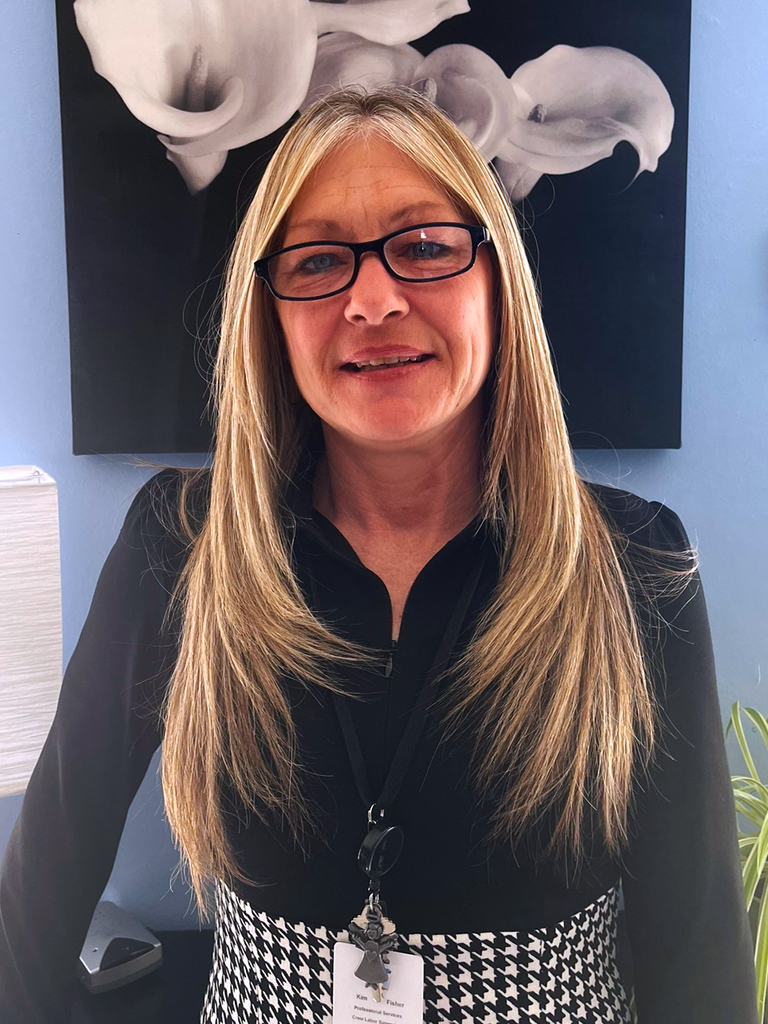
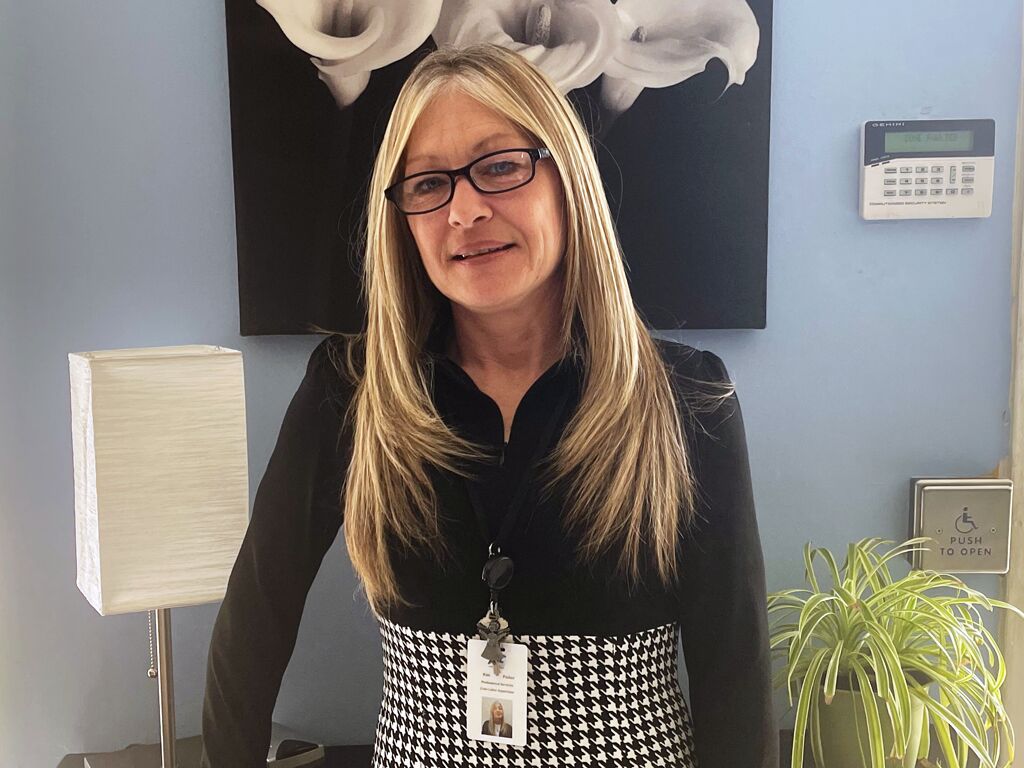
The MCCC CAT program’s new case manager, Kimberly Fisher, is a recent addition to the team at the Center for Accessibility Resources.
The Burlington County resident has an extensive background in supporting special populations impacted by and experiencing mental illness, substance use, domestic violence, homelessness, food insecurity, and other issues by connecting them with agencies in the area.
While this is her first time applying that experience to an educational setting, she has previously coordinated vocational services and programming for IDD individuals.
In an interview, Fisher said that the CAT program is a partnership between educational institutions like MCCC and nonprofits that offer programming in areas like self-advocacy, in-community service providers, and the private sector.
“With all those resources coming together [and] collaborating, we’ll really be able to offer this special population a variety of services and needs based on their individual preferences, choices, [and] goals,” Fisher said. “It’s important for this population to really know what’s out there for them to help them be successful.”
To qualify for the grant, applicants must be between 18 and 24 years old; have graduated high school, regardless of what age they did so; have been identified with an intellectual and/or developmental disability, either while attending a K–12 school system or by a private provider; and live in Mercer County.
While MCCC is still confirming the structure of the program, the “general consensus,” according to Fisher, is to have four-hour classes twice per week, with each session split into coursework and the campus experience.
This planning model, as Fisher explained in relation to the MCCC materials, recognizes that the more a person’s path is tailored to their unique situation and strengths, the greater the likelihood they have of making a healthy transition to the next stage of life.
Several students are already committed to the program, which is set to launch in time for the fall 2023 term start date of Tuesday, September 5; this way, students can enroll at the same time as the rest of the college for a shared sense of community.
“If we have an individual that says, ‘Well, I go to college,’ there’s meaning in that. There’s value in that,” Fisher said. “We want it to be seamless. We want it to be the same experience as others in college, and so as close to that as we can is what we’re aiming for.”
However, Fisher is adamant that although the program is “college-based,” the biggest difference between CAT and traditional MCCC courses is that CAT has no admission deadlines, meaning students can join any time of the year, thus eliminating waitlists that often act as a barrier for support services.
“We get them where they are,” she said, “[In] my experience with community supports, what I often saw [was that] if there was a wait list for service, that individual typically waited a very long time, and things change in those periods. They either go find something else or they stay at home and isolate by themselves, and so we want to make it very clear that this is open at any given time; whenever people want to join us or need to join us, that door will always be open, regardless of a college semester.”
The semesters are broken into modules that begin with career development and adult employment, an introduction to the opportunities and resources available to students on their respective journeys.
MCCC’s CAT will also give students increased access to community service providers, Fisher continued, with the CAT program “serving as an on-campus resource hub” for coordination with entities such as the New Jersey Division of Developmental Disabilities, or DDD, and the Division of Vocational Rehabilitation Services, or DVRS.
DVRS manages vocational supports for the Mercer County area, so representatives from the agency will discuss eligibility for employment-based services that may include supported employment, trial work, or job coaching.
Fisher observed that while working as a community provider, she noticed that there was a “gap” in information where students lost connections to resources during the summer period.
“We find that some of these individuals say, ‘Well, I’ve graduated high school. I’m going to take the summer off. I’ll figure out what I’m going to do later,’ and they often don’t,” Fisher said.
“They don’t remember that connection to the Division of Voc. Rehab., whereas in May [or] June, they might have been interested in those services or those supports for skill training or job coaching, and so we’re hoping maybe to catch some of those individuals and reconnect them back to that specialized service for those vocational supports.”
“Again, we all know, a couple of months into summer break, and people start going to school, or they go to jobs, and you’re home alone, you don’t have your support group, you don’t have your peer group, so what do you do? Really, it just provides for a lot of isolation,” she said. “We don’t want that to happen.”
Instead, Fisher added that CAT can try to reintroduce these young adults to their in-community providers, noting that MCCC has been in contact with just under 100 agencies serving Mercer County to increase their scope of impact, such as the Progressive Center for Independent Living, the Arc Family Institute, Caregivers NJ, and Mercer County’s Aging & Disability Resource Connection.
Those enrolled in the program will also have a designated lunch time where they can go to the cafeteria to eat and interact with other students, staff, and faculty. These real-life scenarios will serve as practical exercises to reaffirm what Fisher will be teaching in the classroom.
Fisher wants CAT students to better understand the appropriate boundaries and behaviors for a college or workplace environment, which she will convey through role play and modeling exercises. These lessons, besides having interpersonal benefits, are also to educate them on how to identify dangerous or unsafe circumstances, especially because IDD populations are at a higher risk of financial and sexual exploitation, Fisher added.
Semester two concentrates on academic enrichment, providing a course overview of class registration, financial aid, joining clubs, and the differences between credit and non-credit courses, as well as certificate programs.
Fisher explained that if a person learned that their local dog shelter needed assistance with marketing materials, they would want to volunteer and practice their computer skills by enrolling in a certification program based around applications like Microsoft Word, Excel, and PowerPoint.
Semester three focuses on campus and community engagement, encouraging students to find peer groups on campus based on shared interests and get involved with programs including MCCC’s food pantry, the classical and jazz radio station WWFM, and the Allies Inc. Garden at the West Windsor campus, a partnership with the Hamilton-based nonprofit’s Project Grow farming and horticulture program.
Students will also gain exposure by using the college shuttle to travel between the Trenton and West Windsor campuses, learning how to greet and respond to the driver, introduce themselves, and utilize public transportation while taking advantage of both locations.
Transportation is another “big barrier” for this population, according to Fisher, and MCCC is looking to possibly work with Rutgers University’s New Jersey Travel Independence Program, or NJTIP, to inform this group of students about using public systems.
While West Windsor and Trenton “offer the same services,” she explained, the latter is the larger, “more rural” of the two, offering soccer fields and other features not present at JKC, giving students chances to meet more people and have “that true college campus experience.”
The CAT Program will also overview Mercer County providers that are largely volunteer-based, such as the Trenton Area Soup Kitchen, or TASK, HomeFront, local food banks, and more to connect this population to their community, as Fisher explained.
The fourth semester delves into independent living arrangements and everything it suggests, such as how to pay rent, contact emergency services, and buy groceries.
“We’ll be partnering up with some of the community providers that offer some of these in-depth independent living structures. They offer recreation, activities, and they can discuss the pros and cons of what is available in Mercer County for living,” Fisher said.
MCCC is continuing to partner with more agencies that cover topics related to independent living and may include providers of residential services, such as group homes and supervised apartments — the latter of which Fisher describes as “a little less restrictive for those individuals that are more independent, that are safety aware, financially aware, and the risk is relatively low for exploitation for them.”
The last semester is self-determination, which Fisher describes as a wraparound exploration of what they covered in the course to enable students to choose whether to pursue employment, volunteer work, a certificate, or other ways to engage and enrich their lives.
“They’ll have all those materials to reflect back on to be able to make a decision that’s based on their wants, their needs, and what they want to do. It’s completely independent,” Fisher said, noting that the individuals will be “empowered to make their own decisions as they continue that transition into adulthood.”
Fisher said that MCCC is currently building this program in a way that prioritizes accessibility with the fewest obstacles to care — and the greatest autonomy — possible.
She added that what sets the CAT program apart from others is its unique position on a college campus, which offers a built-in system of support to this population as they look to integrate into professional spaces.
“We want to make sure, again, that accommodations are built in and there are zero barriers from day one,” she said, noting that the classrooms are still being furnished with inclusive options.
“If we have an individual [who] perhaps has cerebral palsy and has arm braces, they’re going to need a different seating arrangement than what we have right now,” she said. “If we need those accessibility items, it’s imperative that we have them to meet the needs of everyone.”
Fisher described the request for service form as “barrier-free,” noting that the applications are straightforward, electronic, and go directly to the CAT team, who will then respond to families as soon as they are able to do so.
“I have been a community provider for years and years. Never did I have exposure to an individual in this population [who] was going to college or had the opportunity to do so,” Fisher said, noting that times are changing to “move away from those congregate settings.”
“They’re truly going individualized and self-directed in that the individual and their family receiving service really have more of a voice now than they ever did — and they should use that voice to have services that are appropriate for them,” she explained.
To learn more about the Center for Adult Transition (CAT) or ask questions, email cat@mccc.edu or visit the page on the MCCC website, mccc.edu/student_services_needs_cat.shtml. To apply, see the Request for Service form.
For more on the Center for Accessibility Resources (CAR), visit mccc.edu/student_services_needs.shtml or call 609-570-3422.

This fall, Mercer County Community College will open its new Center for Adult Transition, or CAT, to empower intellectually and developmentally disabled adults aged 18 to 24 to achieve their goals across the areas of employment, academia, volunteerism, and more.,
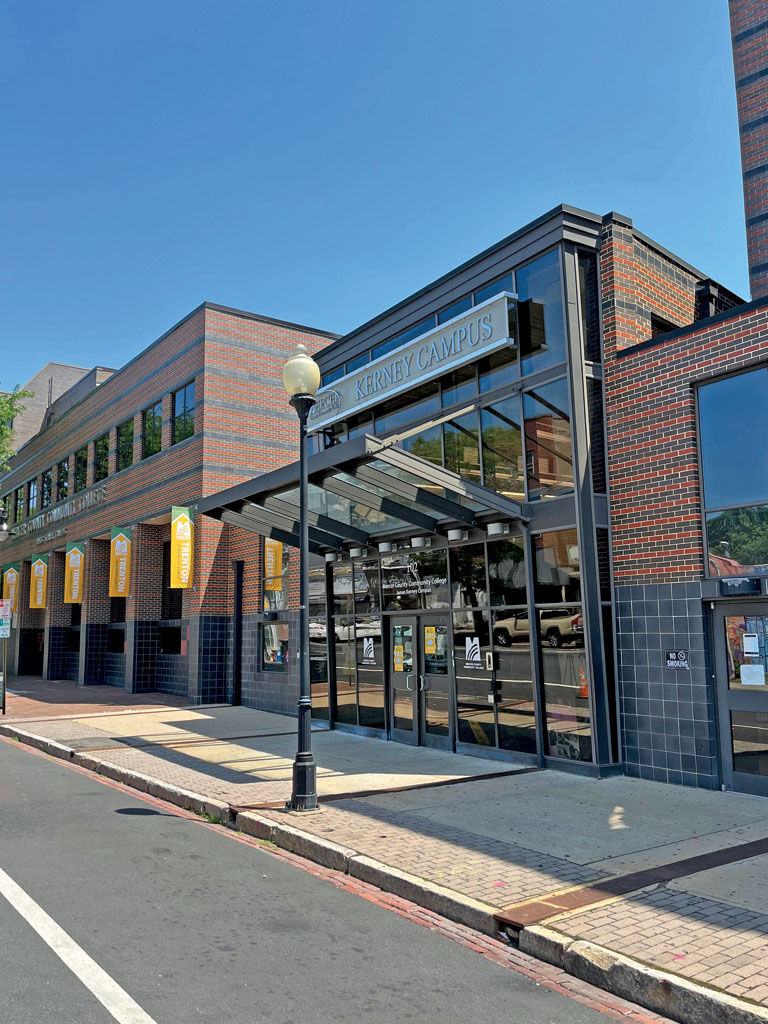

Kimberly Fisher is a case manager with MCCC's new Center for Adult Transition, or CAT program, designated through a grant and a partnership with the state's OSHE.,