Enough is finally enough with Trenton Water Works. The state Department of Environmental Protection is intervening in the daily operations of TWW, which has failed to address numerous problems in the provision of safe drinking water for many years.
The utility, which is owned and run by the city of Trenton, supplies approximately 29 million gallons of drinking water every day to more than 200,000 people—including all of Trenton and Ewing, and parts of Hamilton, Hopewell and Lawrence townships.
Trenton Mayor Reed Gusciora has worked to right the ship at the utility since he was elected in 2018. Gusciora, as well as many state and local officials, have laid a large chunk of the blame at the feet of Trenton City Council, which has consistently failed to approve financing for essential improvements and infrastructure projects.
In 2020, the state attorney general and DEP filed a lawsuit against TWW—which was later joined the municipalities served by the water utility—seeking to compel the City of Trenton and the water utility to take the necessary actions after failing to comply with Administrative Consent Orders to provide safe drinking water.
The takeover in TWW operations follows a months-long investigation by the DEP of conditions affecting the utility that concluded that it continues to struggle to meet water safety regulations.
The DEP takeover also comes amidst reports that Legionella—the bacteria that causes the sometimes-deadly Legionnaires’ disease—has been detected in the water systems of homes throughout TWW’s service area (see page 6).
In an announcement on Oct. 12, the governor’s office said that the state “will work with the city to enhance TWW’s technical and managerial capacity.” The goal is to improve the operations and maintenance of the utility.
“Since the outset of my administration, the provision of clean, affordable drinking water and the promotion of healthy communities have remained among our foremost priorities,” said Gov. Phil Murphy. “Under the leadership of the DEP and in coordination with the City of Trenton, we will work tirelessly to safeguard our residents and return water system quality to the level our communities deserve.”
DEP Commissioner Shawn LaTourette said that the state needs to invest more time, attention and resources in struggling utilities like TWW. He added that the state will provide direct operational oversight to help TWW build the capacity necessary to better serve the public.
“Through this initiative, DEP and the city will more fully assess the system’s needs, meet its challenges, and ensure its long-term success for the benefit of the people of Trenton and the surrounding communities that this system serves,” the commissioner said.
The state said TWW is in need of significant improvements to aging infrastructure, including its 7-acre, open-air-reservoir that stores and provides already treated water to about 70 percent of TWW’s distribution system. The reservoir is in violation of a federal requirement that all outside reservoirs be covered.
The state takeover will be implemented in two-phases to be carried out concurrently.
The first phase is the immediate retention and deployment of a “capacity-building force” of managerial and technical experts who will focus on improving routine operations and maintenance, as well as immediate capital needs.
As part of this, TWW will allow the direct oversight and monitoring of the system by the DEP and its consultants— including a third-party adviser who will monitor and assess all system operations and maintenance.
The state will also add necessary technical and managerial capacity to the system, and make technical, managerial and financial recommendations necessary to bring the system into full compliance with applicable law.
The second phase is a full-scale assessment and preparation of organizational and operational recommendations. Under this phase, the third-party adviser will conduct a comprehensive technical, managerial and financial capacity assessment of the system. This will result in a report of organizational and operational recommendations, as well as short- and long-term asset management and capital improvement recommendations that will serve the basis of future action and investment.
“The DEP and the City will collaborate to ensure that the progress and outcomes of this initiative are open and transparent to the public,” said the state’s takeover announcement.
The state also said that as of Oct. 12, water quality sample results submitted to DEP by TWW reflected that the water system meets applicable water quality standards. “DEP will continue to closely monitor water quality parameters and other indicators of the status of the TWW system.”
“If TWW exceeds a regulatory standard for drinking water quality, or if DEP otherwise determines that an acute risk to public health exists, the public notification would be issued to all TWW customers.”
* * *
It seems that the catalyst for the takeover was a compliance report to Trenton on Sept. 27 that summarized the DEP’s observations and concerns after it conducted inspections of TWW facilities last Oct. 26, Oct. 27 and Nov. 8, and Feb. 3 of this year.
After that, the DEP continued to meet frequently with TWW representatives and provided significant compliance assistance.
Although the 17-page report recognized Mayor Gusciora’s efforts “to improve operating conditions and advance long-overdue capital improvements,” DEP officials were “disturbed by the current city council’s continuing failures or refusals to authorize resolutions necessary to advance critical capital improvements and ensure that ordinary maintenance and operations needs crucial to the protection of public health are met.”
The report states that TWW has “repeatedly failed to properly maintain critical treatment processes, monitor water quality as required by the U.S. Safe Water Drinking Act, employ adequately trained operating personnel, and invest in required maintenance and capital needs…
“Since 2012, the Department has identified at least 40 incidents, including 18 in the past 5 years, where TWW’s treatment plant was shut down for reasons including brownouts, treatment failures, and high turbidity in the Delaware River.”
The full compliance report can be found at dep.nj.gov/trentonwater along with other DEP documents related TWW compliance issues.
Gusciora said he welcomes working with the DEP to resolve outstanding issues and ensure safe drinking water. He said that would announce a proposed plan to address the issues raised by the DEP “in the near future.”
“As we’ve dealt with City Council obstruction, we are resolute and determined in our efforts to build on the substantial progress we’ve made, fulfilling the promise I made to modernize the TWW system to ensure clean and safe drinking water for our customers and service-area residents for generations to come,” said Gusciora in response to the DEP’s takeover.
“If the Trenton City Council had done their job, we would not find ourselves in this position,” Gusciora recently said. “They voted down critical projects, including decommissioning the reservoir, replacing water mains, lead remediation, heavy equipment, facility upgrades, chemical purchases and debt service.”
In response to the compliance report, state, county and officials in municipalities served by TWW called for the state to step in and take over operations at TWW. It was a short time later that the DEP stepped in.
Mercer County Executive Brian Hughes condemned the “irresponsibility and recklessness of the (Trenton) City Council for its egregious neglect of the water system, its disregard for the directives set forth by the NJDEP and the injustices it has placed on communities of color and on all Trenton Water Works customers.”
Hamilton Mayor Jeff Martin also criticized City Council. “The residents of Hamilton have suffered far too long due to the failures of Trenton Water Works and left us with absolutely no confidence in their ability to operate the utility. The Trenton City Council’s refusal to authorize public safety projects is putting people’s lives in danger and has prevented TWW’s ability to provide safe and clean drinking water.”
Martin lauded the takeover announcement. “This is a major step towards reaching our simple goal: to ensure all TWW customers have reliably clean and safe drinking water,” Martin said. “Further, the Order from NJDEP requires the City Council to approve all items necessary to ensure our goal is reached; guaranteeing a road block to progress is neutralized.”
Lawrence Township Mayor John Ryan said, “it is time for the operations of the water utility to be taken from the City of Trenton.”
He added that the compliance report “demonstrates that the City of Trenton cannot meet the needs of its water utility customers by producing clean and safe water. We stand with the other municipalities fighting for their residents’ health and safety. We must do better.”
Lawrence Municipal Manager Kevin Nerwinski welcomed the state takeoverof operations at TWW: “Having the state take such action will give us all the best chance to remove our (conscious and subconscious) fear of using unsafe water in our daily lives. It will take time to get to this head space, but we are on our way.”
Hopewell Township Mayor Courtney Peters-Manning said: “Residents deserve safe drinking water. We are deeply disturbed by DEP’s findings regarding the lack of progress on long-term projects necessary to keep the residents of Hopewell Township and Mercer County safe.,” Hopewell Township has appreciated our working relationship with the professional staff at Trenton Water Works, however, change is necessary.”
Ewing Mayor Bert Steinmann said that the findings in the compliance report “confirm why Ewing joined with its neighbors Lawrence and Hamilton to protect its citizens from this failing authority.”
“It is time for legislation that will provide a meaningful remedy to the suburban ratepayers being held hostage to the Trenton City Council’s intransigence,” Steinmann said. “On behalf of the citizens of Ewing, we implore DEP to act immediately to compel TWW to correct these deficiencies and ensure the safety of the water provided by TWW to its more than 200,000 consumers.”
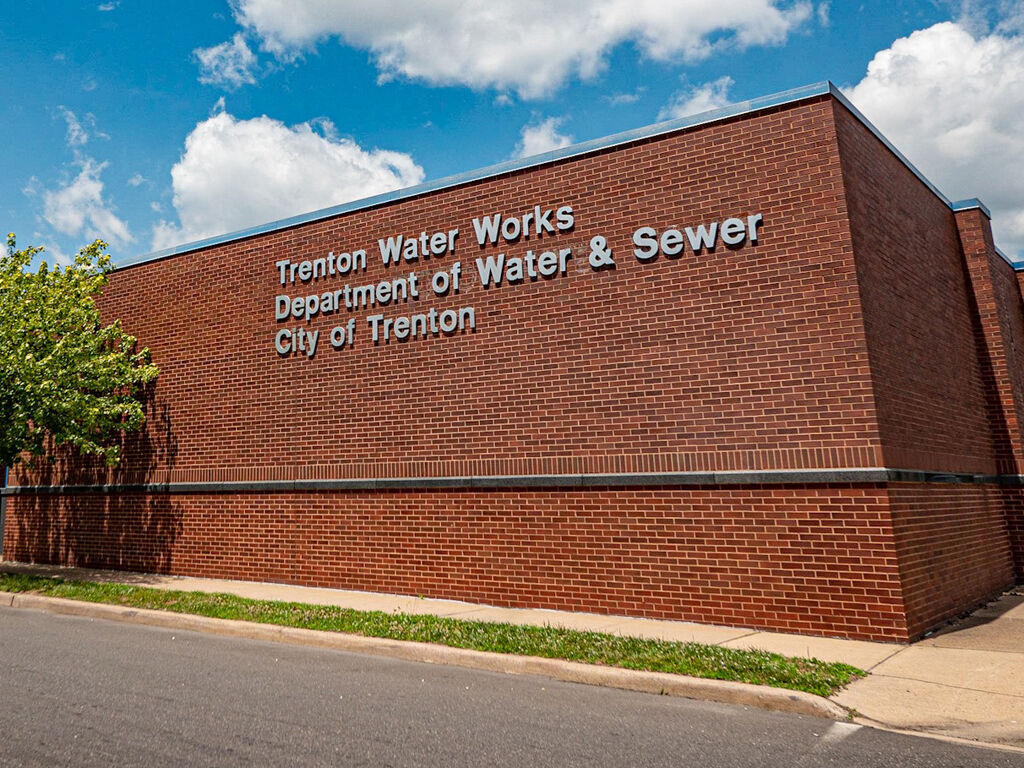
Trenton Water Works administrative building at 333 Cortland St., Trenton.,

