Lawrence Municipal Manager Kevin Nerwinski recently sat down with the Lawrence Gazette to talk about issues impacting the township.
The first part of the Q&A resulting from that interview ran in the April issue of the Gazette and addressed the impact of the COVID-19 pandemic on the township, the 2022 municipal budget and residential and commercial property values.
In the second part of the interview Nerwinski discussed the state of retail in the township and the situation regarding recreational cannabis sales in the township.
In the final part, Nerwinski talks with Gazette editor Bill Sanservino about various capital improvements the township is planning to make in 2022.
Nerwinski also talks about what’s going on in town in this month’s column on Page 15.
* * *
Lawrence Gazette: Let’s talk about quality-of-life type programs in Lawrence Township. What are some things that Lawrence has recently implemented or will be putting in place that are that are assets to the community?
Kevin Nerwinski: Nancy Bergen, the recreation department’s superintendent, does an amazing job with the different programs that she runs. And we’ve just added another person to that department so we can continue to do different and interesting programs.
That said, we have to work harder to get to get the word out to our residents about what we offer. It’s very difficult if someone is not looking to find something to reach that person. Sending out mailers doesn’t really happen, because the cost is too high, and 90% of people just rip them up and throw them away.
We’re definitely committed from the recreational point of view, and Nancy’s also in charge of the senior center and all the programs that operate out of there, which is now reopening again.
Sports has always been a big part of the town and we’re getting back to normal in terms of COVID safeguards. We’re putting a good enough emphasis on providing these programs. Not just sports, but also arts and all the different types to try to appeal to different groups.
LG: What about capital improvements in recreation areas?
KN: One thing we’re doing is adding lights in Veterans Park to provide lighting along the path has, I think, has been successful. People who are done with work will be able to use it while it’s dark. Those are the kinds of things that we’re focusing on.
LG: How about the Eldridge Park community? I guess there’s a plan to revitalize the area?
KN: You should take a drive back there. Eldridge Park is a really beautiful, cool place. The neighborhoods are eclectic, and they have a great mix of people who are really proud of their neighborhood.
One of the things that they were having (before the pandemic) was movies at night, and they were running extension cords from people’s houses. So we put a power grid up there.
We also have a plan to improve the playground area, potentially put up a restroom area as well. So that’s definitely on our to-do list to look for ways to improve that.
LG: You finally got the gas station taken care out there (Pit Stop), which I believe was a priority for you, right?
KN: That was one of my main goals, because it was sitting right in the center of town and it just spoke of decay. We got the building razed and the ground is being studied and assessed to get a cost factor to be able to clean up under the footprint of the building.
BS: Was there a gas tank underneath it?
KN: There’s not a gas tank there now. It was a gas station forever—for 50 years —and there is a lot of oil in the soil and it’s really wet around there. So that part’s going to be cleaned.
About 70 percent of it was already cleaned 10 years ago. So that’s going to be a park—it has to be a park. That was the nature of the deal we made. I think it’s going to be a cool setting for maybe a nice gazebo, or maybe a town clock.
LG: Has the town seen any money from the federal infrastructure funds that were approved last year? Can those funds be used for projects around town?
KN: Yeah, we have. We’re applying the funds, as intended, to our infrastructure. So when we would normally do road improvements and bond out that work, we’re utilizing those funds to do that. It’s going to save us bonding and interest payments and things like that.
We don’t have a serious hole in any aspect of our budget that’s directly related to COVID (another area those funds can be used). We filled those gaps with other reliefs. So, we’re able to use that and not add on to our debt.
People are under the misconception that the federal government is cutting us a check and saying “Here, put it in your surplus,” but it’s not allowed to be in our surplus.
LG: Do you know how much the town received?
KN: I think it’s around $600,000.
* * *
LG: What are some other projects that you’re hoping to pursue this year?
KN: We’re being very conservative this year. We’re going to continue with our road Improvement program, which we do every year, because roads are still used as much as they always been and they need improvements.
We’re not being ambitious at all in any other type of capital improvement at this time. Our capital improvement program is about $2.7 million in total, which is a lot less than it had been in the past.
We want to see where we are before we take a big bite of the apple for something else. So we’re going to do computer equipment upgrades, public works equipment replacements and the other normal things that we have to do.
* * *
Colonial Lake is something that we’ve been on a holding pattern with since we acquired that property, but we’re going to start. The planning is already in place for completing the loop around the lake, and we’re looking for grant monies to finish that project.
There’s a portion of land behind Colonial Bowling that’s township-owned, and we envisioned to be a passive park area—another vista for park benches, playground.
We found in the pandemic that parks are pretty important for people for a lot of reasons—to decompress, to exercise, etc. We are going to continue to put money into parks, because I think it makes the community better, and I think it will make our community desirable and increase our property values. I know people sometimes don’t like us to spend the money on this, but in the end, it’s really to improve the larger community.
The importance of communicating with residents
LG: You have a pretty strong online presence, both on social media and you also have your own blog site. That’s not something that a lot of town administrators do. Why do you feel that’s important?
KN: Well that goes back to when we started our council-manager form of government.
It makes it challenging for the town to have a voice, because the five elected officials are regulated in how they speak on behalf of the community. They can speak on behalf of themselves, but they can’t speak on behalf of the community.
Being appointed by the five of them gives me the opportunity to be a voice, and I use it as an element of transparency.
I think a lot of bad opinions or thoughts about the government are generated from a lack of understanding or a lack of information. I think it’s important to share the information that I have that provides the basis for the decisions that are being made. I think overall people appreciate it.
I know I have a couple detractors out there, and no matter what my opinion is or the decisions I make, is they’ll have a different one. But I think it’s important to get out the reasons that decisions are made, what they’re based upon and the thought processes of the person that’s been appointed to run the municipal government.
So that’s why I do it, and I think more information is better. It may create some pushback, but I think it’s a lot less. I think people are more informed now, if they want to be.
The information is there, and we always look to get that information out—whether it’s on Facebook, whether it’s on the website, on my blog or the Lawrence Gazette.
Local newspapers are really important because I get emails all the time from people who call saying, “Thank you for the article that you put in the paper.”
It’s definitely being read and it’s definitely a certain category of people that love the feel of the newspaper. I think that’s probably coming back.
So that’s the genesis of why I do it. I don’t do it for recognition or a pat on the back. I do it so people know there’s things that are happening. Like what’s happening at the Pit Stop, for example.
I’m able to say, “All right guys, even though you’re not seeing anything happen, there’s a lot of work that’s involved in this. A lot of planning, a lot of things that you don’t see that do occur.”
And I think that just helps people understand that there’s somebody at the wheel and there’s a thought process involved. They may not agree with everything, but at least it’s not random.
LG: I think for the most part, most reasonable residents appreciate when one of their local officials reaches out and tries to inform them.
KN: Yeah, and it’s percentages, because listen, no doubt about it, anything that comes out of my mouth, there’s going to be at least 10 to 20% of people that are just not going to agree. It’s just how it is. You do the best you can with the information that you have, but before you have an opinion, get the information, right?
Final thoughts
LG: Is there anything that I have not brought up that you think it’s important for town residents to know about?
KN: We’re still just very mindful of the pandemic, and if there is a need to retract and implement the safeguards again, we’re going to do that.
I’m not going to feel pushback or pressure from anybody. The main responsibility that I have is to make sure that municipal operations are functioning and our employees are protected and safe. That’s the mandate. So, whatever that involves, I’m going to follow the science, follow the data and make decisions.
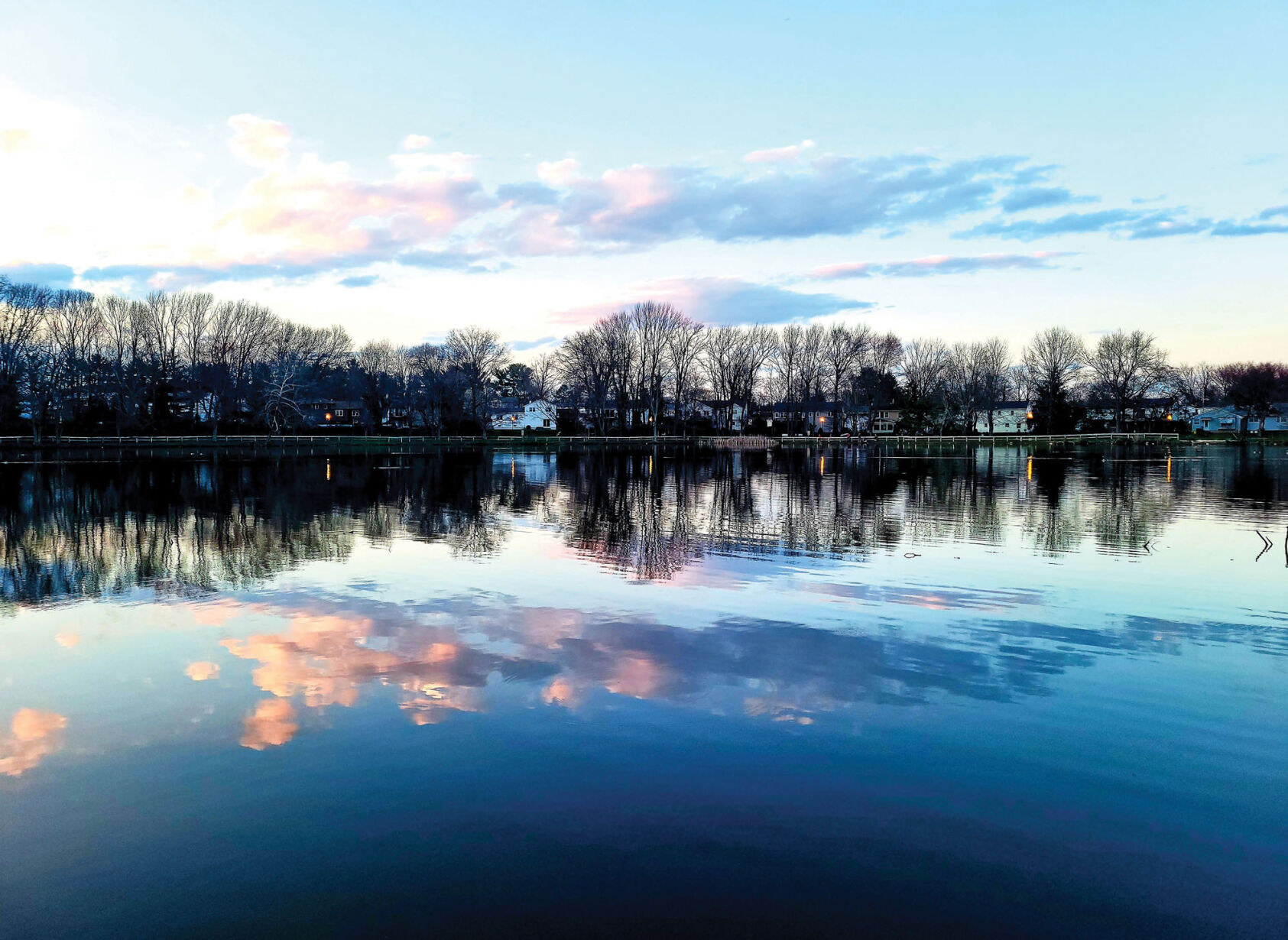
Photo by Maria Festa-Miller, Friends of Colonial Lake.,

