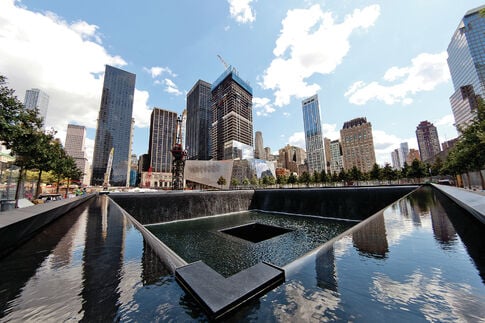
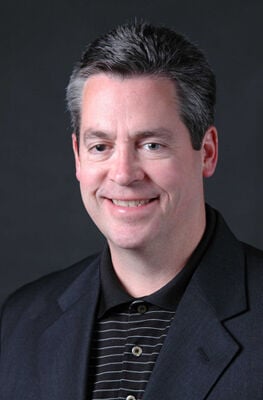
When Kevin Meara walked up the Christopher Street subway station steps just three days after the 9/11 attacks, he heard a noise that sounded like people screaming.
He immediately felt a sense of panic, fearing another attack. He suddenly realized he didn’t really know what he got himself into when he traveled to New York City to volunteer. When he reached the West Side Highway, however, he realized people weren’t screaming—they were cheering.
People were lined up behind the police barricades cheering and applauding the volunteers. For Meara, it was a strange feeling considering this was only his first shift, and he hadn’t done anything other than ride the train into the city. But after so many New Yorkers helplessly watched their home come under attack, cheering the people who came to their aid felt like the the first step to unite their city.
“All the way down they had candles out, and they were doing vigils. It was unbelievable just to see New York City unite like that,” Meara said.
Meara was one of the Hamilton residents who traveled to Manhattan after the Sept. 11 terrorist attacks. He was an account manager for PSE&G at the time, but he began his career as an electrical engineer, which gave him the qualifications to volunteer at ground zero.
As a utility worker, Meara worked many natural disasters—including Hurricane Floyd and a tornado in Woodbridge—but 15 years later, still nothing compares to what he saw in lower Manhattan after 9/11.
“I worked hurricanes, floods, tornadoes,” he said. “I saw what mother nature could do, but now I saw what we could do to ourselves.”
Thousands of volunteers went to New York City after the terrorist attacks to do whatever they could to help, many coming from across the river in New Jersey. After securing everything with PSE&G back home, Meara went to New York City Friday night after work.
Weeks before the 15-year anniversary of 9/11, Meara sat in the City of Angels office reflecting on his experience volunteering after the deadliest attack on U.S. soil since Pearl Harbor. Meara said volunteering was the natural thing for him to do. “It’s just in your blood, it’s the right thing to do. I don’t regret it at all,” he said.
Throughout his life, Meara said he has always been driven to help his community. He enlisted in the military, became a utility worker to lend a hand during storms, and founded City of Angels—a nonprofit organization that aims to helps people battling addiction—after his son KC died of a heroin overdose.
Volunteering may come naturally for Meara, but there was nothing natural about what he saw at Ground Zero.
As he entered the blast zone, he said it was as if time had stopped the moment the towers fell. Cups of coffee were left on vendor carts, food was left on tables inside fast food restaurants, and everything was covered in gray dust.
“When I came around to the building, and I could see the actual ground zero, you just stop and you lose your breath a little bit,” he said, adding that what he saw on television seemed different from what he saw in person—a massive twisted pile of steel and smoke. He estimated the rubble was multiple stories high.
Meara thought it looked like something you’d see as a set design at Universal Studios, not something that should be sitting in the middle of lower Manhattan.
Meara worked on what later became known as The Pile, the remains of the Twin Towers. The pile was extremely unstable. Large pieces of jagged steel were sticking out in every direction, and fires burned in different areas of the rubble. The fires burned for 99 days after the attacks, according to the 9/11 Memorial website.
Meara described the air at the pile as a putrid combination of gas, oil and electrical wires. After his volunteering shifts, Meara said he could still smell the odor so vividly that he thought debris was stuck in his nose. For about a week, he would wash his nose out everyday, but nothing could get rid of that smell.
“That’s when I realized it really wasn’t in my nose—it was in my head,” he said. “That lasted for a long time.”
The last survivor was pulled from the rubble on Sept. 12, according to ABC News, but when Meara volunteered on Sept. 14 everything was still operating as a rescue mission. Meara recalls seeing orange X’s over certain areas of the pile, where search dogs found something.
When Meara looked at the rubble, he knew there wasn’t anyone left alive. The towers didn’t fall over, but fell directly downward, with the top floors crushing the lower ones. As Meara looked around the pile, he didn’t see anything that was recognizable. Aside from the occasional doorknob or computer keyboard key, everything that was once in the office buildings of the World Trade Center—desks, chairs, computers, doors—was gone. Meara knew that the odds of surviving the fall, and being in the rubble for days, were slim to none.
The force from the falling towers was so strong that the buildings surrounding it were also deemed unstable. Therefore, in the immediate aftermath of the attacks, officials decided to hold off on using cranes and other machines to sort through the rubble. Volunteers formed the “bucket brigade” to sort through the pile by hand.
Police, EMS, firefighters, utility workers, iron workers and all the other volunteers formed a line on the rubble, picked up concrete by hand, put it in a five-gallon bucket and then passed the buckets down the line. The buckets were then taken to Fresh Kills Landfill in Staten Island to continue the search for remains. According to the 9/11 Memorial website, more than one million tons of World Trade Center material was taken to the landfill.
The bucket brigade was put in place not only to ensure the safety of the workers who were on top of the pile, but to help search for the remains or belongings of the thousands of people who were still missing. If something was found, EMS officials would take charge.
“You’d be up on the pile just passing buckets down of concrete, and then they’d blow a whistle, and that meant for everybody to come down the pile,” Meara said. “And then you’d see the firemen and the policemen go up. They found something, and they wanted to recover their own. All the volunteers would come off the pile until that operation was completed.”
Out of everything Meara said during his time there, the dedication of the police, fire and EMS personnel stood out to him the most. Meara praised the officials who worked at the pile during the attacks and during the months that followed.
“At that point, you didn’t know how many had passed away of the police and fire, but they owned it. When that whistle blew and they found something, they owned it,” adding that watching those men and women working nonstop was a great reminder of how the country can come together in the face of adversity.
Despite the bravery and the camaraderie between all the volunteers, no one spoke while they were at Ground Zero.
“You’d be sitting right next to people, and they weren’t saying anything,” Meara said. “It was loud, you heard equipment going and bricks being picked up, but interaction wasn’t happening.”
Meara said the volunteers were like deer in front of headlights. No one had ever experienced something like this before. Everyone knew death was all around them, and people often use silence to show their respect for the dead, so no one spoke. Meara only had one interaction with another volunteer, and it was only for a few short seconds.
“There was a firewoman, and I must have been next to her for an hour passing buckets, and I just looked at her once when she looked at me,” he said. “And I said, ‘Hi, my name is Kevin, and she said ‘My name is Ann,’ and that was it. We never said another word. I just felt I had to say that.”
While it was quiet among the volunteers, New Yorkers did all they could to show their appreciation. Meara said if a volunteer had an appetite, they could have gained 30 pounds from all the food that was being donated. Nearby restaurants, businesses and churches opened their doors for workers to store their equipment or to stop and eat, and a counselor was on hand if the volunteers ever became overwhelmed by what they saw.
Some volunteers were taking photos of the rubble, but Meara felt uncomfortable documenting anything. The only thing he saved from that day is his train ticket. He purchased a ticket to ride the train in from Hamilton to Penn Station, but when the conductor saw his utility gear, he told Meara he wouldn’t accept his ticket. This ride was free.
Meara went back to Hamilton after his Friday night shift, slept all day Saturday and went back up to volunteer again the next night. At that time, he was told they didn’t need any more volunteers from the utility department. The search went from a rescue to a recovery, and only EMS personnel would be permitted to work.
“It was very a brief moment in time, just two shifts, but it stays with you forever,” he said.
Now, when Meara opens his glasses case and sees the ticket, he’s reminded of his time spent at ground zero.
“It’s my little connection to history,” he said, pausing to reflect on the memories that are a little more vivid as he holds the ticket in his hand. “We would be a greater nation if we came together before the tragedy.”
But it is by coming together in the midst of great tragedies like 9/11 that Americans can show their strength, Meara said.
“I’m proud to be an American, regardless of how you get painted every so often,” he said. “We are human and we have faults, but we wouldn’t be where we are if the faults weren’t the smallest part of us.”
,