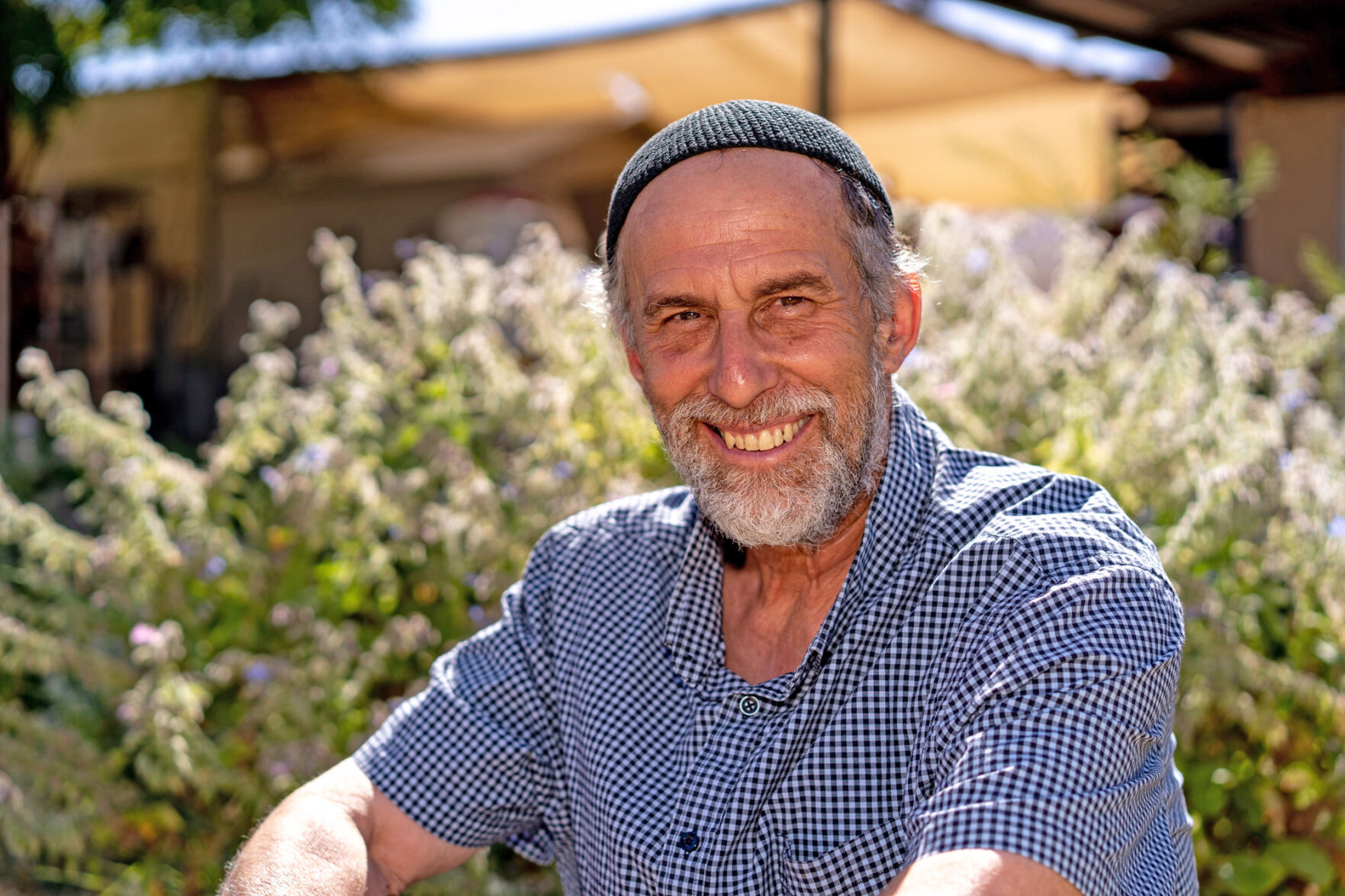
Before an 11-month sabbatical from Israel Synagogue in Manchester Center, Vermont, Rabbi Michael Margaretten Cohen expected to be living with his wife and children in Jerusalem. But an ad in the “Jerusalem Post” newspaper changed his life: it announced that the Arava Institute for Environmental Studies would be opening in October 1996. Cohen, who had cofounded the first recycling center in Ewing with Ewing High School classmate Scott White and is also a peacenik, reached out to the Arava contact, Alon Tal, a leading environmental lawyer, kibbutz member, and, later, member of the Knesset.
His outreach to Tal brought Cohen, now director of community relations for Friends of the Arava Institute, and his family in fall 1996 to a one-bedroom apartment at Kibbutz Ketura, in southern Israel near the Jordanian border. “I quickly discovered that the institute was the address of so many of my passions — peace, the environment, cross-cultural learning, the desert, the kibbutz. It was a magical year,” he says.
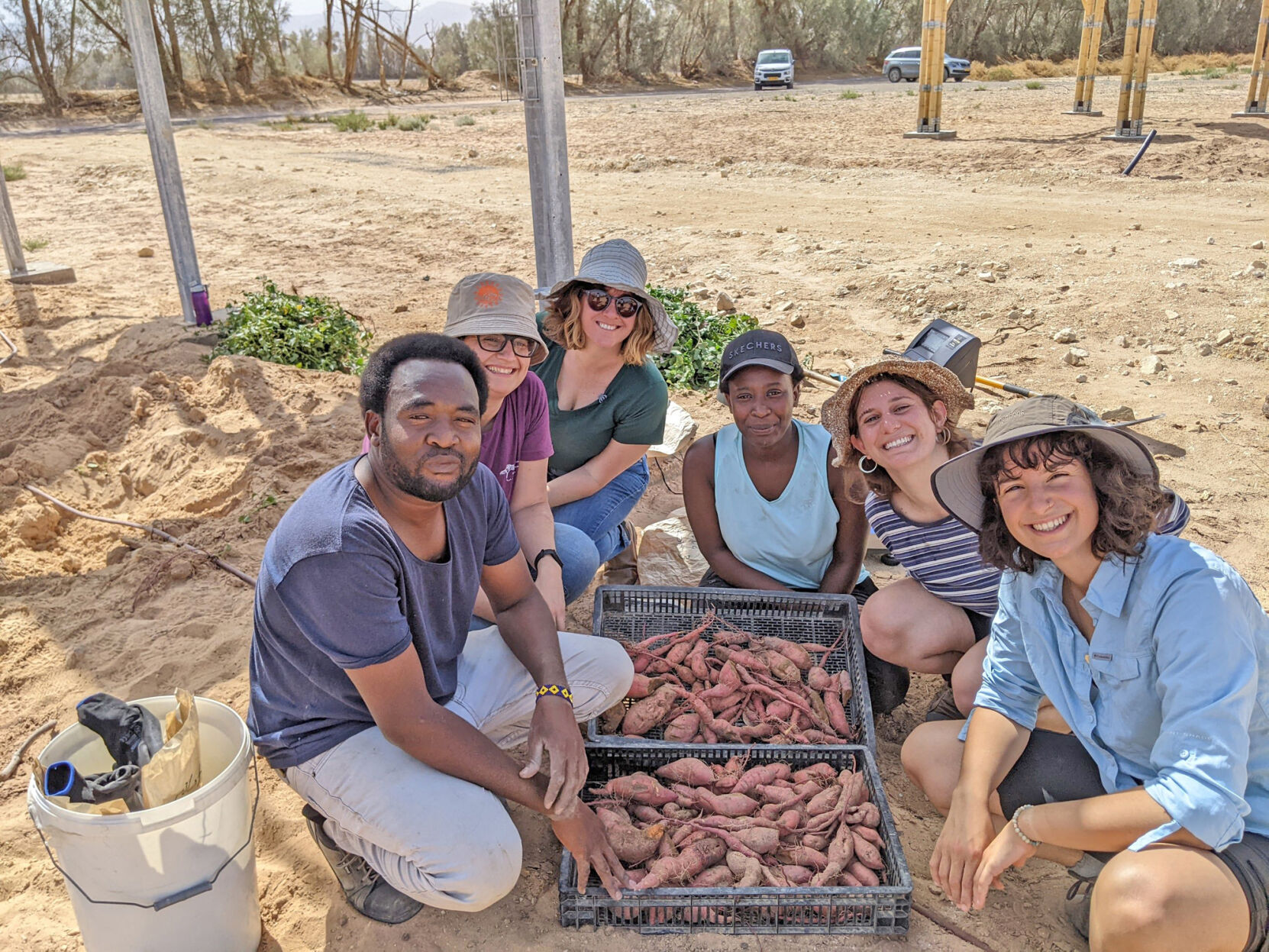
The goal of the Arava Institute, Cohen says, “is to train a cadre of environmental leaders, particularly for the Middle East.” Its undergraduate student body is ideally one-third Jewish, one-third Palestinians (including Israeli citizens as well as residents of the West Bank, Gaza, Jordan, and Morocco), and one-third from the rest of the world (with half of these from the United States). During his sabbatical, Cohen recruited students from Gaza for the institute. “It was still in the glow of the Oslo peace process, that we were all going to do it and achieve it,” he recalls.
Cohen will deliver a talk titled “Cultivating Hope in a Time of Conflict: Building the Foundation for a Future of Peace” at the 34th annual Amy Adina Schulman memorial lecture, Sunday, April 27, at The Jewish Center, 435 Nassau Street, Princeton, from 2 to 4 p.m. The community is invited. For more information, contact Ruth Schulman at schulman.ruth@gmail.com.
Cohen emphasizes the importance of bringing together both geopolitical and environmental perspectives to resolve conflicts in the Middle East. When he is physically at the institute — which has happened eight times, for periods of six months to two-and-a-half years — his daily bike rides to the Jordanian border emphasize for him the distinction between nature, which knows no borders, and the artificiality of an actual border.
Cohen observes, “In winter, clouds flow from west to east and there is no passport control. The water we drink is from aquifers below ground, and we don’t know whether it is from Jordan or Israel. You can’t deal with any environmental issue in that neck of the woods, and in most places in the world, based on political borders: air, rivers, and aquifers don’t follow them. You have to deal with your neighbor, particularly when you are small.”
The institute enables its undergraduate students to gain the skills they need to solve environmental problems — in areas like water management, renewable energy, ecology, sustainable agriculture, and environmental politics — in the midst of a difficult geopolitical reality.
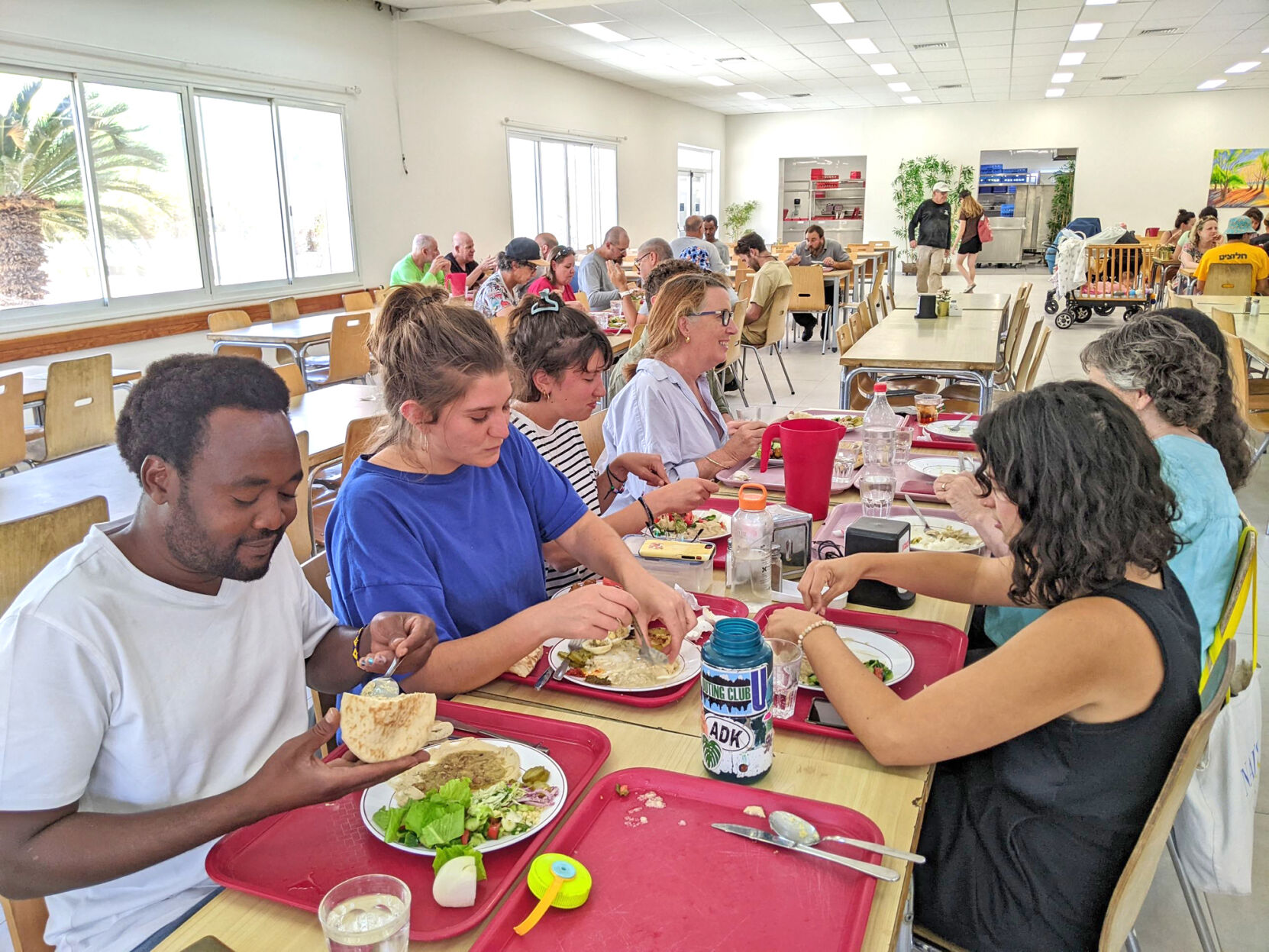
Before dealing directly with the political challenges, however, the students develop relationships with each other. Together 24/7, they have the luxury of time to get to know one another via many touch points, like taking classes together and sharing their religions and foods. They also encounter difference at Kibbutz Ketura, which is itself an intentionally diverse community including both religious and nonreligious Jews. Students also have opportunities, when possible, to do environmental and political touring in the region.
Before the second intifada, which began in September 2000, the institute leadership assumed that conversations about the conflict would happen naturally among students. But with the intifada, Cohen says, “it became really clear that we needed to create a safe space and say hard things that needed to be said and hear things that needed to be heard.”
Even though these conversations, which take place in “dialogue forums,” can be intense, the strong relationships among students ensure that disagreements do not undermine the community. Cohen explains, “We, Israelis and Palestinians, model and live being able to work together on issues of similar concern vis-a-vis the environment while at the same time creating relationships based on trust where you can disagree vehemently with someone but still imagine you will continue to work on this going forward.”
Cohen moved to New Jersey from Indiana at age one when his father, Alfred Cohen, began his 32 years as a history professor at Trenton State College. His mother, Betty Cohen, taught sociology at Rider University, Mercer County Community College, and Trenton State College, where she became the first advisor for students with disabilities.
At age eight Michael left Ewing with his family for his father’s sabbatical at the University of Frankfurt, an experience that began shaping his identity in unexpected ways. During his family’s travels throughout Europe, including behind the Iron Curtain, he remembers that “we would always find the synagogue wherever we went.” As a result, he says, “I left with the impression that my Jewish identity was important and mattered.”
In May 1966 he experienced his first visit to Israel, where, he says, “I remember divided Jerusalem and asking why I couldn’t go to the other side.”
A sabbatical at Worcester College of Education in England when Cohen was in 10th grade was similarly memorable. He recalls being at Yom Kippur services when the rabbi announced the outbreak of the 1973 Yom Kippur war. Later that year they visited relatives in the Soviet Union who wanted to leave (it was also the first time Cohen’s father met his uncles, his mother’s brothers). Cohen mentioned in an email: “The KGB rep, clearly being aware that we were Jewish, asked us at the end of the trip why we visited synagogues in all the cities we went to.”
In 1978 the spirit of adventure perked by these early travels led Cohen to leave the University of Vermont, where he was studying history, in the middle of his sophomore year for another transformational journey. Bolstered by extra credits from summer studies, he studied abroad for two years, first studying theater, history, and politics at Ithaca College’s London program.
On his way to a yearlong Hebrew Union College program at Kibbutz Ma’ale HaChamisha, he traveled through Eastern Europe tracing his family story over 500 years, aided by the 1955 Directory and Genealogy of the Horowitz-Margareten Family (who created the matzoh company of the same name).
He visited his maternal great-great-grandfather Rabbi Joel Margaretten’s synagogue and home in Eger, Hungary. He also stopped in the Jewish quarter of Prague, where his early maternal ancestor, Aaron Meshulam Horowitz, had built the Pinkas Synagogue, and found many family members buried in the Old Jewish Cemetery next door. “It made a huge impression on me and made my Jewish identity even stronger,” he says. His exploration of his family history inspired him to add “Margaretten” to his name.
The move from Europe to Ma’ale HaChamisha to study modern Israeli history and politics and the Hebrew language left him with a strikingly different perspective on Jewish history: “It wasn’t just cemeteries — we were alive,” he says.
Cohen’s year in Israel coincided with the Camp David Accords and discussions of Palestinian self-determination, moving him to choose a thesis topic at the University of Vermont with a political edge. “Lenin’s Theory of Self-Determination and the Muslims of the Soviet Union” brought him the Paul Evans History Award.
Post-college Cohen worked for two years promoting study abroad for the American Zionist Youth Foundation. At the same time, he was deciding his future career direction, either politics or the rabbinate. “I wanted to help the world be a better place and to work with people,” Cohen recalls. “It was also clear I wanted to do that with a Jewish cloak, so rabbinical college made sense.” One of his mentors, Rabbi Dick Israel, steered him in this direction, telling him, “If you put those five letters [r-a-b-b-i] in front of your name, you can do political work and people won’t question it.”
His father suggested that he consider the Reconstructionist Rabbinical College because of its historical approach, and Cohen decided he liked its approach of viewing Judaism as an evolving religious civilization. He married his wife, Alison, in the middle of rabbinical school; they had met during their first week of college in 1976.
Cohen had considered doing Hillel work with students on college campuses. But in 1990, after his year as a student rabbi for the Israel Congregation in Manchester Center, Vermont, he was invited to become the 70-year-old congregation’s first full-time rabbi, and he took the job. After his 11-month sabbatical after his seventh year, he returned for three more years and, now as rabbi emeritus, substitutes as needed.
Cohen returned to the Arava Institute for the 2000-’01 year, during the second intifada, and when they returned to Vermont in September 2001, they opened the first Friends of the Arava Institute in their house.
Cohen’s roles with the institute have evolved over time, and he eventually became Arava’s point person in Washington, D.C., where Vermont’s former senator Patrick Leahy became a great friend of both Cohen and the institute.
As part of Cohen’s U.S. advocacy, he worked with the Alliance for Middle East Peace, attending their national advocacy days and meeting people at both the Department of State and the White House. During the Obama presidency Cohen took on a surprising role at the White House — one that you’d have to say was totally due to Cohen’s chutzpah, a Yiddish word meaning “extreme self-confidence or audacity.”
Recalling the powerful invocation that the Reverend Martin Luther King, Sr., gave at a Democratic National Convention, Cohen began to think when Barrack Obama was running for president how nice it would be to give an invocation or benediction. He did everything he could to make that happen; it didn’t work, of course, but his effort created an interesting opportunity.
After receiving encouragement from Ruth Messinger, past president of the American Jewish World Service, he started tracking down the names of people in the Obama campaign. He wrote to Dan Shapiro, an Obama foreign policy advisor, who responded that Cohen’s idea was interesting and he would pass it along.
Cohen eventually got to know Shapiro after he became Obama’s advisor on Israel and the peace process and would meet with him when he was in Washington. Two years into the Obama presidency, Shapiro sent Cohen an email regarding the upcoming September 1, 2010, dinner Obama would be having with Hosni Mubarak, Benjamin Netanyahu, King Abdullah II, and Mahmoud Abbas, suggesting that White House speech writer, Terry Szuplat, needed help crafting Obama’s remarks. Shapiro introduced them, and, Cohen recalls, “a week later the president was speaking in my words.” Cohen continued this advisory role through the end of Obama’s presidency.
Cohen’s entry into journalism was somewhat happenstance and a bit of a surprise, because he has struggled throughout his life with a form of dyslexia. “Learning was painful for me; I struggled with English and not writing well,” he says. In first grade, he handed in a paper printed entirely backwards, which his teachers called “really creative,” and in rabbinical school, he says, “I bumped into Hebrew as a brick wall.” His mother suggested he get tested, and sure enough he was dyslexic.
But before his 1997 sabbatical in Israel during the first intifada, an experience with his son, Roi, inspired a beautiful piece that Cohen submitted to the “Jerusalem Post” newspaper. Roi was quite excited about the upcoming trip to Israel, Cohen remembers, but he was frightened by images of bombed buses he saw on television and started asking why people hated Jews. Cohen imagined himself then as the biblical Abraham drawing his son into a dangerous situation and remembered a Yehuda Amichai poem about the reach of a bomb. These thoughts congealed into what turned out to be his first article for the paper.
“They printed it out of the blue,” Cohen recalls, “and it developed into an ongoing relationship with the Jerusalem Post doing religious commentary as well as political and editorial writing.”
Yet another career turn followed a lecture Cohen gave at Bennington College in 2011 about the Arava Institute and the dual narratives of Israelis and Palestinians. “People liked what I offered, and I was invited to teach a course on conflict resolution, based on the work at Arava, but expanding to other conflicts,” Cohen recalls. He has continued to teach this course at the college as well as at the Burr and Burton Academy, for Bennington credit.
Cohen’s talk is one of two projects supported by the Schulman family in memory of Amy Adina, who died suddenly at age 20 when an aneurysm burst in her brain. In addition to yearly talks at the Jewish Center, the fund has provided grants to 1,700 young people who weave social justice experiences into the trajectory of what will become their professional careers.
Amy Adina Schulman’s own tragically short history in some ways parallels Cohen’s: she was an activist in social justice, environmental, and peace issues and worked for a year on Kibbutz Kfar Blum in Israel. Not surprisingly, the Arava Institute has trained grantees from the fund created in her name. And perhaps had she lived longer she would have studied there as an undergraduate or served there as a post-college intern for its research centers and their projects, which, Cohen says, “offer scores of models of successful cooperation between Israelis, Palestinians, and Jordanians in the field of the environment.”
One project, described in a March 12, 2025, article in “Haaretz” by Nir Hasson, is a joint initiative, titled “Jumpstarting Hope in Gaza,” between the institute and the Palestinian nonprofit Damour for Community Development. With the goal of sustaining Gazans over the next half-decade, the two partners are creating sustainable refugee camps that use decentralized off-grid technologies for drinking water, water storage, solar energy, and sewage treatment.
“In the asymmetry of the sensational, where the sensational gets all of the attention, people are thirsting to be reminded that that is not the totality of the relationships between Israelis and Palestinians or of reality in general,” Cohen says. “When we are able to present to people what we do, it is a breath of fresh air for them — modeling working together on projects related to the environment to create relationships so we can work on larger issues as well.”
Cultivating Hope in a Time of Conflict: Building the Foundation for a Future of Peace, The Jewish Center, 435 Nassau Street, Princeton. ” Sunday, April 27, 2 to 4 p.m. For more information, contact Ruth Schulman at schulman.ruth@gmail.com.