Trenton Mayor Reed Gusciora on Monday reaffirmed the city’s commitment to retaining ownership of Trenton Water Works.
His statement comes in the face of a push by the leaders of neighboring municipalities for a new independent public utility to oversee the regional water system.
In a statement released Monday, Gusciora called Trenton Water Works “a vital public utility with a 220-year legacy of service,” adding that it remains “one of our city’s most valuable assets—owned by the residents of Trenton.”
He added, “Its future must reflect the best interests of those it serves.”
Earlier this year the mayors of Trenton, Hamilton, Ewing, Lawrence and Hopewell called for the formation of a new regional utility with representative from each town to run the troubled utility.
Their joint statement followed a report from the state Department of Environmental Protection recommending such a structure due to longstanding operational and financial concerns about TWW.
“I strongly support Trenton retaining ownership of TWW,” Gusciora said in the new statement. “While we all acknowledge that decades of underinvestment and past inaction have raised concerns about Trenton’s stewardship, we have made meaningful progress in reversing those trends.”
Gusciora said the city is working with the NJDEP to study the feasibility of a regional authority, but clarified that “we must explore every option that secures the long-term health of the utility and protects the interests of Trenton residents.”
He added that if other municipalities want an ownership stake in the utility, “they must come to the table and declare what they are willing to pay for that right.”
Gusciora stressed that the city’s acquisition of the utility in the 1850s was done through referendum and legislation—and said any changes to TWW governance should follow the same democratic principles.
“The governance of TWW rests on the residents, expressed through their elected City Council,” he said. “Any decision about its future should not be made by decree or lawsuit.”
He said that the utility continues to face “significant challenges,” including state oversight from the DEP and ongoing litigation from service municipalities.
He said According to Gusciora, the city is conducting a rate study to determine a fair pricing structure to fund nearly $1 billion in capital upgrades over the next decade.
“These projects are expensive but necessary, and will require coordinated investment, regional cooperation, and a serious commitment to future generations—not political posturing,” Gusciora said.
He also highlighted ongoing improvements made during his administration, including accelerated lead service line replacements, billing upgrades and increased staffing.
TWW is owned and operated by the city, but supplies roughly 29 million gallons of drinking water daily to Trenton, Ewing, and parts of Hamilton, Hopewell, and Lawrence. It also temporarily supplies Bordentown City while that municipality’s treatment plant is under repair.
In January, Gusciora joined the other four mayors in acknowledging that the current governance model is inadequate.
At the time, they pointed to independent assessments commissioned by the DEP that found the system’s infrastructure aging, staffing levels inadequate, and management insufficiently professionalized.
“Trenton Water Works is more than pipes and pumps—it is part of Trenton’s identity,” Gusciora said. “We must move forward together, with clear eyes, strong leadership, and a shared commitment to clean, reliable, and affordable water.”
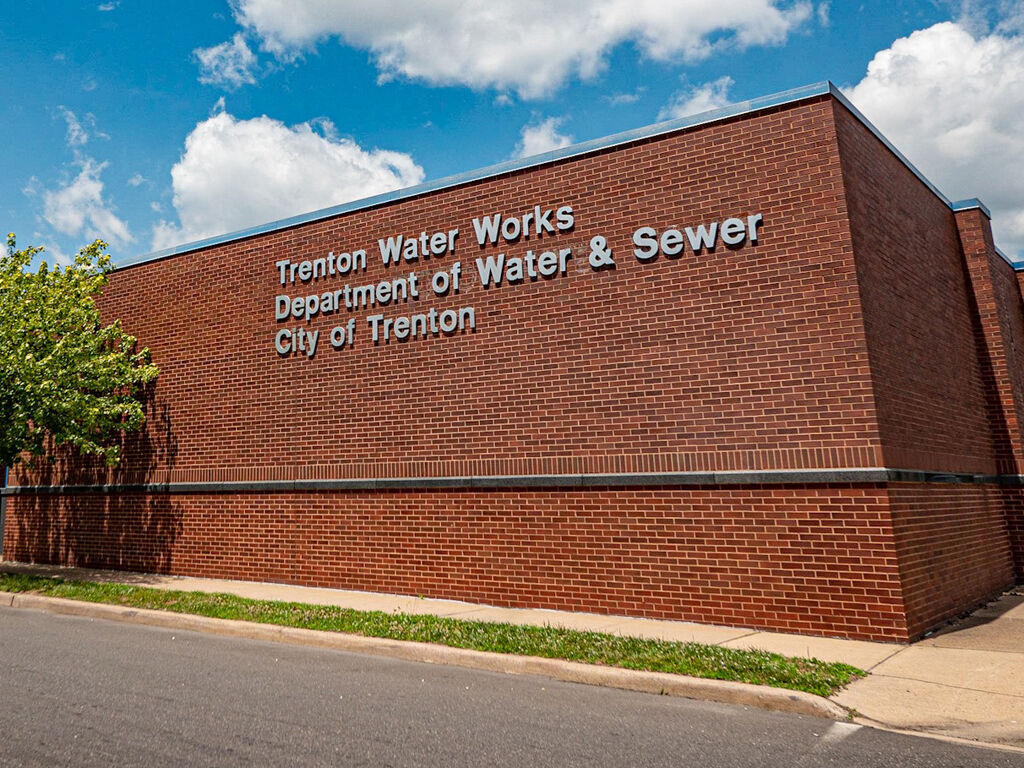
Trenton Water Works administrative building at 333 Cortland St., Trenton.,

