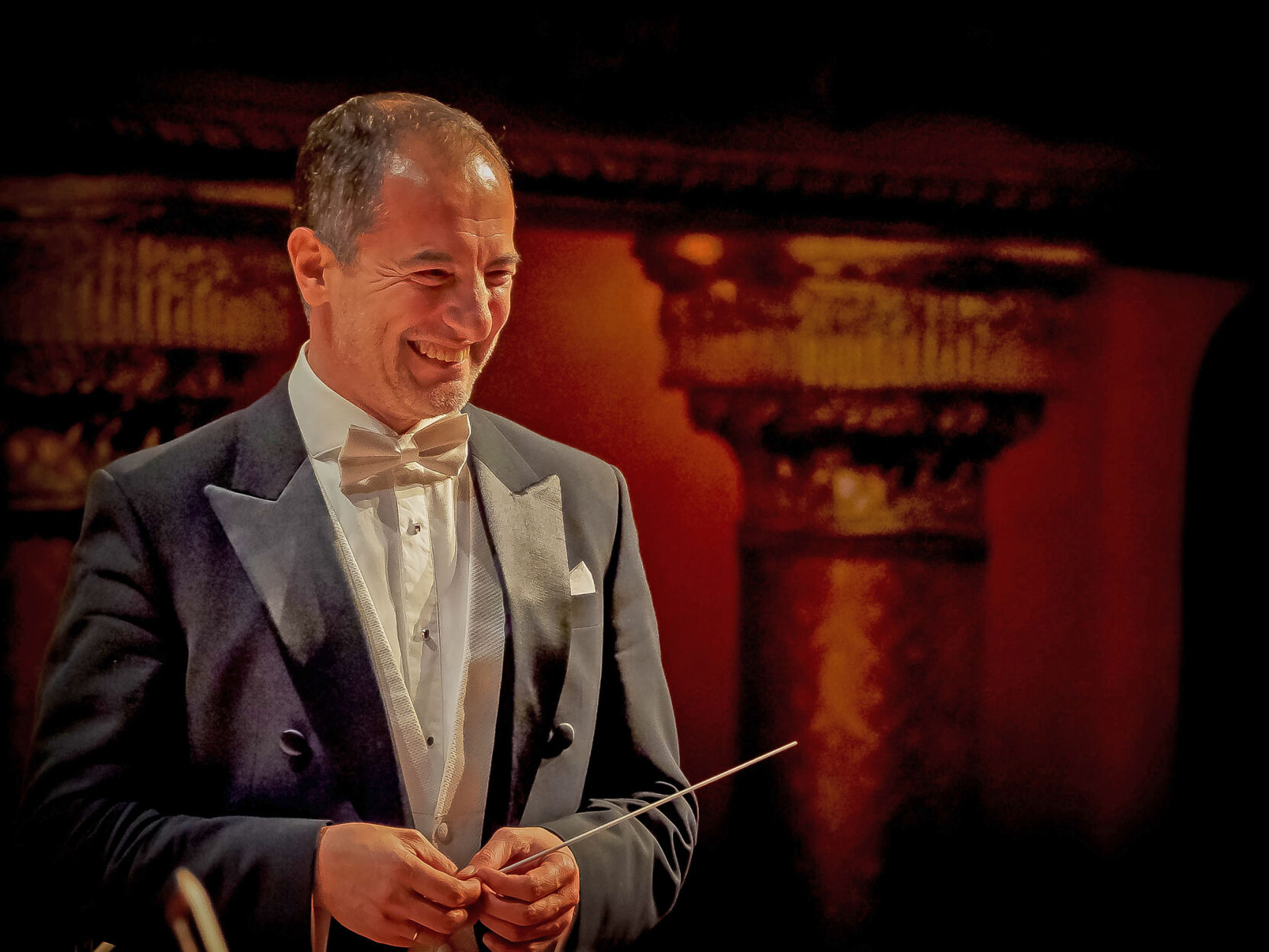
To celebrate his milestone 60th birthday in January 2025, Rossen Milanov, the Edward T. Cone music director of the Princeton Symphony Orchestra and the Princeton Festival, has been programming some of his favorite works for the PSO to perform throughout the 2024-’25 season.
He is a busy man. In addition to the PSO, he is the music director of the Columbus Symphony Orchestra and the Chautauqua Symphony Orchestra, and he has conducted operas presented by Komische Oper Berlin and Opera Columbus.
Milanov has collaborated with some of the world’s preeminent artists, including Yo-Yo Ma, Itzhak Perlman, Joshua Bell, Renée Fleming, Midori, Christian Tetzlaff, Hilary Hahn, Dawn Upshaw, and André Watts, among many others. During his 11-year tenure with the Philadelphia Orchestra, Milanov conducted more than 200 performances.
In 2015, he completed a 15-year tenure as music director of the nationally recognized training orchestra Symphony in C (based in Camden County), and in 2013, a 17-year tenure with the New Symphony Orchestra in his native city of Sofia, Bulgaria.
His passion for new music has resulted in numerous world premieres of works by composers such as Derek Bermel, Mason Bates, Caroline Shaw, Phillip Glass, Richard Danielpour, Nicolas Maw, and Gabriel Prokofiev.
For September’s season-opening concert, Milanov and the PSO premiered “Manta,” a numinous composition by New Zealand native and Hopewell resident Gemma Peacocke, who is finishing her PhD in music and humanistic studies at Princeton University.
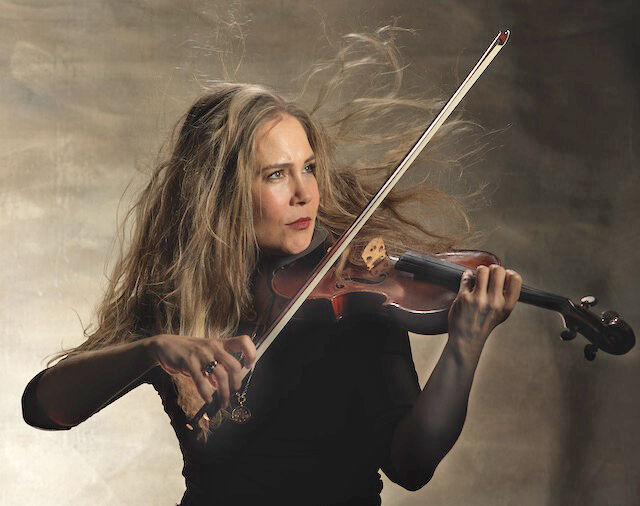
On Saturday and Sunday, January 11 and 12, Milanov and the PSO will host one of the orchestra’s favorite collaborators, violinist Leila Josefowicz, to play Stravinsky’s extraordinary Violin Concerto (1931). The afternoon and evening of music also features Tchaikovsky’s rarely heard symphony “Manfred” (1885), which will utilize an expanded orchestra.
Josefowicz is not only an esteemed musical colleague, she and Milanov are longtime friends, with a rapport that goes back more than three decades.
“Rossen and I overlapped at the Curtis Institute while I was there from 1991 to 1997, so we were already acquaintances, and saw each other around,” Josefowicz says. “When we started working more together with different orchestras, we became even more friendly and recognized that we make very good colleagues. Our first performance was around 2001 with the Philadelphia Orchestra for a gala concert doing showpieces.”
“Then we worked together with many orchestras he was involved with, including Symphony in C, Oviedo in Spain, the Princeton Symphony Orchestra, as well as the Columbus Symphony,” she says. “We’ve seen each other many times over the years in different stages of life, and it is a pleasure to maintain this friendship as well as our professional work together.”
Reflecting on what makes the Stravinsky Violin Concerto special enough to be part of Milanov’s celebratory concert, Josefowicz says, “It’s a piece that has been truly beloved in my repertoire for many years, and together with (myself), Rossen will bring great character, spontaneity, and wit to the score. The Stravinsky will be a joy to play with him.”
Milanov, who was marking his upcoming 60th birthday with an extensive trip through South Asia, reached out to U.S. 1 via email about the concerts, the music, his musical background and friendship with Josefowicz.
U.S. 1: Aside from the concerts, will you be doing anything special to celebrate your 60th birthday?
MILANOV: I am writing this as I travel to the Darjeeling area in India. This three-week long land trip is my 60th birthday’s special treat.
U.S. 1: Tell us about yourself: you came from Bulgaria with your family in 1990. Was it a particularly musical family?
MILANOV: I didn’t grow up in a musical family, but my parents exposed us to classical music and opera performances on a regular basis. I had a beautiful voice as a child and enjoyed singing, which led me to become a part of an elite children’s chorus with which I had performed on five continents by age 12. That for me was very important, as it gave me the impulse to consider becoming a musician. I also played oboe and piano, and got a double degree in oboe and orchestral conducting from the Bulgarian Music Academy in Sofia before continuing my education in the USA, first at Duquesne University in Pittsburgh and later at Curtis Institute of Music and the Juilliard School.
U.S. 1: Did you enjoy putting this season’s programming together?
MILANOV: We are performing music by composers that are close to my heart, (working with) soloists that I have collaborated with for many years and young artists that I feel very excited about.
U.S. 1: What is it about the Stravinsky Violin Concerto that is special for you so that you programmed it for the January concerts?
MILANOV: Stravinsky’s Violin Concerto is a masterpiece of the 20th century and unfortunately not performed often. The main reason I programmed this work is because I just love collaborating with Leila Josefowicz, particularly in modern music such as the Stravinsky work.
U.S. 1: Is it a piece you’ve known since your youth?
MILANOV: No, when I was growing up that piece was not part of the canon, which included (and still does) Beethoven, Brahms, Tchaikovsky, and Sibelius. I heard the piece later in my life, in my 20s.
U.S. 1: Leila Josefowicz has performed with the PSO before and is an ideal guest for the celebration. Is she someone you’ve known for years?
MILANOV: We went to Curtis together in the early 1990s and subsequently have performed together with Philadelphia Orchestra, Princeton, Symphony in C, my former orchestra in Spain, OSPA.
I love performing with Leila and admire her musical integrity and spontaneity.
U.S. 1: The second half of the program presents the Tchaikovsky Manfred Symphony, quite a challenging work. What is your special affinity for this piece?
MILANOV: I love Manfred Symphony because it is a piece that, in my opinion, bridges the purely symphonic world, known from his last three symphonies, with the supercharged expression of his operatic music and the exquisite orchestration of his ballet scores such as “Swan Lake” and “The Nutcracker.” All this combined with a programmatic narrative and larger orchestration than in his symphonies.
U.S. 1: Does Tchaikovsky’s music resonate for you in a particular way? Is he a composer you’ve loved since childhood?
MILANOV: I must admit, yes, my very first LP recording of classical music that my parents introduced me to was the Tchaikovsky Piano Concerto No. 1 with Svyatoslav Richter performing the solo part. It was mesmerizing!
U.S. 1: I really enjoyed Gemma Peacocke’s work “Manta” in this season’s opening concert in September. Did you hear about her/hear her work through the Princeton Sound Kitchen?
MILANOV: No, her music was introduced to us through the collaboration we started two seasons ago with the Princeton University music department to include works by student composers in our programming. We review the recommendations and program a work and also provide an opportunity for the composer to interact more fully with our audiences. Unfortunately, Gemma was not in Princeton for the performance of her work this season.
U.S. 1: The last time we spoke, maybe 10 years ago, one of your goals was to program more music from young, up-and-coming composers for the PSO to perform. Do you feel that you’ve succeeded in this goal?
MILANOV: I certainly feel very proud that over the course of my tenure we have performed an impressive amount of new music. In every season it is a conscious choice to have a good balance of works from the classical music canon as well as works that I feel strongly represent the voice of the music of our time.
Rossen Milanov conducts the Princeton Symphony Orchestra, performing Tchaikovsky’s Manfred Symphony and Stravinsky’s Violin Concerto, with guest violinist Leila Josefowicz, on Saturday, January 11, 8 p.m. and Sunday, January 12, 4 p.m., at Richardson Auditorium on the campus of Princeton University. $40 and up. 609-497-0020 or www.princetonsymphony.org.