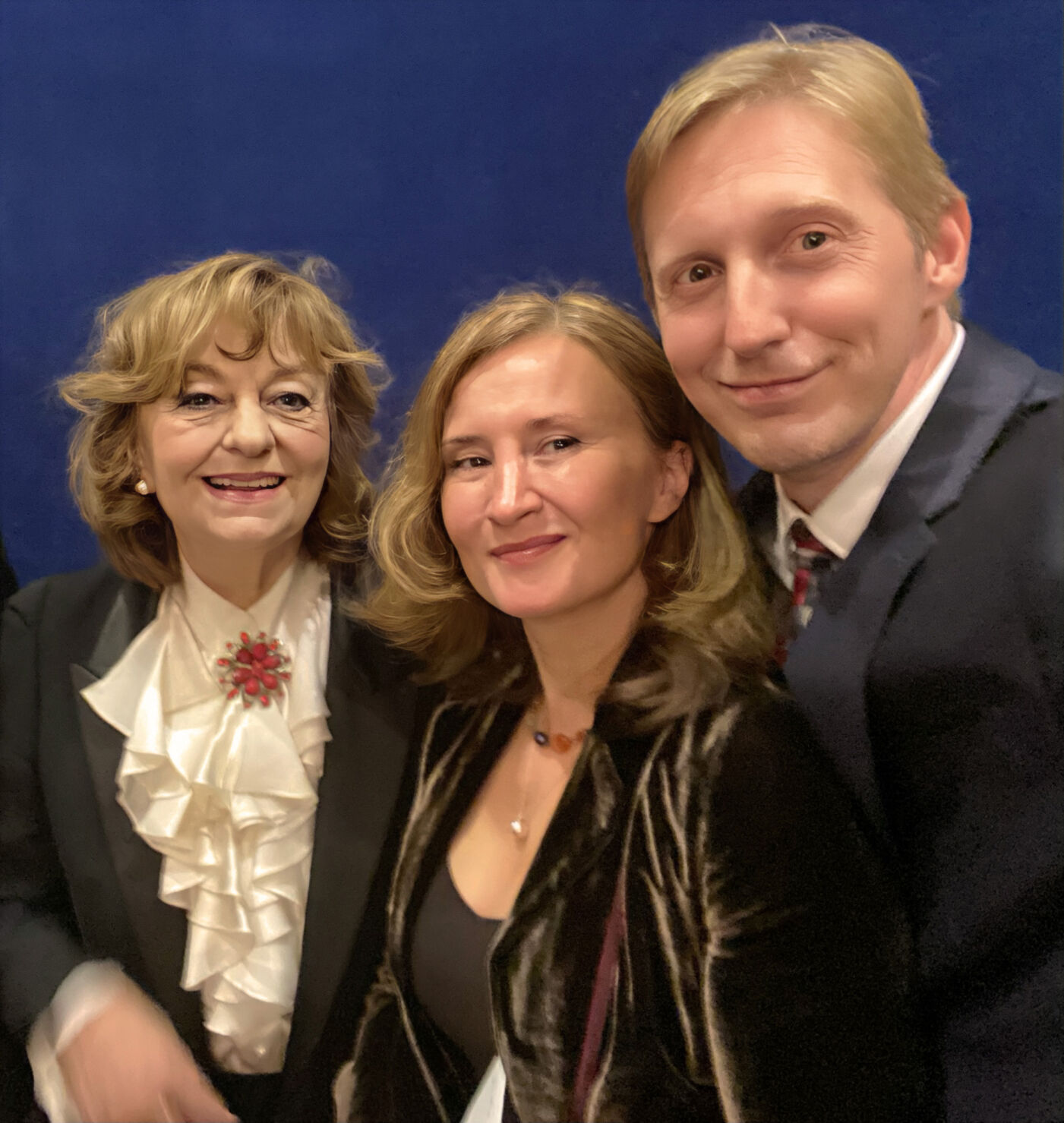
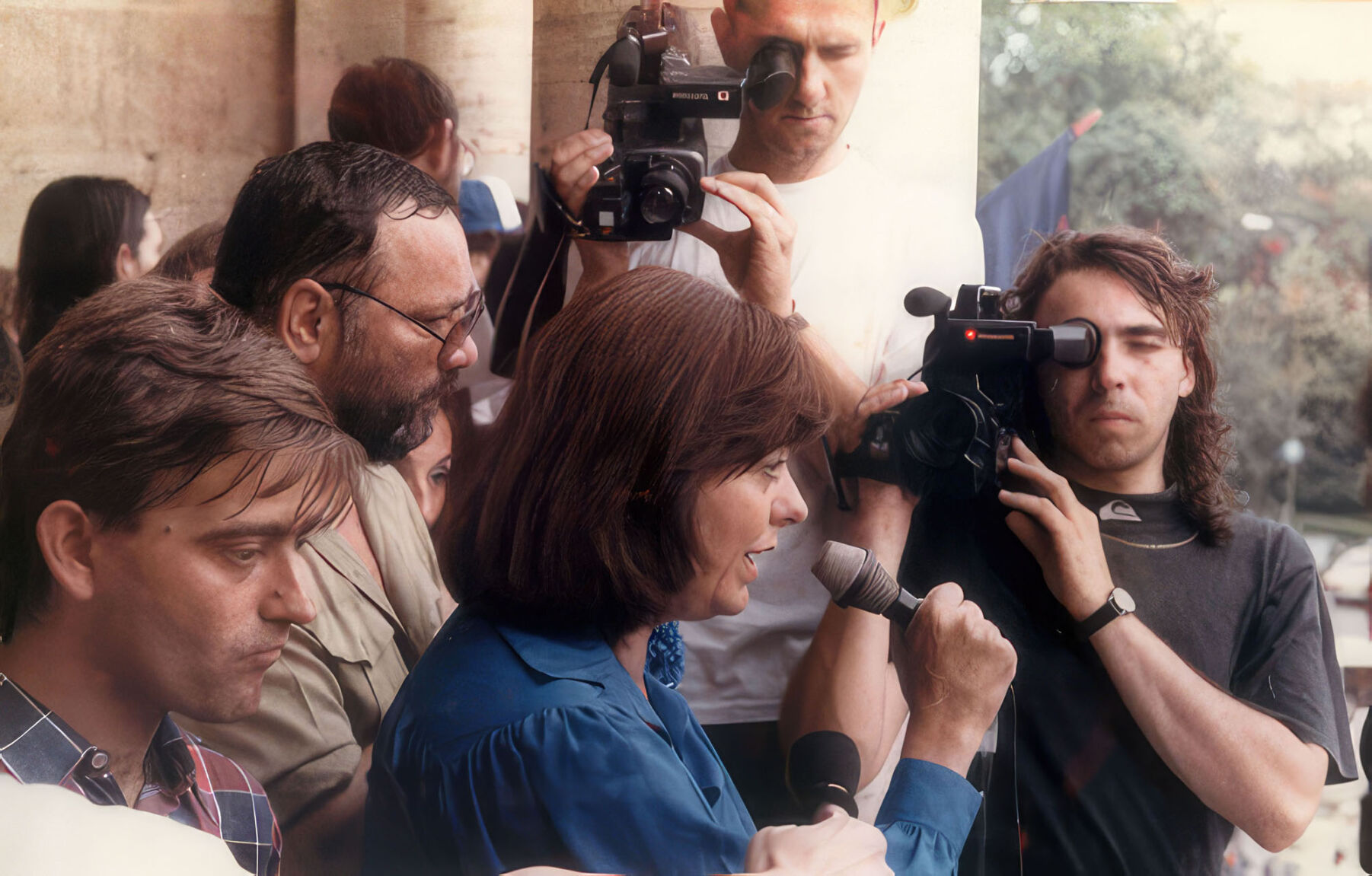
Princeton University’s Liechtenstein Institute on Self-Determination presents the first U.S. screening of the acclaimed documentary film, “Between Silence and Sin,” directed by Princeton resident Diana Nicolae, on Thursday, February 20, at 5 p.m. The free event, which includes a post-screening Q&A with the filmmaker, takes place in Friend Center 101 on William Street.
The film, which has already been shown at film festivals across Europe, captures the power of poetry to fight a brutal dictatorship by telling the story of Romanian Ana Blandiana, one of Europe’s most important yet overlooked poets. She is a symbol in the fight for democracy and freedom of speech, values that are again under threat around the world. Part history, part biography, and full of poetry, “Between Silence and Sin” explores the power of the word as the last bastion of a nation’s collective soul in the face of oppression.
Nicolae is not new to documentary filmmaking or to explorations of Romanian history. Her other recent works include “My Father’s Revolution,” about a Romanian grandfather who lived most of his life under Communism and has his dreams of democracy shattered after the 1989 revolution; and “Come Find Me,” the story of a single mother adopted from a Romanian orphanage into an American family who returns to Romania to find her long-lost birth family, currently streaming on PBS.
Ahead of the “Between Silence and Sin” screening, Nicolae answered a few questions from U.S. 1.
What were your parents’ professions? How did your upbringing impact your worldview and career path?
I grew up in Romania, which until I was 15 years old was under the Communist dictatorship of Nicolae Ceaușescu. Both my parents were medical doctors, but we were not so much better off as to be immune to the systemic economic conditions and effects of the authoritarian regime on all of our daily lives.
I was fortunate to be encouraged in my education and developed a passion to read at an early age. Both my dad and my maternal grandfather had a passion for literature and my grandfather wrote poetry as a hobby. Even though he did not get to be published, he had the misfortune to be investigated by the secret police.
What brought you from Romania to Princeton?
I have been in the U.S. since 2000; I came initially to pursue my graduate degree in filmmaking and have been teaching university courses first in North Carolina and later on in New Jersey.
What do you do for work aside from documentary filmmaking?
I teach television production and documentary courses at Rowan University, in New Jersey. I have been fortunate to have helped produce dozens of award-winning documentary films with students over the years, and many have gone on to achieve great success in the media industry from NYC, Philadelphia to LA.
What inspired you to create this film? What was the biggest challenge you faced in getting the film made?
I first met Ana Blandiana 25 years ago when I was working as a journalist and also making my thesis film, a documentary about the system of incarceration and extermination methods used in the Communist era prisons in Romania. In her role as founder of the Sighet Memorial, which is one of the first and most comprehensive museums devoted to the crimes of Communism in the world, I was fortunate to interview her.
Nearly 20 years later, I was dismayed at the lack of awareness the world has both for her poetry and writing, but also her activism and the role she played in paving the path to a democratic Romania.
In the making of this film, I found it impossible to disentangle her life and her writing from the eight decades of Romanian history she has influenced. My goal was to capture Ana Blandiana’s story over her eight decades of life thus far, and to showcase her poetry that is so intrinsically tied to the soul of a country in a way that is perhaps no longer possible for poetry to be.
What do you hope viewers take away from “Between Sin and Silence”? Are there lessons from Blandiana’s life and work that are relevant to Americans in the current U.S. political climate?
As authoritarian governments wrestle for control throughout the world, in countries long considered to be bulwarks of democracy and free speech, I believe the story of Ana Blandiana is relevant and timely for us all. It shows the power of resistance through culture, and shows the impact that one person can have through the power of the pen to change the course of history. Blandiana has lived through wars, fascism, Communism, and now a capitalist democracy, and her poetry captures the essence of those times and those unique challenges humanity still faces.
If someone can’t make it to the screening at Princeton, are there other ways for people to access and view the film?
We have had many screenings of the film in film festivals throughout Europe, including meeting the King of Spain last fall, where Ana Blandiana was awarded one of the most prestigious awards for literature, The Princess of Asturias Award. The film will be broadcast on Romanian National Television in March. We are just getting started with festival screenings later this year for the U.S.; in March we will be shown at a film festival in Montreal, but we don’t have additional dates confirmed yet.
All the latest news and upcoming screenings will be posted on our website: www.betweensilenceandsin.com.
Between Silence and Sin, Liechtenstein Institute on Self Determination, Friend Center 101, William Street, Princeton University. Thursday, February 20, 5 p.m. Screening followed by Q&A with director. Free. www.betweensilenceandsin.com.
The Liechtenstein Institute on Self-Determination, according to a mission statement on its website, “supports teaching, research, events, and publications about self-determination in a globalizing world. The Institute interprets self-determination broadly, subsuming the promotion of self-government, sovereignty, security, diversity, human and democratic rights, group identity and cooperative international solutions among national, nonstate and international actors.” For more information, visit lisd.princeton.edu.