Despite what pollsters might say, we are not just faceless groups of statistics divided into ethnicities, gender, age, etc. We are all individuals, and we all have personal stories to tell.
How fitting that the Capital Philharmonic of New Jersey’s season opening concert at Patriot’s Theater in Trenton was titled “American Stories.” It was a night of music by American composers, with works reflecting on the diverse journeys we all take living in the United States.
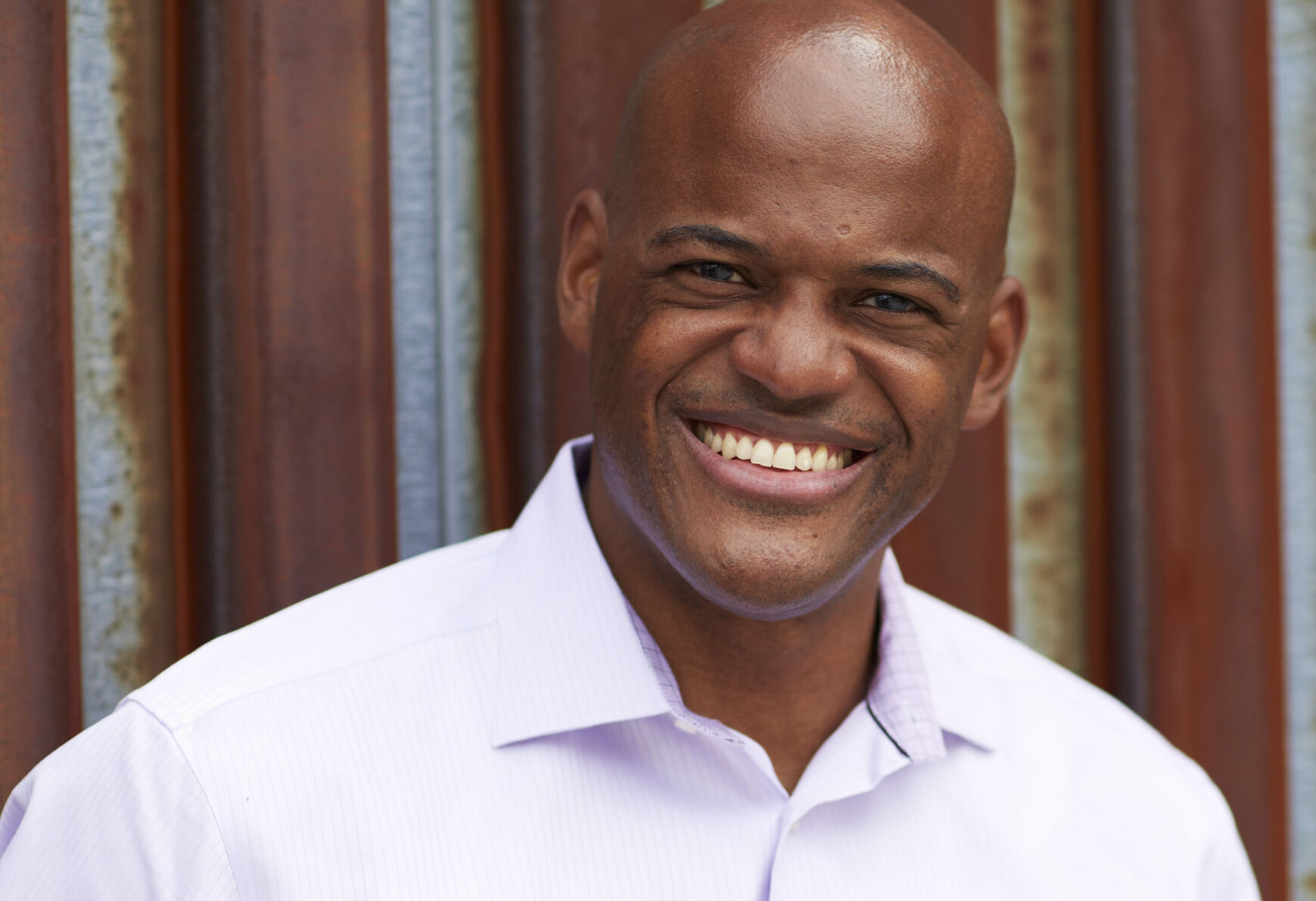
One person with a uniquely American story is Larry Hilton, a native of Trenton, whose decades of support and contributions to arts and education in the capital city were honored Saturday through the CPNJ’s Ten for Trenton program.
The concert then opened with Made in America by Joan Tower (b. 1938), with guest conductor Ruth A. Ochs leading the CPNJ. This single movement piece was partly inspired by the composer’s time living in Bolivia, when her eyes were opened by the poverty she saw in that country. Returning to the U.S., she reflected on the many things we take for granted.
Tower based her composition on “America the Beautiful,” whose strains came and went throughout the piece, sometimes overwhelmed by bursts of aggression and discord, but always returning.
The early passages of the composition had a sense of bustling feet-on-the-street, evoking a big city’s constant activity, which quietly folded into a gentler melody. Then it was back to the hustle and bustle, as principal clarinetist Antonello DiMatteo carried a brief melody, countered by a haunting and rich passage in the strings.
The CPNJ’s playing was especially strong and tight as the work rose to a climax, then fell again. We heard a spirited conversation between two trumpets as the wind section brought Made in America to its close.
Even before hearing the first notes of Ethiopia’s Shadow in America by Florence Price (1887-1953), I was intrigued by the titles of the three movements: “The Arrival of the Negro in America when first brought here as a slave;” “His Resignation and Faith;” and “His Adaptation — A fusion of his native and acquired impulses.”
A clarinet in the lower register opened the piece with a mournful melody over a dirge-like tempo and minor chords. Then the full orchestra entered and the sound rose and fell, which evoked ocean waves and a long, treacherous sea journey.
A sense of hope was introduced as the woodwinds explored a brighter passage. We could hear a snippet of a spiritual in the lower brasses, as oboeist Melissa Bohl took up a poignant melody.
The second movement (andante) introduced strings and various tuned percussion, and concertmaster Nina Zubaidi played a lovely violin solo. This was passed to first cellist Katrina Kormanski, both phrases hinting at a traditional spiritual. The melody was picked up by the entire string section, and the andante closed with a gentle passage in the woodwinds.
The third movement pushed things forward as the “native” subject was introduced to a hopeful but somewhat chaotic America. There was a sprightly feel to this passage, as the melody wound its way through the strings, brass, and winds, countered with a certain disharmony and harshness toward the close.
Selections from George Gershwin’s (1898-1937) “Porgy and Bess,” arranged by Robert Russell Bennett, filled the second half of the program, which was conducted by Vinroy D. Brown, Jr.
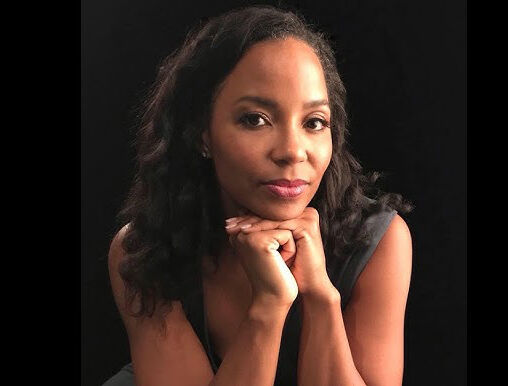
Soprano Heather Hill and baritone Keith Spencer came on stage, she in a vivid red gown with a sparkling bodice, and he picking up on the color scheme with a rose red vest, bow tie, and pocket square.
They were joined by the Westminster Symphonic Choir, the Westminster Jubilee Singers. The Capital Singers of Trenton, and the Elmwood Concert Singers, all of which gave listeners a sumptuous sound.
The opening ignited the auditorium, with busy tuned percussion and upper winds and resounding horns. The music died down as a solo clarinet introduced the strains of “Summertime.” Hill’s luxurious voice brought a little shiver to me as she sang this haunting piece.
Spencer, an area resident and versatile, natural performer, brought his warm voice and dynamic personality to “A Woman is a Sometime Thing.”
Accents of jazz — muted trumpets, wailing clarinet — were interspersed throughout as the CPNJ played with vigor but never overwhelmed the singers. Brown led the orchestra masterfully with his subtle, energetic conducting style.
Hill’s voice was especially poignant in “My Man’s Gone,” which also showcased her remarkable range.
Spencer really connected with the audience in the famously, ironically jolly “I got plenty o’ nuttin’” and “It ain’t necessarily so,” and he made it look easy.
I was deeply moved when the duo sang “Bess, you is my woman now,” and loved the tender interplay between Hill and Spencer. I thought it couldn’t get any better, but it did, as the concert concluded with the animated “Oh Lawd, I’m on my way,” Spencer, the orchestra, and choirs in full force. It was such a joyful night.
The Capital Philharmonic of New Jersey returns to the Patriot’s Theater for its traditional New Year’s Eve concert, conducted by Sebastian Grand, Tuesday, December 31, 8 p.m. $32 to $60. 800-514-3849 or www.capitalphilharmonic.org
Heather Hill,