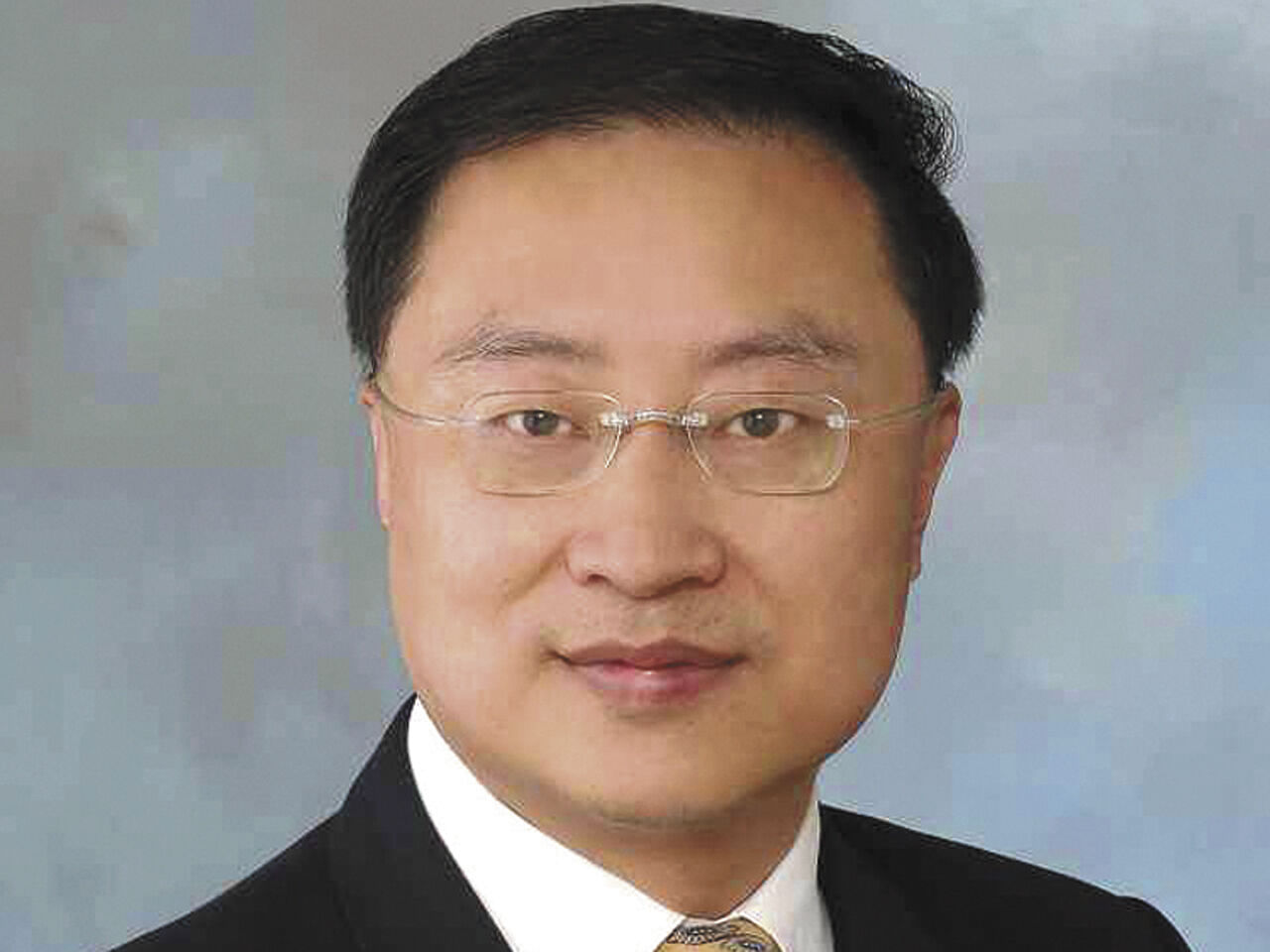
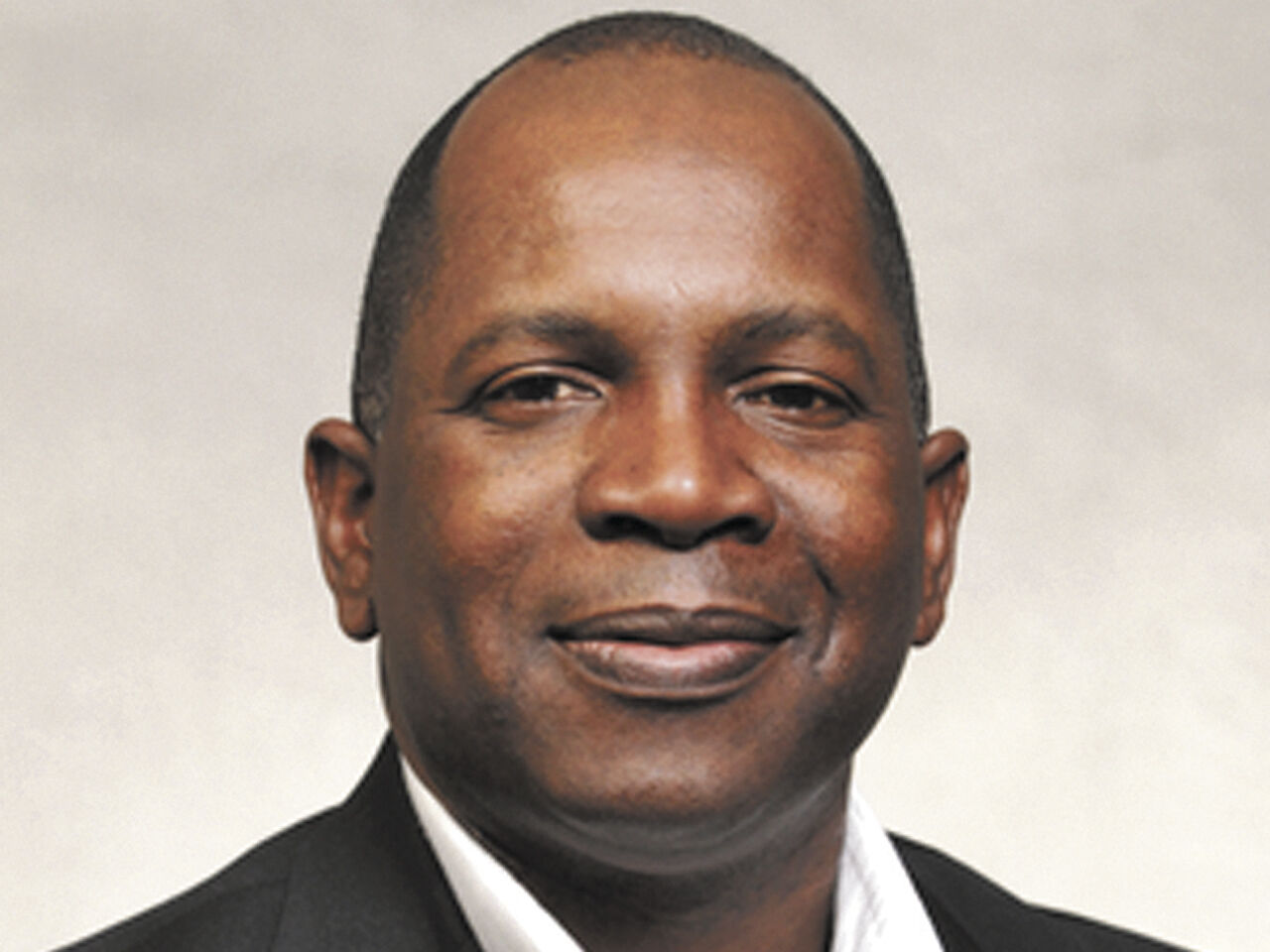
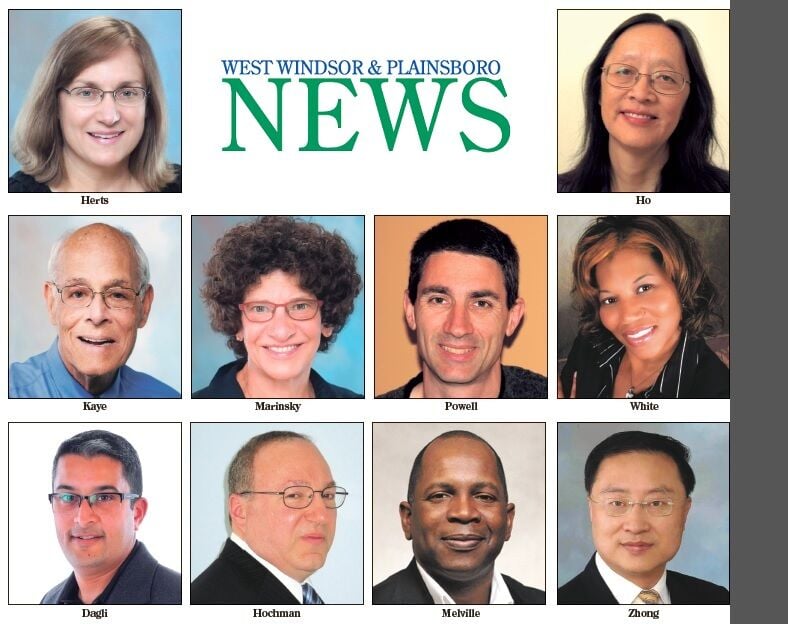
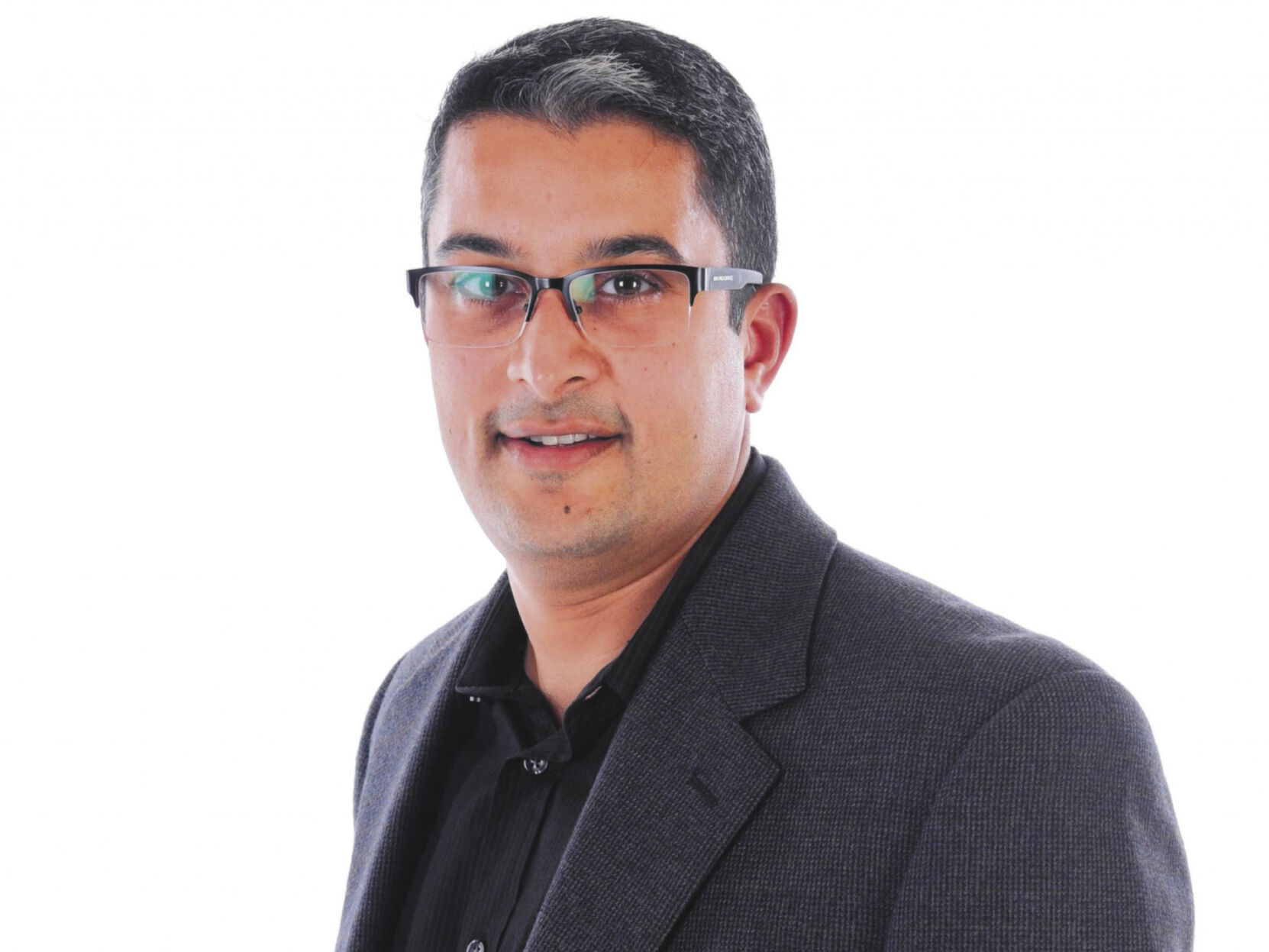
In Plainsboro, four candidates are seeking election to one open seat on the board. Running against incumbent Yu “Taylor” Zhong are Shrenik Dagli, Todd Hochman and Russell Melville. The seat is a three-year term.
Dagli, 40, is from Bombay, India. He has an engineering degree from the University of Bombay and a master’s in biomedical engineering from NJIT. Dagli moved to Plainsboro in 2013 and works in IT for QBE Insurance.
Wife Priti is a dentist with a practice in East Brunswick. They have two children who both attend Wicoff School. They are also both Wicoff PTA members and they enjoy volunteering for the school science fair.
Hochman, 57, is from Smithtown, Long Island, and holds a degree in applied math and economics from SUNY Stony Brook, and a law degree from St. John’s University.
Hochman moved to Plainsboro in 1999. Wife Lisa Chandler Hochman is an administrative analyst for Middlesex County. Both of their sons are graduates of High School South. Ross, 24, has a degree in industrial and systems engineering from SUNY Binghamton and Laurence, 20, is studying at TCNJ.
A pension law attorney, Hochman works in New York City as assistant general counsel for a financial institution. Hochman was a school board member from 2009-2012 and decided not to run for reelection then due to his Florida job commute at the time.
Zhong, 46, is from Zhenjiang, Jiangsu Province, China. He holds a degree in physics from Fudan University and a master’s in physics from Clarkson University. He is finishing his first term as a school board member.
Zhong moved to Plainsboro in 2007. Wife Jennifer Zhang works in budgeting for an immigration law firm in Red Bank. They have twin sons, Andrew and Brian, who are rising 10th graders at High School South. Zhong works in New York City as a risk manager for BNP Paribas.
***
All four candidates were asked by the News to answer a list of five questions. Their responses appear below.
Briefly explain how your experience, expertise or perspective would be most useful on the board.
Dagli: I understand the need for students to learn real world experiences. As an entrepreneur I will offer evidence-driven solutions and analytic decision making for smarter spending. As a leader I will influence decisions while taking opinions of parents into consideration. I founded a sports startup recently (kheloJiyo.com) and when in high school co-founded a business manufacturing lab equipment for engineering colleges. I have led multiple transformation teams generating revenue of more than $200 million in my career and understand the importance of bringing everyone along for the journey.
Hochman: I am a former member of on the board of education who served from 2009 to 2012 and was a member of the Administration & Facilities Committee. Each board member has different experiences, talents and interests. During my tenure on the board, I used my skills, training and experience as an attorney to help update the district’s policy manual, which needed a full overhaul.
This was a significant contribution to the district and helped ensure that our district and its schools ran smoothly. If elected, I will continue to use my skills, training and experience to help this district.
Melville: We are, in more ways than one, the sum total of all of our experiences. I believe it is very important to speak to the experiences I have gained as I have lived in Plainsboro and abroad. I have worked both domestically and internationally, as a civilian and in the military, and I have negotiated with world leaders, dignitaries, executives and the like.
These experiences, in addition to being a director at a local university, have greatly informed and influenced the approach I will follow to bring forth the important skills, aptitude and discipline needed in our schools today to assure that students reach such potential. It is the process that we set forth for these students that can pave a path toward success, and with my experience I can have a role building this foundation.
Zhong: My major was in physics. I have 15 years of experience in the financial industry. My analytical skill fits me well in the finance committee. As an incumbent, I am more prepared to serve the board.
A school board member’s willingness to listen to parents/residents is far more important than his/her experience and expertise. I have spoken to thousands of residents. I will continue to seek advice from the community.
Superintendent David Aderhold has said that the district must consider the wellbeing of its pupils and help them maintain a proper school/life balance. Are the board and the administration following best practices after tailoring the curriculum to meet these needs? Or should the board reverse course and clarify its vision for what’s best for WW-P students?
Dagli: The board and administration are working smart and hard to ensure that the needs of every child are met. Changes are always met with opposition. The superintendent should articulate a 3-year strategy. The strategy needs to spell out how the end goals will be achieved. It needs to clearly list the potential changes.
This will give us enough time to research, to incorporate feedback and make appropriate changes. It will also allow us to bring in changes in an organized way.
Hochman: Dr. Aderhold and the board are committed to educating the “whole child” and have taken major steps to ensure that that our students have balanced lives. But we need to go further and beyond the classroom.
There need to be more programs focused on social and emotional learning. Character education needs to be enhanced, along with conflict resolution and promotion of respect and tolerance. Our children will not succeed in life without social skills and these skills are learned in a number of environments.
Sports teach the concepts of teamwork, collaboration and leadership. Model UN teaches communication and debating skills. Music teaches many skills including group participation. Our children will not succeed in life without social skills and these skills are learned in a number of environments.
Our children are living with incredibly high levels of stress. We have to find ways to alleviate that stress, bring balance to their lives, and focus on the social and emotional aspects of their lives.
In the business world, soft skills can be more important than academic achievement. Very few things are accomplished by a single individual. Collaboration and teamwork are absolutely critical, along with the ability to effectively communicate verbally and in writing.
In short, our children need to be healthy, both physically and emotionally, with manageable levels of stress.
Melville: I believe the question here is whether or not there is sufficient data to support reversing the current policies put in place by Dr. Aderhold. In considering this, we must formulate a position on whether we agree with the current direction in which he is taking our schools.
Has this current course of action benefited our children? The priorities in our district must be as such: children first, and then our parents and teachers. We cannot make the mistake of thinking the current action is intended to reduce the rigors of the curriculum, which would reduce the benefits to our students.
All I am saying is that we must take the students into account and understand how the current process and programs that are in place benefit our students and provide them the necessary tools for continued success.
Zhong: I believe Dr. Aderhold and administration have good intention for each of the changes. I think the board and the administration are following best practices after tailoring the curriculum to meet these needs.
However, some changes are controversial, as different groups of students can get affected by the change. Last year, the board approved the change of A&E program. We are still waiting for the results of the change.
One major change was elimination of midterm/final exams. I heard the arguments from both sides. Hundreds of parents disagree with this change. They are saying the kids should have final exams as they will face same challenge in college. We should revisit this area.
What is one challenge facing the school district (aside from the curriculum issue) that you believe deserves more attention?
Dagli: Development. Enrollments of new families is one area we need to monitor closely. There are many possibilities (different developments, different plans) that we need to be flexible and prepared with a number of options. We need to continuously monitor enrollment projections and staff supplements when new developments become operational.
Hochman: The property tax burden is the greatest challenge facing our school district. Our taxes are simply too high for many in the community to afford.
Contractual settlements that include compensation increases in excess of 2 percent are exacerbating the problem. With limited exceptions, the state of New Jersey caps property tax increases at the 2 percent number.
In light of the property tax cap, contractual settlements in excess of 2 percent force the district to make program cuts. This cannot continue and is hurting our students.
But even with the 2 percent state cap, our property tax burden continues to be too high. Just because the board can legally raise taxes 2 percent does not mean it should. We need to be fiscally prudent and understand that if people can’t afford to pay their property taxes their lives will suffer.
Melville: Our district is growing rapidly. Currently, several new developments are expected to take place in 2017 and 2018, adding additional students to an already overcrowded school district.
We need to address the current overcrowding and future accommodation of new students in the district with a prudent, forward-thinking plan. We need to assure that we will be removing any stressors that large classes will play on our teachers’ pool. The ability to accurately forecast the current expansion of the community will be key to our future decision-making process.
Zhong: One challenge the school is facing is to balance the budget among different programs. Last year the board approved on the robotics lab in High School North.
I voted for it. However the project caused much controversy as parents said other projects got ignored. I will always listen to various groups, not just special interest groups, on different topics.
The addition at Village School was paid for using funds on hand rather than through the use of bonds. What do you believe is the best way to fund capital improvements going forward?
Dagli: The use of available funds can make sense, but will depend on the amount of future needs. New school building is likely to cost more money than the district can afford and will, out of necessity, require the use of bonds. Interest rates can change so we need to keep our options open and not lock ourselves to only one option.
Hochman: Capital reserves are important in maintaining a fiscally sound school district. There is no reason why capital improvements cannot be funded using existing reserves.
Borrowing is not always the best alternative. Right now, we are in low-interest environment, but let’s not forget that this is likely to change. However, large capital improvements that are either funded out of capital reserves or constructed using borrowed money, should be the subject of a public referendum so that taxpayers can decide if they are appropriate.
Melville: It is important that we give credit to the board of education for having the foresight to anticipate the district’s growth and plan accordingly. Every year there has been a budget surplus, in which the funds have been set aside. This occurs to the chagrin of many of parents who believe that the budget surplus should be used on the students.
When it comes down to it, though, in some way or another these funds ultimately do benefit the students of the district. The Village School addition, as stated, was paid for by funds on hand. In the very near future the district will need to address class overcrowding. Will we have to issue bonds this time to address this?
Zhong: I think we should treat each project case by case. While the Village School expansion was paid for using funds on hand, our school district did issue bonds for some projects in the past. I used to work for a bond underwriting department for a major investment company. Issuing bonds (project finance) depends on current interest rates and other market environments.
The Village School expansion was decided after hurricane Irene and Sandy flooded the basement of the former central office. The controversy surrounding Village School expansion was not because it used funds. It’s because capital reserve is earmarked for certain projects. Parents are also complaining that the new central office is more luxurious than it should be.
Effective communication between the district and parents and students is crucial at all times. What role does the Board of Education play in ensuring that the district’s vision and implementation are well understood by parents and students? Is it fulfilling this role well? What could it do better?
Dagli: We need slightly more interactive sessions, which I plan to encourage if elected. Maybe some advance question box that are sent to board, which they can answer. I would go back to laying out a 3-year strategy and bringing everyone in on it.
Hochman: At every board meeting, there are two opportunities for public comment. The problem with public comment is that individuals who participate often expect the board to respond. People don’t understand that while they have the right to comment, the board is not required to respond to these comments.
It would best if this procedure were changed. I believe that communication would be a lot better if the board was required to respond, at least in the aggregate, to issues raised during the public comment period.
Melville: Effective communication in any form requires one to listen to what is being said and understand the meaning of the words.
Can the district do a better job at communicating its actions or intentions? Yes. For sure. However, it is also the responsibility of the parents and members of the community to communicate back to the district what they are expecting.
The best conduit for that type of communication is our board of education. If any member of the community has a disagreement with the board, we would, I would like to think, welcome a civil conversation to address this. It is not always the common path by all members of the community, however. That said, when the district makes decisions, it should ask for community input; our community should have some buy-in on all projects.
The perception among many, erroneous or not, is that we as a district and even the board, have not always been transparent in our dealings with the community. I think there is an opportunity here to develop better means of communication both ways. An open dialogue between the community and the board of education is crucial to our success as a district.
Zhong: I think there’s lots of work to be done by BOE to engage communication with parents and residents. BOE members are elected by the residents and should advocate and speak for the residents.
One complaint from parents is that if parents make comments or ask questions, no immediate answers are given back to the parents. Some questions can never be answered. That’s one reason the BOE meeting is being videotaped.
PTA meetings are good, but may not be enough, as there are many working parents who cannot attend regular PTA meetings during the day. In the past, the district hosted town hall meetings for the biology honor class at High School North, and for the A&E discussion at the High School South theater. I think more town hall meetings can be helpful.
I not only attended those meetings, I also speak to parents/residents extensively. I can always learn from parents and residents. I will always try to understand what residents want and don’t want.
,

Yu “Taylor” Zhong,