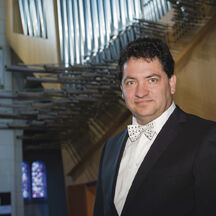
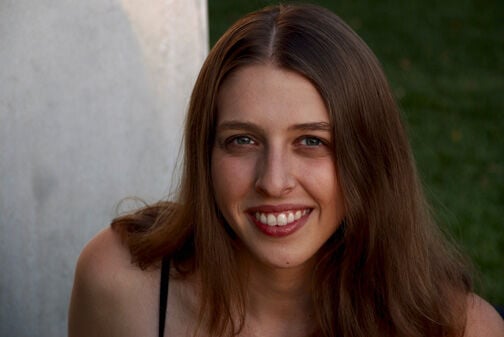
Something for everyone is the phrase that comes to mind when I look at the eclectic offerings that are part of this year’s Princeton Festival. The diverse lineup is filled with genres I have known in passing but rarely if ever had experienced in full: Jazz that sang my father’s songs, organs and piano that were church staples, orchestra music I played in school and university, modern dance performances I have happened upon once or twice in life.
Opera, however, is completely new and foreign, at least to me.
That concerns Jean Brown and Takako Lento, members of the Festival Guild, a group of volunteers organized in 2013 to pick up and run off with community education and outreach events for the festival. I meet up with them at a quiet coffee shop to get a sense of their outreach efforts and see how they are going to introduce opera to a new generation.
“I love opera,” says Brown. “Saturday Met radio broadcasts permeated our household” growing up in Ridgewood, New Jersey, where her father commuted to his sales job in Manhattan and her mother was a volunteer. Brown, who has a master’s in nursing from Yale, worked as midwife for 30 years while her husband, David, a Ph.D. in chemical engineering, ran an energy company. For the Browns a pleasant break from the work routine was going to the Metropolitan Opera in New York. They had an annual subscription from 1978 to 2008.
Brown has now spent more than a decade volunteering to promote opera in New Jersey. To her, opera is the rare breed born of all performing arts, crammed into something greater than the sum of its parts. “One of the wonderful things about bringing young people to opera,” Brown says, “is how surprised they are to learn there are no mikes, they are hearing the power and beauty of a trained human voice with no amplification.” Reaching McCarter’s 1,200 seats is one feat; singing at the Met’s 4,200-seat hall is another. That’s what opera singers do.
And, she adds, “you don’t have to go to the Met to have a high quality experience. You can get it right here at the Princeton Festival, for about a third the price.”
Takako Lento grew up in Japan, where her father was a juvenile officer for a family court and her mother was a music lover. Lento’s interest in music was encouraged by a junior high school teacher, but she had never gone to the opera until she moved to the states, where she became a consultant leading cross-cultural seminars for major corporations and also a translator of poetry. She was taken to the Met on a date with her then-fiance, Tom Lento, a science writer and editor who would later be affiliated with the David Sarnoff Research Center. “We walked in and bought ‘day’ tickets,” said Lento. “After 3 they released the tickets. And then we could only get standees. So we stood for three-and-a-half hours, just mesmerized by ‘The Queen of Spades.’”
Lento immediately joined the converted. “It helps that the first opera I saw was really high level,” she says. “It’s like eating a strange food for the first time. If you get something that wasn’t well prepared you might hate it. Opera is the same way. And you get very high quality at the Princeton Festival.”
In short order over coffee with Brown and Lento, I get answers to questions I did or did not ask. Thank God for donors (tickets cover 20 percent of costs). Peanut gallery seats can go for $30 a pop (awesome). Rap is opera (okay, but no). Yes, you can go in jeans (smiley face). Opera at large is trying to head off a projected mini-crisis of sorts akin to the national healthcare dilemma, where projections assume there won’t be enough young audience members to support the system at large for the accumulating mass of graying heads.
“We’re working at getting at inter-generational,” says Brown. “The festival, for years, has had very nice talks and lectures at free public libraries. And mostly adults come. People over 50. So we’re trying to expand on the younger group. And we’re working on several organizations in Trenton.”
When the Guild began planning outreach, it found programs for small children and older adults to be more commonplace than teenagers. So it focused its efforts on middle and high schoolers. “That age group doesn’t get that much exposure to opera,” says Brown. “And, in fact, a lot of music teachers in the schools really aren’t familiar with opera either.”
The first year, their workshops were led by a talented artist who had strong connections to Trenton-based youth organizations but wasn’t much of a teacher. The next year, in 2015, the Guild doubled down on quality, paring their efforts down to a single workshop and hiring Rochelle Ellis, a 20-year Rider Westminster College of the Arts professor and Rutgers Ph.D., as the new teaching artist.
With Ellis in place, the Guild partnered with the Turning Point United Methodist Church of Trenton, Trenton’s Children Chorus, and Princeton YMCA’s English as a second language program. But it took patient persistence on behalf of organizational leadership to convince the kids, who initially wanted no part of something that would cut into their free summer days.
Ellis, meanwhile, fine-tuned her approach. Last year she talked about the history of opera with her young audience. This year Ellis has enlisted young singers to sing the history of opera at two-hour workshops planned for Wednesday, June 8, at the Princeton Public Library and Saturday, June 11, at Turning Point Church. The program will also include live performances of arias from the English opera repertoire by young singers from area schools.
In addition to the workshop, participants will attend a full performance of Peter Grimes, the opera featured at this year’s festival, at its final dress rehearsal. Before the performance participants will be taken on a guided backstage tour to give insight into the behind-the-scenes preparations for staging the production.
Another opportunity for young (but not too young) people to gain additional appreciation for opera will be at an open rehearsal with Concertmaster Juan Carlos Zamudio on Monday, June 20, from 3:45 to 5:15 p.m., at the Lawrenceville School’s Clark Music Center. Concertmaster Zamudio and members of the Princeton Festival Baroque Orchestra will demonstrate the challenges of playing period instruments and the sounds that can be achieved. The talk will be followed by a working rehearsal where the audience will have an opportunity to observe the creative process in real time: how a chamber Baroque ensemble addresses issues of articulation, ensemble, balance, tempo, gesture, and affect.
As the press release notes, “since the rehearsal process requires intense focus with no distractions, this event is not suitable for young children. Older children and teens, especially those who play instruments, will find it as fascinating as adults.”
The Festival will also be organizing four additional lectures about the play, covering the main character’s conflict with a town at large, how the music amplifies emotion through Grimes and love interest Ellen Ford, how playwright Benjamin Britten came to write a play based off a poem in the context of World War II, and a holistic overview of how the play and relationship with audiences.
Lento says it’s the drama, the “gorgeous” music, “wonderful” singing, the shared mood of the sea and the townspeople, and “20th century master” playwright Benjamin Britten that makes Peter Grimes “really the 20th century opera.”
When I found the play on YouTube, I did find myself singing tidbits of dialogue when I was sure no one was around to listen. But it was the visual setting, character interplay, and above all, the story itself that held my attention.
Peter Grimes is a local fisherman who is acquitted of, but held guilty by popular opinion for, the death of his young apprentice at sea. The story is plausible enough to be real, but far enough outside my specific experience to feel distant. At least half a dozen characters left me wondering about implications left unsaid: The woman who gives Grimes unconditional love regardless of consequence, a couple of morally questionable peace-keepers, two sisters who fall somewhere between fun-loving flirts and professional women of the night, Grimes’ irrational stubbornness, an oddly complacent boy who replaces Grimes’ apprentice, and mob-like townsfolk whose behavior mirrors modern politics, among others.
So now that I, and any other opera newbies, have found a reason to consider seeking out more, what comes after the Festival?
“Good question,” says Brown. Then she asks Lento for her take: “Do we have an answer for that?”
“Philadelphia opera. New York. Westminster. Small local operas,” Lento says, rattling off the usual suspects.
“This is very interesting, to think about how to [do this], since we are a summer festival only in June,” says Brown. “It’s a question one of the Guild volunteers had asked recently. I don’t think we really have any continuity once they get hooked to help them continue. We are going to have to think about that.”
The Northeast Corridor hosts an impressive four-point graduating scale of live opera, if you can manage to balance limited showings, high priced tickets, and time-consuming travel. Student-run productions at Westminster run twice a year. McCarter has one show, the Princeton Festival offering in June. Even excluding the cost of a ticket, time and money can make a round trip to Philly or NYC prohibitive for some.
The day after meeting Brown and Lento, I go to a movie theater on a whim and see a billboard advertising “The Met Opera Live in Cinema.” I discover that Kathy Froppe (also known as Ms. Ellen) has been hosting the Met Opera series here at AMC Hamilton since 2009. Patrons seem to appreciate the effort, coming from as far as Ocean County to watch live broadcasts and encores for less than the cost of a round trip between Princeton and New York. The Summer Encore Series begins in late June, around the same time the Princeton Festival comes to a close.
It’s a nearby option that may serve as a filler between attending in-person performances. For some people it may help make opera a little less foreign.
Opera Highlights
Peter Grimes, Princeton Festival, McCarter Theater, 91 University Place, Princeton. www.princetonfestival.org. Benjamin Britten’s opera, directed Steven LaCosse and conducted by Richard Tang Yuk. $30 to $140. Saturday, June 18, 8 p.m.; Thursday, June 23, 7:30 p.m.; Sunday, June 26, 3 p.m.
Festival Preview, Princeton Public Library, 65 Witherspoon Street. Discussion with the directors and performance of scenes from “Peter Grimes” and “A Little Night Music.” Thursday, June 2, 7:30 p.m.
Opera Workshop, Princeton Public Library, 65 Witherspoon Street, Princeton. “Music That Tells a Story,” led by Westminster Choir College voice professor Rochelle Ellis, who orients participants to English opera and the Princeton Festival’s production of “Peter Grimes.” Includes backstage tour and viewing of the final dress rehearsal on Thursday, June 16, from 5:30 to 10 p.m. Register. Wednesday, June 8, 6:30 to 8:30 p.m. Also Saturday, June 11, at 10 a.m. at the Turning Point United Methodist Church, 15 South Broad Street, Trenton.
Music-inspired art by the Trenton Area Soup Kitchen’s A-TEAM for sale in the McCarter lobby at all performances of “Peter Grimes.”
Opera at the Movies
The Met Opera Live In Cinema, AMC Hamilton 24 Theaters, 325 Sloan Avenue, Hamilton. 609-890-4900. Encore productions will be presented through the summer. “Tosca,” Wednesday, June 22, at 7 p.m. “L’Elisir d’Amore,” Wednesday, June 29, at 7 p.m. www.metopera.org/Season/In-Cinemas
More Music
Voices of Light: The Passion of Joan of Arc, University Chapel, 609-258-2787. Oratorio with silent film. $35 to $45. Thursday, June 9, 8:30 p.m.
Concordia Chamber Players, Miller Chapel, Princeton Theological Seminary, 64 Mercer Street. Music by Britten, Part, and Brahms. $35 to $45. Friday, June 10, 7:30 p.m.
A Conversation on Voices of Light/The Passion of Joan of Arc, Princeton Garden Theater, 160 Nassau Street. Richard Einhorn, composer of “Voices of Light;” Andrew Lovett, Princeton University Department of Music; and Daniel Hobbins, professor of medieval history at Notre Dame, discuss composing for film and the trial of Joan of Arc. Free. Thursday, June 9, 5 p.m.
A Little Night Music, Matthews Acting Studio, 185 Nassau Street. Stephen Sondheim musical. June 11, 12, 16, 17, 18, 19, 23, 24, 25, and 26.
Organ Recital, University Chapel. Kristiaan Seynhave performs French organ symphonies. $25 to $35. Sunday, June 19, 3 p.m.
Open Rehearsal: Meeting Baroque Instruments, Clark Music Center, Lawrenceville School. Concertmaster Juan Carlos Zamudio and members of the Princeton Festival Baroque Orchestra discuss playing period instruments. Not intended for young children. Free but registration is required. Monday, June 20, 3:45 to 5:15 p.m.
Festival Baroque Orchestra, Miller Chapel, Princeton Theological Seminary, 64 Mercer Street. Works of Veracini, Bach, Vivaldi, Torelli, and Heinichen on period instruments. $25. Wednesday, June 22, 7:30 p.m.
Bach Cantatas, Miller Chapel, Princeton Theological Seminary, 64 Mercer Street. Princeton Festival Chorus and Baroque Orchestra perform four cantatas. $20. Saturday, June 25, 5 p.m.
Dance
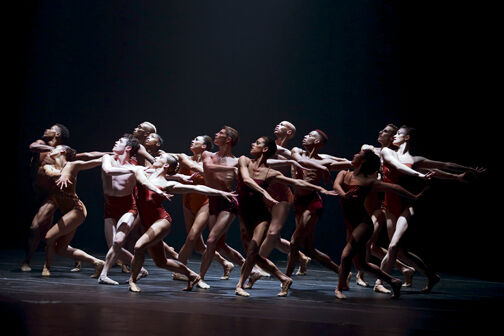
Complexions Contemporary Ballet, McCarter Theater, 91 University Place. New York-based group founded by Dwight Rhoden and Desmond Richardson. $35 to $45. Saturday, June 25, 8 p.m.
Jazz & Blues
A Cappella Vocal Jazz, Taplin Auditorium, Fine Hall, Princeton University, 609-258-2787. Ensembles Fonic and Break from Blue Collar perform. $30. Saturday, June 4, 8 p.m.
Cecile McLorin Salvant, McCarter Theater (Berlind), 91 University Place, 609-258-2787. Grammy award winning jazz vocalist. Register. Sunday, June 19, 7 p.m.
Lectures
Artists Round Table, Erdman Center, Princeton Theological Seminary, 20 Library Place. Artists, directors, and production staff from “Peter Grimes” share the pleasures and perils of bringing the opera to life. Marian Burleigh-Motley of the Metropolitan Museum of Art moderates. Free. Wednesday, June 1, 6:30 p.m.
Peter Grimes vs. the Masses, West Windsor Library, 333 North Post Road, West Windsor. Timothy Urban discusses what makes “Peter Grimes” a masterpiece of contemporary opera. Saturday, June 4, at 2 p.m., and Tuesday, June 14, at 7 p.m.
Peter Grimes and Ellen Orford: Musical Relations — Apocalyptic Outcomes, Princeton Public Library, 65 Witherspoon Street. Rider music professor Stephen Arthur Allen discusses the musical language used in “Peter Grimes.” Tuesday, June 7, 7 p.m.
The Enduring Tale of Peter Grimes. Marianne Grey, Princeton University Art Museum docent, lectures on how World War II changed the arts of the mid-20th century. Thursday, June 16, at 7 p.m. at the Lawrence Library, 2751 Brunswick Pike. Also Wednesday, June 22, at 7 p.m. at the Princeton Public Library.
Princeton University music professor Scott Burnham retraces his own first journey through Benjamin Britten’s opera. Free. Saturday, June 18, at 6 p.m. at McCarter Theater.
Music Around Town
Princeton Shopping Center, in conjunction with the Arts Council of Princeton, www.princetonshoppingcenter.com. Live music Thursdays at 6 p.m fromm June 23 through August 25.
Thomas Sweet Ice Cream, 183 Nassau Street, www.thomassweet.com. Live music outdoors on Friday and Saturday nights from 7 to 10 p.m., weather permitting.
Ivy Inn, 248 Nassau Street, 609-921-8555. www.ivyinnprinceton.com. Karaoke Thursdays & live music Friday and Saturdays at 10 p.m. Wednesdays TK, from 5 to 8
Mediterra, 29 Hulfish Street, www.terramomo.com. Live music Tuesday and Thursdays at 7:30 p.m.
Nassau Inn, 10 Palmer Square East, 609-921-7500. www.nassauinn.com. Live music Thursdays 6 to 8 p.m.
Witherspoon Grill, 57 Witherspoon Street, 609-924-6011. Live music Tuesdays from 6:30 to 10 p.m.
Halo Pub, 9 Hulfish Street, 609-921-1710. Live music outside on Saturdays from 6 to 9 p.m.
Small World Coffee, 14 Witherspoon Street, 609-924-4377. www.smallworldcoffee.com. Princeton Bluegrass Jam Sunday, June 12, 7 to 9 p.m. Nectar and Ambrosia, Saturday, June 18, 8:30 p.m.
Follow the Music
National tour: Anyone who lived in Princeton in the 1980s or 1990s will recall Clancy-Paul Computers — the area’s leading seller of those brand new personal computers. Entrepreneur Bob Clancy, the co-founder of the store, raised his kids in Princeton. Now one of his grandsons, Rob Clancy, has a venture of his own, a Philadelphia-based rock band known as Cold Roses.
The six-piece band, which also includes trumpet player Rick Rein (son of the Echo’s editorial director), is going out on its first extensive tour, a 20-city swing that begins in San Diego on June 4 and includes Philadelphia on June 23, Washington, D.C., on June 24, and New York on June 27. Clancy’s band is playing at the opening of new stores owned by the tour sponsor, a company with which his grandfather had some dealings: Microsoft. For more tour details: facebook.com/coldroses or coldrosesband.com.
Broadway bound: Two 2015 Princeton University graduates will present a cabaret performance Friday, June 10, at Feinstein’s/54 Below at 254 West 54th Street in Manhattan. Katie Welsh, accompanied by Emily Whittaker, considers what it means to be a “Sondheim woman” by exploring 12 female characters from the musicals of Stephen Sondheim.
Welsh went to Riverside Elementary School before her family moved to Lawrenceville, but continues to maintain her Princeton ties. She studied piano and choir/voice at Westminster Conservatory (participating in Patricia Thel’s Children’s Choir and Cantus Choir) and was a member of Nathan Brewer’s High School Musical Theater Workshop and studied ballet for 11 years at Princeton Ballet School. For more visit www.katiewelsh.com.

,

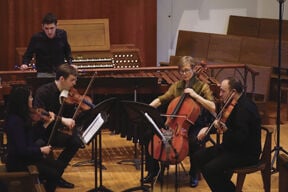
Complexions Contemporary Ballet performs at McCarter Theater, Saturday, June 25.,
Kristiaan Seynhave performs French organ symphonies in the Princeton University Chapel, Sunday, June 19.,