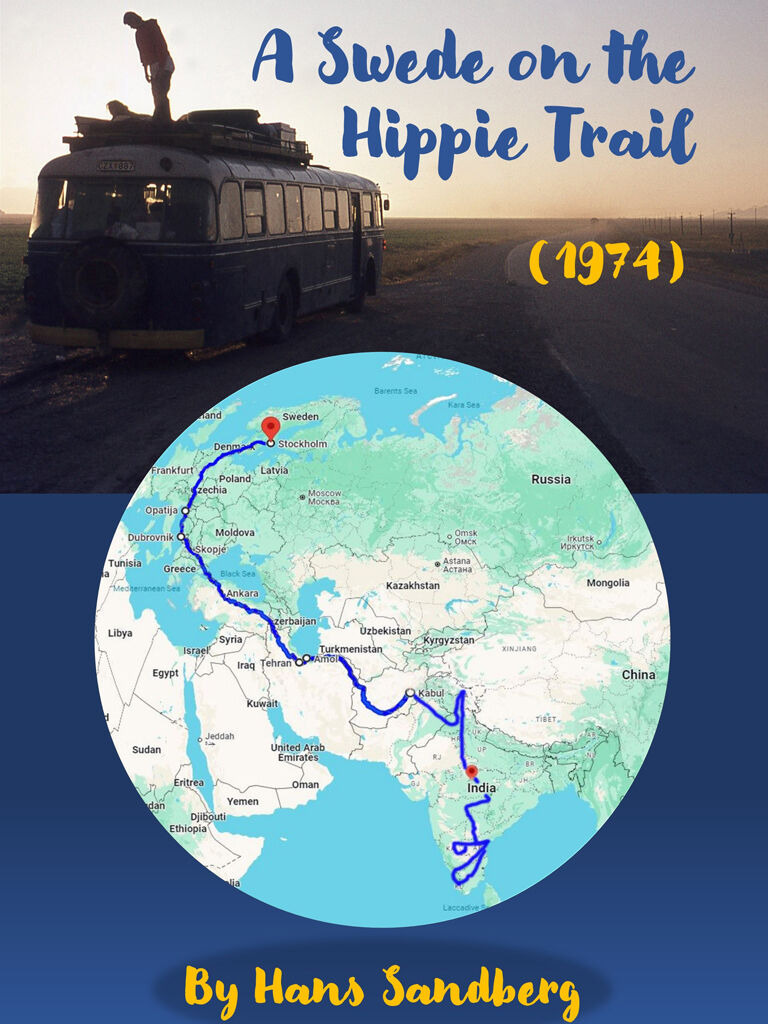
A little more than 50 years ago, Hans Sandberg and a group of other young Swedes embarked on an adventurous journey from Sweden to India, traveling the famous “Hippie Trail.”
The trail was an overland route from the mid-1950s to the 1970s that was followed by Western travelers often seeking adventure and cultural exploration.
They hitchhiked or rode buses and trains to traverse landscapes ranging from mountains to deserts in Europe, the middle East and Asia..
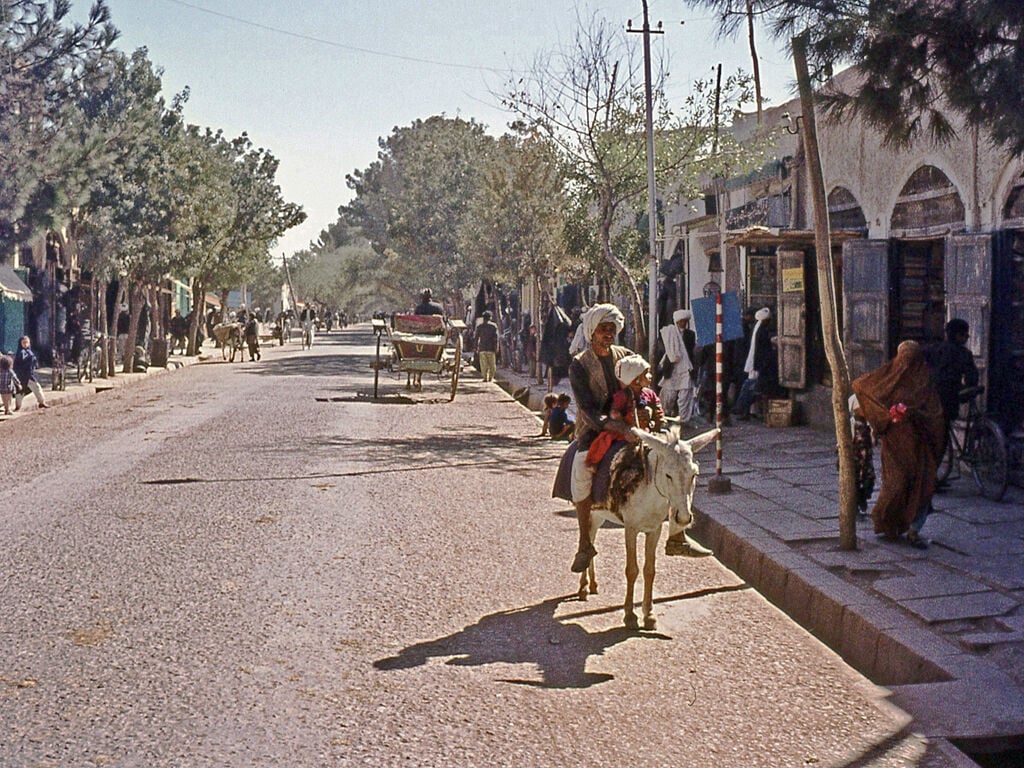
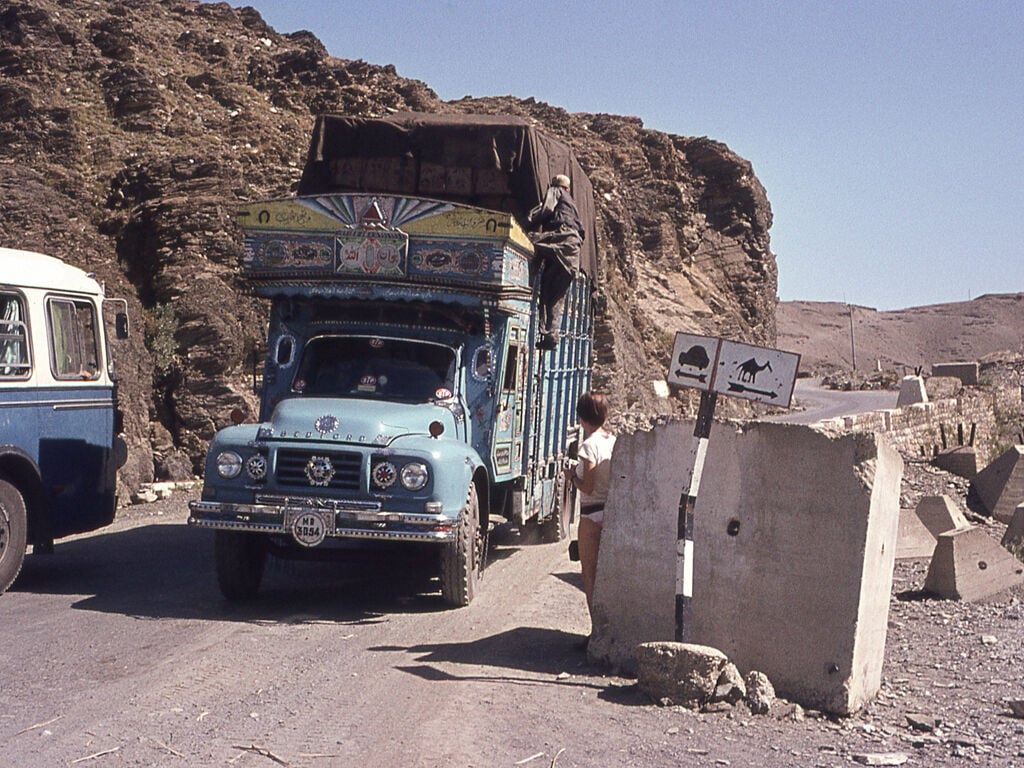
Although not hippies themselves, Sandberg (now a West Windsor resident) and his group trekked through Greece, Turkey, Iran, Afghanistan and Pakistan, ultimately arriving in New Delhi, India.
After a week in Srinagar, Kashmir, Sandberg and his girlfriend embarked on a five-week, 4,000-mile trip through central and southern India, before returning to Stockholm on the same buses. Sandberg has chronicled their journey in his book, Swede on the Hippie Trail.”
Sandberg was born in 1953 and grew up in Stockholm, Sweden, as the second of three sons to Constance and Harald Sandberg, a Swedish painter. He was studying political science at Uppsala University in the spring of 1974 when he set out on his trip.
Afterwards, he continued his studies at Stockholm University, majoring in economics and economic history. In addition to his journey to India, he traveled extensively in China starting in the mid-1980s, reporting on China’s economic, political and cultural reforms.
Sandberg moved to the area in 1989 and spent most of his career working as a foreign correspondent, writing for Swedish and Scandinavian newspapers and magazines. In 2011, he became an editor and technical writer at the R&D division of the Educational Testing Service.
Since his retirement in 2022, he has been writing novels and non-fiction books. He now lives in Princeton Junction with his wife, Lisa. The couple have two adult sons—Erik and Alexander.
Below are excepts from Sandberg’s book, which is available on Amazon.
Waiting for Bill and Bull
There I was, waiting for the bus that was to take me on a 11,000 km (7,000 miles) ride from Stockholm to New Delhi. It was September 3rd, 1974, and I was three months shy of 21. With me was my girlfriend Elisabeth and 39 other young travelers, half of which were women. Around us were parents and friends who were there to see us off on our three-and-a-half-month adventure. Eventually, Bill and Bull—two weathered blue Scania buses—arrived and parked on the railway overpass by the northern entrance of Stockholm’s Central Station.
We said our good byes, picked up our luggage and stepped onto Bill. There were a dozen seats in the front of each bus since most of the seats in the back had been removed and replaced with particle boards topped with thin foam mattresses. We had no air conditioning, so all we could do when it got hot outside was to open the ventilation windows.
I brought a large, light-blue, and ultra-light Fjällräven backpack that had my red sleeping bag strapped to the bottom of the frame. I had strategically packed the bare minimum of clothes and personal items, a couple of books, notebooks, a thermos flask, a water bottle of metal, malaria pills and charcoal tablets for diarrhea. A burlap bag from an army surplus store held my two cameras, a Rollei 35 and a Nikon F with a flash and two lenses, 35 and 105 mm. I had stuffed 55 rolls of film—30 Kodak Tri-X, 10 Kodak Plus-X and 15 Kodachrome II for slides in the
side pockets of my backpack. My passport and $400 in American Express traveler’s cheques rested in a thin nylon pouch under my shirt along with $100 dollars in cash.
That was it.
I didn’t own a credit card, and we had no mobile phones, no e-mail, no World Wide Web, no Wi-Fi, no Skype, and no Facebook. MP3s were not around yet, nor were portable Walkman cassette players, so we had to make do with the radio in the bus—if the reception was good.
Back then, the world was analog.
What Were We Thinking?
Fifty years have passed since I stepped onto that bus, and I ask myself: What were we thinking? The truth is that we didn’t think. Elisabeth had heard of a guy who took people to India and back for a very good price.
We were young and naïve, and simply said, let’s go!
* * *
Taking a bus from Europe to India was one of those things you could do in the mid-seventies.
We were a mix of university students, nurses, workers, teachers and young people in search of self, or simply curious about the world. We were not hippies, even though some talked about smoking pot while sitting on a roof somewhere in Nepal. The trip was just a trip, an opportunity that had presented itself to us and one that we took, but we were also part of a growing stream of European and American overland travelers heading for Afghanistan, India, and Nepal. Rory MacLean, the Canadian travel writer, wrote in his Magic Bus – On the Hippie Trail from Istanbul to India (2006) that 90,000 visitors arrived in Afghanistan every year by the mid-seventies. Most of them would continue to India and Nepal.
The name Hippie Trail evokes images of the fabled Silk Road, which had attracted adventurers, spies, and explorers in the early 20th century, but was never mainly about silk. It was the German geographer Ferdinand von Richthofen who in 1877 came up with the German name “Seidenstraße” as he explored a possible path for a railway between Germany and China. There was, however, never a road stretching from Istanbul to China or India, but a series of trade routes over land or over water, where merchants, diplomats, explorers, bandits, warriors, and pilgrims had traveled for two, maybe three thousand years. Marco
Polo knew of no Silk Road, and neither did the Nestorian monk and diplomat Rabban Bar Sauma who also traveled in the 13th century, but in the opposite direction, from Beijing (then called Khanbalik) to Jerusalem, Baghdad, Sicily, Rome, Paris, Bordeaux, and Genoa before settling in Baghdad.
The land routes from Europe to Asia lost their importance when the Ming Dynasty closed the doors on foreign trade and with the European discoveries of new sea routes to Asia in the 16th century. However, geopolitics and the growing interest in oil and natural gas made the area hot again in the 19th century, although not so much for trade as for imperial rivalries like the British and Russian “Great Game” over Persia and Afghanistan.