Hopewell Borough has changed immensely since one of its most famous residents, John Hart, a signee of the Declaration of Independence, farmed his land on what is now Hart Avenue. Technically Hart preceded the borough, as it was not incorporated until 1891, more than a hundred years after his death. While the Hart family is still around and continues to farm, (one of Hart’s descendants sits on the township committee), the borough’s incorporation signaled the area’s transition from farmland to industry.
Next April 14 will mark the 125th anniversary of Hopewell Borough’s split from Hopewell Township, and because the boro likes a good party, one day is not enough. The anniversary will be feted throughout the year beginning Jan. 1. The 125th Anniversary Planning Committee, co-chaired by Deb Stuhler and Cydney Perske, has spent many months planning a calendar of events.
The celebratory year will kick off Jan. 1 when the church bells ring at noon, followed by the traditional swearing-in of elected borough officials. Brothers Moon will cater the event at Borough Hall, which is free and open to the public. A commemorative booklet detailing all anniversary events will be handed out, and the booklet also includes borough history, photos, and a walking map highlighting shops, restaurants, and historical landmarks. Booklets will be available throughout the year at Borough Hall, the library and many other locations. Additionally, flags and snow globes, featuring the 125th anniversary logo designed by Bob Stuhler, will be for sale. Proceeds from the snow globe sale will go towards the Hopewell Depot Restoration Corporation’s Sustaining Operations Fund and proceeds from the flags will go toward the Hopewell Community Day Festival.
Since August, the planning committee (Stuhler, Perske, Sandy Brown, Dave Blackwell, Elaine Buck, Sara Cooper, Cindy Friedman, Joe Klett, Roxanne Klett, Virginia Lewis, Ruth Luse, Ali Myers, Cathy Peterson, Susan Pollara, Doug Robbins, Jamie Sapoch, Janice Schroeder, David Sellers, Beth Young and Reggie Toth) has worked closely with Mayor Paul Anzano and Borough Administrator Michele Hovan to assemble a diverse list of events to celebrate the anniversary. On Dec. 7, Stuhler and Perske, the planning committee co-chairs, unveiled the list to Borough Council members.
Stuhler relocated from Denver to the Bank of America/Merrill Lynch Hopewell office in 2002. Her family chose to live in Hopewell Borough because the school was nearby for their son, and the downtown was walkable. Husband Bob works as heavy equipment broker. He also paints and is the former drummer for the band Hot Tuna.
In Colorado Stuhler volunteered for Merrill Lynch’s Disability Professional Employee Network for more than 10 years. Within the first year of her move, she volunteered for the Hopewell Harvest Fair and continued to do so for six years.
As her son aged, she saw the need for an event geared less for families, such as the Harvest Fair, and more for adults. In 2007, she started the Hopewell Borough block party, and the organization gained non-profit 501(c)(3) status in order to donate profits to local charities. Over the past several years, profits have been donated to Christine’s Hope for Kids.
Cydney Perske, a professional photographer with photos currently on display at Brothers Moon, grew up in Los Angeles. As children, she and her brother often volunteered for events run by her mother, who was President of her Junior Women’s Club chapter. Perske moved to the borough in 2013 from Austin, Texas. With their fraternal twin children in college, Perske’s husband, Keith, decided to accept a position at Johnson & Johnson in New Brunswick.
They chose Hopewell Borough because of its friendly, small town atmosphere, close proximity to horse boarding facilities, and the short commute to New Brunswick. Her many volunteer positions have included being her children’s classroom parent, a band booster parent for her children’s school marching band, secretary of her children’s high school graduation committee, and a horse handler and side walker at a therapeutic riding center. In 2014, Perske volunteered for the Borough Block Party and in August she and Stuhler, were asked by Mayor Anzano to co-chair the committee.
Stuhler has watched the influx of restaurants and businesses enter the once sleepy hamlet, what Perske says is now, “a tourist attraction.” Stuhler says that she’s “never felt so at home” in a place and Ms. Perske mirrored the sentiment by saying she felt “instantly integrated” into community life when she moved here. Both feel lucky to live in the Borough and have enjoyed learning about the borough’s extensive history while planning anniversary events.
A significant amount of money has been raised toward funding many of the excellent events further event sponsorships are available and tax-deductible donations are appreciated. To donate or sponsor an event, contact the planning committee at 125thboro2016@comcast.net.
A Short Borough History
On March 30th, 1688, wealthy English physician, Dr. Daniel Coxe, conducted a trade with 11 Lenape tribe members. He received 31,000 acres of land, comprising what is now Hopewell Township, Hopewell Borough, Pennington Borough, part of Trenton and most of Ewing Township, for 30 guns, powder, shot, 80 hatchets, 100 knives, and clothing, among other items. Hearing of the rich agricultural soil, the mid-1690s brought a migration of English farmers predominantly from the Long Island and East Jersey settlements.
Hopewell also welcomed immigrants of Dutch, Irish, Scottish, and German ancestry, and they purchased large tracts of land. With these farmers came slaves and indentured servants. As more people came to settle the area, subdivision of land tracts were required. Farmers typically held between 100-300 acres of land on which they grew rye, oats, wheat, corn, and flax, as well as clover, grasses, and timothy for livestock (cattle, sheep, hogs, and poultry.)
In response to farmers’ need for blacksmiths, wheelwrights, gristmills, and their families’ need for dry goods, schools and churches, the villages of Hopewell and Pennington slowly emerged. Roads were constructed and ferries that would cross the Delaware River were established. Farmers, once isolated in large swaths of land, became connected within the township and beyond its borders.
The Transportation Revolution reverberated throughout Hopewell with the building of the Washington Crossing Bridge and the D&R Canal in 1834. Expansive roads were constructed by 1875, and railroads arrived in the Township in 1851. The Philadelphia and Reading Railroad, fully established by 1879, brought suburban development to the township. Train stations were built in the villages of Hopewell and Pennington on the Reading line. Residents of the villages were not farmers, many were employed by various industries, and as such had different concerns and needs than their more rural neighbors. This disparity led to the incorporation of Pennington (1890) and Hopewell (1891) Boroughs. Hunter, Richard W. and Porter, Richard L. (1990) Hopewell: A Historical Geography. Hopewell, NJ: Township of Hopewell Historic Sites Committee.
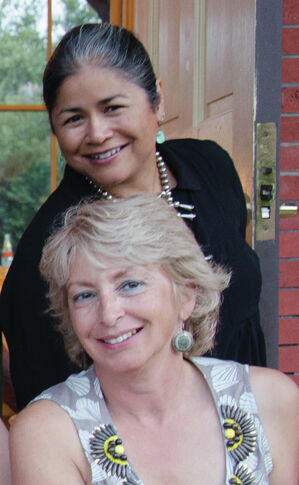
Hopewell Borough 125 Planning Committee co-chairs Cydney Perske, back, and Deb Stuhler.,

