As Robbinsville Township enters the month of March, one of the main issues on many people’s minds is finances. Inflation and rising costs have not only had an impact on residents’ wallets, but also municipal and school governments as well.
Voters will decide the fiscal future of education in the Robbinsville School District this month when they cast their ballots in a special election on March 12.
The referendum on the ballot asks residents to approve a $2.75-million increase in property taxes to make up for an anticipated shortfall in revenues. (See the Community Forum section starting on Page 8 for some of the consequences of a no vote.)
If the referendum is approved, it will result in an additional tax increase of $16.19 per month on a home with the township average assessed valuation of $379,458. It would also add $32.54 per month in 2025.
The vote is necessary because the the amount of the overall tax increase would exceed the state’s 2 percent cap on government tax increases.
A larger $4.8 million question that was on the general election ballot, failed by a 2,300 to 1,964 vote in November. That money, if approved, would have provided funding for both the shortfall in revenues and also the potential loss of state aid.
Robbinsville Advance editor Bill Sanservino recently sat down with Mayor Dave Fried in February to talk about a number of issues confronting the township in 2024. The topics included the upcoming school referendum and the status of the municipal budget as it stood in early Febraury.
An edited version of that discussion appears below in Q&A form. Other topics will be printed in future issues of the Advance.
* * *
Robbinsville Advance: I know the township government doesn’t have anything to do with the school budget and the upcoming special election referendum. Do you want to tell me your thoughts on the issue?
Dave Fried: I think the district is in a tough spot. You know, they approved a contract for the teachers with 4% increase that they needed to pass in order to keep the teachers. They have a 2% annual cap on tax increases. It was no surprise that we were going to need extra funding.
The district has been putting a significant amount of money into its fund balance (budget surplus), because they have some construction challenges that are coming down the road. It’s difficult for residents to understand why they’re putting fund balance away, which is in the millions of dollars, and at the same time asking for tax increases.
So that’s one of the biggest questions that I’m hearing from people. It’s a difficult situation for the district. The district has lost some state aid. They’re also losing students, which is difficult. When you lose students, you also lose state aid. Unfortunately everyone would think, “Well, that’s good then your budget should go down,” but it doesn’t really work that way.
Just because you lost, let’s say 75 students, it doesn’t automatically mean you get to reduce by two classes. Those students are spread out amongst a large population, and you still have to have those classes.
So even though the students are going away, it may not actually correlate to one classroom. You lost one out of different portions of school your population, so the costs don’t go down respectively.
Your state aid goes down, your student population goes down, but your costs don’t really go down in the same way. So it’s been a very, very challenging year for them.
RA: Why is Robbinsville losing students? Is the demographic getting older or changing?
DF: Well, a good chunk of it has been. We have been very mindful of the fact that we have not put in any new (residential) development. As you know, as your population ages, they have less kids.
People here don’t move out, because there’s not a lot of senior developments in Robbinsville. So if you want to stay here, you’re forced to stay in a regular residential unit. You’re not selling.
People like me. My kids are now gone, but we don’t want to leave. So we’re seeing that lack of turnover create neighborhoods now that don’t have a lot of kids generated in them.
That’s why (the new residential development on) Gordon Road is actually a good thing, because the school district lost 75 students last year. They’re projected to lose another 75 next year.
Gordon Road will help actually fill that gap and keep further erosion of state aid from happening. You do need a little bit of development every once in a while as your your neighborhoods age, because they don’t turn over.
RA: Interesting. It’s the first time I’ve ever heard a public official talk about a situation where not having enough school kids is a bad thing.
DF: You know, like everything, things change. I mean, we have been very mindful not to put any new developments in, and we’ve been mindful of that for the last 20 years. Well, after 20 years of not putting any new development in, the bubble has finally gone all the way through the process, and we’re finally seeing the real results of not adding any new developments.
Now, we may need a little just to make sure that we maintain what we have. If you had ever told me that the superintendent of schools was going to call me to tell me to let Gordon Road go through because he needed the kids, that’s one of those things that, literally, 10 years ago, I would have laughed at you, but it happens.
The municipal budget
RA: I know it’s still early in the process. Can you tell me how this year’s municipal budget is coming together?
DF: So far, we’ve only seen the revenue side of the budget, but it’s coming together very nicely. I have to take a look at the expense side of the budget, which is the challenging side, with inflation and everything getting more expensive. There’s a lot of things that have been surprising. Health insurance has gone up pretty dramatically, but I am cautiously optimistic that we’re going to be okay. We’ve been very conservative here in Robbinsville, and that that approach continues to pay off.
RA: What do you do in a situation where you might see a number of increases hitting you that are over that 2%? How do you keep yourself from having to go out for a referendum like the school district?
DF: We haven’t ever done that, and we don’t intend to, but it is difficult.
RA: What are some other areas where you you’ve seen increases or decreases in revenue?
DF: We’ve been lucky on the on the revenue side. We’ve got a number of good things happening in terms of ratables. We’ve got some things happening in terms of selling some of our municipal property, and we’ve got some interest in Town Center South.
One of the original redevelopers that we had talked to about Town Center South originally wanted to put in regular residential housing, which we were nervous to do, because we didn’t want to cause any overcrowding in the schools.
They came back to us with a new proposal, that is strictly seniors, and that’s something that’s very interesting to us. We don’t have any senior projects in town. The actual project itself is beautiful and would have no impact to our schools. In fact, it would be a positive ratable.
All in all our financial health is very good. We consolidated banks and we’re now getting a significantly higher interest rate on some of the cash that we have.
We continue to see added interest in the town in terms of people wanting to move into town, which is good. The value of homes in the town keeps increasing, which is great for us because we want to continue to see home values expanding.
When you think about it, that’s a good thing, right? We have the fastest-growing home values in Mercer County. We’re now on par with Princeton. believe it or not.
We have exceeded West Windsor. We’ve exceeded Hopewell. I always look at home values as if I were running my company. I look at stock value. I have to show a return on investments.
For most people in town, their home is the most valuable thing they’ve ever bought, and if I’m increasing their home value, then I’m increasing their own net worth, so that’s actually a very positive thing for our residents.
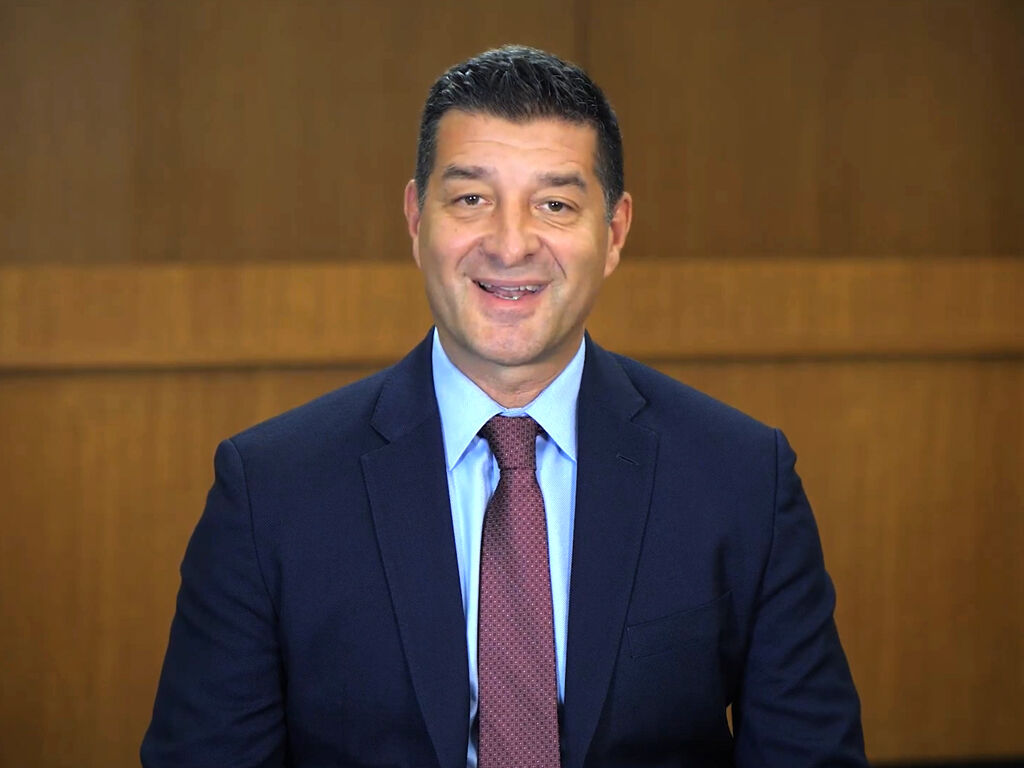
Robbinsville Mayor Dave Fried.,

