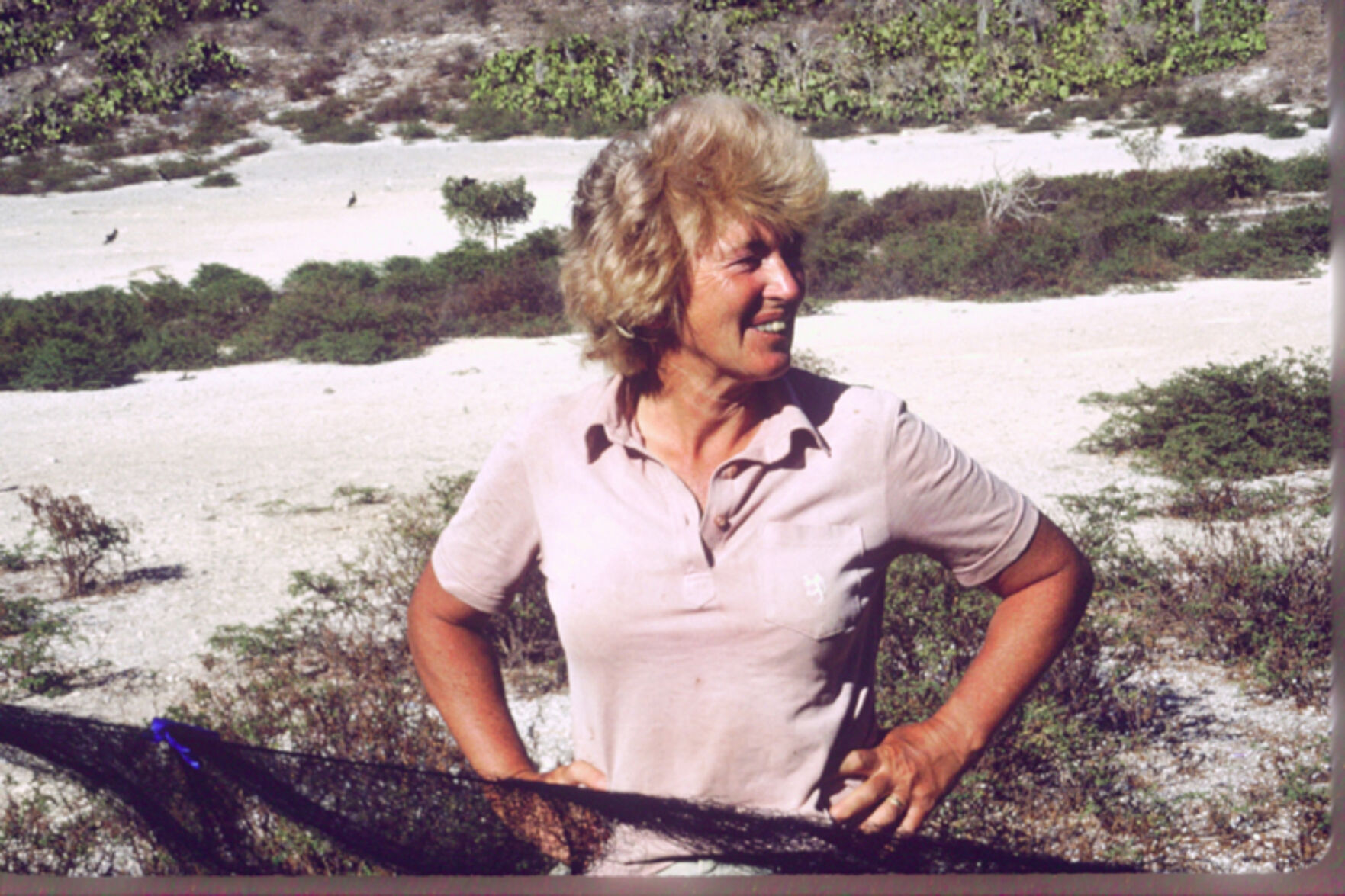
Evolutionary biologists B. Rosemary and Peter Grant, both 88, live around the corner and regularly walk past our house, always engaged in animated conversation. I had learned about their work in a New York Times article a decade ago and, contrary to much that I read, the fascination of that article remained with me. And in fact, the research data that the Grants gathered over 40 years of field work on Galapagos finches yielded thousands of blood samples that now lie in a freezer set at minus 80 degrees Celsius at Princeton University.
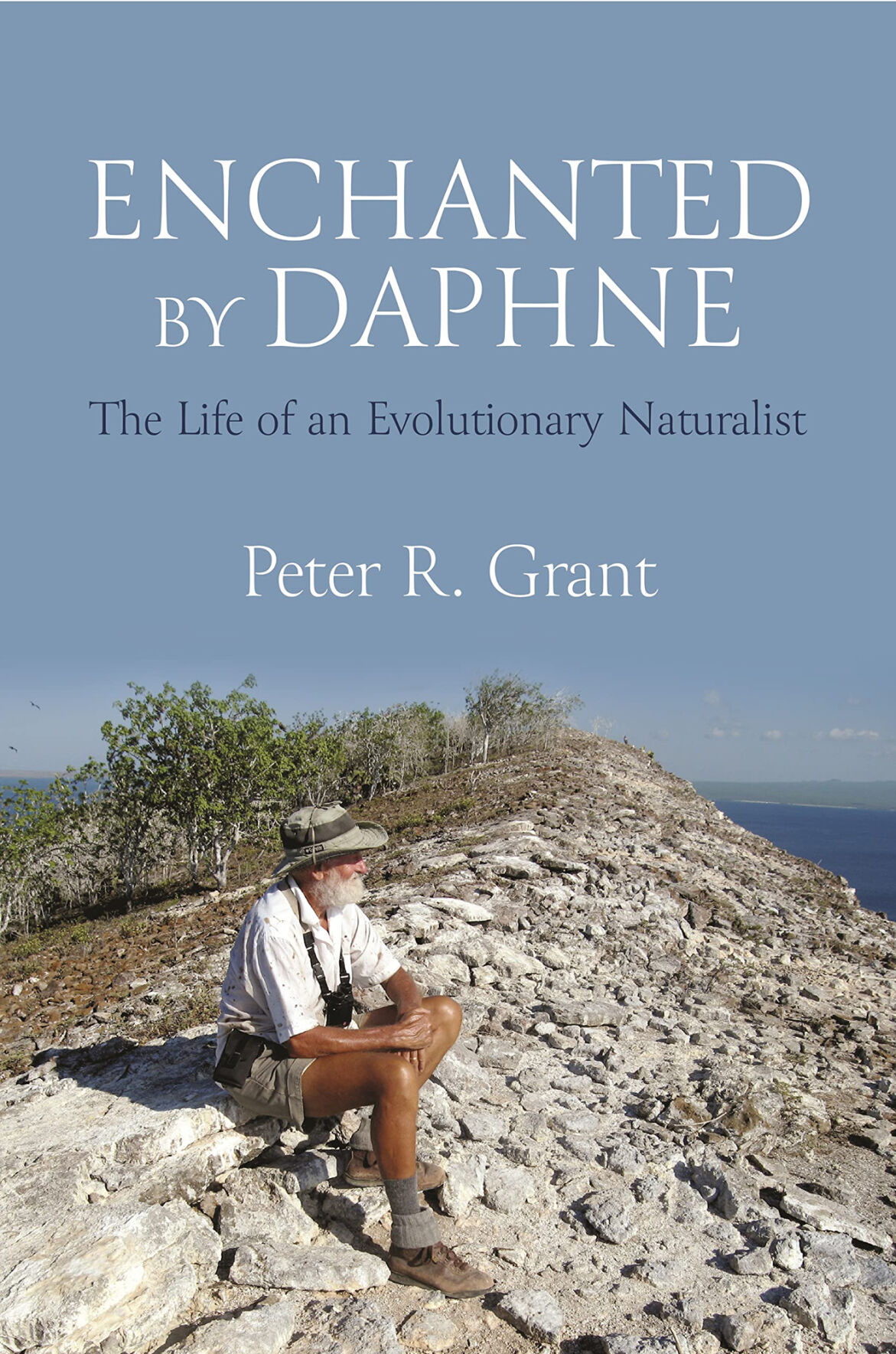
So, when I saw that Rosemary would be talking about her new memoir, “One Step Sideways, Three Steps Forward,” on Sunday, February 2, at 3 p.m. at Princeton Public Library, I jumped at the chance to write an article about her and her book. The event, cosponsored by Labyrinth Books, Princeton University Press, and the library, will also include Peter Grant talking about his 2023 book, “Enchanted by Daphne: The Life of an Evolutionary Naturalist.”
To read Rosemary’s memoir is to enter her world of questioning, wondering, and deep investigation of life on earth — animal and human. It is also an opportunity to wonder about yourself — how would my life have been different if I had experienced her childhood, for example? Or, would I have marched off into the snow-laden mountains around Vancouver just to experience the thrill of being there — no park rangers around to save you from danger? Or hike the Himalayas in Nepal?
Or, for that matter, live for about three months a year on an island in the Galapagos. One tale Rosemary shares is revelatory of both the potential dangers and to a small degree of how their minds rush to scientific solutions.
One day Peter, following their regular bath routine, dove into the lagoon covered from head to toe with shampoo, when suddenly a six-foot-long Whitetip Reef Shark swam toward Peter, ready to take a bite out of his shoulder. Rosemary and their two daughters, Nicola and Thalia, screamed, and the shark abruptly turned away. They joked that the shampoo had saved him, which may have actually been true. Back at home, they had a big surprise upon reading a newspaper article in Montreal, where they lived from 1965 to 1978, while Peter was at McGill University. The piece was about the chemical composition of a new shark repellent and, scientists that they were, they rushed to the bathroom to read the ingredient label on their shampoo; sure enough, it was identical.
Given the Grants’ many adventures that to me seemed dangerous, I asked about whether she is a risk taker. She didn’t give me a yes or no, but offered a sensible, rational answer: “As far as taking risks, such as going off to other countries, I tell myself that disasters can happen most frequently to the unprepared, and as a result I usually prepared well. For example, taking a suitcase full of medical things, antibiotics, splints, etc., to the Galapagos when we took our children, and taking enough water in case after two-three months the boat we arranged does not turn up.”
Reading about Rosemary’s early childhood in Arnside, in the southwest corner of England’s Lake District, it seemed that both its diversity of habitats, as well as plants, birds, and butterflies, and even the dangerous tidal bore that shattered its tranquility twice a day made it a perfect setting for launching an evolutionary biologist.
Add to that parents who were there to interpret the world for their children, and the recipe for the future was almost perfect. Looking back at her childhood, Rosemary writes that “experiences in early life often shape our interests and govern our actions in later life, which is why education of young children and our parental role is so important.”
Her parents nurtured the disparate “activities and curiosities” of her and her two brothers, but more generally they provided a moral and intellectual basis: “They encouraged us to be critical, skeptical, and ethical, and to value others with different backgrounds,” she says.
Rosemary’s mother shared with her children her knowledge of fossils, wild plants, birds, and other animals, as well as the complexities of classical music. Her father was a classically trained country doctor with a strong interest in engineering, whose practice brought in all manner of people. One old man that she recalls had been in the trenches in World War I; he pointed to the bowl of flowers in the waiting room and said to five-year-old Rosemary, “Do you not see … every flower is the soul of a man I shot and killed.” Afterward, her parents explained that he was suffering from shell shock.
Other childhood experiences also influenced her future perceptions and values.
Rosemary grew up in a town where not everyone had the privilege of attending school. When at age 11 Rosemary corrected the grammar of their housekeeper, who could neither read nor write, her mother took her aside and lectured Rosemary on her own good fortune. The underlying message, Rosemary writes, was “Don’t ever think for a moment that you are superior to anyone.”
A second experience involved German prisoners of war who were installing a water main near their house when Rosemary was six. The foreman allowed Rosemary and her brother to speak with the soldiers at tea break, which they did, feeling a little guilty about hobnobbing with the enemy. She writes in her book: “This dichotomy, being fearful of German bombs yet realizing these German prisoners also disliked war and were people like my parents, with children like my brother and me, was very bewildering.”
“My parents explained about Hitler and his atrocities, and how one person and his devotees could influence and have power over thousands,” Rosemary says. “This concept never left me.”
Rosemary’s interest in the physical world morphed into a passion for biology, as well as a perspective on human interactions. She explains: “It was finding fossils in the carboniferous limestone and coal that were similar yet different to the living species around me that led me to the realization that life had not been static over time and to ponder the question of how and why changes had occurred.”
The only downside of the otherwise nurturing environment was an inherent devaluing of women’s intellects, which Rosemary imbibed as a child. Because women were expected to marry and become homemakers and mothers, training them academically was thought to be a waste of money.
On the other hand, Rosemary was also a feminist at heart, a woman driven to achieve a successful scientific career. When her father suggested she study “domestic science” at university, she responded, “This is only training to serve a man.”
Looking back to the time when, desperate to study biology, she felt that she had to work harder than her male colleagues who she believed were “innately more intelligent than me,” she says: “I am ashamed to say I succumbed to the prevailing attitude of the time and believed that men were more intelligent than women. It was not until I had bright daughters of my own that I realized how inaccurate that was. In the UK at that time there was no coeducation, and girls’ schools from puberty onward were taught at a much lower level than boys, so of course this led to a difference in outcome. Why was I not more skeptical? I think it shows the power of brain washing.”
When unable to do her PhD immediately because of lack of money, she and Peter decided she would do a one-year teacher training course in Montreal, then teach while doing her own scientific research during school holidays. She taught in Montreal for about three years.
An important influence on her future teaching was the opportunity to learn about the Finnish educational system “that inspired individuality, creativity, and respect for others” during her own training. Teachers required five years of post-graduate training, with salary. As a result, Rosemary says, “as far as salary and prestige, experienced teachers, doctors, and lawyers were equal.”
After the Russian invasion in Ukraine, the Finns recognized the importance of resisting disinformation — and now test as the most resistant of all Europeans — and incorporate training in discerning between truth and falsehood in their school systems. One example Rosemary cites in her book is that students are asked to write the same story from a propaganda perspective and a scientific and factually based one.
In her own teaching Rosemary says, “I always tried to encourage individuals to ask their own questions and helped them to follow up with their own investigations.” She also had a creative flourish, for example, when she asked eighth graders “to design a fictitious plant or animal that could survive in extreme desert or arctic conditions.” The students, she writes, “were amazed that products of their wildest imaginations did exist in nature, if not exactly, then close.”
The Grants started their research in 1973 on the Galapagos finches in Daphne Major, a tiny island, three-quarters of a kilometer in diameter that looks like the top of a volcano with a crater in the middle. The population sizes of the two primary species of finches on the island vary depending on conditions of drought or rainfall. In 1978, after Peter secured a professorship at the University of Michigan and they moved to Ann Arbor, Rosemary was able to start her own research on Genovesa, a low, flat shield volcano about five miles in diameter with a central saltwater lake.
The Grants’ research approaches were complementary. They were both interested in the question, “How and why do species change and multiply?” Rosemary came from the genetic side and Peter from the ecological. She explains: “I was interested in the differences between individuals in a population, for example differences in size and shape, behavior, and genetic differences. My question was how this variation between individuals of the same species translated into a new species, in a changed environment, through natural selection and responses to selection events via inheritance. Peter was interested in competition between individuals of different species for food and resources and how this could cause change through natural selection.”
They chose to work on these two isolated islands for three reasons: First, because Darwin’s finches were a closely related group that had formed many new species in the last million years from the same ancestral species, the Grants thought it was possible that they were still undergoing measurable change. Second, these islands never had human inhabitants, hence any changes would be natural, not generated by human interference. Third, the islands are subject to the El Niño Southern Oscillation weather phenomenon, “which brings torrential rains once or twice a decade followed by a drought.” During a drought, survival depends on the food supply and the ability of individuals, in terms of their behavior, body size, and beak size and shape, to exploit it.”
After capturing birds in flight with fine, nearly invisible mist nets early in the morning, they bagged them individually, and then, in a shady, cool cave, they measured beak depth, width, and length; wing length; and weight; then identified each bird via three colored and one metal band. From each bird, they took a tiny drop of blood, via a quick prick from a sterile hypodermic needle, and put it on filter paper for later DNA analysis. During breeding season they find nests, determine who the parents are, and band their offspring at day 8. And they walk around the island “recording every bird we see, and what it is feeding on — Peter going one way, me the other way.”
The Grants found two methods of speciation, the process by which new species are created through evolution: one was suggested by Darwin and the other occurs via rare incidences of hybridization (where an animal or plant breeds with a member of another species), which introduce a few genes that are then acted on via natural selection after an environmental change.
On Daphne, they camped on a flat area on the island and cook in a shady cave. They would bring lots of dried and canned food, plus two gallons of water per person per day. They even took along what they call a “tuna repair kit” — “jars of herbs and spices to make our dinner taste differently each night!” They washed in the sea and, if it rained, caught rainwater to use for washing clothes and rinsing after sea baths. They also brought along scientific equipment, radios for emergency contact, and more recently, cell phones.
The Grants’ daughters were never bored on the islands. Sometimes they did schoolwork, but otherwise were happy to live freely in a tropical paradise. When they were younger, they helped with their parents’ research, and when a little older, did their own.
Rosemary eventually got her doctorate in Sweden, almost by happenstance. After publishing papers on her completed Genovesa research, she was invited to give a talk at two Swedish universities. The evening after Professor Staffan Ulfstrand introduced her incorrectly as Dr. Grant, he offered her an alternate route to her doctorate at Uppsala University. The thesis would comprise already published papers in peer-reviewed journals plus two more she was still working on. Then, after a couple of exams and a semester in residence, she would publicly defend her work. In May 1986, during Peter’s sabbatical, she became Dr. Grant.
They moved to Princeton University in 1986, working out an arrangement where they would teach intensively in the fall term and do research in the Galapagos in the spring.
Having carefully read Rosemary’s memoir, I asked her for her thoughts about the value of interacting with and learning from people with different backgrounds and cultures to resolve issues that plague our world — racism, xenophobia, extreme inequalities, and war — a recurring theme in her book.
“There has been widespread degradation of the environment, accelerating loss of biodiversity, and increase in economic and welfare inequalities,” she observes. Rosemary’s experiences in science, life, teaching, childrearing, and travel have led her to question why human beings, who during some periods have used their conceptual and communication capabilities “to spur incredible creativity in the arts and in science,” also “to our shame [have] used it to incite people to racism and to wars for resources.”
Indeed this theme shaded her thinking as she explored the histories of the many countries the Grants visited giving seminars after their retirement. In Asia and Europe, she writes, “I found many examples … of periods of great creativity associated with collaboration and interaction between peoples of different backgrounds, interspersed with times of violence and inequality. Whether these times were violent or peaceful was often determined by the attitude of a powerful leader who could communicate with and have power over millions. What was astonishing was how quickly a switch occurred with a change of leader.”
For Rosemary, the road to a benevolent leader lies in “education that inspires critical thinking and respect for others as a safeguard against propaganda and deception.”
Authors Peter R. Grant and B. Rosemary Grant, Princeton Public Library, 65 Witherspoon Street, Princeton. Sunday, February 2, 3 p.m. www.princetonlibrary.org.
One Step Sideways, Three Steps Forward, Princeton University Press, 328 pages. $29.95.
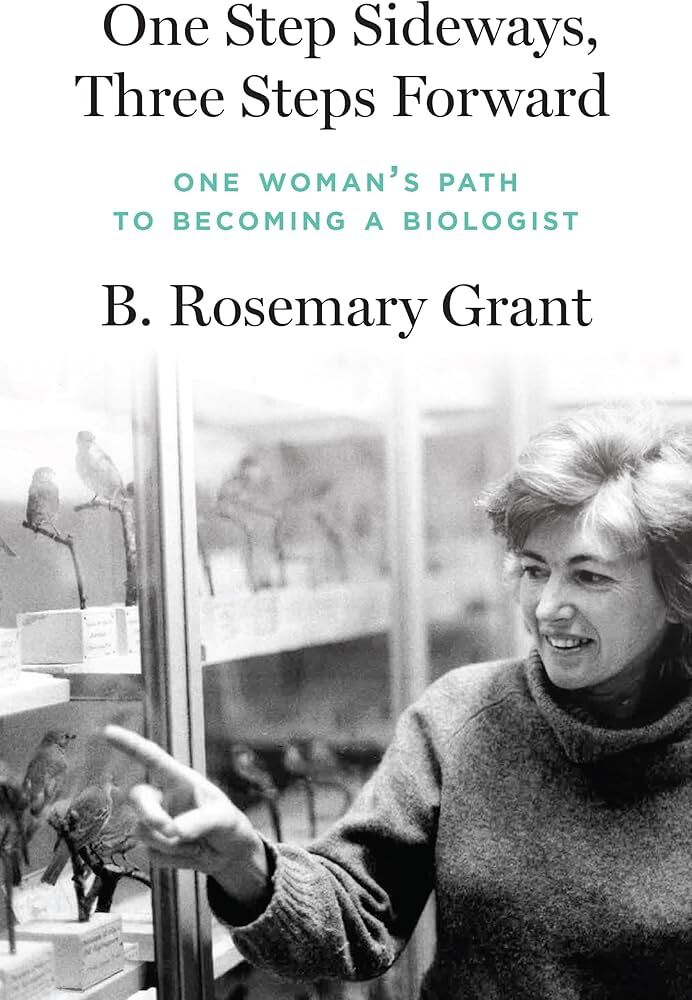
B. Rosemary Grant discusses her memoir on Sunday, February 2, at Princeton Public Library.,