Three candidates are running to fill the seat being vacated by Mayor Shing-Fu Hsueh, who decided to retire from public office this year.
Vying for the four-year seat are former councilman Kamal Khanna, councilman Hemant Marathe and political newcomer Yan Mei Wang.
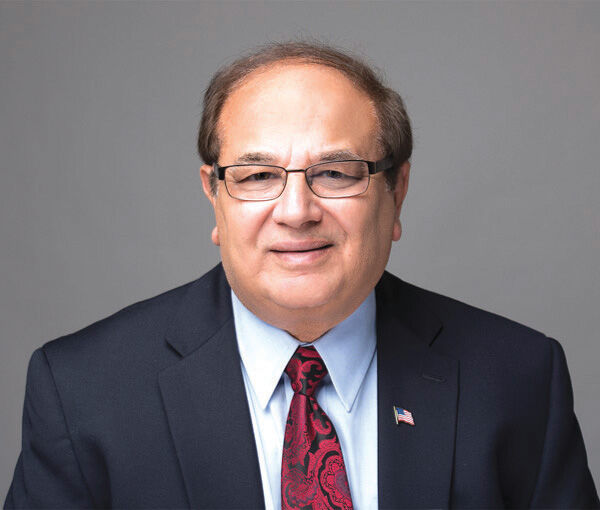
Khanna, 74, has been a resident of West Windsor for 39 years with his wife, Dr. Veena Khanna. He holds a master’s degree in engineering and management from the University of Florida. He founded his company in 1978, which specializes in corporation efficiency engineer and business analysis.
Khanna served on the West Windsor Township Council from 2009 to 2013, and as council president for two consecutive years. He has also served on the affordable housing committee, planning board, environmental commission, Mercer County Improvement Authority, and the West Windsor Democratic Committee, as chairman.
Khanna is running on the Working Together For West Windsor slate along with council candidates Kristin Epstein and Yingchao “YZ” Zhang.
Marathe, 55, has lived in West Windsor for 23 years with his wife, Punit. The couple has raised four daughters who all attended the WW-P School District.
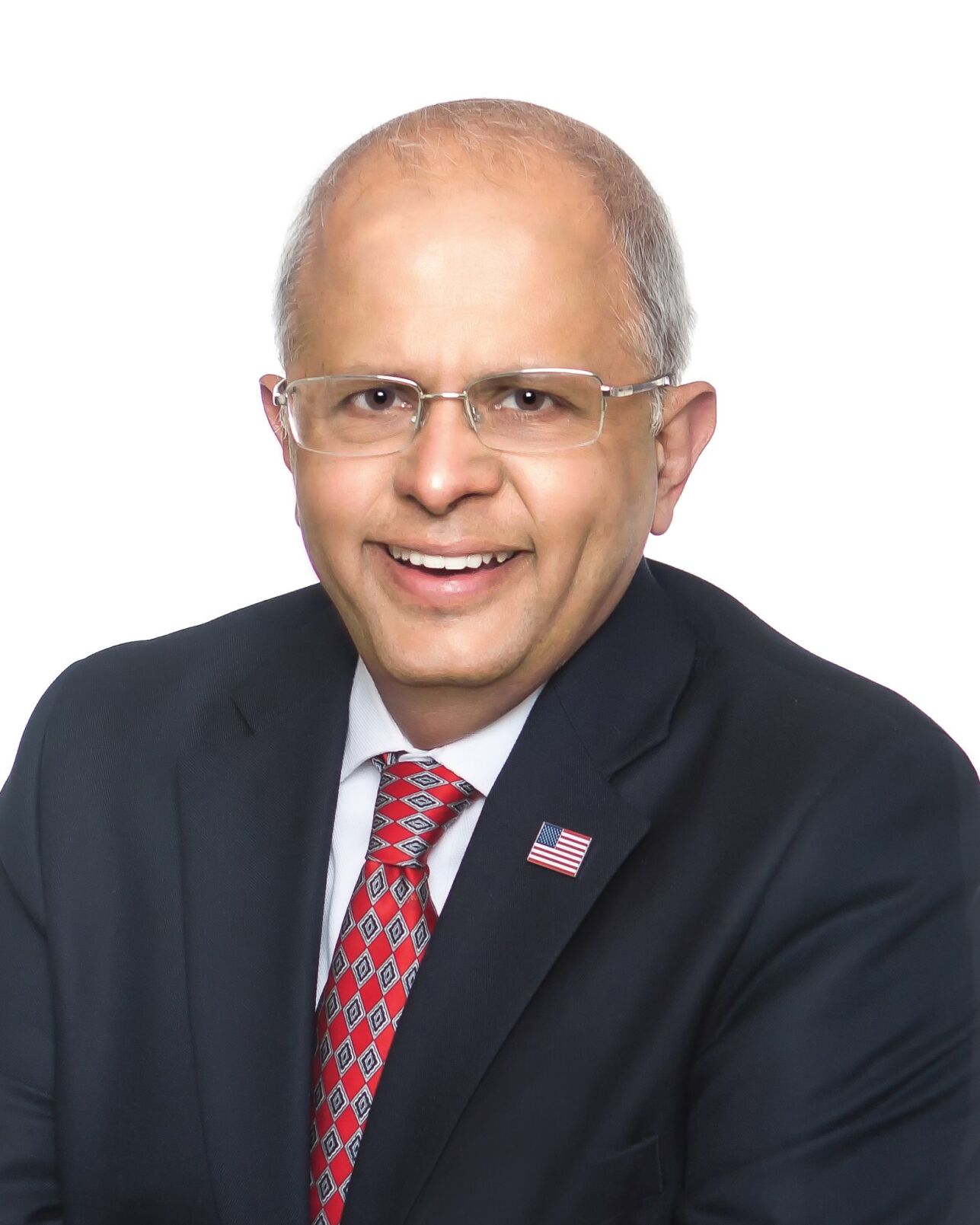
Marathe holds a bachelor’s degree in electrical engineering from I.I.T. Bombay, a master’s in electrical engineering from Virginia Tech and a PhD in electrical engineering from the University of Washington. He currently owns a small business that distributes imported ethnic food items from India. For the past 26 years he has owned three different small businesses in different fields.
Marathe served 12 years on the WW-P School Board—the last nine as the president. He has served for two years on the zoning board and for the last three years on the West Windsor Council, where he was vice president in 2016. As a volunteer he has coached recreational soccer, served on several PTA committees and is a member of the West Windsor Lion’s Club.
Marathe is running on the Standing Up for West Windsor slate with council candidates Linda Geevers and Virginia Manzari.
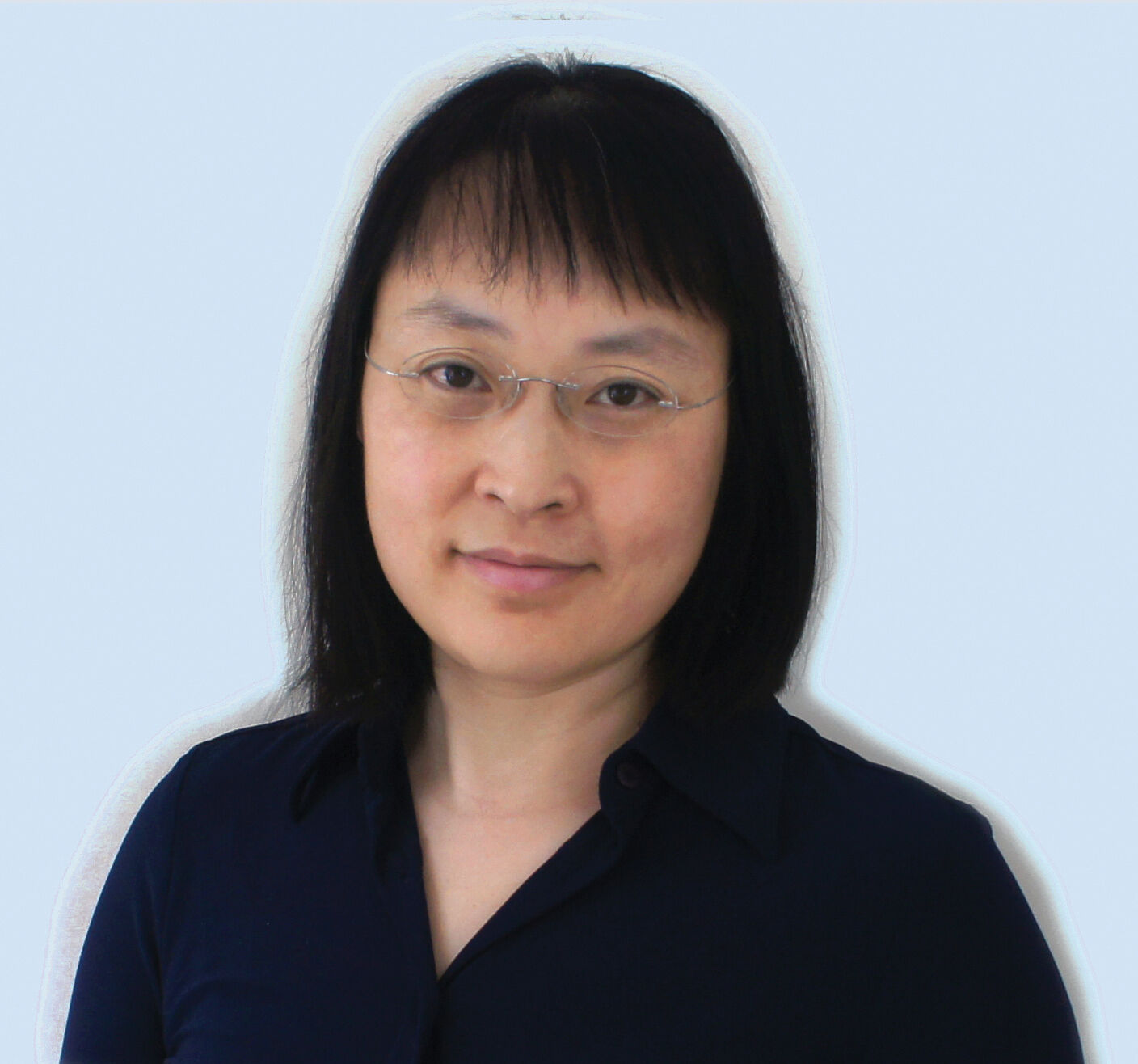
Wang, 44, has lived in West Windsor for two-and-a-half years with her husband, Je-Luen Li. She holds a Ph.D. in physics from the University of California, Berkeley, and a bachelor’s degree in physics from the University of California, Los Angeles.
She currently works as a physicist at Princeton University, and previously was a professor at Washington University and a postdoctoral researcher at Princeton University in biophysics. She has served as a member of the West Windsor Human Relations Council.
***
The WWP Newsasked each of the three candidates a series of six questions. Their responses appear below.
Why are you the most qualified candidate for mayor? What differentiates you from the other two candidates?
Khanna: My long record of public service demonstrates my commitment to working for the residents of West Windsor. I have served on the West Windsor Township Council, Affordable Housing Committee, Planning Board and Environmental Commission. I have cultivated relationships with government officials at county and state levels, which I will use to assist West Windsor with obtaining public funding, building partnerships and addressing regional issues.
What differentiates me from the other two mayoral candidates is that I have a long track record of putting the needs of West Windsor residents above partisan disagreements. As I have in my years of volunteering on boards and commissions, I will evaluate the merits of every proposal based on their value to the township, not based on who proposes them. I will work collaboratively with all communities in the best interests of all residents. When I say I support an issue, such as improving bicycle and pedestrian safety, I will follow through with that promise by investigating all ways to improve our community.
Marathe: All three candidates for mayor are good people and have good intentions. We have different philosophies and demonstrated records of service. Both my record and philosophy on important issues make me the best candidate for mayor. I have served on the school board for 12 years, the last 9 of as the president. In 2004, I took over a school board that was fractured and most votes were 5-4, including my election as the president. In the very first year I earned the trust of everyone, which led to my unanimous confirmation as the president over the next several years.
It didn’t mean that all board members agreed on all issues, but under my leadership we never let a disagreement on an individual issue get in the way of working collaboratively for what was best for the children. During this time the school district enhanced its reputation while decreasing relative per pupil cost from $300 above the state average to $1,200 below the average. This was in spite of the fact that we lost a significant amount of state aid during this time due to the financial crisis.
This style of working hand-in-hand helped the district stop a charter school that my opponent’s running mate was promoting, and it helped us work on important issues by working together with all unions. My opponent, Yan Mei, has some good ideas. However, she is new to the town and she lacks experience. She has no record of service to the township or significant public service anywhere else.
My opponent Kamal has been on the wrong side of the most important issue facing West Windsor: whether to allow housing on the Howard Hughes property. Even though he has recently stated that he agrees with my position to not rezone the property, he has only done so in the last month of the campaign, and he has left open the option to negotiate with Howard Hughes.
If, as a voter, your main concern is the Howard Hughes property development, I am the only candidate who has steadfastly opposed rezoning of the property and laid out reasons why it’s not necessary. My school board record should give voters confidence that I am a man of my word and I will fight the hardest to prevent any housing development on the Howard Hughes property. My record and philosophy on issues facing West Windsor make me the best candidate for mayor.
Wang: Candidates should be judged not by their promises, but by their accomplishments, and if they have not held elected office, by their extra efforts to improve our town, and the viability of their proposals at this critical transition time for West Windsor.
My opponents have both served on council for some years, yet I have seen little effort from either of them in initiating badly needed new programs or improving existing ones beyond routine voting action on council. That they have more experience than I with the township code and township practices only emphasizes their lack of leadership and accomplishments.
Furthermore, it seems that one of my opponents has always opposed what Mayor Hsueh has done, and the other followed Mayor Hsueh. In other words, both put politics ahead of sound reasoning and the interests of West Windsor residents. West Windsor’s future mayor needs to have his/her own principles and positive vision to lead our town forward without dwelling on the past.
I, however, am different. During the short two years of my stay in West Windsor while holding a full-time job, based on residents’ needs, I have led efforts on real issues and solved/initiated five problems/programs as a regular resident, working with relevant township entities.
I have solved the Mews shuttle noise problem by changing to a smaller shuttle with a quieter engine; designed a one dollar a trip community shuttle program to train station, schools and businesses; designed the first New Jersey protected bike lane at Canal Pointe Boulevard; planned for a walking school bus program where children walk to school led by our police-trained personnel; and mediated a preservation agreement of 10-acre farmland.
These consensus-building accomplishments strengthen the foundation for my detailed plan to improve our infrastructure while cutting taxes, and therefore, for my leadership in West Windsor. If elected, I’ll be a full-time plus overtime mayor with my whole heart and soul. Tax reduction details are on my website wangformayor.com.
West Windsor is at a critical transition point because past administrations did not prevent us from becoming an overcrowded township with ever-increasing taxes. The proposals and plans put forward by my opponents do not go beyond conventional measures that have so far failed us. My proposals, however, represent new trends in the United States that have proven successful in townships similar to West Windsor.
What do you think should happen on the Howard Hughes property at Quakerbridge Road and Route 1, where the developer has proposed rezoning the property for a large mixed-use project, which includes almost 2,000 housing units?
Khanna: No decision should be finalized for the Howard Hughes Corporation’s property until the township has undergone the master plan re-examination in early 2018. The conceptual land use plan presented by representatives of the Howard Hughes Corporation on July 26, 2017 to the West Windsor Planning Board is wrong for West Windsor.
The plan proposes a new development within West Windsor so large that it would require its own three to four schools spanning K through 12, a fire station, a medical center, emergency services and more. Yet, Howard Hughes fails to identify this needed infrastructure or its costs to West Windsor residents. The plan will impose additional taxes and traffic on West Windsor without enhancing the quality of our community.
A parcel as large and significant as the Howard Hughes property merits smart planning that will improve, not burden, West Windsor, by increasing ratables without significantly adding to the student population. Our community is especially attractive to businesses that promote green energy initiatives and innovative technologies. The West Windsor Planning Board and council should work together to ensure that the property is zoned to reflect these values.
Marathe: What should definitely NOT happen at Howard Hughes is a rezoning of the property in the misguided hope that we can reach a reasonable settlement with the developer. The property is currently zoned ROM (Research, Office and limited Manufacturing). This offers us the best opportunity to move some tax burden from residential homeowners to businesses, and thus we should maintain the current zoning.
Building housing in West Windsor is the easiest project for any developer. Once he builds and sells the homes, it becomes our headache. Thus the first step is to convince Howard Hughes that there is no chance we will change the zoning. If the choice is between building the 2,000 homes that Howard Hughes has proposed vs. leaving the property as it is, I will take the latter. However, HH is in the business of making money and we will work with them to find other uses for the property that will be a win-win for both sides.
Since they own the property, we can’t force them to choose a particular tenant or use (as long as it fulfills the zoning requirements), but we can certainly work with them to attract favorable tenants. One potential use for the site our team has suggested is for a data center. It would generate minimum traffic, could provide jobs to our educated workforce, could be supplied with solar power, and given the increasing use of data, would be virtually recession proof.
A second option would be to attract multiple companies to build their campuses on the site. Bristol-Myers Squibb just consolidated their operations at a site in Lawrenceville. There is no reason such consolidation can’t happen at the HH site. By attracting multiple such companies rather than a single one like Amazon, we diversify and minimize our dependence on a single company. If elected mayor, I will provide the leadership needed to cooperatively find alternate uses for the site, uses that will benefit the current residents of West Windsor.
Wang: There are two ways that the township can go with respect to the Howard Hughes Corporation property: (1) keep the zoning for businesses; or (2) change the zoning to build houses. When we try to “plan” for the future of the HH property, we need to bear this in mind that the developer is here to make money. At this moment, it appears that the developer thinks there is more money to be made by building houses. However, the developer is likely to face 10 years of costly litigation, which it will likely lose. By that point, the township may have become so overcrowded, that building housing on the HH property may no longer be profitable.
Option 1 is what I would like to see happening on the HH property. It may seem to make less money in the short term; however, by concerted planning with the township and relevant entities to make the site attractive in the aspects of environment, transportation, infrastructure, and resident-friendliness, the property can become extremely attractive to top businesses.
We will use the almost 100 percent green NRG’s energy headquarters site in West Windsor for model architectural, transportation, and infrastructural designs. In addition, the site will be open to residents as a new destination. In the long term, the developer will become a top business center/destination developer and consequentially, make more money. Furthermore, the developer will have West Windsor residents’ support from the beginning and start earning revenue quickly, as opposed to fighting against the residents as in option 2.
The township has put off a decision on the construction of a solar microgrid project at the municipal complex until after this election. Are you in favor of the project? Why or why not?
Khanna: I was greatly disappointed that the solar microgrid project at the West Windsor municipal complex was blocked by the current council. If elected, I will work to reinstate the project.
This project will not only save taxpayers money, it will provide critical backup power to ensure that municipal services are no longer interrupted during storms. Solar panels would cover only 2.5 to 3.3 acres out of 45 acres of the municipal compound and would be hidden behind the existing firehouse building and by new landscaping and screen fencing.
The microgrid system is fiscally sound because it would provide lease revenue, free energy to three municipal buildings, and additional back-up energy. It would ensure electric energy residency and stability within the municipal compound, and thereby better ensure the ability of the township to provide emergency services to the community during power outages. It would also include an education kiosk to explain how the micro-grid and renewable solar energy generation works. Finally, West Windsor could remove the panels and restore the land to any use after 15 years.
At a time when West Windsor seeks to attract green businesses to increase our tax revenue without burdening our schools, the micro-grid would help establish West Windsor as a leader in green energy.
Marathe: I believe the land is best used for recreational purposes rather than putting solar panels on the front lawn of the municipal building. If elected mayor I will aggressively pursue putting solar panels on the roofs of the six buildings in the municipal complex.
This is an especially appropriate time because the main municipal building and the volunteer fire company building both need a new roof. When I was the school board president, the district completed two successful projects on the roofs of high schools South and North. Although the district spent money out of pocket up front, we have already recovered the money and the taxpayers will enjoy the financial benefits for the remaining life of the solar panels.
The school district had pursued a project to put solar panels on roofs of five additional school buildings, but we had to abandon the project for lack of state support. I am proud of my record on the environment as the school board president.
The West Windsor recreation commission has shown willingness to fund a feasibility study for the use of that land for recreational purposes. I will start with that study, then get various sports organizations within the township involved to find the best use of that land for the benefit of all residents. We are severely limited in the availability of recreational facilities for both youths and adults. I would prefer to use the land for that purpose.
Wang: I do not favor the project as it is currently being offered. Having visited the solar farm by Old Trenton Road and almost all farms and preserved lands in West Windsor, it is clear to me that the value of open space exceeds the $30,000 per year that is available under the current offer.
We can do much better if we use the land for the dual purposes of community services and solar energy generation. We can build community structures and install solar panels on the rooftops. Potential structures are: a barn for residents interested in raising farm animals; a pavilion for holding community events when the weather cooperates—such as the Diversity Day, the Peace Day and the Memorial Day events; and a garage for our emergency vehicles that are currently waiting for a home to be constructed (it is budgeted in our capital improvement plan).
Solar panels on the roofs of these structures will provide sufficient clean energy (and backup energy) for the whole municipal complex and will be paid for by PSE&G. PSE&G can also offset the cost of the unbudgeted barn and pavilion with the fencing and installation budget of the ground-mounted solar panel array in the original microgrid design that are no longer needed.
The relationship between the mayor/administration and the township council has historically been contentious in West Windsor. How would you improve communications between the two branches of township government?
Khanna: The best way to improve the relationship between the mayor and council members would be to elect new council members who commit to working together on the issues important to our residents to: promote inclusive, responsive and transparent government; control taxes by increasing ratables, especially with new environmentally-friendly and high-tech businesses; manage development wisely; preserve open space; improve pedestrian and bicyclists safety; and improve infrastructure.
But regardless of who serves on the newly-elected council, I would insist that township business is prioritized by the needs of our residents, not by the personal or political values of elected officials. My education and career has centered on management efficiency. I have the experience and skills to bring together proponents of differing opinions and values to efficiently achieve progress for the common good.
Marathe: In every election in which I have participated, I have asked the voters to look at my record rather than what I promise in the weeks leading up to the election. In this regard, I will point to my record as the school board president for nine years. Over this time, I worked with over 30 different board members. We handled many difficult issues without once losing the ability to communicate. I believe in open communication and first trying to understand the viewpoint of the person on the other side of the argument. That allows me to modify my thinking, if necessary.
Thus, at the resolution of every issue, people may not get everything they want, but they will definitely feel they were heard. The key to improving communication between the mayor and council is to agree to a set of rules and procedures and maintain consistency in the process. As mayor, my style will be to take ownership of an issue. It will be the administrative staff’s job to convince me about the merit of a proposed solution and my job to convince the council.
If the council disagrees with me, we will try to find a solution that works for both the mayor and council. If at the end of the day we can’t find common ground, we will move on to the next issue. The most important thing is to not let our disagreement over the previous issue cloud our judgment about future issues. Every person looks at an issue from a different point of view and my job as the mayor will be to find a consensus that amalgamates all these points of view to achieve what’s best for West Windsor.
I have successfully used that approach as school board president over nine years to achieve great results for the district. I have used the same approach over the past three years as a West Windsor council member. While I was school board president we never had a controversy that made the front page of local newspapers. Instead, we worked as a team to find solutions that worked for all involved. I am confident that if I’m elected mayor, the council and I may not always agree, but the relationship will be more cordial and we will work collaboratively to do what’s best for West Windsor residents.
Wang: I think we have long forgotten the most important player in this issue: West Windsor residents. The government body, be it mayor or council, should be, quote: “of the people, by the people and for the people.” The time we deviate from this principle is the time that government constituents begin to focus on individual interests and contention ensues.
When facing a potentially contentious issue, the first step of the decision-making process should be for the council and mayor to reach out, together, to neighborhood residents to inform and educate and then gather their inputs, just like when we campaign. Decisions should be made based on the majority suggestion of residents after this step. With this concerted effort of the mayor and the council together towards a consensus solution from the very beginning, we not only have a realistic chance to reduce, or possibly eliminate contention, but also may strengthen our government body as never before, which is badly needed to face our challenging future.
Commercial development has slowed in town, including on Route 1 and the train station redevelopment area. What would you do to promote development and attract more commercial ratables to West Windsor?
Khanna: Our community is especially attractive to businesses that promote green energy initiatives and innovative technologies. The West Windsor Planning Board and Council should work together to ensure that properties in the Township are zoned to reflect these values.
All new developments must be designed appropriately to avoid overburdening our first-class schools and local traffic. In addition, I will act as the township business development officer to manage a newly-created volunteer business development commission.
Together we will create and maintain a list of all vacant commercial spaces and pair them with the types of businesses that would enhance the West Windsor experience, such as a grocery store and an ice cream shop. We will reach out to local commercial real estate brokers and attend chamber of commerce meetings to stimulate interest in available spaces and desired businesses.
I will also promote current West Windsor businesses to highlight their contributions to West Windsor and to enhance business. I also will direct township departments to ease and clarify the regulatory paperwork without reducing appropriate oversight and regulation. I will present modifications to the municipal code to clarify and remove unenforceable sections.
For example, some sections of the code that regulate the distribution of campaign signs are too vague to enforce. As a result, roadways have been littered with political signs for months before the election.
Marathe: What’s needed is a proactive approach to increase business development in these areas and throughout West Windsor. Long gone are the days when we can wait for companies to come to us. Marathe, Geevers and Manzari have a plan to enlist the help of a business development director who has expertise in identifying appropriate companies and encouraging them to consider making West Windsor their company’s home.
Our community has a lot to offer. By changing our approach, we should see a shift fairly quickly. Following the financial crisis, business development had slowed down. Recently it has picked up again. We see it in our surrounding towns. There is no reason why West Windsor should not get our share of it. Because opening a business in West Windsor can be difficult, we will revamp our internal processes based on our own evaluations and the feedback of business owners. And we will provide additional support to current businesses as well.
As the owner of several small businesses over the years, I can appreciate the hard work and financial risk that goes into keeping a company profitable, and I will do whatever I can to help others achieve this goal as well.
Wang: Two aspects: (1) Make West Windsor an attractive and welcoming town to work in, and (2) regional sustainability should be the first step and top priority in the planning process of recruiting small businesses.
(1) Provide alternative transportation methods for both the workforce and customers, provide the needed infrastructure that enables such transportation, and provide strong township supports. Let’s use Carnegie Center for an example. Currently, the only mass transportation vehicles that go between the train station and some parts of the Carnegie Center are the BlackRock shuttle, the NRG energy’s headquarters shuttle, the hotel shuttles and the New Jersey Transit’s 600 bus line. For most other parts of the Carnegie Center, there are no convenient, connected, alternative transportation methods for going to and from the train station—the bike lanes and sidewalks are fragmented at best.
Here are my suggestions: (a) I have heard that the property management intended to put bike lanes in Carnegie Center Drive; I think this is an infrastructure improvement effort in the right direction to attract both new businesses and customers. The township should help with the process as described in (c).
(b) The various shuttles can be consolidated to serve the Carnegie Center all day, frequently, from the train station. This will not only provide conveniences for workers and customers alike, but also save money for businesses that run the separate shuttles at their own cost.
(c) How can the township support such efforts? By actively participating in their design and implementation processes, working together with regional transportation improvement organizations such as West Windsor Bicycle and Pedestrian Alliance and Greater Mercer Transportation Management Association. For regions between the train station and the Carnegie Center, the township should (or urge the county to) make it a priority to connect up the fragmented bike lanes and sidewalks. The township should also mediate agreements on consolidating the shuttles and design a new schedule and route map.
(2) For businesses that target local residents, the first step should be for the township to reach out to residents and ascertain their needs. Without a real market for their products or services, the businesses will eventually fail. Then, the township should proactively recruit such businesses to come to West Windsor. What is important is that from the beginning, we should aim to embrace these businesses to be an integral part of the community. By doing so, they will function as a glue to bond and strengthen our community.
A state superior court judge will soon be making a decision on West Windsor’s affordable housing obligation. Once that number is established, how do you propose that the town meet its mandated obligation to provide low- and moderate-income housing?
Khanna: West Windsor can add affordable housing inventory with minimal impact to our public schools by targeting residents who do not have school-aged children while addressing critical housing concerns. We can add affordable housing that is restricted to 55-plus aged residents, with contracts in place to ensure that the housing will not be converted to unrestricted housing at a later date.
We can include nursing homes, memory care facilities, dedicated accessible units and special needs homes with affordable units or beds. With a smart and flexible strategy built on creative planning instead of litigation, West Windsor can meet its important affordable housing obligations to vulnerable residents without compromising the quality of our community.
Marathe: West Windsor has been a good citizen and followed up on our commitment to provide affordable housing even when the Council on Affordable Housing was not active. I hope the judge recognizes that and rewards West Windsor for being so responsible. The expert appointed by the judge calculated West Windsor’s obligation of affordable housing units at 1001. If the judge assigns that number, then we have already met our obligation.
The Fair Share Housing Center calculates our number at 1,976. They have settled with neighboring towns at a 35 percent discount to their number. Under that methodology our number would be closer to 1,300. The council has identified a number of locations in town, which can be used to satisfy even that worst case scenario without touching the Howard Hughes property. The list of potential locations has not been made public because we will hold any locations that are not used now for the next round. As a sitting council member who has followed the court proceedings closely, I am confident that West Windsor can meet our obligation without rezoning the Howard Hughes property.
If elected mayor, I consider it my moral obligation to provide for low- and moderate-income housing while at the same time not allowing it to be used as an excuse to let developers benefit financially at the expense of current residents of West Windsor.
Wang: From the information I have gathered, we have already built approximately 800 affordable housing credit units towards our new obligation, and we have planned for many more affordable housing units to be built. Here are possible outcomes and solutions.
(1) If the mandated obligation is outrageously high, such as near 2,000 and that means we need to build additional 4,800 housing units to satisfy it (using the approximately 25 percent ratio of affordable unit/normal-priced unit), we need to appeal. (2) If the numbers are reasonable, but still above what we have already planned for, we can use three approaches.
Before we get into the details, let’s first introduce some background information on mixed-income developments in West Windsor. Mixed-income developments work well up to a maximum low- and moderate-income unit/normal-income unit ratio of 25 percent in order to provide affordable housing without compromising social stability.
West Windsor has been successful at our mixed-income developments. Mews at Princeton Junction is a good example of maintaining a healthy living environment at a low- and moderate-income unit/normal-income unit ratio of 27 percent.
The proposed three approaches all aim at minimizing the total number of units we build in West Windsor while satisfying our affordable housing obligations and maintaining the healthy mix of residents of different income levels. (a) For the affordable housing units we have planned for, negotiate to increase the low- and moderate-income unit/normal-income unit ratio to 27 percent. (b) Group homes have been running successfully in West Windsor for many years; they are the best option because they are 100 percent affordable, use existing houses and do not disturb local neighborhoods. We should encourage more group homes in West Windsor. (c) For any new residential housing developments in West Windsor, pass an ordinance to mandate the 25 percent low- and moderate-income unit/normal-income unit ratio.
(3) The numbers might just be what we have planned for. In this case, we should still negotiate to increase the low- and moderate-income unit/normal-income unit ratio to 27 percent to minimize new housing construction in West Windsor.
Yan Mei Wang,