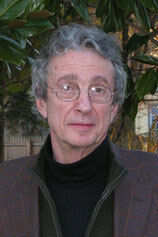
C.K. Williams (Photo by Catherine Mauger).
Princeton University is set to present a premiere reading of Beasts of Love, a new play by Pulitzer Prize-winning writer C.K. Williams.
The reading, directed by R.N. Sandberg with student actors, is scheduled for 8 p.m. Feb. 24 at the Princeton University Art Museum.
The play is a brutal, lyrical retelling of the story of Phaedra, Hippolytus and Theseus based on the ancient Greek myth of Phaedra.
The event is part of Myth in Transformation: The Phaedra Project, a year-long series of events at Princeton. The reading is free and open to the public and will be followed by a conversation with Williams and a reception.
According to mythology, Phaedra was born to Minos, King of Crete, and Pasiphaë, immortal daughter of Helios, the Sun, and became the second wife to Theseus, the founder-king of Athens. Theseus’s son Hippolytus (by his first wife Hippolyta) was a virginal devotee of Artemis, and spurned Aphrodite.
In revenge for his disregard, Aphrodite made Phaedra fall in love with Hippolytus. In some accounts, it is the nurse who reveals Phaedra’s burning passion for her stepson, while in others it is Phaedra herself. When Hippolytus vehemently rejects his step-mother’s desire, Phaedra falsely accuses him of rape. Believing his wife, Theseus curses his son, prompting Poseidon to send a sea monster to terrify Hippolytus’s horses and to plunge his chariot over a cliff, sending him to his doom.
As many versions of the story have it, Phaedra, upon hearing of her beloved Hippolytus’s death, takes her own life.
In Williams’ Beasts of Love Aphrodite is a powerful on-stage presence, arousing human passions leading Theseus to give into his rage and condemning Phaedra and Hippolytus inexorably to their doom. The tragic results warn us to respect the complex, untamable, merciless force that is love — or suffer the inevitable fate.
Williams recently retired from the faculty at Princeton’s Lewis Center for the Arts. His books of poetry include Wait, Collected Poems, Repair, which was awarded the 2000 Pulitzer Prize; The Singing, which won the National Book Award for 2003; and Flesh and Blood, which received the National Book Critics Circle Award in 1987.
The Phaedra Project brings together artists, scholars, and students from Princeton and beyond to engage creatively with the myth’s instantiations. Upcoming events include a performance and discussion of Benjamin Britten’s Cantata Phaedra for orchestra and mezzo-soprano by the Princeton University Orchestra on March 7 and 8. The Lewis Center is set to present a production of Euripides’ Hippolytus on March 28, 29 and April 3, 4 and 5.
More information is online at princeton.edu/arts.
,

