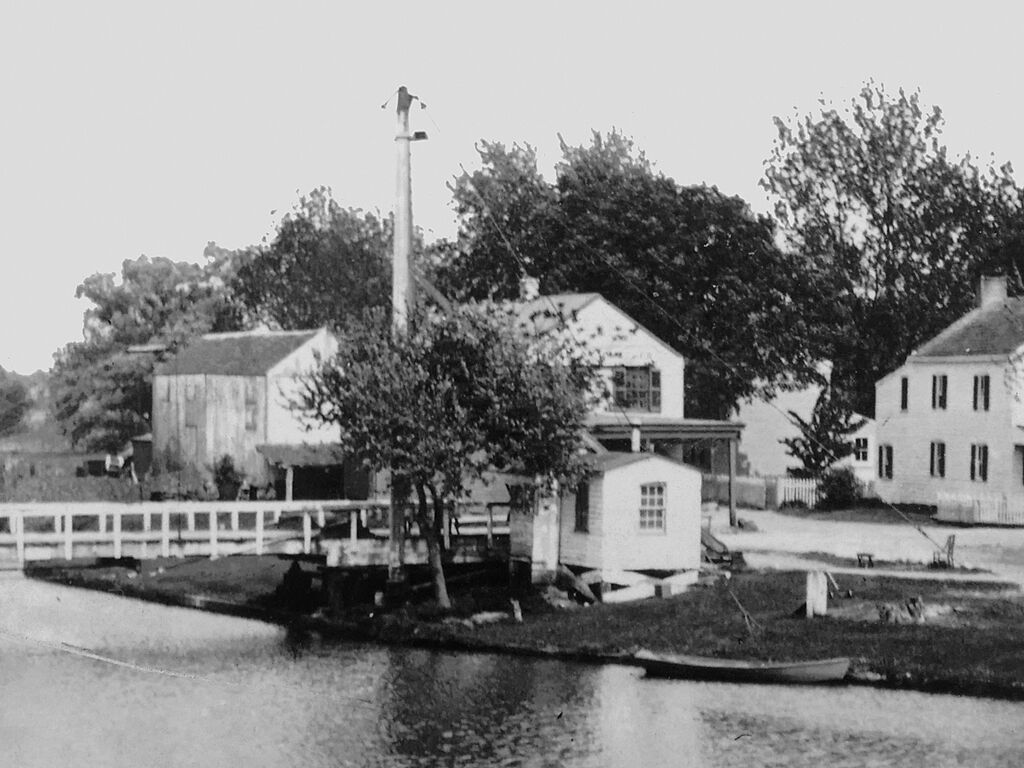
Each month, the Historical Society of West Windsor—a nonprofit dedicated to preserving and promoting local history—publishes a column covering our town’s surprisingly rich heritage. This article explores a port community that once thrived off the Delaware and Raritan Canal and Camden and Amboy Railroad.
Also, West Windsor turns 225 next year—look forward to a year of commemorations! More info on how to help plan or celebrate are at westwindsorhistory.com/year-225.
ImPORTant origins
Located at the intersection of Quakerbridge Road and the Delaware and Raritan Canal (behind Nassau Park Pavilion), Port Mercer straddles three townships: Lawrence, Princeton, and West Windsor.
It was historically located along the Province Line that once divided the state into East Jersey and West Jersey in the late 1600s. Today, two local roads still mark this boundary: Province Line and Quakerbridge roads—the latter of which also divides West Windsor from Lawrence.
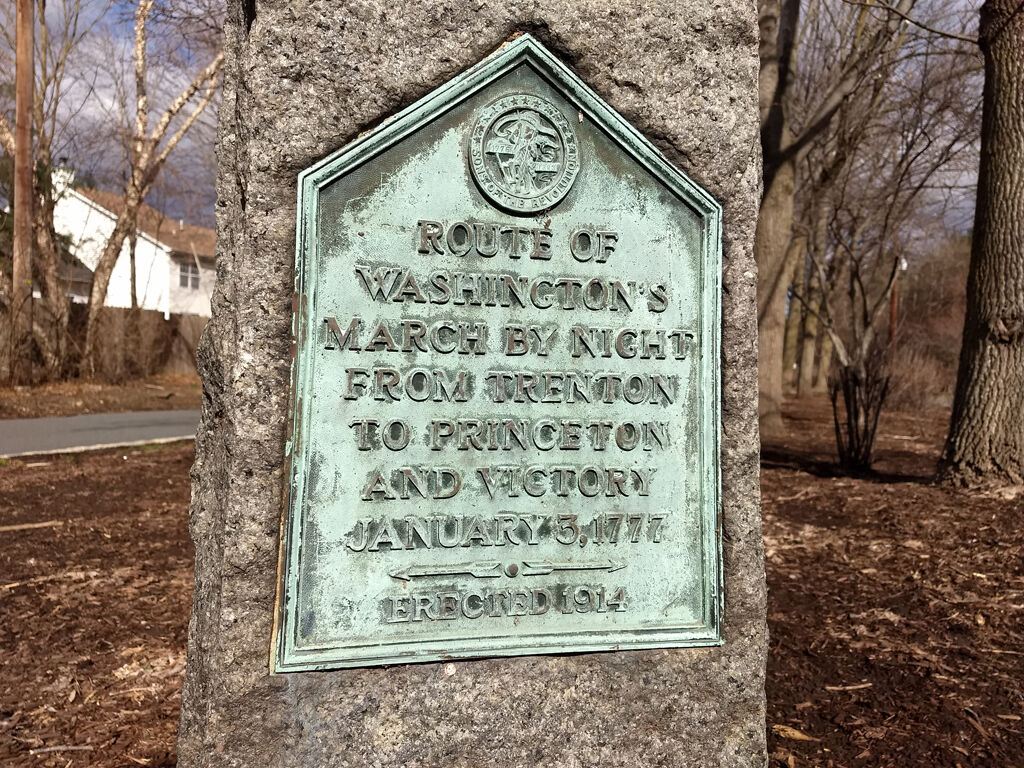
On the morning of January 3, 1777, the American Revolution was in full swing. George Washington’s army, fresh off two victories in Trenton, marched through the land that—much later—become Port Mercer and soon won a third victory in Princeton.
These three triumphs collectively convinced many troops not to abandon the revolutionary cause and helped position Washington to reclaim New Jersey and eventually receive foreign aid.
A major player in these victories was Brigadier-General Hugh Mercer—a compatriot of Washington who was killed at Princeton. In death, he became a rallying symbol for the American cause, and it is after him that Mercer County and Port Mercer are named.
Bustling Community
However, we must fast-forward several decades to see the rise of this community. The year is 1834, and the Delaware and Raritan Canal has just opened to connect trade between Bordentown and New Brunswick.
Five years later, the Camden and Amboy Railroad laid a track directly along canal’s eastern bank. Clarksville Basin—later renamed Port Windsor and then Port Mercer—blossomed as a community thriving off the canal and rail trade.
The original toll bridge over the canal swiveled horizontally to allow barges to pass through, and was managed by a “bridge tender,” whose 1830s-era house at 4278 Quakerbridge Road is now a museum operated by the Lawrence Historic Society and on the National Register of Historic Places. John H. Arrowsmith was the last bridgetender, in the early 1930s.
Port Mercer’s businesses were diverse. Charles. A. Gillingham opened a lumber yard in 1835. Joseph Decou Jr. and Joseph Gillingham owned lime kilns and a storehouse in 1840. Alfred Applegate reputedly operated a store from about 1840-1848, which was later taken over by Evan Cook and in 1883 was owned by Judson Allen.
In 1849, John A. Crater established a sawmill, the same year he was made postmaster. Crater also owned a coal yard, tenant houses, icehouse, blacksmith shop, shoe shop, and general store.
His residence was the mid-1800s Greek revival house at 4263 Quakerbridge Road. His son, David A. Crater, was appointed New Jersey’s Secretary of State in 1912 under then-Governor Woodrow Wilson.
Charles H. Mather was another prominent resident, who served as state Assemblyman from Mercer County in the early 1900s and held a variety of West Windsor Township offices. He opened a general store here around 1895 and owned a coal business.
Also in 1895, George W. Harrold erected an incubation house for chicken-raising. John F. Schanck raised racehorses on his farm nearby. And of course, there were stops for loading and unloading of train and barge cargo.
The community’s inn still stands along Quakerbridge Road, although now as a private residence. It may have been built in the 1840s/50s by John A. S. Crater, who in 1861 sold it to Samuel Smith. Smith, in turn, reputedly leased it to William West, who also owned an inn in in another West Windsor/Lawrence community named Clarksville. Longtime rumors insist that enterprising “ladies of the night” frequented the establishment.
A 1964 historical analysis portrayed life in old Port Mercer:
“The store, with its big potbelly stove in the middle, was the village meeting place. Eggs and butter could be exchanged for dress goods in gay colors. Penny candy was the drawing card for children.
On Saturday night, the men congregated for a game of “Catch Five.” The first telephone in town was installed there… Whenever a steamer or yacht blew its whistle to go through, many of the town’s people, especially the children, would run out and stand on the bank to see the boat and wave to the people on the deck.
If a steamer… stopped to unload freight—sugar, flour, molasses, furniture, etc.—the children were allowed to go on deck and inspect the boat … At night the bells on the patient mules could be heard tingling as they trudged up the tow path.”
A 1992 Historical Society “Broadside” newsletter by Port Mercer resident Gordon Keith, Jr. broadened this image of community life:
“Attempts to capitalize on the heavy traffic included a well-timed delay in opening the swing bridge. This slow opening … might entangle the mules’ tow lines and inadvertently pull (them) into the canal.
Fortunately, local boys would be nearby and rescue the mules… and receive a reward… Other (locals) would acquire coal by placing cans or bottles on fences or posts. Passing bargemen might be enticed to practice their throwing skills in knocking down the targets with lumps of coal.”
Decline and transformation
However, all good things must come to an end. With the 1860s-era realignment of the Camden and Amboy rail line to the present-day Northeast Corridor, the irreversibly and dramatically lost commercial traffic as it was now in direct competition with larger, faster trains.
It eventually fully shut down in the 1930s, and transformed into a state park decades later. So, too, did Port Mercer lose its once-bustling traffic and identity as a port community. However, it maintained its identity as an agrarian community until the last quarter of the 20th century.
Since then, the surrounding farmland and farmhouses have been replaced by housing developments and malls.
Although much of Port Mercer is now gone, the community is still visibly identifiable. Several residences exhibit unique and vernacular architectural characteristics largely unchanged from their original designs.
And, of course, the Delaware and Raritan Canal and Washington’s March plaques speak to the early history of Port Mercer—much-transformed, but not forgotten.
To contact, donate to, or volunteer for the Historical Society and explore more WW history, visit westwindsorhistory.com. We are also on social media—search “@SchenckFarmstead” on Facebook and Instagram. Email us at westwindsorhistory@gmail.com.

,