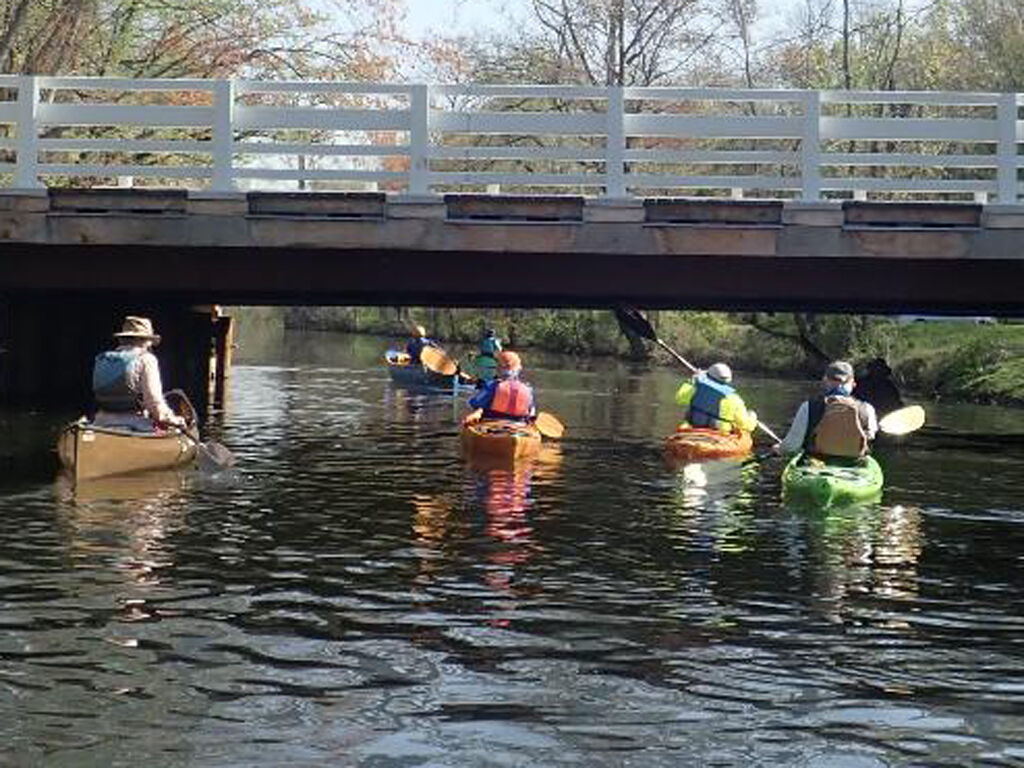
The gentle lap of water against a canoe, the rhythmic dip of a paddle, the call of birds overhead—these are the sounds that have filled the lives of Mohawk Canoe Club members for more than 120 years.
Founded in 1903 by a group of Trenton businessmen, the Mohawk Canoe Club has survived two world wars, the Great Depression, floods and fuel crises. It was originally a men-only organization dedicated to the sport of canoeing, which named itself after the Mohawk people, who were renowned for their canoeing skills. In its early days, the club thrived, even boasting a magnificent mahogany clubhouse.
The club adapted over time, opening its doors to women and families of all ages in 1968. “We had families coming in with their kids and those kids grew up with the club and brought their kids. It was good, it was good,” says Ruth Gibson, the current and first female president in the club’s history.
Gibson recalls that it was a spur-of-the-moment inflatable tube ride on the river that turned comical for herself and a friend one Fourth of July weekend that sparked her interest in canoeing.
The oars malfunctioned, leaving them paddling with their hands. Witnessing the limitations of their inflatable vessel, Gibson’s friend declared, “If we’re going to do this, I’d rather have a canoe.”
Little did they know, the situation would be the start of a lifelong passion for Gibson, leading her to eventually become a leader in the very club that would turn them into skilled paddlers.
Tom Wilkins, a longtime member and instructor at the Mohawk Canoe Club, highlighted that this is the oldest canoe club in the United States, with members historically seen paddling down the Delaware River in wooden canoes.
Mohawk Canoe Club experienced its glory days throughout the ’70s, ’80s, and ’90s. It had more than 100 members embarking on adventurous trips ranging from peaceful flatwater paddles to exhilarating whitewater rapids.
The club’s members and instructors—a number of whom come from the Mercer County area—have paddled on several bodies of water in New Jersey, Pennsylvania and New York, including the Delaware, Toms, Musconetcong and Lehigh rivers.
But beneath the serene surface of those rivers, a current of change flows that threatens the future of the historic club—the Mohawk Canoe Club has struggled to recover and stay afloat after COVID-19.
The pandemic took a heavy toll on the club. Membership dwindled and fragmented the once-vibrant social scene of monthly meetings and shared Thanksgiving dinners.
COVID-19’s impact led to the abandonment of the annual river training program, a cornerstone of safety and skill development. And like many other recreational organizations, the club has struggled to return to its pre-pandemic status.
While members can still look forward to various outdoor activities, including paddling trips, social gatherings, river cleanups, camping and more, many of these activities have had to be curtailed due to the club’s struggles with participant numbers.
“As to whether we can make it two more years… I don’t know,” says Gibson.
Nevertheless, the club and its members are working to spread the word about the importance of preserving the club for years to come. They have plenty of heartwarming stories to share about what the club means to them.
One was a trip along the upper Delaware on the Fourth of July morning in 1975,” Gibson says. They had about 20 paddlers and many of them agreed to bring along American flags.
“We headed downstream past the little river town flags flying, and as we approached the deepest point in Delaware we went under a bridge and on the bridge, there was a whole crowd of people waving a big flag and cheering,” Gibson says. “As we approached, we all cheered and waved. That is how we celebrated the glorious Fourth.”
Recounting moments with like-minded individuals can evoke a deep sense of fondness, as members relish the experience of taking full command of their boats and answering only to the river, all while enjoying the camaraderie of friends.
One of the key advantages of joining a club rather than paddling solo is the shuttle service, which allows members to leave their boat at the “put-in” and have their car waiting at the “take-out,” eliminating any transportation issues.
Additionally, paddling with a group not only enhances skills but also provides for safety and fellowship with other members. “Any trip you go on in our club is a learning trip. There is always someone to show you how to paddle better,” says Gibson.
New members need to buy or acquire all the necessary equipment and a boat to join. Although this initial investment may seem high, many items will last for years, making it worthwhile for the experiences you’ll gain, says Wilkins.
New members will learn about safety, new paddling techniques, and essential skills like securing their canoe or kayak to their vehicle.
Despite the club being around for decades, the club has never experienced a serious fatality or injury. No matter how harsh the waters became, trip leaders and the more experienced people went through first, waited at the bottom, and pulled down the others one boat at a time.
The club has fostered a sense of community and helping each other no matter the skill level they are always welcoming newcomers. Wilkins expressed how the Mohawk Canoe Club revived his love for paddling.
He began paddling as a Boy Scout and continued until he graduated high school, a time he described as long ago. However, after marrying and starting a family, this enjoyable activity faded into the background. Despite this, Wilkins always harbored a desire to return to canoeing or paddling.
It wasn’t until he turned 40 that he decided to rekindle his passion. During a conversation with a Red Cross member involved in the Mohawk Canoe Club, Wilkins received the contact information he needed. The rest, as they say, is history.
For Wilkins and fellow club members, paddling nurtured a mutual appreciation for nature and provided a refuge from daily stresses by offering a change of scenery.
“There’s no stress in canoeing, and I’ve never seen a canoe paddle wrapped around a tree, but I’ve walked through golf courses and have seen clubs wrapped around trees,” says Wilkins.
Wilkins shared that on tough days, paddling would lower his blood pressure. Regardless of one’s mood, being in nature with fresh air, clouds above and cooler underfoot makes life feel good.
Rivers have the power to transport people into tranquility, away from the hustle and bustle of metropolitan life, and into an entirely different world. Witnessing New Jersey’s beauty from a car is one thing, but paddling at around three miles an hour in a canoe allows canoers to be immersed in the scenery, sit back, appreciate it and realize how fortunate the residents of this marvelous state are.
Gibson says that being the captain of your boat, putting the cellular device down and stepping away from the hassles of everyday life is one of the many beauties that this kind of activity can bring into your life.
“If you want to go slow, we can let you paddle slow,” Wilkins says. “If you want to paddle fast, we will keep up with you. I will let you go. We just go out, have fun and enjoy the environment,” says Wilkins.
Anyone who wants to put their long-unused boat, canoe or kayak to good use should consider joining the Mohawk Canoe Club. This group encourages growth among its members, both new and old, and fosters lifelong friendships through the unique and wonderful experience of paddling.
For more information, visit the Mohawk Canoe Club’s website at mohawkcanoeclub.org. Anyone interested in becoming a member can contact Gibson at (609) 586-0588.
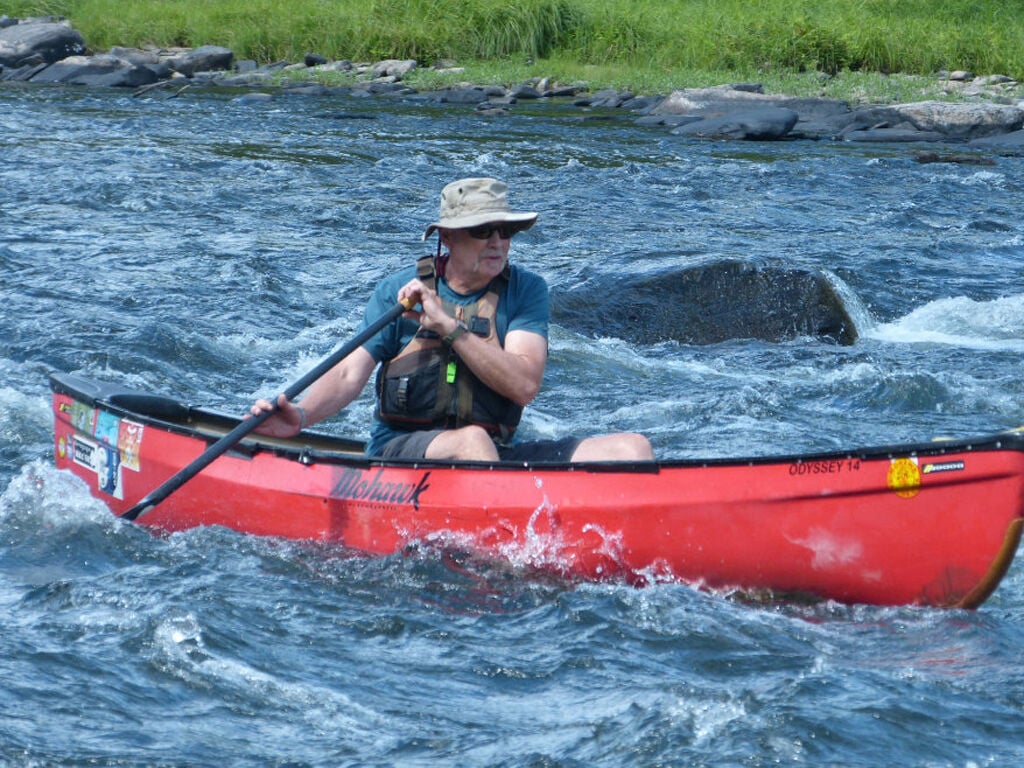
A member of the Mohawk Canoe Cub paddles through some choppy waters.,