Being an enthusiastic gardener with a formal education in landscape architecture, I enjoy taking my family to new and interesting gardens and looking for the “wow” factor in outstanding gardening concepts and techniques.
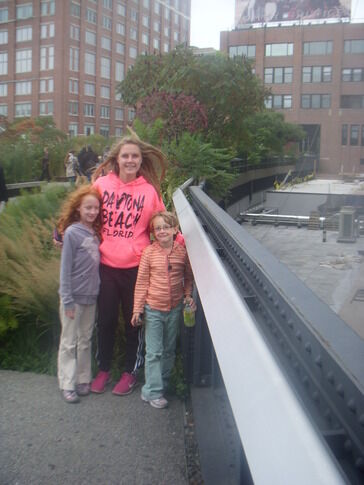
When I found out that phase three of the High Line Park in New York City was completed and opened, I called my friend and fellow gardener Gerry to accompany us on a day trip to New York City. Our families took the train to Penn Station, exited the station at 34th Street and 8th Avenue, and walked down 34th Street to 11th Avenue to where the new entrance into High Line Park is located. A tremendous amount of construction going on at the entrance because the Hudson River Park is still being built and will eventually tie into High Line Park. We packed a picnic lunch and were looking forward to a leisurely walk exploring the unique park and seeing the many plant species that were in bloom.
High Line Park, often known simply as the High Line, is a 1.45-mile-long New York City park built on a section of a disused elevated railroad spur. The concept and development of the High Line was inspired by the 3-mile Promenade plantée, a similar project in Paris that was completed in 1993. The High Line Park runs parallel to the Hudson River on the West side of Lower Manhattan. We gained entrance into the park at 34th Street near the Javits Convention Center, walked over the West Side Train Yard that feeds into Penn Station, through Chelsea and ended up in the Meatpacking District, where the terminus of the park is.
The park’s attractions include naturalized plantings of perennials, grasses, shrubs and trees — a self-seeded natural occurrence of plant species that had become established on the disused tracks. At one point of our journey, there was a dense grove of grey birch with overhanging branches; it gave the feeling of walking in the forest, with no indication that we were 20 feet off the ground in a busy city. While walking, we were able to view the Hudson River from between tall buildings and catch glimpses of cruise ships setting sail or the Statue of Liberty standing majestically. Since it was October, the plantings of asters, toad lily, golden rod and grasses were in their autumnal glory of colors and texture.
Gerry was intrigued by the way the benches were constructed out of large dimension timber dunnage and how the park design incorporated inconspicuous storage areas into the bleacher type benches, which we took advantage of for our picnic lunch. Some of the abandoned train tracks and switches were left in the landscape design, giving a hint of what the main purpose of the park had been many years ago. This design concept exemplifies that nature has no boundaries or qualms in taking over man made objects and turning them into meadows or forests over time.
I was told that the park gets pretty crowded during the weekend; we had gone during a week day and had no problem. The park was easy to get to and had several entrances from street level via stairs or elevator. There were places to eat on street level, and a place to buy food in the park, which you can locate on the park’s website. It took us approximately two hours to walk at a leisurely pace one way.
“Empty parks are dangerous…Busy parks are much less so. You’re virtually never alone on the High Line.” —Joshua David
Craig Dupée is a garden-design consultant. He lives in Ewing with his wife and daughters. Send him your email questions at hort1014u@aol.com.
,

