Amy Flynn, the new chief executive officer of the Trenton Area Soup Kitchen, grew up poor on a dairy farm in rural Ohio, with early memories of an absence of heat during the cold winters. She remembers “going to bed at night and my mom stacking blanket after blanket on top of me and waking up in the morning and seeing my breath.”
But an ethic of communal sharing trumped poverty in her farming community. “Even though our family didn’t have a lot, we never had so little that we didn’t have something to give back,” Flynn recalls. “We canned all summer to have food for the winter and shared some of that food with others who had less.”
This commitment to communal sharing was exemplified for Flynn by her grandmother, “a person of service, who was always giving back to the community.”
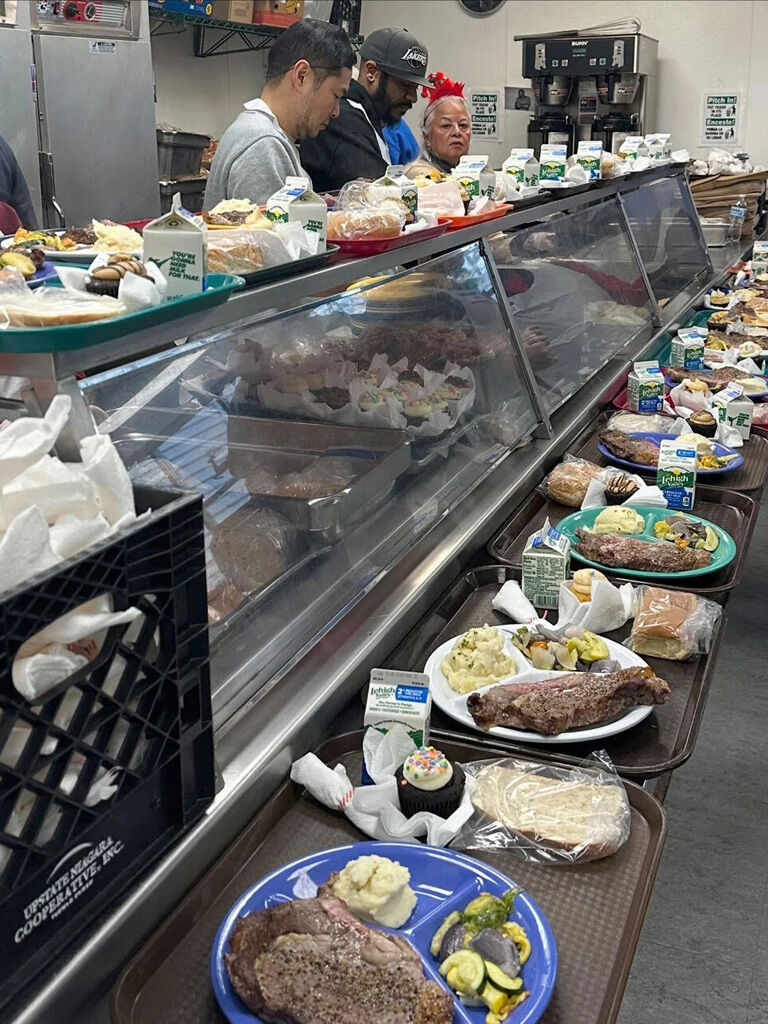
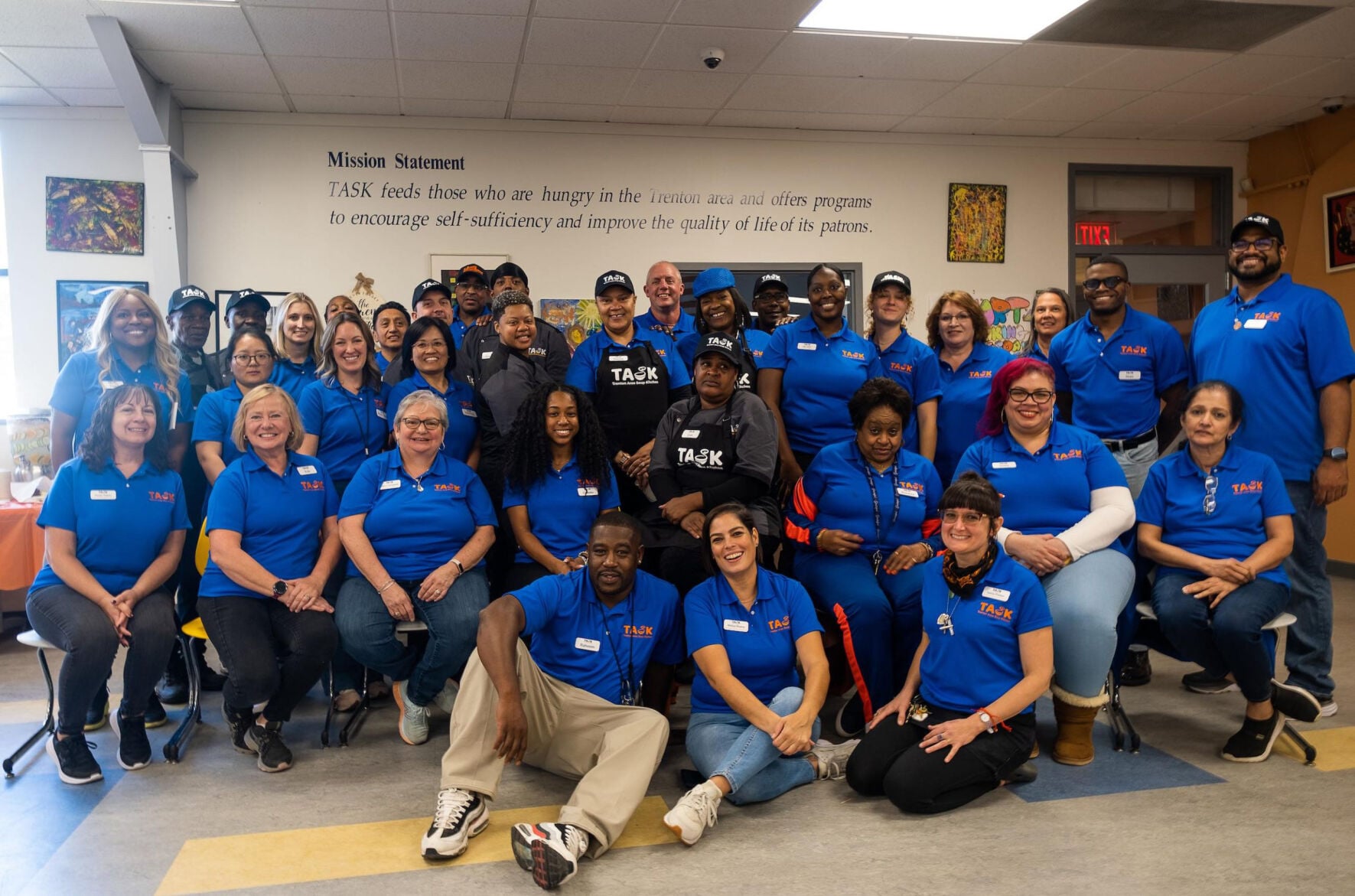
Flynn says that the big meals her grandmother cooked for everyone at harvest time are reminiscent of TASK’s mission and the critical involvement of volunteers in realizing it. Not only does TASK provide food for the hungry six days a week at its Escher Street home, no questions asked, it also gives more than 4,000 volunteers a year a chance to give back to their community.
“TASK has a doctrine of radical hospitality. It takes me back to growing up—neighbors helping neighbors,” Flynn says.
Flynn, a resident of Ewing Township, started as the new CEO of TASK on Jan. 21 after being named to the position by the nonprofit’s board of trustees earlier in the month. She replaces Joyce Campbell, who announced her plans to retire last summer after more than eight years at the helm.
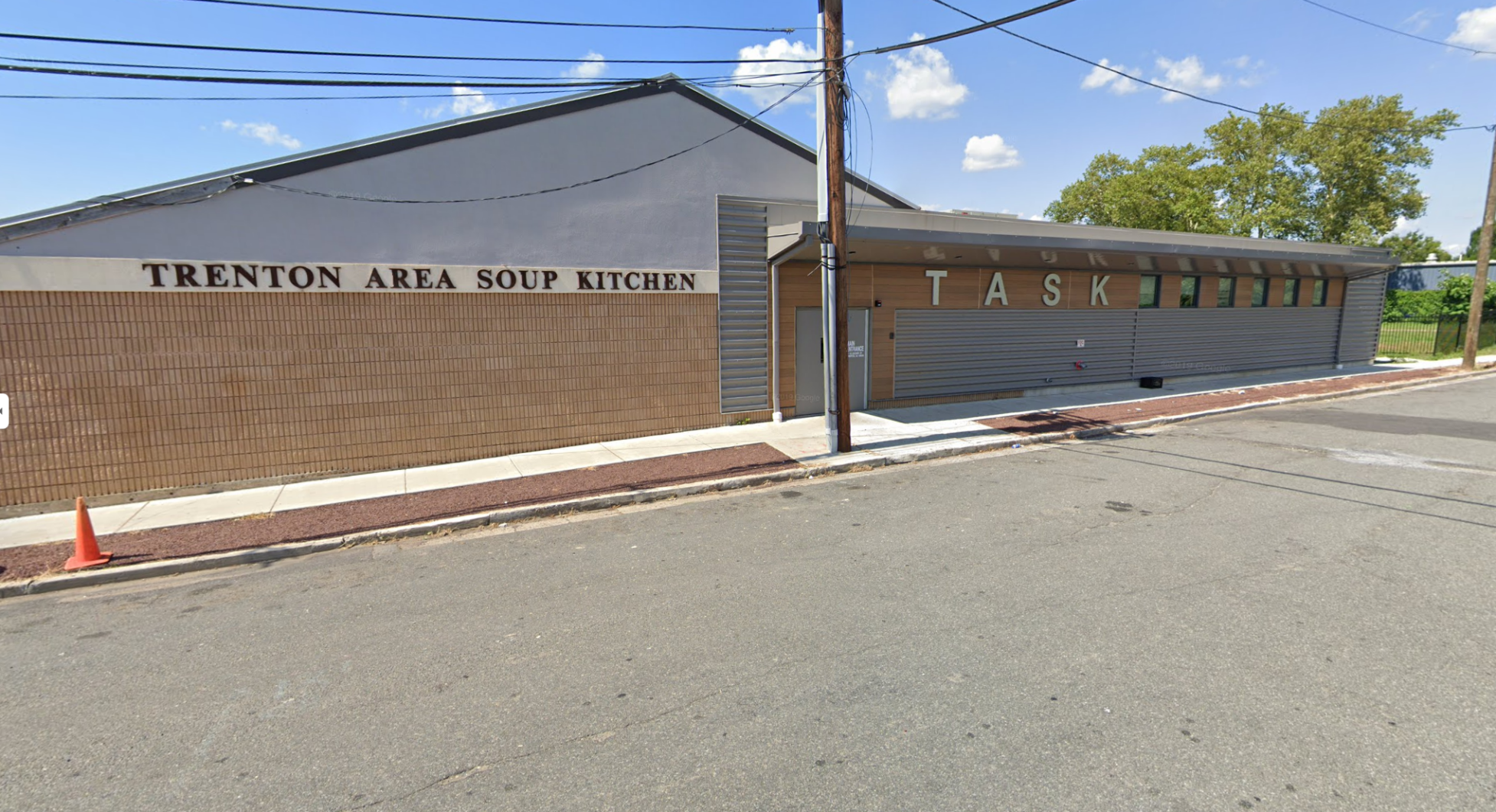
TASK, one of the largest nonprofit organizations in the Mercer County area, provides free meals to those who are hungry, including the homeless and working poor.
Flynn’s career in fund development and leadership at mission-driven organizations has given her many varied opportunities to carry forth the tradition of communal support to improve the lives of families.
For both staff and volunteers, she says, “you have the opportunity to make that kind of impact every day, to go to the fringe where people are in need, meet them there, support them there, and, at best, provide opportunities for them to move forward.”
But Flynn’s career actually started in education, not development. It took a while until “the planets aligned, and I knew what I wanted to be when I grew up.”
Only in her late 30s, while living in Cochocton, Ohio, and working as an art and religious education teacher at Sacred Heart Catholic School did Flynn have two experiences that moved her from education to fund development.
The first grew out of her efforts to move her school art program from “a stark basement” to “a bright space where the kids could be creative.” To make this happen, she reached out to parents and to community members to raise money or get donated services.
“I didn’t know there was a word for that—development—and I didn’t understand that as a career path,” Flynn says.
Soon a critical set of events involving the Pomerene Center for the Arts in Coshocton, where she gave art lessons to students after school and summers, changed her career goals entirely.
When the head of a local family foundation died and his more progressive and forward-thinking son took over, he brought in the Indiana School of Philanthropy for a two-week intensive training and required all the organizations his foundation funded to come with two employees as a prerequisite for funding renewal.
The art center’s executive director, its only employee, invited Flynn to be the second attendee.
“That’s where I met professional fundraisers, for whom philanthropy was their career,” Flynn says, “It clicked for me; I really wanted to do this. When you work in a nonprofit, you get to see the fruits of your labor every day and how it impacts lives.”
Flynn’s first big developmental role was at a continuing care retirement community, the Ohio Eastern Star Home, in Mount Vernon, Ohio. She then moved to a similar community in Yakima, Washington, but did not stay long because they decided to refurbish their facility instead of moving forward with the promised funding development effort.
Her next position came by happenstance when Flynn and her husband were touring the Yakima YWCA, the largest domestic violence service provider in south-central Washington. It had a shelter, transitional housing, legal aid and advocacy for victims of domestic violence and their children.
The tour leader mentioned that their grant writer was retiring, and they wanted to build a funding development effort. Sure enough, Flynn, who had done some grant writing for the Ohio art center, became their director of fund development and, later, executive director.
Flynn learned many lessons during her tenure at the YWCA. An early one was the importance of getting everyone involved—volunteers, donors and even service recipients—by finding ways to share their stories.
“It’s one thing to read a pamphlet or to hear from a staff member,” Flynn says. But hearing from someone who is passionate about an organization or who has experienced life changes because of it pulls people in. “People are drawn to the experience of other people; people give to people.”
One day at the YWCA a woman from Oregon delivered of a van full of backpacks and school supplies that she had collected on her own for the shelter’s children.
“I wanted to find out why,” Flynn says.
The woman, who made these deliveries yearly, had grown up in Yakima, where her mom was in and out of abusive relationships, and her family was in and out of the YWCA shelter.
“The shelter had a profound impact on my life,” the woman explained to Flynn. Not only did it provide safety, but it taught her what a healthy relationship looks like and what red flag behaviors look like.
The woman said, “I am married, in a healthy relationship, and I’m the first woman in my family in four generations who is not in an abusive relationship. I owe that all to my time as a child when I was in the YWCA shelter.”
Bowled over by the story, Flynn invited her to write the YWCA’s annual appeal and share her story.
Also important for Flynn’s professional growth was the opportunity while at the YWCA to be part of a regional group of other YWCA leaders throughout the northwestern region.
“Those women were profoundly influential as I was learning and growing into the role of executive director,” she says.
Faced for the first time with an entire organization’s budget, she asked another executive director whether she should take finance classes.
“She gave me the best advice ever: ‘You do what you do best and surround yourself with people who have expertise in the areas you do not.’”
At the YWCA Flynn also learned about creativity and innovation, “being able to think outside the box.”
When she saw that women faced significant resistance from landlords when it was time for them to leave the shelter, she came up with a workaround. Because the landlords were unwilling to risk a tenant without a history of renting, the YWCA worked with many landlords in the area to create a master lease program whereby the YWCA held leases for a year and then transferred them to the individual women in their own names.
Flynn also had an opportunity to start a social enterprise, a thrift store named Persimmon, managed by domestic violence advocates (woman who in most cases were survivors who had come out the other side and helped others to “get their feet under them”). The shop carried a working woman’s wardrobe, and any woman referred and returning to work could get five full outfits.
Just as important, the shop provided a soft launch into the work force for women in the shelter who may not have been ready for a regular job, dealing as they were with worries of abusers showing up, depression, or not having childcare. Working in the shop taught them the soft skills they would need, like how to handle conflict, work as a team, and write a resume.
For Flynn, the shop held yet another lesson—the importance of diversified funding streams.
“No nonprofit should be heavily reliant on government funding or grants,” she says, explaining that they need to investigate other revenue opportunities that can give the nonprofit long-term stability.
Flynn’s next career move was to California, in support of her husband’s career as a nonprofit consultant—he had an opportunity to work for Father Craig Boyle at Homeboy Industries in Los Angeles.
Flynn got a job as the director of major gifts for Habitat for Humanity of Greater Los Angeles, where she headed the individual giving team. What was different from her previous work was the size of the development group—22 people—and the opportunity to work together with other teams.
“It was amazing because you had so much support you had more bandwidth and a farther reach; you could cover all the bases because you had help. I loved that,” Flynn recalls.
Also, because many team members were early in their careers, Flynn had a number of opportunities for doing more mentoring, as she had done at the YWCA.
In February 2020, after four and a half years at Habitat and a couple at Olive Crest of Los Angeles, where she ran her own development program, Flynn and her husband moved back to Ohio, where their son, one of eight children in their blended family, had two small children and was working on his doctorate.
Flynn worked as executive director of Modcon Living, a nonprofit focused on keeping people in their homes longer, with dignity and independence. They had a tool lending library, where people who wanted to make repairs or do landscaping or put in a garden could check out the tools they needed, using a library card. They also provided home repairs, from installing grab bars to putting on new roofs.
Modcon worked closely with the local Meals on Wheels program, whose volunteers would make referrals so that their clients could stay in their homes safely.
Four years later, Flynn and her husband decided to move closer to their two daughters in New Jersey. Having worked closely with Meals on Wheels in Ohio, Flynn became chief executive officer of Meals on Wheels of Mercer County.
“Meals on Wheels is an amazing organization; we are serving people who don’t have the opportunity to go and get meals at places like TASK or to get to a food pantry or even to make meals on their own,” Flynn says.
Always attuned to the human component, she emphasizes the importance of social connection with the volunteer food deliverers. “Sometimes that is the only human contact our participants have all day long.”
A year after joining Meals on Wheels, Flynn learned that TASK was looking for an executive director. “I decided at the last minute to throw my name in the hat. It’s such an amazing local organization,” she says.
In fact, Flynn already had a connection with Joyce Campbell, who retired as TASK’s executive director on Dec. 31. When Flynn came to town, Campbell, she says, “got me connected to the right people and helped me learn about the nonprofit landscape here.”
Michelle Wexler, TASK’s chief development officer, said that Campbell’s eight years as executive director was a period that included accelerated growth brought on by COVID. She also shared some challenges that the nonprofit will face under Flynn’s leadership.
TASK’s cornerstone program, meal service, involves preparing and serving over 11,000 meals weekly from its Escher Street kitchen. About a third of these meals are served in the Escher Street dining room, with lunch provided six days a week and dinner five days a week.
The remainder of meals are distributed to more than 40 community meal sites, both public (e.g., churches or community centers) and private (e.g., after school programs). Several of the sites are served by food trucks.
The need is significant: over the last fiscal year TASK has served 596,000 meals. Driving people to soup kitchens are skyrocketing food prices and rent increases that have outpaced rises in wages (in January average monthly rent in Trenton for a studio is $1,000 and $1,400 for a one bedroom).
Anecdotally, Wexler says, “we hear that food ends up being a flexible expense. People will forego meals to pay rent, keep a car or pay a bill.”
But, Wexler says, “the inability to access food can be really detrimental and stressful; it has a negative impact physically and mentally—not knowing where your next meal is coming from.”
“Our goal is to provide additional access,” Wexler says, but there are a number of potential barriers to service: lack of transport, stigma (the discomfort of coming to a soup kitchen, which they try to counter with their “no questions asked” policy), and even hours of operation.
TASK also has programs and services meant to address some of the underlying causes of food insecurity: case management; advocacy; education; creative arts; job search assistance; and patron services (providing, e.g., warm winter gear, a place for mail delivery, eyeglasses, and hygiene products).
“Going forward, our biggest opportunity but also our biggest challenge is space,” Wexler says. “Often, we can’t comfortably serve all the people who come at once. We had to go to one in, one out, to make sure flow is there and everyone can relax a bit. We are using every available inch.”
TASK is also looking for ways to bring in additional revenue through social entrepreneurship, for example, using food trucks for private events or catering—in order to maintain sustainability as expenses continue to increase. Today TASK is almost exclusively funded through individuals and businesses via fundraising and philanthropy.
Looking toward her new job, Flynn says she wants to take such challenges head on, and to preserve and build on Campbell’s “incredible legacy of impact.”
“I know I am going to be standing on her shoulders; I know she has great team; and I’m just looking forward to continuing with that tradition of service,” she says.
As the interview closes, Flynn had two more things to say. First, she urges readers to volunteer at TASK or Meals on Wheels. Helping to feed the hungry, she says, “is incredibly rewarding.”
And, finally, she reemphasizes that her grandmother was the person who influenced her the most. “She has a lot of responsibility for the trajectory of my life. I think about her every day.”
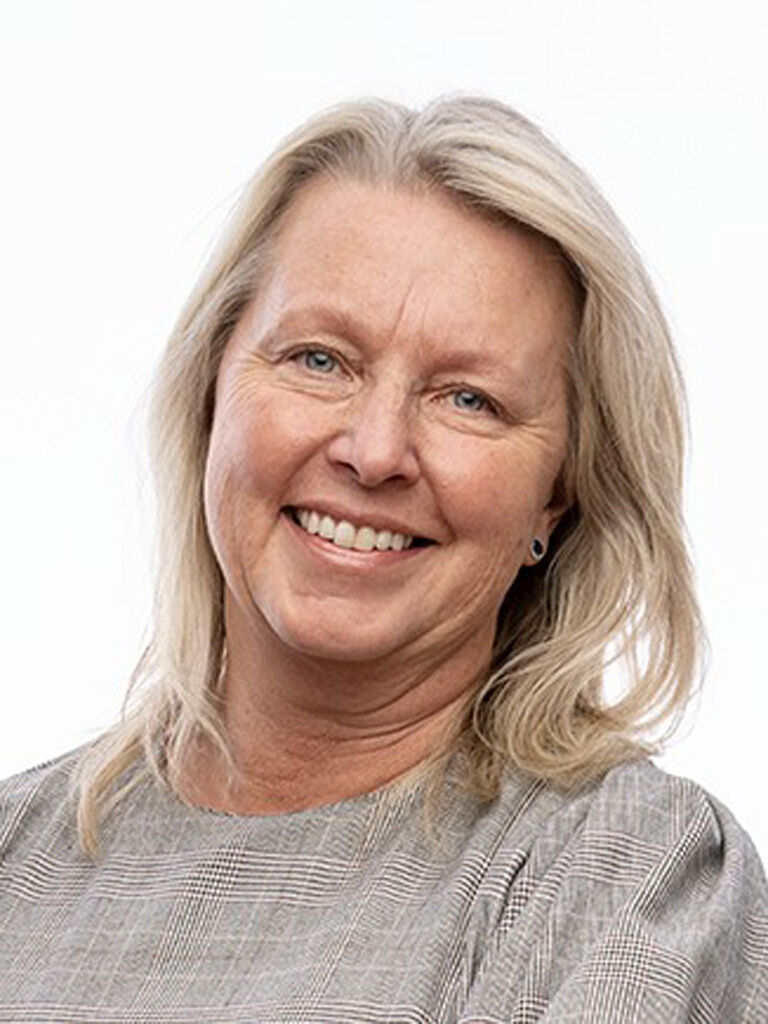
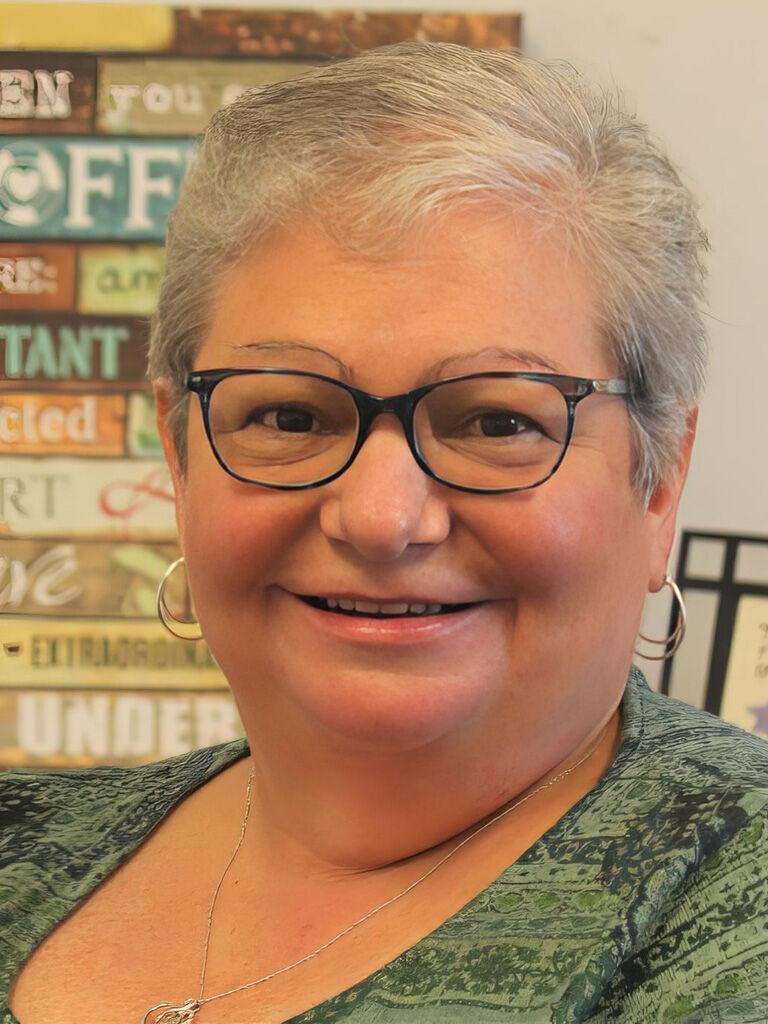
Ewing resident Amy Flynn, the new CEO of the Trenton Area Soup Kitchen.,
Workers at the Trenton Area Soup Kitchen serve holiday season meals to the hungry. (Facebook photo.),