The sensation of waking up to see rays of light streaming in from the outside can start your day with an equal glow of positivity. But when the wintry weather does not want to cooperate, or if you happen to pass a wall before a window, rise and shine to a painting with a sunny disposition that brings warmth to those colder, earlier hours of the morning.
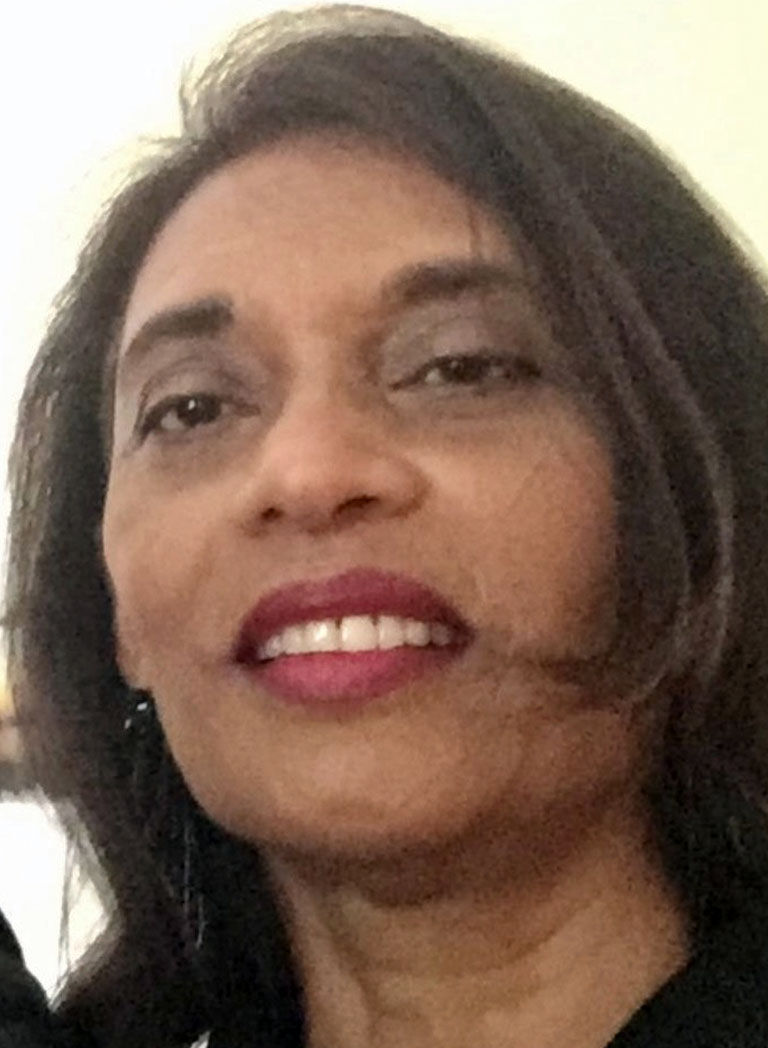
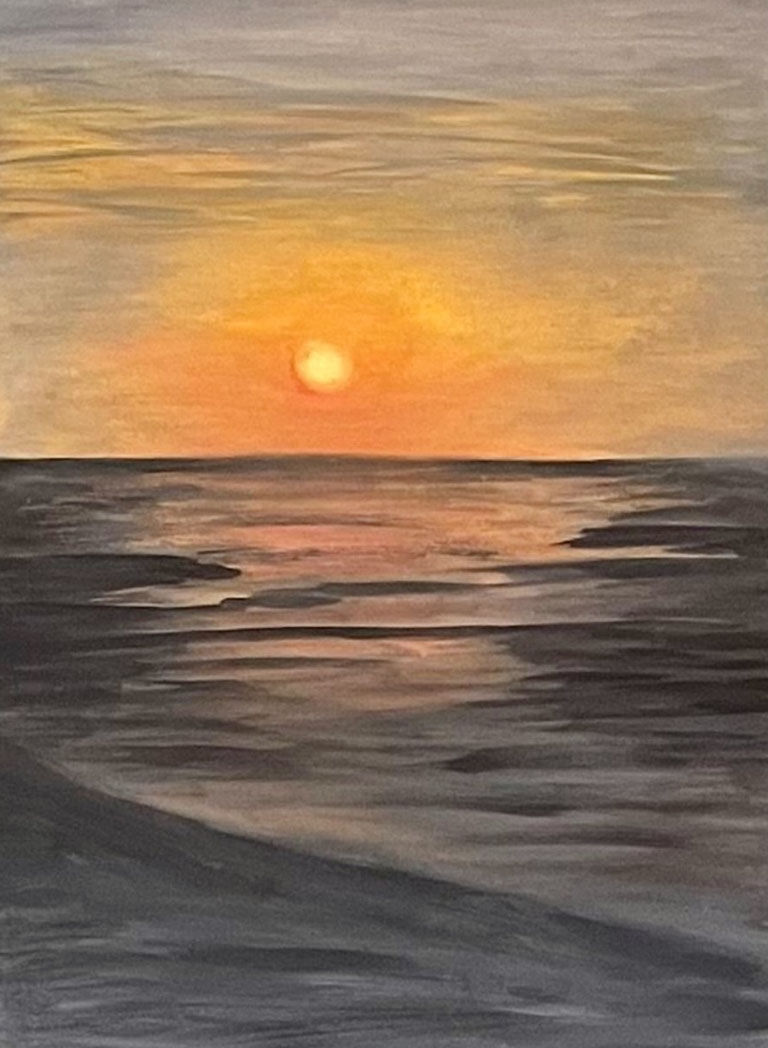
Self-taught artist Shiranie Perera creates acrylic paintings with intense, emotive hues in the form of sunsets or abstract patterns. Her piece “Hiru Sevaya,” Sinhala for “sun rise,” melts from oranges and yellows into a sea of red, the rippling waves reflecting color in the sky.
“I don’t use too many dull colors. I want people to be uplifted by looking at a painting. That’s my idea — if you want to get up in the morning and you see a nice piece, you feel good about it,” Perera said, reinforcing that feeling with similar compositions in her own bedroom.
Perera, who is originally from Sri Lanka, spent roughly 25 years living in Princeton before recently moving to Lawrenceville, where she now has her own studio and gallery at 21 Craven Lane. “Shirankala” is the permanent home for all of Perera’s 100-plus paintings, with the name a combination of hers, Shiranie, and the word “kala,” or “art,” in Sinhala.
Now, 15 of Perera’s paintings are on display in the office lobby of Songbird Capital, an investment services firm located at 14 Nassau Street.
The exhibit opened November 19 and is accessible to the public on Saturdays from 1 to 6 p.m., as well as by appointment on Thursdays and Fridays from 5 to 6 p.m. To schedule a time to visit, contact Perera by phone at 609-331-2624.
Jie Hayes, the founding principal and portfolio manager of Songbird, personally asked Perera to display a number of paintings in her office through the holidays.
This “thrilled” Perera, who met her while working at the boutique below Songbird, Orvana London, which specializes in handcrafted textiles and artisan apparel. Before Orvana relocated to Nassau Street, owner-designer Alka Mattoo launched it as a pop-up in Palmer Square, then as a storefront on Chambers Street (see the Echo, October 2018).
What brought the two parts of the building together was a September day when Perera gave Hayes a business card for her gallery. While she had initially planned for a quick visit, Hayes ended up spending nearly three hours with Perera, calling the experience “mesmerizing.”
Hayes proposed that Perera could use the space at Songbird Capital to show her work. During a pause in the installation process, Hayes confessed that in the morning after her studio visit, she was so moved by the paintings she described as “captivating and liberating at the same time” that she picked up her guitar and played again.
“That itself was telling me, ‘you need to paint more.’ It inspired her,” Perera said, grateful for the opportunity to spark another person’s imagination. “If somebody wants to get inspired [and] do something that they like to do — it need not be painting, it can be something different — then my message to them is you have to do it.”
Perera’s primary medium is acrylics on canvas, but she also enjoys using wood from time to time; according to the artist, the latter material requires primer, a “lot of paint,” and can be difficult to frame.
“When I grew up in Sri Lanka, things were not that easily available. Everything was expensive,” Perera explained, which kept her from pursuing her passion. She has “always loved” art since childhood, often mixing vibrant colors or using markers to scribble for fun. She was eager to learn more about painting in her earlier school years, but once she grew older, classes on the subject were no longer offered.
But that did not stop her from experimenting with less expensive alternatives like chalk, even if the medium was never as rewarding as the acrylics she now gets to use.
After Perera received a degree in accounting and economics from the University of Peradeniya, she married her husband, Priyantha. The two of them moved to the United States together in 1983, where Priyantha continued his studies at Michigan State University.
As self-described “poor students” living on a stipend, the couple was able to get by, but Shiranie could not further her own education in America given the steep price of college credits.
“I regret it, and I don’t regret it,” Perera explained, noting that she did already graduate from an institution in Sri Lanka and feared that any financial complications would prevent her from living out another dream of hers — becoming a mother.
The Pereras welcomed a daughter, Dilshanie, and moved to New Jersey in December of 1997. There, Shiranie postponed her painting endeavors to work for Lisa Jones, the owner of a Witherspoon Street retail store by the same name that sold jewelry and accessories. Jones closed the business in February of 2018 amid rising rent prices and the shuttering of several other smaller shops, leaving 11-year employee Shiranie with newfound free time.
By this time, Priyantha was an executive at a global reinsurance intermediary. Dilshanie had graduated from Princeton High School, moved out, and enrolled at the University of Chicago. This was the open window, sunlight and all, that Shiranie went for.
“I thought when I lost my job, ‘this is the chance; I need to do it,’” she said, noting that when she started out, the couple downsized from their first home to a smaller two-story apartment in Palmer Square. The arrangement presented difficulties, but Perera remained determined and carried on painting even after taking on another part-time position.
Perera would make multiple trips downstairs to the basement floor, where to properly store her pieces, she had to “put everything down and bring it back in the evening” after work. “You can travel with the wood pieces, but [when] you take canvas, you have to be very careful, so you don’t get any holes or anything like that,” Perera said.
Despite feeling “restricted,” she gained more confidence in her skills along the way. Shiranie explained that both Priyantha and Dilshanie were “very supportive,” which encouraged her to keep going despite any bumps in the road.
Shiranie’s family members, including Dilshanie’s husband, Phil Friedrich, have helped to name all of her paintings. Dilshanie, who earned a PhD in anthropology at Stanford and now lives in New York with Phil, is a climate humanities postdoctoral fellow at the Center for Science and Society at Columbia University, as well as a lecturer in the department of anthropology.
“I never thought I could do this,” Perara said, whether that was in terms of affordability or timing, noting that her family’s best interests always had to come first. “Otherwise, everybody has to pitch in and do [more], but [Priyantha and Dilshanie] are over the top, always helping me…without them, I couldn’t have done it.”
When the apartment was no longer feasible for Shiranie and Priyantha, the Pereras bought a new house in Lawrenceville just before the COVID-19 lockdown. During the pandemic, Shiranie could focus on her pieces instead of worrying over her husband because Priyantha was able to work from home.
“Actually, it was very peaceful for me to work with my art,” Shiranie explained, the “freedom” of expression giving her a way to relax further.
Using the internet as a tool, Perera could build a platform through her gallery website, www.shirankala.com, and view online exhibitions from artists she admired. Shiranie fondly remembers that in the past, she would travel with Priyantha to see some of these inspirations in physical museums, too.
“Rothko is my favorite,” Perera said, citing additional figures like Henri Matisse and Jackson Pollock as influences even if her own artistic approach does not exactly match theirs.
Rothko might have refrained from defining his personal style, but he is most famous for his color field paintings, an offshoot of abstract expressionism “characterized by large areas of color, typically without strong tonal contrasts or a defined point of focus,” according to the MoMA website.
Some of Perera’s works even include geometric shapes reminiscent of Rothko, particularly in “Trio,” which features three shapes — one rectangular is evocative of Rothko’s signature shape, yet much longer and readily overlapping others in thick, bold lines of red.
“Doing abstract work, there’s no limit. You can stop anywhere you want. But whereas if you’re doing a portrait or something like that, that has to [look like] that person, or, if you’re doing a scenery, it has to look like that scenery. With abstract painting … it’s limitless,” Perera said.
Now, she has a spacious studio and gallery where there is “plenty of room” for her passion. Her rules are simple, no matter the complexity of the piece; if she hangs it and “is not happy” with the result, she just “paints over it” until that feeling changes.
“In life, there’s so many hurdles you have to jump [through], but when you’re alone and looking at a painting, if it feels good to you, then it’s good,” Perera said. “Sometimes people have lots of things to do with their lives. It’s so hectic, and you look at a painting or a picture … and then you feel relaxed.”
Perera is candid in saying that while she does view her endeavors as a long-awaited escape, she also wants to hear the opinions of people who view or purchase the paintings.
“I think that’s a good thing. That’s why, I think, painters paint — because they want to give a message,” Perera explained, adding that a musician once told her that three paintings she had purchased “sang to her.” “She said, ‘I see music in these three paintings,’ so that in itself is so interesting to me. But I like people to give feedback; then you want to paint more.”
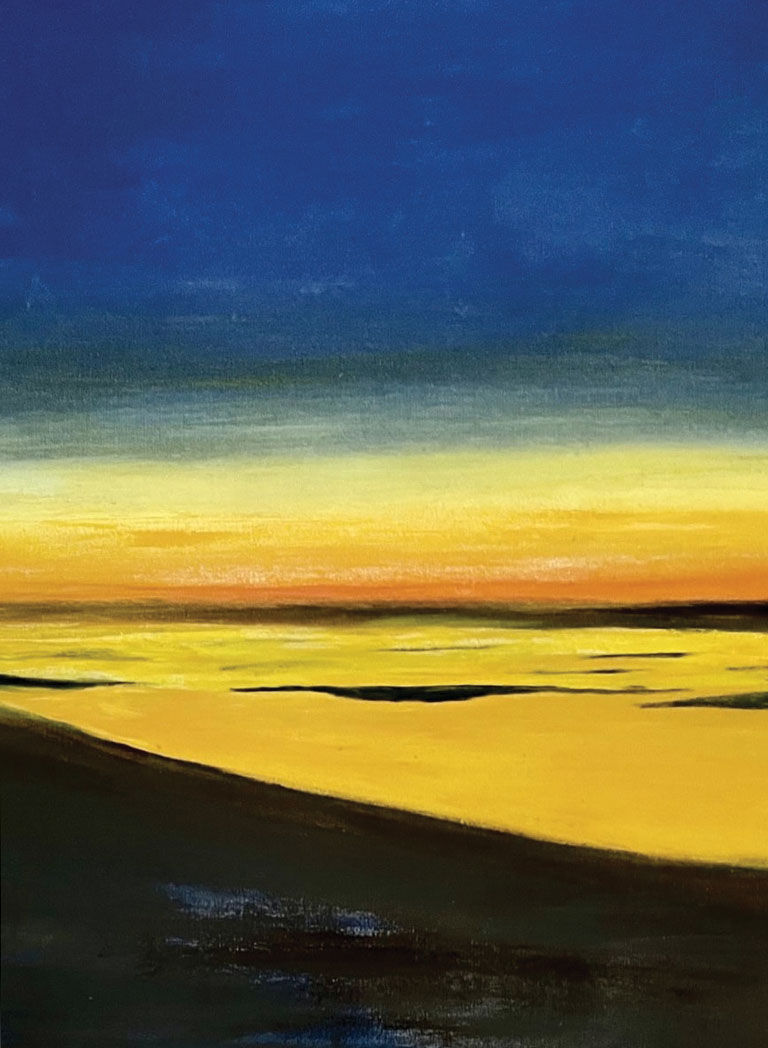
While “Ness” is another natural scene, Perera’s palette changes in tone, with blue occupying the top half of the composition before being greeted by familiar yellows encroaching on a black beach. But this time, Shiranie paints a promontory, a headland or cliff leading into a body of water, to provide visual contrast.
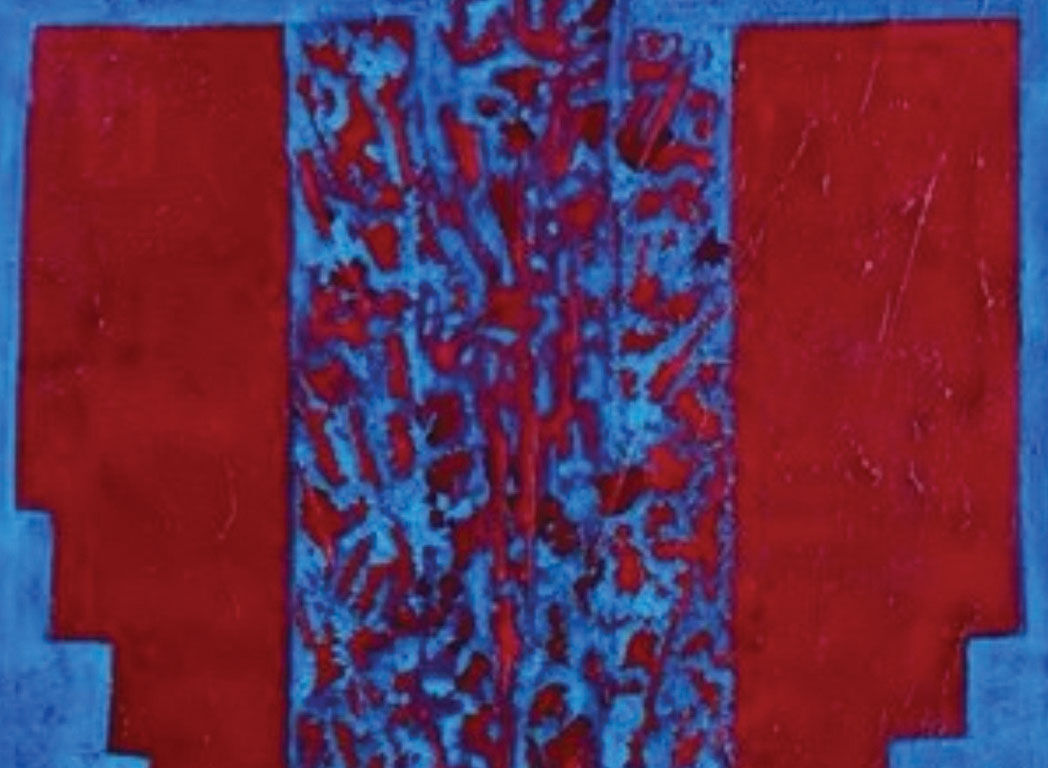
Others, like “Gateway,” are less defined, giving the artist the ability to make shapes her centerpiece, then invite spectators to apply their perspectives to the paintings. Everyone can see abstract work differently, so as Perera’s exhibit at Songbird Capital continues through January, she is eager to share this selection of works with Princetonians and hear thoughts as vibrant as her use of colors.
“I am so happy with what I have done thus far,” Perera said. “It’s very relaxing to me, and I enjoy every piece that I have done.” If it dawns on you to ask the artist herself to pick one of them over another, though, her response will be as humble as it is illuminating.
“I don’t want to say that because the other paintings will get mad,” Perera explained with a laugh. “They’re all my favorites.”
For more of Shiranie Perera’s work or inquiries, see her website at www.shirankala.com or visit in person at the Shirankala Art Gallery at 21 Craven Lane in Lawrenceville.
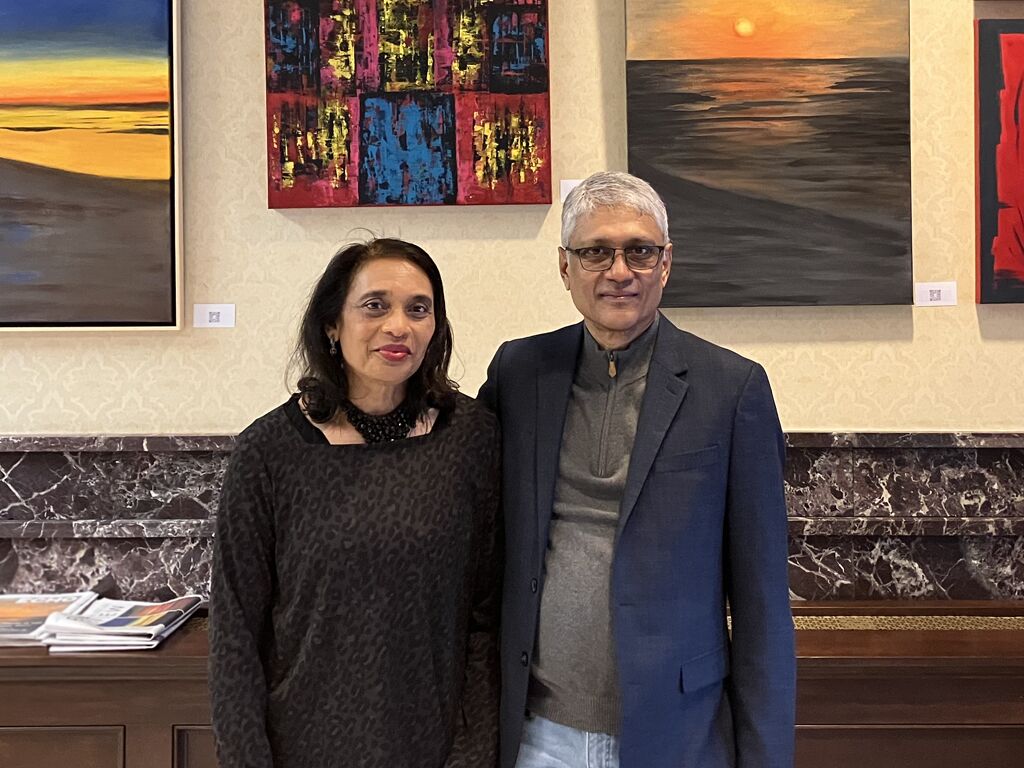
Lawrence resident Shiranie Perera and her husband, Priyantha, at Songbird Capital in Princeton, which is hosting an exhibition of her paintings. (Staff photo by Rebekah Schroeder.),
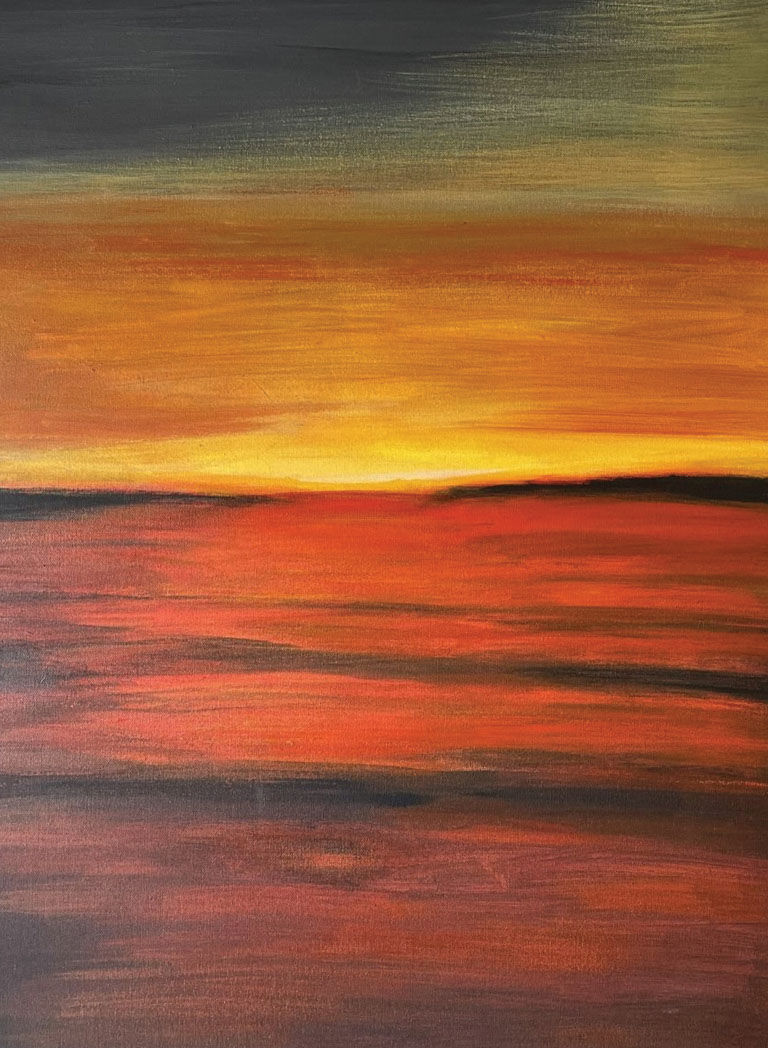
'Dawn' by Shiranie Perera.,
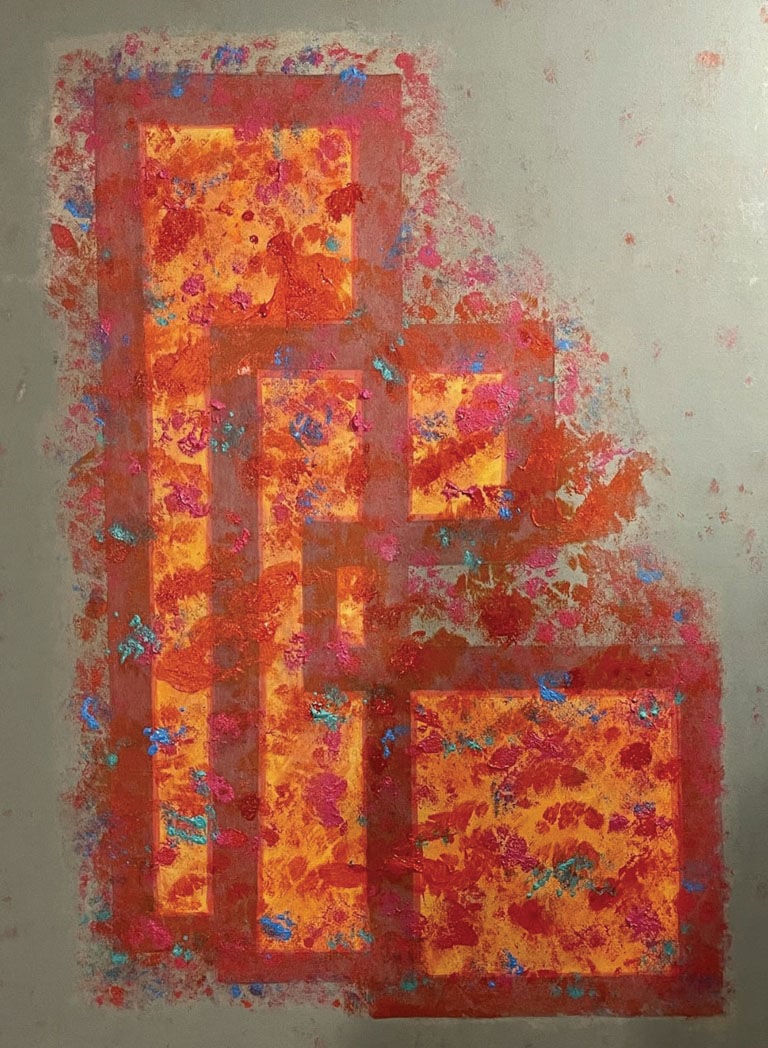
'Gateway' by Shiranie Perera.,