Four of seats on the Hopewell Valley Board of Education are up for a vote this year — all in Hopewell Township.
Three of the seats are full three-year terms on the board. Incumbents Andrea Driver and Anita Williams Galiano, both elected for the first time in 2020, are up for re-election. Long-time board member Adam Sawicki is not running for re-election.
Also running for the three-year seats are Pamela Lilleston, John Slotman and Aileen Matticoli. Lilleston is a current member of the board, having been appointed earlier this year to fill the unexpired term of former board president Deborah Linthorst.
Andrea Driver, 48, is an 8th grade English language arts and social studies teacher. She has lived in Hopewell Valley her whole life. She and domestic partner Lawson McElroy II have three children: CHS grads Hailey and Brooke Driver and CHS senior Lawson McElroy III.
Pamela Lilleston, 41, is director, Office of Applied Research and Evaluation, state Department of Children and Families. She has lived in Hopewell for six years. She is married to James Noe, and they have two children who attend Hopewell Elementary School: Kai and Hope. Lilleston has a doctoral degree and master’s degree in public health from the Johns Hopkins Bloomberg School of Public Health and a bachelor’s degree from Georgetown University.
Aileen Matticoli, 47, is an office administrator who has livedin Hopewell for 21 years. She and husband Dave have three children; two attend Hopewell Valley Central High School and one attends Timberlane Middle School.
John Slotman has lived in Hopewell Township for a decade. He and wife Jessica have a fifth and a sixth grader in the district. Slotman did not provide his age.
Anita Williams Galiano, 57, is a business consultant who has lived in Hopewell Valley for 23 years. She is the mother two two Hopewell Valley graduates: children Matthew and Alicia.
Two candidates are running to fill the year that remains on Lilleston’s term: Mark Austin and Dhruv Kapadia. Austin did not respond to multiple requests from the Hopewell Express to participate in this Q&A.
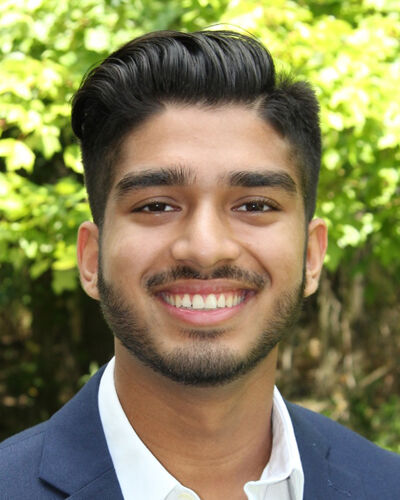
Dhruv Kapadia, 21, is a soon-to-be graduate of Boston University. He has lived in Hopewell Township since 2004 and attended HVRSD schools from K to 12. Kapadia is the son of Amit and Renu Kapadia. His elder brother, Kunal, also attended HVRSD schools.
The Hopewell Express emailed questionnaires to the candidates and asked for their responses. Their answers can be found below, edited as little as possible for length, grammar or clarity.
Tell us about the moment that you decided to run, or run again, for school board.
Andrea Driver: I made the decision to run for school board when I realized our community, state, and country were in a state of yearning for change. I struggled to determine the role I could play in order to help make and influence positive change. I care deeply about my community and felt compelled to get involved. I strongly believe the route to change is through education. Coming from generations of lifelong community members, as well as a professional educator, running for school board appeared to be the most logical choice.
Pamela Lilleston: I was appointed to the school board in January 2023 and quickly came to understand the meaningful impact that a thoughtful, hard-working and collaborative school board can have on the lives of children and families. I also saw the unique value I bring as a public sector leader and scientist with experience making data-driven decisions in a complex environment, a parent of young students in Hopewell’s schools, and an advocate for child and family well being.
Aileen Matticoli: I decided to run for school board after observing recent meetings. This spring the board unanimously voted to approve the budget, which included pausing the elementary STEM program, and like many parents I was caught off guard by the perceived lack of transparency in their decision. Often motions are passed unanimously with little discussion or dissent. We need someone with a fresh perspective to join the board, and I feel I can serve in that capacity.
John Slotman: Our family has long been active in our community, whether on the field or court, on the stage, or volunteering with the PTO as room parents. I have a strong commitment to community service, and I believe I can bring a new and fresh perspective to our Hopewell Valley Board of Education. A single moment that cemented my decision to run this November was the recent decision to reduce STEM-specific education in our elementary schools.
Anita Williams Galiano: I’m a mother and businesswoman and I have witnessed how national politics can negatively influence local communities. I’m driven to ensure our educational environment remains champions every child. With expertise in communication, I’m dedicated to upholding high educational standards, nurturing future leaders, and ensuring equity for all students. I’m running for the school board to nurture space for diverse viewpoints and prioritize the well being and success of each child in our district.
Kapadia: I am running to bring a young, progressive, student-centered perspective to our school board. Throughout my time as an HVRSD student, I found the board ineffective in addressing “on-the-ground” student issues relating to social justice, community-building, and ensuring post-graduate success. Additionally, Asian students represent our fastest growing demographic, and the Board has not featured a South Asian representative. For these reasons, I am running for our school board on three principles: Equity, Community and Success.
Grade the job the school board has done in recent years. What can you as a member of the school board do to maintain or improve this grade?
Driver: I’ll leave it to my fellow community members to grade the work we’ve been doing on the school board. I will say that we are doing work we believe in, and that there’s always room for growth. The greatest thing about HVRSD is that we are always willing to learn. The district has a stellar reputation. We do what is right, even when it isn’t easy. We get ahead of the curve, addressing things head on in a way that is consistent with the values outlined in our mission.
Lilleston: The pandemic and its aftermath have presented schools with some of the most complex challenges they have ever faced. In these unprecedented times, our school board and Administration have done an excellent job balancing state and federal guidance with the voice of the community while keeping student and staff health and wellbeing central in decision-making. We’ve also set ambitious, forward-looking goals for the year ahead focused on meaningfully engaging the community in important conversations, addressing students’ health and emotional wellbeing, planning for environmental sustainability, and improving equity within our schools.
Looking forward, I will support these goals by leading with evidence and transparency and ensuring our values as a community and District are integrated into our policy and budget decisions.
Matticoli: I would give the school board a solid B. We have consistently ranked as a top district in our area and were one of the few districts to offer in-person learning during the pandemic. However, there are few areas where we can improve. We should strive for student excellence by targeting our instruction to the individual needs of each student. We need more opportunities for open discussion between the board and community through informal coffee chats or community forums. We should involve our community in DEI initiatives so that every family feels valued and respected. With the population increases from new developments and rising operating costs, we need to create a sensible budget. If elected, I will work to achieve these goals.
Slotman: I would give the board of education a C grade in the last few years. While in the day-to-day HVRSD has, in general, continued to run relatively smoothly, there are several areas where improvement could be considered. First, Board of Education and HVRSD communication is often inconsistent, fragmented and missing key details. District communication could be more regular, and major Board decisions could be communicated in a fashion that fosters collaboration with district families.
Second, five out of six HVRSD learning facilities have undergone a leadership change in the last school year. This upheaval in leadership has left many parents uneasy and oftentimes caught off guard with significant changes. Understanding that change is inevitable, HVRSD and the Board of Education could have done more to reassure families as these significant changes were made. I will strive to drive enhanced HVRSD transparency and communication for Hopewell Valley families and educators.
Williams Galiano: I believe HVRSD school board has performed well and would merit a solid grade of a B. Working with the administration to balance post-pandemic school resumption, budgetary management in recessionary times, and insuring we maintain an excellent teaching staff are laudable achievements. Supporting work to successfully staff the district’s transportation department, as well as the effort it takes to delivery above-average services for uniquely abled and neurodiverse students is noteworthy.
However, there’s room for improvement in working through the finance committee to tackle building maintenance backlogs, increase community engagement supporting healthier school building environments, and addressing students’ mental health concerns. As a board member, I will diligently continue that committee work.
Kapadia: Report card: B. The board has effectively managed the budget to accumulate a substantial surplus, and stayed committed to public health safety guidelines during the Covid-19 pandemic. Shortcomings: our board has fallen short in its overly punitive antidrug policy, lack of diversity in both curriculum and teaching staff and overworked CHS counselors’ office.
As a recent HVRSD graduate, I will leverage my knowledge of our district, as well as my strong relationships with faculty and administrators, to create student-centered policy. Whether it is diversifying our curricula, advocating for inclusive hiring practices or creating a young alumni network, I know how to best serve the needs of our student body.
What are two vital issues facing the school board today, and what will you do as a member of the board to address them?
Driver: There is an attack on the values we uphold as a community that are centered in what is best for our students well-being, and that is DEAI and Social Emotional Learning. Actions we engage in for the support of these things are centered in educating the full child. They are essential for their physical and emotional well being and to prepare them for a very diverse world that they will fully inhabit when they leave our halls.
Likewise there is pushback on teaching our students a complete and accurate account of history, one that examines all the ways in which people contributed to the success of this country, and the ways in which decisions were made that caused harm. Examining all of this affords our students the opportunity to think critically and consider ways in which we can move more powerfully and equitably in the future.
Lilleston: Our country is facing a youth mental health crisis unlike we’ve seen before, with schools on the front-lines. School boards must ensure: the provision of adequate mental health supports to students; and social and emotional learning focused on self-regulation, empathy, and building positive relationships. As a current board member, I address these issues through the Social and Emotional Learning Subcommittee where I help ensure that the policies and budget are in place to provide students with the comprehensive support they need to be successful learners in our schools. I also do and will continue to partner with our school’s administrative staff to determine whether these services are impacting youth engagement in school and to identify opportunities to continue integration of evidence-based best practices.
Matticoli: Two vital issues facing the school board today are student performance and decision-making transparency. As a board member, I will prioritize student performance by supporting a curriculum that exceeds the recently lowered state standards. Our students deserve to explore their interests, engage in challenging coursework, and develop critical thinking skills.
For students facing academic or emotional challenges, we need dedicated, knowledgeable teachers and compassionate, well-trained staff members to support them. If elected, I commit to improving the transparency in the board’s decision-making; the community should not feel blind-sided or misinformed as they were last spring during the budget approval. I support more opportunities for open discussions among community members and the board so issues in our schools can be addressed with input from all stakeholders
Slotman: As a new middle school parent, one area where I believe the board of education can lead is on the issue of student and teacher wellness. For example, between an early start time and after school activities, our middle and high school students are for all intents and purposes working an 8-5 job. Add club sports, theater, dance and other activities, and many students inevitably sleep significantly less than needed. Our district has examined pushing back middle and high school start dates; the board should reinvigorate this conversation.
A second area where there may be room for improvement is parent and community communications. More frequent and engaging communication can help working families understand how decisions are made and/or how changing policies will impact learning. If elected, I would seek out and participate in additional events to better engage the community.
Williams Galiano: Community growth and our children’s academic and emotional well being are pressing issues. As a board member, I’ll focus on proactive strategies for community expansion, utilizing data-backed infrastructure plans. Prioritizing our students’ needs, I’ll push for early intervention initiatives, enhanced counseling, and parent involvement workshops. Tackling drug and behavioral issues requires a comprehensive strategy from educational programs to robust community involvement. Feedback from educators, parents and students, paired with regular policy assessments, will keep us in tune with our community’s needs. I’m dedicated to crafting policies that champion students’ overall well-being and success.
Kapadia: Equity/Inclusion: HVRSD is home to an ever-diversifying student body, with students of color making up more than 25% of our student body. However, our district’s language arts and social studies curricula lack diversity from marginalized identities. For this reason, including more diverse perspectives, both in our books and in our teaching staff, is essential to creating an equitable academic environment.
Drug policy: Rather than punishing students by suspending them from the classroom and effectively disrupting their education, I encourage assigning community service hours as a learning experience. It is also important to teach students in grades 9-12 about drug awareness, rather than stigmatizing the issue. We must shift from the ineffective “Just Say No” policies of yesterday, and embrace the student-oriented policies of tomorrow.
Do you believe that it is important that the board of education work to provide a safe and accepting environment for all students, regardless of race, religion, culture or sexual orientation? Do you support all students’ right to determine their own sexual identity?
Driver: It is essential that the BOE support the work of staff and administrators to provide a safe and accepting environment for all students. I can’t imagine that any well-meaning individual would not. I fully support the rights of students to live and move authentically, especially at school where students spend a large chunk of their days.
Lilleston: Yes, the board of education must work to provide a school environment that is safe and accepting of all students. Beyond being legally and ethically bound to do so, research consistently shows that when children experience school in an environment that is physically and emotionally safe, respectful, responsive and inclusive, they do better academically, are less likely to be absent from school and experience fewer behavioral challenges. In alignment with guidance from the state and in support of safe school environments that are free from discrimination, I support students’ rights to assert their own sexual identity.
Matticoli: Yes, I believe the board of education must provide a safe and accepting environment for all students. Every student should feel respected and valued, which positively impacts their overall well-being and academic success. I do support all students’ right to determine their own sexual identity because everyone’s sexual orientation and gender identity are an integral part of who they are.
Slotman: I am familiar with and support the existing HVRSD policy on this issue. And we should celebrate and respect the individuality of every student. The board of education can and should support the district’s efforts to create the conditions necessary where both kids and teachers feel safe in the learning environment. HVRSD’s primary remit is to provide a safe environment for all children to learn. A safe environment will support student and educator wellness, and wellness is critical to providing this safe learning environment for all students.
Williams Galiano: Absolutely, I believe the board of education must foster a safe and accepting environment for all students, irrespective of race, religion, culture or sexual orientation. A fundamental pillar of education is nurturing self-determination and self-sufficiency. This ethos extends to supporting students in understanding and expressing their identities. It’s pivotal for holistic personal growth. Therefore, I unequivocally support every student’s right to determine their own sexual identity. By doing so, we uphold the core values of education and cultivate a culture of respect, acceptance, and genuine understanding.
Kapadia: Equity is an integral part of my platform. As our student body grows increasingly diverse, our district must respond with culturally competent resources and policies. During my time in HVRSD, I strived to create an anti-racist environment through diversity initiatives, most notably having Diwali and Chinese Lunar New Year recognized as holidays on calendars. As a board member, I will continue to advocate for greater equity through the following policies: implementing inclusive, representative, and diverse curricula; reforming punitive drug policies and improving drug awareness education; diversifying faculty, staff and administrators through inclusive hiring practices.
I strongly support our students’ right to determine their sexual identity. In a time where transphobia is normalized, we must do all that we can to affirm, support, and uplift our LGBTQIA+ community.
The school district has amassed significant capital reserve (“surplus”) in recent years — almost $7 million, according to the most recent budget. How do you believe this money would best be spent? When should the district begin utilizing this surplus for the benefit of students?
Driver: Think of capital reserve as the equivalent to a savings account. We as community members save money for big purchases and repairs. Things like putting a new roof on your house or buying a new car. School districts need to do the same thing. They need to save money to replace the boiler system at an elementary school, or buy a new school bus because the old one has died or is too old to use to transport students. The business administrator and the board have a 5-year plan, a plan that has detailed projects that surplus is earmarked for. Spending the money on those items is always for the benefit of the students. The district is already utilizing it for the benefit of the students.
Lilleston: It’s expensive to operate a school district — for Hopewell Valley Regional School District, approximately $100 million dollars per year. Just as it is advisable for any household that is fortunate enough to hold some money in savings, school districts must do the same. Infrastructure funding is required to ensure our facilities are continuously safe and appropriate spaces for students. At the same time, we must use the funds available to our district to address our most pressing needs coming out of the pandemic — particularly related to student mental health and learning loss — and to prepare our students for the future through integration of evidence-based curricula; training in STEM, innovation and critical thinking and social skills for an increasingly diverse world.
Matticoli: Capital reserve is important for good financial management because it allows us to complete facilities projects on time, on budget, and without affecting the tax-payers. It’s also used to cover unanticipated facility and maintenance costs. We have to balance immediate needs with long-range planning when we decide how and when to use the surplus. I believe the surplus would best be spent on essential building improvements, upgrades to energy efficient systems, and technology. But we are on the cusp of a population increase that will drive expensive improvement projects at Bear Tavern far larger than this surplus can cover. We need community input and transparency in the discussions surrounding how we fund those significant improvements.
Slotman: There is no shortage of successful academic and extracurricular activities where our students and educators could use additional financial support. Programs that come to mind are elementary STEM education and bus availability for after-school activities. These popular programs for the Hopewell Valley community have been significantly reduced and/or eliminated in recent school years. Our full-time STEM educators are amazing teachers who encourage exploration. HVRSD and the board should strongly consider reinstating this program.
For working families, after-school activity pickup may not be feasible during work hours, especially for parents who serve as teachers, law enforcement or health care professionals. The “late” bus may be a budget crunch; however, this service is critical for those working parents whose schedules do not permit them to leave their place of employment during office hours.
Williams Galiano: The $6.9 million in our capital reserve was possible due to reduced operating cost during the Covid shutdown. As there was a return to normalcy, there were also many unknowns. Reopening schools, the rising cost of health insurance, fuel/energy cost, and a generally tenuous economy. There was wisdom to set aside monies in capital reserve and balance it with paying down existing debt. That said, once monies are deposited into the capital reserve, there are strict laws and guidelines mandating its use for capital projects for facilities and infrastructure. While some may debate, the HVRSD administration with board direction by mission and vision believes all facilities work falls under safety, wellbeing, and spaces of growth for our students and community families. Repairing aging HVAC and plumbing systems has ensured a better, safer environment for our current and future community and students.
Kapadia: I believe the capital reserve surplus of almost $7 million should be utilized to benefit our students and enhance their educational experience. We should allocate these funds for: curriculum diversification — developing inclusive and representative curricula that better prepare students for the world outside of the Hopewell bubble. Mental health services — expanding mental health resources and counseling services to support student well-being. Community desegregation — investing in relationships with neighboring school districts in Mercer County, one of the most segregated metropolitan areas on the East Coast.
Regarding timing: while it is important to maintain prudent financial planning to ensure the long-term sustainability of these improvements, I believe we must begin utilizing this surplus promptly. Our students’ education and well-being must be prioritized without unnecessary delay.
Despite the surplus, the district has in recent years wrestled with difficult decisions in terms of cutting programs and staff. Does it make sense that the district has banked so much surplus while struggling to maintain all existing classes and programs?
Driver: Yes it does make sense. The district can’t balance the budget and fund programs on money that is not guaranteed. Once you use up your savings to supplement your income you now have two areas to fund in the future. You now need to balance the budget and rebuild your savings in order to do those big budget repairs and purchases.
Lilleston: Our district is lucky to have an award-winning business administration team led by an expert in school finance and budgeting. In partnership with the board of education, they ensure our district is fiscally responsible while also providing the highest quality education for our students. Unfortunately, our district, like many across New Jersey and the U.S., has faced rising costs associated with inflation, healthcare spending and transportation. At the same time, we are projecting an increase in student enrollment over the next decade and also need to plan for aging infrastructure.
Responsible fiscal planning requires that we ensure adequate funds are available to keep the district running.
Matticoli: Banking a surplus is not necessarily a bad thing, especially if there are long range projects in the pipeline or future funding for capital improvements is uncertain. But for parents who are spending $500 per child on busing or disappointed by the cuts to STEM at all four elementary schools this year, such programming cuts in the face of a surplus seem unjustified.
I understand that the board needs to strike a balance between fiscal responsibility and meeting the immediate needs of students and staff. They should also clearly communicate their priorities to the greater community.
Slotman: Our school district continues to spend on a per student basis as much as any other school district in the state. Yet, we continue to see board of education deliberations that result in requesting additional funding from HVRSD taxpayers while simultaneously reducing services such as elementary STEM education and “late” bus service for students in sports and other activities. We can and should do better with our annual budget process.
Williams Galiano: It is always a delicate balance between maintaining excellent facilities and providing programming for our students. I am proud to say that while we have had budgetary challenges, the district has not cut any programs due to budget. We have had challenging dynamics to balance, including reshaping STEM programs to give access to all kids and shifting language offerings due to smaller class sizes or the availability of language educators.
Still, thankfully, these were not budget constraints. Finally, it always makes sense to challenge and struggle to balance priorities, as this is how we know we are doing the best for our current and future community and tax-paying stakeholders.
Kapadia: In my view, it does not make sense for our district to amass a significant surplus, while simultaneously facing the challenge of cutting programs and staff. While having a surplus is a responsible financial practice for unforeseen emergencies, it should not come at the expense of our students’ education or faculty’s working conditions. It is crucial to strike a balance between fiscal responsibility and the educational needs of our students.
The surplus should be a resource to maintain and enhance existing programs, support staff, and invest in our students. It’s essential to ensure that the surplus is used strategically to address the district’s pressing needs, such as enhancing curricula, improving mental health resources, and serving our teaching staff.
Why should voters elect you to serve the next three years on the school board?
Driver: Voters should elect me because I stand for the same things they believe in. They should elect me because I have been serving on the Hopewell Valley Regional School District (HVRSD) School Board since 2021, and I was elected to serve as Vice President in 2023. I was born and raised in Hopewell Valley, am a graduate of HVRSD, and I also chose to raise my children here. I am a 27+ year educator and understand the delicate balance between providing an excellent education to our students, and being fiscally responsible to our community.
Lilleston: Coming out of the pandemic, we face new, complex challenges in student learning loss, student mental health, and staff burnout. We can solve these problems with courage, collaboration and experienced leadership. As a social scientist focused on child safety and well being, leader in the public sector, parent, and current board member, I have the skills and experience to tackle these challenges using a participatory, evidence-based approach that centers the needs of children and families.
Matticoli: I am a dedicated parent deeply invested in our community and children’s education. Having been actively involved in our community and schools, I have great respect for our teachers and staff, and I value the quality of our public education. Hopewell Valley is a special place, and I am committed to representing all members of our community. With a focus on excellence, transparency, and integrity, I will bring a fresh perspective to the board.
Slotman: I believe my experiences in communications and public affairs along with my interpersonal skills would bring a fresh perspective to the board of education. Our board frequently makes decisions in the dark with – in the view of some – limited community input. I will strive to change that process to ensure our board of education is as transparent as possible on budget, curriculum, and all other issues critical to HVRSD students and families.
Williams Galiano: Electing me to the next term ensures the community has a staunch advocate for diversity and inclusion, ensuring every student thrives. I prioritize transparent community engagement, valuing feedback and concerns. With a forward-thinking approach, I aim for global education standards, consistently placing students’ holisac development at the forefront. My commitment and vision make me an ideal representative for our community’s educational aspirations.
Kapadia: As the youngest, only K-12 HVRSD alumnus, and only South Asian candidate in this election, I bring a fresh, student-centered perspective that will prove beneficial for our district. From spearheading diversity initiatives to collaborating with current board members, I know what it takes to create change in the Valley.
Aileen Matticoli.,
John Slotman.,
Dhruv Kapadia.,

