Welcome to Happy Valley. (Thanks to readers for suggesting column names!) In general, I’ll focus on positive happenings in the Valley. Yet, for January 2024, I’ll focus on the “Happy” part.
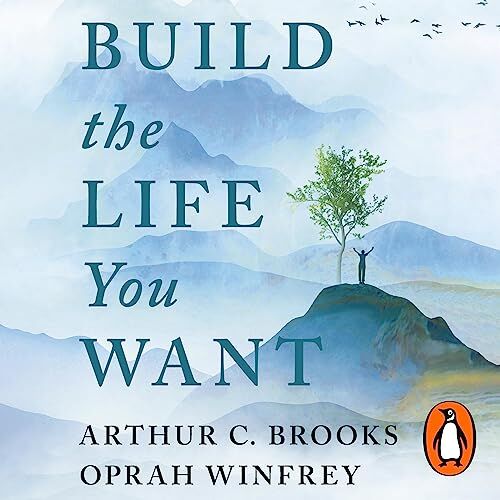
It appears I am in good company. At the end of 2023, Oprah released a book titled, Build the Life You Want: The Art and Science of Getting Happier.
Now just to ensure that you don’t view me as an Oprah copycat, I’ll point out that my annual New Year’s resolution/intention is to bring more happiness into the world both for myself and others. I call it an intention to send it out to the universe while avoiding the stressful expectations of a resolution.
The first time I shared this publicly was five years ago, when I posted, “Get Your Happy On! 10 Science-Backed Ways to be Happier” (fohvos.info/2019-happy.) Back then I proposed some obvious recommendations like exercise and sleep more, and some lesser-known suggestions including move closer to work and practice gratitude.
My January 2020 follow-up, “Connect in 2020!” suggested that connecting with others on the activities I advised in 2019 was key to happiness, with a bonus for getting outside in nature.
Since Oprah’s book release happily (!) coincides with my new chapter and new column, I want to revisit this subject with some fresh guidance and a few actions to avoid that may impede your happiness.
A few months after my January 2020 post, my advice appeared prescient: Covid restrictions contributed to feelings of isolation and sadness. The negative effects of endless news loops amplified by social media are well-documented, which brings me to my first recommendation.
Reduce media consumption. Social media can help you stay connected and news media can help you stay informed. But going down rabbit holes, chasing likes, viewing toxic content, or just reinforcing your own political echo chambers can stoke fear and be divisive. That said, sometimes it takes real effort to walk away.
Don’t believe the media or me, simply check in with yourself. Be self aware enough to ask, “How do I feel?” If you are engaged in polarity and hateful discourse, you know it’s not healthy. Yet somehow, it’s hard to quit. Group suffering can be addictive.
Revisiting my 2020 advice, I realize that it takes some effort to prioritize meaningful connections. I am not proud to confess that I’ve blown off a get-together because I was binging on a good show.
Better to focus on in-person relationships instead of scrolling through media content from keyboard warrior trolls intent on escalating negative emotions. Hopefully, your friends and family are a kinder lot, yet there are no guarantees. So, rule two:
Minimize your time with negative people. At the risk of sounding a little too new age-y, the energy you put out in the world tends to multiply.
I really love the concept of paying it forward. When I do nice things for others, I try to be creative and avoid overdone actions that don’t necessarily help. For example, I remember when it was popular to go to a drive-thru and pay for the order of the person behind you. Originally, I’m sure the person with the comped order felt great by the surprise. Today, I’m thinking that the person in line at your local Starbucks can probably afford their order more than the person serving everyone, so maybe you’re better off just doubling the tip. Further, this craze has resulted in chains, which may become a stressful obligation for the recipient and add a tracking headache for the cashier.
This brings me to rule three: Avoid unintended consequences. If a well-meaning gesture becomes work for someone else or can be misinterpreted as having strings, skip it. Bring happiness by considering the best ways to encourage others or bringing pure joy.
Now for a few things you can do. Visit actionforhappiness.org for daily actions you can take to build your own joy and add positivity to our world. I particularly like how they break up these positive actions into 10 key areas such as giving (doing kind things for others), relating (connecting with others) and meaning (being a part of something bigger.)
What I like about setting an intention to maximize happiness is understanding that it is an ongoing process and the setbacks make the advances feel all the more meaningful.
You may recall that the most popular class in Yale University’s 300-year history was their course teaching happiness. A little-known fact is that Professor Laurie Santos, who designed the course, and whose “Happiness Lab” podcast has been downloaded over 65 million times, took a sabbatical during the 2022-2023 school year. She needed to take her own advice and address her own feelings of burnout.
All this to say, stay positive, keep it simple, realize it’s a process, and make an extra effort to be kind to yourself and others.
In both of my former posts, I included a Flora Edwards quote that I’m certain Oprah would endorse and I’ll go ahead and end with it here: “In helping others, we shall help ourselves, for whatever good we give out completes the circle and comes back to us.”
,

