Editor’s note: the version of this Q&A that ran in the October issue of the Hopewell Express indicated that Jacquie Genovesi had reported attending less than 50% of the school board meetings held in the past 12 months. In fact, Genovesi reported attending more than 90% of the meetings held in the past 12 months.
Four candidates are running for three seats on the Hopewell Valley Regional School District Board of Education this fall, including one who is the current president of the board.
Because of the way the school district allocates its nine school board seats, not all of this year’s candidates are contesting the same spots on the board. Seven of the seats are allocated to Hopewell Township. One seat each is allocated to Pennington Borough and Hopewell Borough.
This year, three candidates — Kimberly Stolow, Jacquie Genovesi, and current school board president Debbie Linthorst — are running for two seats available in Hopewell Township. Linthorst will completing her first term on the board in January.
Genovesi is a second-time candidate who ran in 2020, but was not elected. Stolow is running for the first time. Incumbent Debra O’Reilly is not running for re-election.
The fourth candidate on this year’s ballots — Alex Reznik — is the sole candidate running for the board’s available Pennington seat. With no one else in the running, Reznik is expected to take over the seat vacated by Jenny Long, who has opted not to seek re-election.
Voters who live in Hopewell Township will not see Reznik’s name on their ballots, while voters in Pennington will see only Reznik’s name. Hopewell Borough voters will not see any candidates for school board on their ballots.
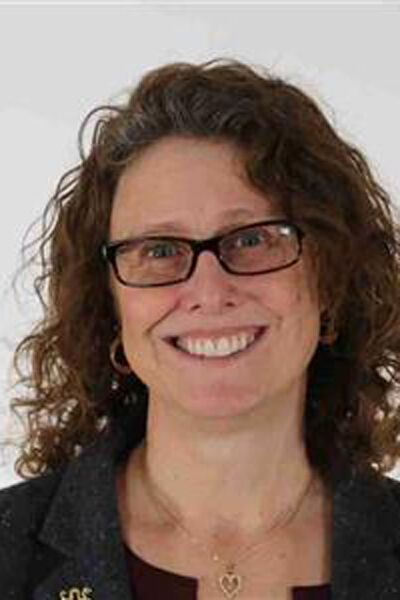
Jacqueline (Jacquie) Genovesi, 52, is vice president of the Center for STEAM Equity at the Academy of Natural Sciences of Drexel University. She has lived in Hopewell for 21 years with husband Rocco.
Genovesi has a doctorate in educational leadership and technology from Drexel University, a master’s in environmental studies from the University of Pennsylvania, and a bachelor’s degree in biology from Rider University. She also has specialized training in Diversity, Equity and Inclusion Leadership from the IDEAL Center at the Science Museum of Minnesota funded by the National Science Foundation. And has certificates in Preventing Escalation with Conflict Resolution Skills; DEI certificate from Drexel University; and Leadership Development certificate from Drexel University.
She has three children: Katie, 21, a CHS graduate who is a senior at Eckerd College; Michael, 18, a CHS graduate who is a freshman at University of Tampa; and Joseph, 15, a sophomore at CHS.
Genovesi says she has deep roots serving the community through committees for science fairs, parent councils, DEI and Hopewell Valley Together group. She says she has attended most of the board meetings held in the past 12 months.
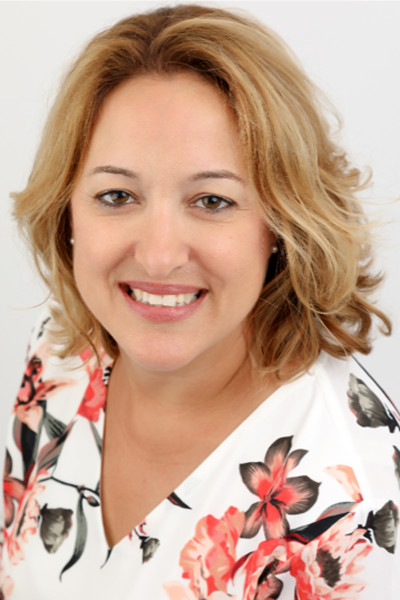
Deborah (Debbie) Linthorst, 51, has lived in Hopewell Township for 21 years. A stay-at-home parent, she has been employed as a legislative and policy analyst in Washington and as an executive assistant and consultant for 20th Century Fox.
Linthorst was elected to the HVRSD board of education for the first time in 2018, and is currently the board’s president. Shehas a bachelors degree in English from Douglass College, Rutgers University, and a master’s in public administration from the George Washington University. All four of her children have attended Hopewell Valley Schools: Ryan is a junior at the University of Florida; Matthew is a freshman at the University of Tennessee; Téa is a sophomore at CHS; and Michaela is in 8th grade at Timberlane. She attended 100% of the school board meetings held in the past 12 months.
Alex Reznik, 47, is a pre-sales technologist who has lived in Pennington for almost 18 years. He has a bachelors degree from the Cooper Union, a master’s degree from Massachusetts Institute of Technology and a doctorate from Princeton university, all in electrical engineering.
Reznik has three children, all of whom have attended district schools since kindergarten. The eldest is currently a junior at North Carolina State University; the middle child is a freshman at CHS. The youngest is in 5th grade at Toll Gate Grammar School. Reznik has attended less than 50% of school board meetings held in the past 12 months.
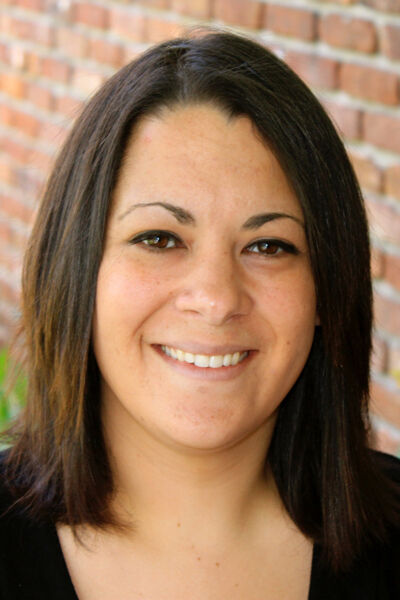
Kimberly Stolow, 42, is a social worker and therapist, working with individuals of all ages, including seniors. She has lived in Hopewell for 4 years. She has a bachelors degree in psychology from Rowan University, a master’s degree in social work from the University of Maryland, and a doctorate in social work from Rutgers University.
Stolow has a son who has recently begun the PEECH (pre-k 3) program at Stony Brook Elementary School. She is an adjunct professor at the Rutgers School of Social Work, and has attended less than 50% of school board meetings in the past 12 months.
The Express sent questionnaires to the candidates to be filled out and returned. Their responses are below, edited lightly for length and clarity.
Q. Why are you running, or running again, for the school board?
Genovesi: I am running for the School Board because I love Hopewell, I love our schools and I believe we should always strive to do better for our children and our community. I will be a valuable member of the school board because of my extensive and diverse experience.
Most importantly, I will speak for the entire community in Hopewell. I will work respectfully with an eye towards “win-win” solutions for our communities, students, schools and administration.
Linthorst: As board president, I have served at a critical time in our district’s history. I have led collaboratively, playing an integral role in district efforts to ensure a safe return to in-person learning. Concurrently, I have led the board through a successful superintendent search and appointment. I’d like to return to see us through this pandemic, so that we may more fully concentrate our efforts on more visionary endeavors such as district equity and social and emotional learning efforts.
Reznik: It’s an opportunity to give back to the community that has been our home for most of my and my wife’s adult lives and all of our children’s lives.
Stolow: As a single mother of an elementary student, business owner, and mental health therapist, I can provide unique insights, perspectives, and ideas to further enhance this amazing school district. I also want to give a voice to those who may not feel as though they have one.
Q. What are the two most vital issues facing the school board today, and what will you do as a member of the school board to address them?
Linthorst: One is student and staff wellness, and another is continued planning for maintenance and updates to our facilities.
As psychologists have noted, good mental health is a prerequisite to learning. At my suggestion, the board will establish a standing committee dedicated to district social-emotional and mental health. Specific steps will be taken to increase: student contact with counselors, to expand staff awareness of wellness services, as well as continued efforts to address the culture and climate in schools through DEI efforts and through culturally responsive teaching.
As for finance and facilities, we’ll need to be more intentional about balancing both long term and emergent needs and to be prudent in planning. In order to ensure equal access for all board members during budget deliberations, we will transition to a “committee of the whole” for these discussions.
Reznik: I think the Covid-19 epidemic is the most challenging issue facing us right now. Keeping us open for face-to-face instruction is crucial; especially so at the elementary level, which is where it is also most challenging. I expect this to be an on-going effort as we continue to navigate the ever changing landscape of CDC advisories, federal and state guidelines and the public health realities of our community.
Additionally, I look forward to participating in the upcoming curriculum reviews. The curricula we use — from STEM to Social Sciences — are the fundamentals of preparing our children to be highly competitive contributors to society and its effective citizens.
Stolow: Board members must responsibly ensure that students receive an excellent education and are well-prepared for the future.
Social-emotional wellness is paramount in educating a whole child. As a therapist, I see how the pandemic, political climate, and additional challenges associated with today’s society, make it difficult to ensure educational and emotional health. I’d use my expertise to ensure that a child’s mental health is prioritized in Board decisions regarding education.
That said, Board members must also keep a careful eye to ensure the best value for taxpayer dollars spent. For example, rising gasoline prices and current bus driver shortages may further increase transportation spending. This could strain our district, whose per-pupil-costs and 3-year-spending rates already top all Mercer County and most other New Jersey school districts.
Genovesi: My knowledge, experience and empathy will help tackle any issues that arise. The impact of Covid on our community continues to be a vital issue. From the mental health challenges to the impact on student learning to the burden on parents, teachers, and administrators we are all dealing with the impacts of Covid every day. Community relationships have been strained. This strain is negatively impacting trust and open communication. Together we can change this.
The second major challenge is the budget. We must be able to balance the needs of an aging infrastructure, increased Covid mitigation costs, and being fiscally responsible. I am the candidate with the most experience when it comes to large complex budgets, educational institutions and supporting social-emotional health in organizations.
Q. In its Equity Goal Plan of Action, the district says it is “committed to identifying and removing institutional barriers, and creating access and opportunities to foster the success of our students. ‘Achieving equity’ means students’ identities will not predict nor predetermine their success in school.” Tell our readers your thoughts on how the school board is following through, or falling short, on this pledge.
Reznik: Over the last few years, I’ve seen a noticeable and positive change in my children’s exposure to diverse points of view. Being asked to look at the world through the eyes of someone else is a skill that is incredibly effective in both promoting inclusion and equity and preparing all children to navigate a complex world.
Ultimately, I believe that exposure to diverse role models as part of our daily routines goes a lot farther than structured imposed activities and continuing to increase such exposure is where I would like to see us focus.
Stolow: HVRSD progressed on its Plan of Action through program, committee work, and action. For example, when the pandemic required all students to attend remotely, HVRSD provided internet for students with inadequate access.
The board is not ‘achieving equity.’ Pre-pandemic: Black and hispanic students did less well on performance tests and socioeconomics played a large role in determining district success. Pandemic-related issues may widen those gaps.
The 2021-released NJDOE Performance Report indicates that the percentage of HVRSD economically-disadvantaged students graduating high school or attending post-secondary school was significantly lower than overall percentages districtwide. Recently canceled late-bus routes disproportionately harm these students.
Genovesi: I carry a wooden talking token with the words “If it was easy it wouldn’t be hard!” It reminds me that we must do the work every day. We must listen and ensure we leave space for those most affected by inequity. “Achieving equity” is not something we or any district can achieve in a year or even 10.
The district is committed to directly addressing these issues and has implemented curriculum, town halls and training for staff. However there continues to be significant challenges that must be addressed. I will address them and hold myself and our board accountable.
Linthorst: The district has made positive strides in this area. However, efforts will be required to develop culturally responsive teaching, as well as audits of curricula through this lens. Ultimately, we’d like for all students to see their heritage, culture, and orientation reflected in district curriculum.
Additional professional development will be required, more community forums will be held, and hiring practices should continue to be examined and refined. Efforts toward student content mastery must also continue, to include the development of board policy on grading practices, exploration of the impact of eliminating weighting on honors and AP classes, and by reviewing and revising the homework policy.
Q. How would you assess the job the board and the district have done in response to the ongoing coronavirus pandemic? What has the board done well? What could have been done better?
Stolow: The school district was better positioned to address pandemic needs than neighboring districts. Examples: 2016 Referendum-funded upgraded HVAC, 1:1 chromebooks, outdoor learning areas, and experience with remote learning from 2018 E-Learning snow days.
District staff did great meeting pandemic-related hygiene, safety, and PPE protocols. Further, the Hopewell Valley Food Pantry, initiated by (former) Superintendent Tom Smith with supportive Valley municipal leaders, was a crowning achievement for district leadership and community response.
The board’s last-minute vote to change from its solid return-to-school plan to opening “remote only” caused unnecessary angst. Fortunately, 5-4 voted “No” and the plan allowing a hybrid or remote choice prevailed.
Genovesi: The school board should be commended, but there is always room for improvement. Starting this year in person with safety measures that protect students, teachers and staff is an accomplishment. However, there are still policies and procedures that are not equitable.
When you look at past self-evaluations, the board acknowledges the need to work on transparency. Working on transparency and communication with an eye on equity is something that could be handled better.
Transparency enhances equity by ensuring all are aware of supports, opportunities and how decisions are made.
Remember, the pandemic affected everyone differently — some more than others.
Linthorst: I think that the district staff has done an admirable job and that our students and families have demonstrated resilience. We were able to safely welcome students back to our classrooms at the beginning of last year, to offer many of the time-honored school traditions, and to successfully navigate an in-person, hybrid experience for the majority of the year along with a continuous remote learning experience.
In my assessment, any difficulties experienced were universal in nature, as remote learning has its limitations. In this new year, despite the prevalence of the Delta variant, we are off to a good start.
Reznik: Last September, our kids went to school for face-to-face instruction — and stayed there for most of the year. It was far from perfect, but I’ve lost count of the number of jealous out-of-district friends whose kids were at home, often learning little. So, with perspective, the board got the big things right. Of course there are many things that could have been done better.
As noted above, I think the pandemic is the major challenge facing us and look forward to working on improving what we do and how we do if I am on the board.
Q. For the incumbent: What accomplishments would you point to from your tenure on the board to convince voters that they should vote for you again this election?
Linthorst: As board president, my collaborative approach and contributions were essential to the district’s safe return to in-person learning. I led a successful superintendent search process, in which over 1,200 community stakeholders participated.
I have promoted efforts to enhance district communications to increase transparency, and have instituted an increased focus upon internal board communications and organizational practices to promote cohesion. I have participated in successful negotiations with all bargaining units.
If reelected, I vow to continue utilizing my skills and expertise to advance student achievement, district equity and SEL efforts, and to ensure that our facilities are well maintained.
Q. For nonincumbents: What experiences in your life or professional career make you qualified to serve on the school board?
Genovesi: As a parent, educator, community member and leader in non-profit organizations and complex educational institutions, I have developed skills that are directly transferable to being an effective board member. These include: financial planning and expertise, including multimillion-dollar complex budgets; formal training in Diversity, Equity, Inclusion and Collaboration, including leading DEI institutional initiatives and training program; understanding from personal and professional experiences the importance of supporting students’ mental health; understanding the national landscape in education while being able to contextualize the local needs of our community; excelling at finding creative, unique solutions that focus on local needs; and serving on school and district committees.
Stolow: As a social worker, I am an advocate for those who may not have a voice. I then help deliver the tools needed for people to be their own advocates.
As an educator, I guide my students, and provide them with a safe environment from which they can explore and learn.
Now, as a single mom, I am an advocate for myself and other single parents/single income households who feel that they may not have a voice at the table when it comes to their child’s educational and emotional well-being. All roles enhanced my skills as an effective communicator.
Reznik: For four years (ending this February), I chaired an international standards committee. It is a position that requires negotiating competing interests, including from large multinationals who are direct competitors, to help participants find a common ground and move the work forward.
The challenges facing the board are in this respect quite similar: negotiating the various, often opposing, opinions of board members and the public; competing interests of taxpayers and unions; complexities of regulations; etc.; to find a way to move forward towards our goal — ensuring that our kids get the best education possible.