In 2009, I published a book of poems and photos called Optimism. The poems were mine, the photos mostly the contributions of others. Though I didn’t originally intend it, the book became a global effort, with photographers from several countries participating.
My method was to seek out the photo first, not the photographer. Most times, I’d have a general image in mind before starting; other times the perfect photo would only emerge after hours of browsing related subjects. The website Flickr was invaluable, but this was still a labor-intensive effort. I did a lot of scrolling, and looked at a lot of images.
Once I found an image I liked, I’d send a message to the photographer via Flickr, asking for permission to use it in exchange for a photo credit and a copy of the finished book. I used a few of my own photos, and for a final handful of poems that resisted easy image-matching, I sought the help of my cousin, a pro photographer who impressed me when I was a kid when he graciously photographed my action figures. Since then, he’s produced images used on U.S. stamps, among other accomplishments, but that early work—“Hoth Storm Trooper in Living Room with White Bedsheet”—is still my favorite.
I was happy with Optimism, and now in 2024, having gathered a similar number of poetry pages, I decided to do it again. As a veteran of the process described above, this time would be much easier. Or so I thought.
There were new challenges I hadn’t counted on—for one, stock photography, always a big industry, had developed a much bigger online presence since 2009. Any Google search seemed to generate a never-ending supply of image clutter from Adobe Stock, iStock, Getty Images, Shutterstock, and more. Aside from the fact that these companies charge for the use of photos, there’s also the undeniable aesthetic problem that their photos all look very… posed.
I wanted photos that stood out as unique or personal in some way, so I headed back to Flickr. By chance, I selected an image by a photographer who had contributed to Optimism, and he was excited to be a part of this book, too. But browsing Flickr felt like inspecting a battlefield long after the conflict had been decided. Flickr had been invaded by AI photos, stock photos, and its search engine hadn’t improved much since 2009, which meant wading through thousands of photos to find one or two that might work.
Most importantly, there seemed to have been a diaspora at some point, because very often when I did find a photo that might fit, the photographer hadn’t posted anything new in years. I suspected this inactive status might make communication difficult, and it did—why check your inbox on a platform you don’t use anymore? I fired off a flurry of messages and got just a few responses.
I didn’t think people hadn’t given up photography en masse, so I had two options: I could try to track down the Flickr refugees individually, or I could try to find another, more active and better moderated photography website to scour for possible matches. I did both, and found that www.500px.com drew a wide array of U.S. and international photographers, both amateur and professional.
At the same time, I began a social media search for some of the former Flickrers. Some people had thoughtfully provided their full names in their profiles, which allowed me to find them on LinkedIn, Facebook, or their own websites. They didn’t always list their hometowns on Flickr, but by noting the locations of their other photos, or even the way they spelled “color,” I could sometimes figure it out, which helped greatly when trying to find a person with a common name.
Many Flickr refugees hadn’t listed any information other than a screen name, but I figured they wouldn’t completely abandon the reputation and accumulated goodwill they’d earned through years of posting photos, albeit anonymously. Google searches for those screen names turned up several possible hits, but to investigate them fully I had to join Instagram, Pinterest, and X (formerly Twitter)—a high price to pay, indeed.
I felt strongly about the the photos I sought permission to use, so I kept up the search, with a victory here or there providing additional encouragement and motivation. Some photographers had questions, and two declined the offer because the people in their photographs didn’t allow use. (Rules for using people’s images in “street photography” vary from country to country.)
After several months, there were a few people who still hadn’t responded to messages sent via multiple social media platforms. If I had another photo to use as a substitute, I’d go that route, but even with the glut of images uploaded to the internet, there are a few subjects so specific and unique that they’re nearly impossible to find, like a photo of a particular woman, at a particular point in her life, playing a theremin. Or a gorilla displaying its middle finger while looking agitated.
In these cases, I had to cast a wider net, reaching out politely to people listed as friends, colleagues, or close family members of the photographer through Facebook or another website. This did eventually get me in touch with a woman in Georgia (the country, not the state) who granted permission to use her photo.
I wanted to avoid phone communication, which seemed like a much more intrusive and potentially expensive method of contact than a social media message, but in desperation I did resort to making one (successful) call.
Throughout the process, I noted the obvious changes that had occurred in the lives of these people. Five, ten, and in some cases even fifteen years had passed since these people had posted the photos I wanted to use. Kids had grown up, and now permission was being given by not just the parent who took the photo, but the child who was the subject of it. People had moved along in their careers, started families, and explored other artistic interests; even though I’d only gotten to know them from a curated collection of photographs and a few brief interactions via e-mail, it was heartening to see what they’d accomplished in that time.
A lot can change in a few years, and unfortunately, not all of the changes in my photographers’ lives were good. For some, health issues seemed to have dramatically affected their ability to pursue photography. And in one case, I was informed by a family member that the person who’d taken the photo had passed away; after discussing it among themselves, the family gave permission to use the photo because it was something “he would have likely been interested in if he were still alive.”
Even in the digital era, I’ve swung between extremes, from the overzealous photographic tendencies that come with having small children, to my current preference of taking photos only rarely—a choice that is, perhaps, a response to the overwhelming barrage of images that accosts us every day from social media and internet news.
But putting together this book, The Lotus Eater (and Other Poems), made me appreciate photography again, because a picture—sometimes even a rushed or ill-conceived one—can capture subtleties that don’t translate through any other medium.
If a picture is worth a thousand words, it could be argued that I’ve gone over the limit in this column, but since we’re talking about multiple photographs, I’ll give myself a pass. There’s great value in resisting the distractions of photography and fully inhabiting beautiful, ephemeral moments as they happen, but there’s also value in sacrificing a bit of that experience to preserve those moments for future inspiration.
To sum it up with another cliché: Take a picture, it’ll last longer.
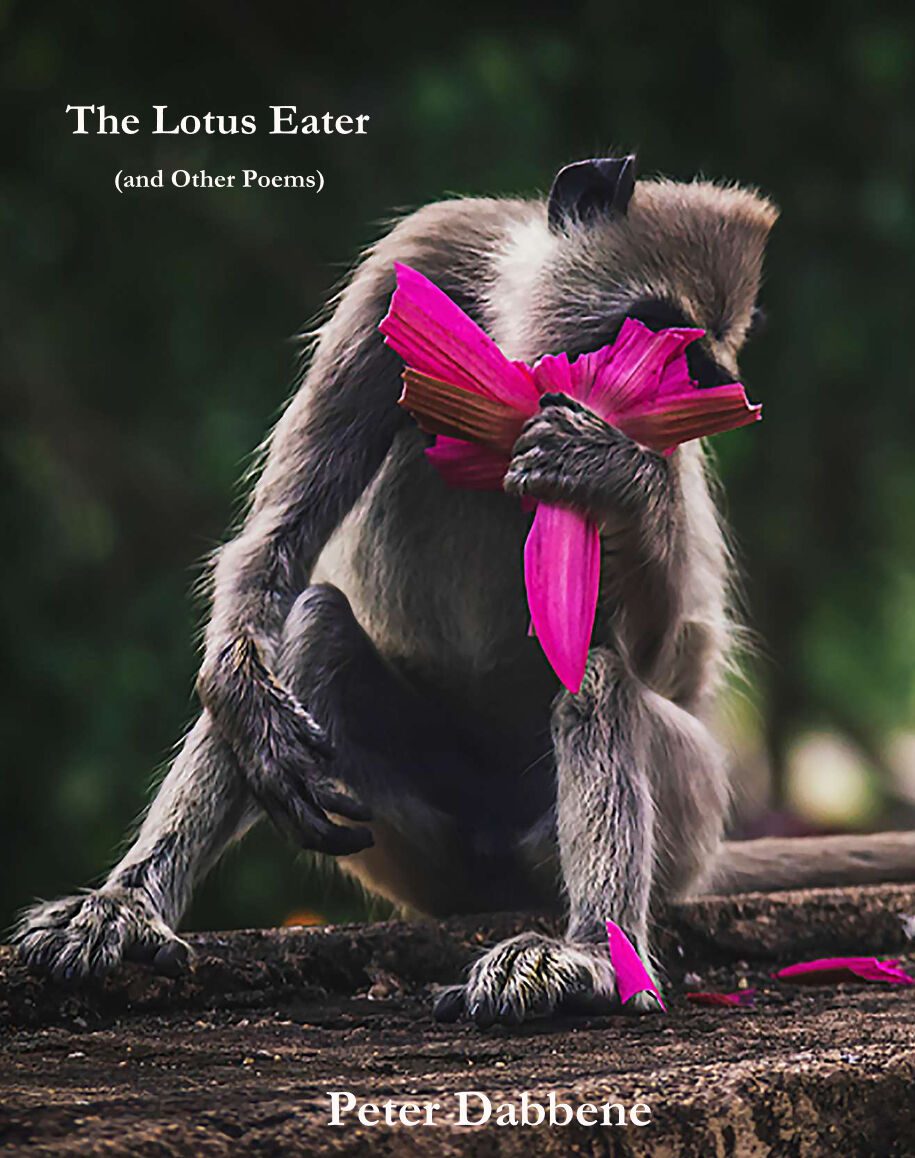
The cover of Peter Dabbene’s new collection of poems and photography, “The Lotus Eater.” (Photo by David Blacker.),

