Rhonda DiMascio has less of a mountain to climb and more of a “big hill.”
In February, Morven Museum & Garden named the veteran nonprofit leader, who has more than 25 years of experience in historic museums, sites, and gardens, as its new executive director. DiMascio succeeds Jill Barry, who left last September to become CEO of the Houston Botanic Garden in Texas, and takes over from deputy director and curator Elizabeth Allan, who served in an interim capacity during the search process, on March 25.
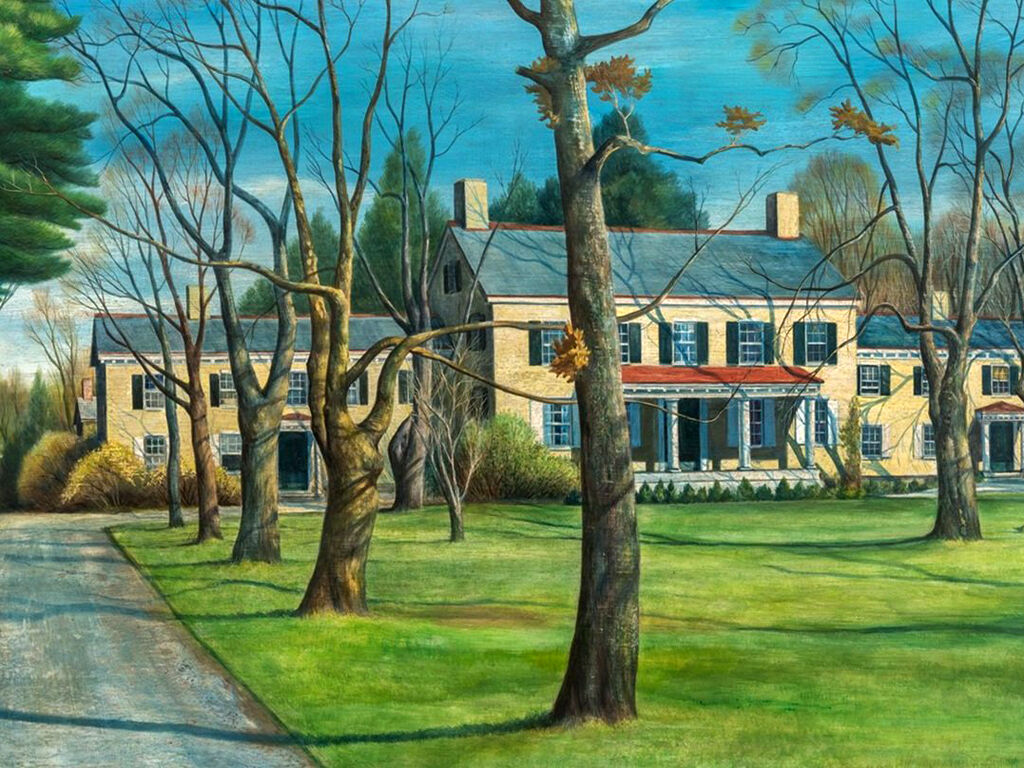
Morven was originally the home of Richard Stockton, one of New Jersey’s five signers of the Declaration of Independence, as well as the former Governor’s Mansion. The National Historic Landmark encompasses five acres at 55 Stockton Street in Princeton that, since opening to the public in 2004, has become known for its permanent and special exhibitions, events, and educational programming.
Stockton, a wealthy lawyer and a graduate of what is now Princeton University, built Morven in the 1750s. His wife was the patriotic poet Annis Boudinot Stockton, dubbed “the elegant muse of Morven” by George Washington, and who named the estate after the Gaelic phrase for “big hill.”
After five generations of Stocktons, the property was eventually leased to General Robert Wood Johnson II, the chairman of Johnson & Johnson, before becoming New Jersey’s first Governor’s Mansion until the state’s official relocation down the street to Drumthwacket in 1982.
Morven has attracted a number of notable guests, including Washington, Grace Kelly, and Buzz Aldrin, and by delving into the depths of the museum’s archives to celebrate its two-decade anniversary as a restored museum and garden in 2024, curators uncovered the “lesser known” stories of the residence and its residents throughout its 250 years of historical significance.
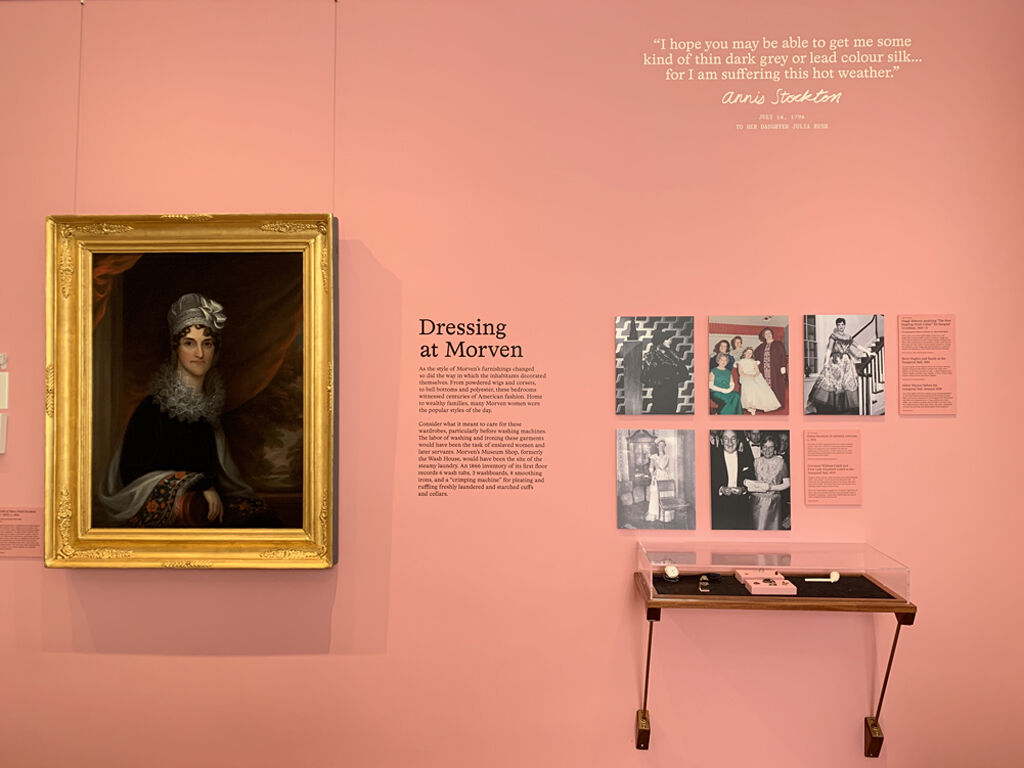
This colorful collection is the subject of Morven’s newest exhibition, “Morven Revealed: Untold Stories from New Jersey’s Most Historic Home,” which is on view through Sunday, March 2, 2025.
Morven Revealed “talks about the behind-the-scenes of who has lived in this house over time,” DiMascio says, by showcasing objects and photographs that “take a thematic look at subjects recognizable to many American families,” according to the exhibit’s page on the website, including “childhood, hosting guests, pets, fashion, and more.”
DiMascio steps into the role not only during Morven’s 20th year in operation, but at the height of its preparations for the 250th anniversary of the signing of the Declaration of Independence and the United States Semiquincentennial in 2026.
When people picture the delegates of the Continental Congress whose names helped ratify the foundational document in 1776, DiMascio explains, “They think of all of the big names that you would just recognize instantly,” such as Washington, Thomas Jefferson, and John Adams.
But in acknowledgment of the milestone, Morven plans to host an exhibit highlighting New Jersey’s five signers of the Declaration of Independence — Richard Stockton, John Hart, John Witherspoon, Francis Hopkinson, and Abraham Clark — in 2026.
Some, like Stockton and Witherspoon, are better known as the namesakes of towns, institutions, and streets across the state, but “there’s a lot of room for interpretation to talk about their stories as well, which are all really interesting,” DiMascio adds.
According to DiMascio, Morven is in the process of setting the stage for 2026 by preparing the grounds, forming partnerships with other Princeton organizations, and phasing in everything that needs to be done to “get us recognized as that resource” for the national commemoration.
“Being one of the most historic sites in New Jersey and the trajectory of everybody who has lived here — through the Stocktons, and through the Johnsons, and through the five governors that have been here — we’re [one of New Jersey’s] most historic houses, and we have this great venue for educational programming. We have a wonderful venue for exhibitions and touring a historic site. We’re on five acres of beautiful landscape,” DiMascio explains. “I think that we’re really excited, because this is a time [when] we’re building up to this. Obviously, we’re working with different partners and creating programming and content, but it’s not just about the 250th anniversary; it’s about getting people to come back after that, too.”
“We’ll have a lot of celebrations coming up in 2026, in some way, shape, or another, but we want to preserve this unbelievable resource. We want people to realize the significance,” DiMascio says, hoping to do so by “engaging audiences, increasing our public programming, and, just at the end of the day, instilling a love of Morven, its exhibitions, and the historic site.”
For DiMascio, that passion is personal.
“I can honestly say I’m a true Jersey girl,” says DiMascio, a resident of Ewing who was born in Marlton before moving to Pennington at a young age. She has lived all across the state, including South Jersey, Cherry Hill, “down the shore,” Mount Laurel, and finally back to Ewing in 2011.
Although her family is from South Philadelphia and South Jersey, DiMascio says with a laugh, “How I landed here is being born here, escaping, and then living in every exit of the parkway, I think.”
She lived briefly in Rhode Island, Tennessee, Ohio, and Pennsylvania, then moved back to New Jersey to attend local private schools such as the Chapin School, located in Lawrence Township just outside of Princeton, and later the Pennington School.
“I can definitely thank my parents for giving me an appreciation of history, museums, and cultural sites and their importance in the community. I always, as a little kid, would love going to museums. I loved going to churches. I like going to historic houses,” DiMascio explains, adding that because she was introduced to historic sites at such a young age, she has always been drawn to the familiarity and comfort they provide — especially as someone who has felt like she is, at least in part, “from another time.”
Now, as an adult, her travels and vacations “are all historic” in nature. For example, she has plans with friends to visit Monticello, Thomas Jefferson’s plantation in Charlottesville, Virginia, after hearing that they have added and updated the stories in their repertoire.
“It seems to have morphed into the fabric of who I am. But I guess I can really thank my parents, too, for exposing me to that,” she says.
DiMascio first earned a bachelor’s in art history from Rosemont College in Rosemont, Pennsylvania, but a year after graduating and realizing her true affinity for the operational aspects of the field, she returned to academia to receive her master’s degree in arts administration from Drexel University in Philadelphia.
“I’ve always had a love for arts and culture and historic sites, and I knew I wanted to spend the rest of my life working in a cultural setting, specifically a venue,” DiMascio says. “It’s been something that has been a passion of mine professionally, as well as personally, and I have worked my way through historic sites, through art museums, through sculpture gardens, historic sites again, back to another historic site. That’s been the trajectory of my professional career.”
“When you work for a nonprofit arts and culture organization, you have to do a little bit of everything,” she adds, having now amassed over a quarter-century of experience in responsibilities such as fundraising, development, community outreach, educational programming, and grant writing.
DiMascio started out as the director of education at the Noyes Museum of Art, a folk art museum in Oceanville founded by Fred and Ethel Noyes, the couple known for spearheading the development of the Colonial Williamsburg-inspired tourist attraction “Historic Smithville,” also in Galloway Township.
After a series of fundraising attempts to update the main building failed, the original structure closed in 2016. The Noyes Museum is now fully overseen by Stockton University, and its collections — including 300 duck decoys — have since been divided into affiliated locations in Hammonton and Atlantic City.
In 2000, DiMascio became executive director of the Alice Paul Institute in Mount Laurel, a nonprofit organization created to preserve the “family home and birthplace” of feminist, suffragist, and women’s rights activist Alice Stokes Paul.
Founded as the Alice Paul Centennial Foundation in 1984 to celebrate the 100th anniversary of Paul’s birth in 1885, API “furthers the legacy of Alice Paul and her life’s work for gender equality, and also takes a leadership role in bringing recognition to women and the organizations and historic sites that honor them,” according to its website, alicepaul.org.
Described as “the architect of some of the most outstanding political achievements on behalf of women in the 20th century,” Paul was a key figure in rallying for the passage of the Nineteenth Amendment to the U.S. Constitution that officially recognized American women’s right to vote.
After its adoption, Paul advocated for the Equal Rights Amendment (ERA), a proposed amendment she co-authored with fellow activist Crystal Eastman that would legally enshrine equal rights and protections for American citizens regardless of gender. As part of her commitment to advancing reform, Paul earned three different law degrees, according to the API website.
Originally introduced in 1923 and rewritten by Paul two decades later, the ERA finally made its way through the government to the states for ratification in 1972. Although the legislation required the approval of 38 states, Congress had set a deadline that expired with just three states short of its goal.
DiMascio noted that she is grateful to have had the opportunity to learn and lead at API so early in her career. While there, she oversaw a “multimillion-dollar historic restoration and rehabilitation project,” according to the Morven press release.
The work at API honored Paul’s contributions to the country as well as her legacy of advocacy, with DiMascio adding that it was a “wonderful combination of blending historic preservation and leadership development with young women.”
Next, DiMascio spent nearly 10 years at Grounds For Sculpture as the Hamilton sculpture park’s first director of development. When she arrived at Grounds for Sculpture, DiMascio explains, there was no such program in place, which gave her the unique opportunity to build one from the ground up and cement GFS as the artistic institution it is known for today.
“That was at a time [when] Grounds For Sculpture was just getting on the map. Basically, people knew about it as its best-kept secret,” she adds.
By the end of her time there, DiMascio had increased incoming revenue by nearly 50 percent after establishing a sustainable fundraising program.
DiMascio then transitioned to serving as the executive director of the Friends of Laurel Hill Cemetery in Philadelphia, where she spent four years at the nonprofit organization dedicated to the preservation of the two Laurel Hill Cemeteries — considered some of the “oldest in the country” and another National Historic Landmark — that still offer traditional cemetery and funeral services to the public.
Coincidentally, Morven’s exhibit for 2025 will explore historic New Jersey cemeteries—an area she has both recent and relevant experience in. Morven is currently in the data collection phase of the project, but hopes to compile comprehensive information on tombstones, burial grounds, and related artifacts from sites across the state.
To do this effectively, Morven will also provide the necessary national context for what is known as the “rural cemetery movement,” according to DiMascio.
After urban cemeteries became overcrowded in the mid-19th century, she continues, a new style emerged that transformed the typically somber gathering place for mourning the dead into a rural getaway where families could picnic, enjoy nature, and take a break from city life. These “rural cemeteries” would feature grand gardens, landscaping, and architectural features reminiscent of a traditional park, reflecting American society’s changing views of death through their aesthetics.
DiMascio has several books on the subject from her time at Laurel Hill, noting that because there is “so much about symbolism and cultures and food and flowers,” she can imagine the robust programming that would grow out of the exhibit.
After assuming the position in 2020, DiMascio navigated Laurel Hill’s programming and fundraising during the pandemic, calling it a “learning experience” in which she had to “work within [the] parameters of attendance and visitors” during an unprecedented time of constant challenge.
“It was four years, but it felt like eight because we were doing everything new for the first time,” she explains. Trying to serve the public through “all of those trials and tribulations” was an obstacle for everyone, but fortunately, because much of the Friends of Laurel Hill Cemetery’s programming could take place outdoors, DiMascio says they did well despite the circumstances.
DiMascio had briefly met Barry, Morven’s former executive director, while the latter helped conduct an American Alliance of Museums audit of Grounds For Sculpture. When DiMascio heard that Barry was moving on after seven years at the helm of Morven, she expressed interest in the position.
“I was born and raised in New Jersey, so I have been coming to Morven for a long time,” DiMascio says. “When they were going through their restoration, I was going through a similar restoration when I was working at Alice Paul. It’s always been woven into my brain.”
“Also, I love the New Jersey community, and I’m happy to be back in New Jersey,” she adds.
DiMascio is particularly fond of driving into Princeton on the same back roads she used as a teenager, voicing her nostalgia for driving past Terhune Orchards and other landmarks of her childhood. At a young age, DiMascio explains, she and others would “walk around Princeton for hours” or take the bus to New York from there.
“Being in my own backyard again and helping to bring more visibility to a historic site, whether it be through exhibitions, whether it be programs, or just partnership outreach, it’s a really exciting opportunity,” DiMascio explains, and her “comfort level” with the area is not only a source of pride, but a valuable resource for taking on a new position at an institution like Morven.
Through her years of experience managing both historic sites and nonprofit organizations, DiMascio has gained an “understanding of preservation” and “the stories that need to be told.” She also recognizes the importance of having a strong foundation for fundraising, which she learned firsthand at Grounds for Sculpture.
“But I think that my background is an interesting combination of not just having boots on the ground and developing programming and overseeing historic preservation, but it’s also about fundraising, so I feel like I’m where I’m supposed to be. I feel like I’m home, and I feel that there’s so many aspects of Morven that really draw on my past experiences,” she says.
“When you start at a new site … there’s all of these stories and elements that are different, but yet still familiar and comfortable to me, so I feel like I had that experience in doing a little bit of everything for long periods of time, too,” she adds.
Another benefit, according to DiMascio, was that she was able to carry over relationships she had already established with local and state agencies, pointing to resources such as the New Jersey Historic Preservation Office or the Council on the Arts.
“I’m having to learn a lot, but there is some familiarity there, and I’m so, so excited to be able to take some of the skills and experiences — knowing that I still need to learn a lot — and apply them to Morven,” DiMascio explains.
DiMascio notes that many of the staff at Morven have been there for years, which is “a testament to their dedication to the organization and their commitment to telling a story and to making the best visitor experience as possible.”
“They’ve been around for a long time, and they’re committed, and that’s another wonderful element that I’ve had in some other places that I’ve worked, too, that you just feel like you’re in the right place, and you’re working with the right people,” she adds. “It’s not all going to be easy; I know that. But when your heart’s in the right place and you have good people to work with, I think that it just makes that road so much easier, and then you end up staying some place that you didn’t realize you were there for so long.”
DiMascio says she came several times to see “Ma Bell: The Mother of Invention in New Jersey,” a 2022 exhibit about the state’s history of scientific and technological achievements through Bell Telephone Laboratories, and “Charles and Anne Morrow Lindbergh: Couple of an Age,” which chronicled the lives of the famous duo in 2015. These two “must-see” exhibits captured what excites her about planning for the future.
“One of the things that really appealed to me, too, was the possibility for educational programs,” she says, referring to “the Stockton Education Center and having the ability to do programming on-site.”
The Stockton Education Center, which opened in 2018, overlooks the Colonial Revival Garden and spans 3,000 square feet in three interconnected sections, including a “gathering space,” an atrium, and a classroom for hosting indoor events, workshops, and more.
“Obviously, we can do rentals and make some revenue there, but it’s really nice to take the wear and tear off of the house. For many years, I’ve worked at historic sites where it’s just been so problematic to have programs inside the house. You’re having it rehabbed, or there’s not enough space, and there’s a whole humidity [problem],” DiMascio explains, and with the Stockton Education Center described as just “steps away” from the historic mansion and gardens, its addition offers a real advantage.
In her new leadership role at Morven, DiMascio recognizes the importance of taking a holistic approach to how all the pieces, from programming to promotion, fit together to support the site’s continued growth.
There are two sides to implementing these strategies, according to DiMascio. The first is operational, which includes historic preservation, grounds maintenance, and functional aspects such as working lights or accurate signage. The second is “heritage tourism outreach,” defined as attracting repeat visitors and more people from “diverse audiences” to the site while ensuring capacity for those guests.
For all the day-to-day details, however, DiMascio never loses sight of Morven’s mission.
“Our focus,” DiMascio explains, “as always, is to preserve and celebrate Morven’s legacy by sharing all the stories of the people who have lived here.”
“We’re in a really good place right now, and we are trying to ramp up and increase our visibility, diversify our programming, and really take care of this historic resource through a lot of grants to preserve the grounds and ADA pathways,” she continues. “It’s not all going to happen overnight, but it will happen over time, and I think that it’s an exciting place to be.”
“We want people to have the same love of Morven as we do,” she says, while also emphasizing the desire to stand out as “one of the most historic homes in New Jersey,” especially one “that has an unbelievable repertoire of stories and people that are endless.”
DiMascio observes that most people who know about Morven have either lived in Princeton or the surrounding area, and she hopes that people who are not as local will gain a greater awareness of the historic house’s offerings as a museum and garden.
“I think that we’re a resource, and whether your thing is horticulture, whether your thing is historic sites, whether it’s civic programming, community involvement, I think that you can come to us. You can like them all, or you can come to us through your particular area of interest, which I think is such a wonderful place to be, is to be an organization that we can’t be all things to everybody, but … we have some really wonderful areas that we focus on, that we immerse ourselves in, which makes us a welcoming place to come to, and I hope that I see more people visiting here. That would just be lovely,” she says.
Morven kicks off its seasonal “Morven in May” festivities with the site’s largest fundraiser, the Spring Garden Party, on Friday, May 17, from 7 to 9 p.m. While enjoying refreshments, live music, and the “peak season” of Morven’s peony garden on the grounds, attendees will also have the opportunity to view the new “Morven Revealed” exhibit.
In addition to honoring the museum’s key supporters, the event supports Morven’s future programming for the 250th anniversary of the Declaration of Independence in 2026.
Tickets range from $250 to $20,000. Guests must RSVP by Friday, May 10. For more information, visit morven.org/fy24/may or contact chief development officer Megan Shackney at 609-924-8144 x 101 or email mshackney@morven.org.
Morven’s upcoming calendar continues with a museum panel discussion about Morven’s journey, a program with the Princeton Storytelling Circle, guided walking tours, plein-air painting with the Arts Council of Princeton, and an African American genealogy workshop with historical research consultant Sharece Blakney, the developer of Morven’s “Inclusive History Interpretive Plan.”
Morven hosts a virtual civic engagement series in partnership with the Princeton Public Library and supported by the New Jersey Council for the Humanities called “So You Think You Know Civics?” The lectures run through November while covering topics related to democracy and the U.S. government.
The second program, “What is Citizenship?” takes place on Wednesday, June 12, at 6 p.m. with Holly Korbey, journalist and author of “Building Better Citizens: A New Civics Education for All,” via Zoom webinar. To pre-register or see more information, visit morven.org/upcoming/civics2024.
Morven is also partnering with the Princeton Symphony Orchestra for the 2024 Princeton Festival, described as “New Jersey’s premier performing arts extravaganza,” where musicians perform live from June 7 to 22 at a tented performance pavilion in Morven’s parking lot. To see the full lineup of genres spanning classical, opera, baroque, choral, chamber, cabaret, to Broadway and more, visit the PSO website at princetonsymphony.org/festival/events.
Lastly, DiMascio mentions the July 4th Jubilee, described on Morven’s website as “a free, family-friendly celebration of Independence Day” with food trucks, live entertainment, and “patriotic activities,” as another highlight of the organization’s summer programming.
The beauty of bringing younger people to sites like Morven, she explains, is that you can teach them about history through storytelling, such as how the past relates to our modern times.
“Hopefully, we’re creating a new generation, too, of kids that do appreciate and recognize the important significance of saving a site or going to an art museum,” DiMascio adds.
“We want people from various communities to feel welcome here, and I’d also love us to continue with the [creativity] that we have, and I think there’s no shortage of good ideas,” she says.
“At the end of the day, [what we want] is to steward this wonderful historic site, increase our visibility, and diversify our audiences, but just instill a love of historic sites and being here at Morven, and we want people to feel welcome, and not just for 2026 — for beyond.”
Morven Museum & Garden, 55 Stockton Street, Princeton. Open Wednesdays through Sundays from 10 a.m. to 4 p.m. Gardens open daily until dusk. 609-924-8144 or morven.org.
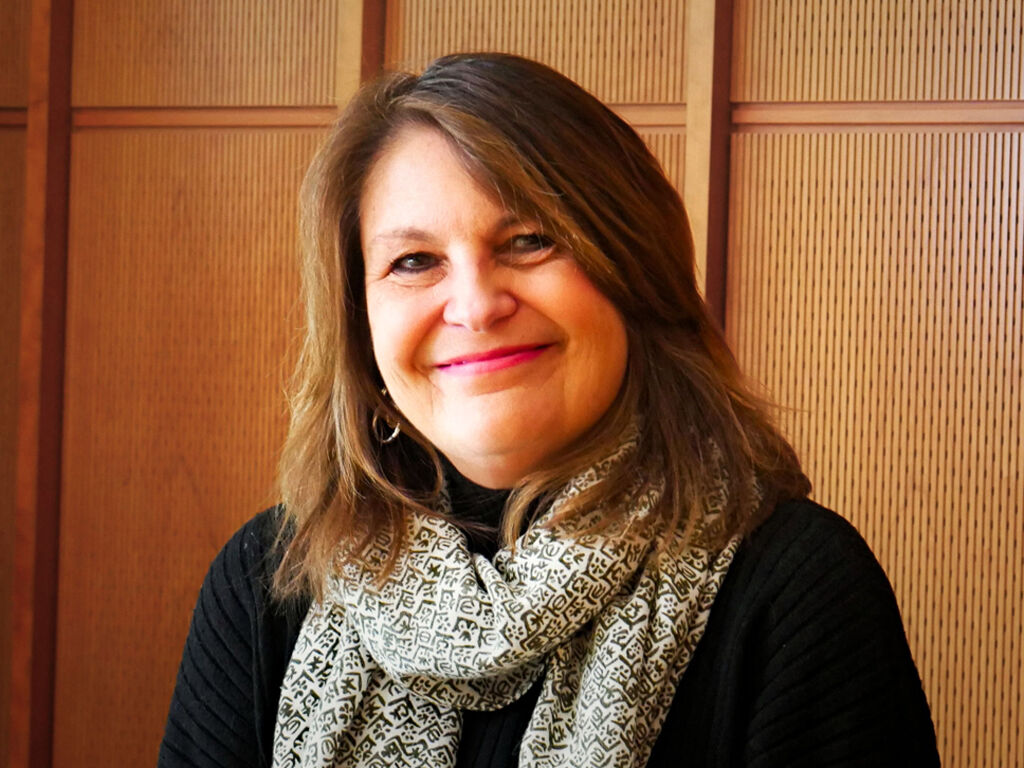
Rhonda DiMascio takes the helm as Morven Museum & Garden's new executive director as the site celebrates its role in New Jersey's past, present, and future.,
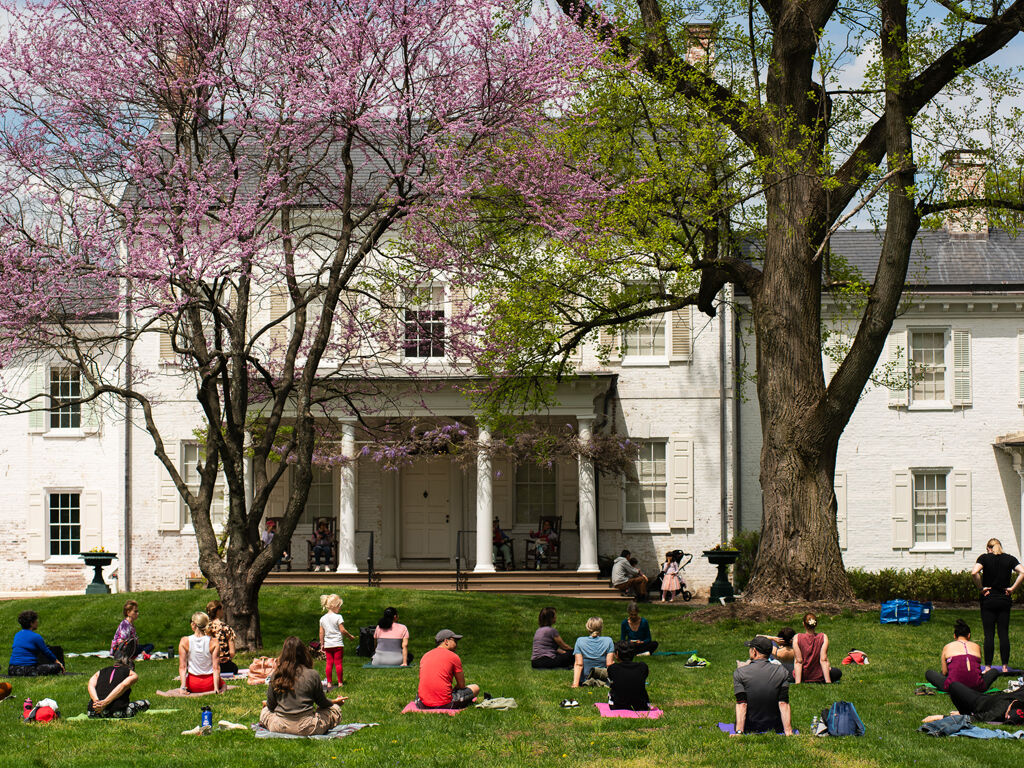
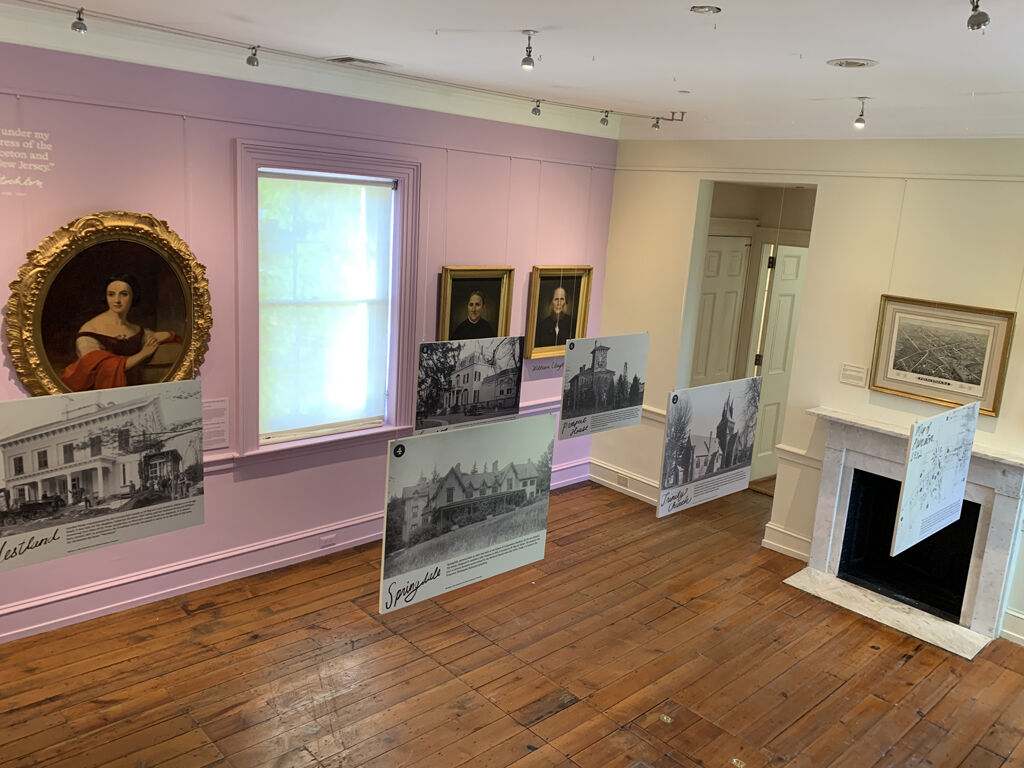
One portion of the 'Morven Revealed' exhibit focuses on fashion through the years. (Photo courtesy of Morven),