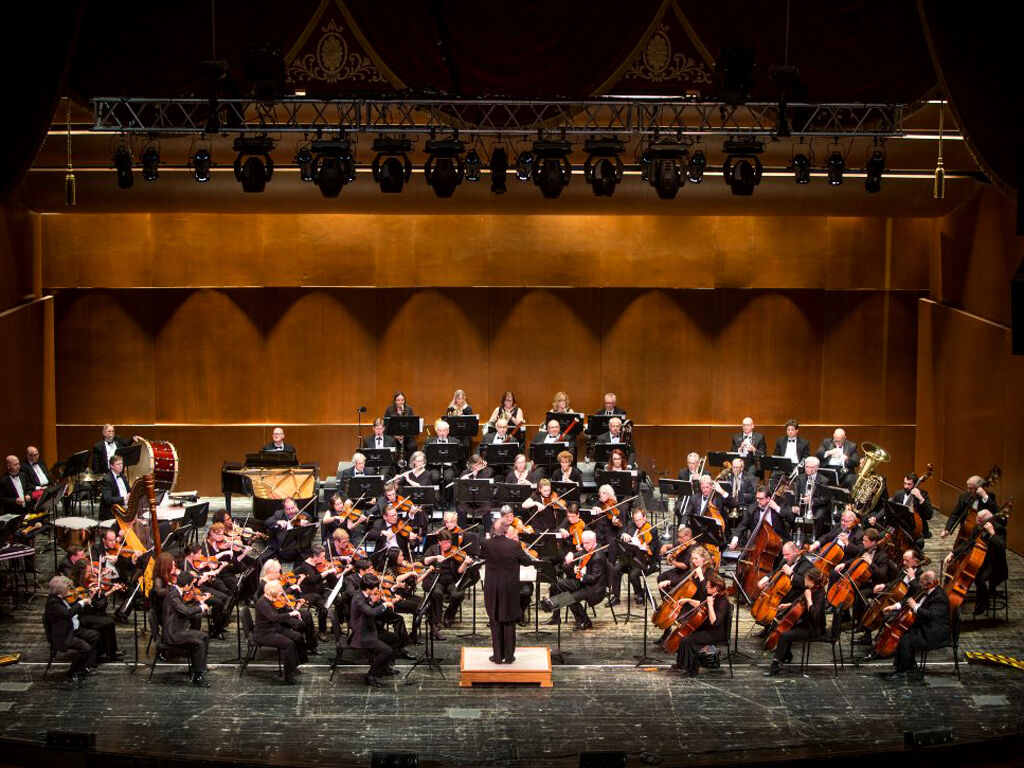
There is no question there is an art to putting together an effective concert. It just so happens that art will also be a central component to this Saturday’s, October 21, presentation, by the Capital Philharmonic of New Jersey (CPNJ), of Modest Mussorgsky’s “Pictures at an Exhibition” at the Trenton War Memorial.
The orchestra will collaborate with Artworks Trenton. New works by area artists, inspired by Mussorgsky’s music, will be projected as the music is performed. Featured artists will include Alia Bensliman, Leon Rainbow, Tamara Torres, Amanda Chesney, Mayfield Williams, Diya Paul, Katelyn Liepins, Hannah Fink, Addison Vincent, and Kathleen Hurley Liao.
The artworks will also be on display at the venue, in the lower lobby of Patriots Theater, where a 6:30 p.m. pre-concert talk will be held. In addition, there will be a free post-concert reception, at which the art may be viewed and/or purchased.
In the days leading up to the concert, the artists and their work will be profiled on the orchestra’s Facebook page (New Jersey Capital Philharmonic Orchestra).
Also on the program will be Sergei Rachmaninoff’s Piano Concerto No. 3, with Maja Rajkovic the soloist. The “Rach 3,” composed in 1909, has a reputation of being one of the most challenging piano concertos in the repertoire and a great audience favorite. Both in terms of power and display, it’s quite a different animal from Mozart’s Piano Concerto No. 21, played by Rajkovic on her last appearance with the CPNJ, in 2019. Interestingly, Rachmaninoff himself once appeared in recital at the Trenton War Memorial, on October 30, 1940.
Mussorgsky originally conceived “Pictures,” one of his most popular works, as a piano suite in 10 movements. Each of the movements was inspired by visual art by the architect and painter Viktor Hartmann, a personal friend of the composer. Mussorgsky attended a Hartmann exhibition at the Imperial Academy of Arts in St. Petersburg in 1874, a year after the artist’s death. (Hartmann died of an aneurysm at 39.)
On Saturday, the process will come full circle, as the audience will get to experience how Mussorgsky’s music, inspired by Hartmann’s paintings, has in turn influenced these local artists.
A “Promenade” theme, first heard at the beginning the piece, recurs throughout, reflecting a hypothetical viewer’s shifting moods and reflections while strolling between pictures in a gallery.
In its original guise, “Pictures” too became a showpiece for virtuoso pianists. Over the years, many arrangers have attempted to translate its allure to the orchestra. The most successful of these has been Maurice Ravel, whose masterful orchestration, completed in 1922, will be heard on Saturday.
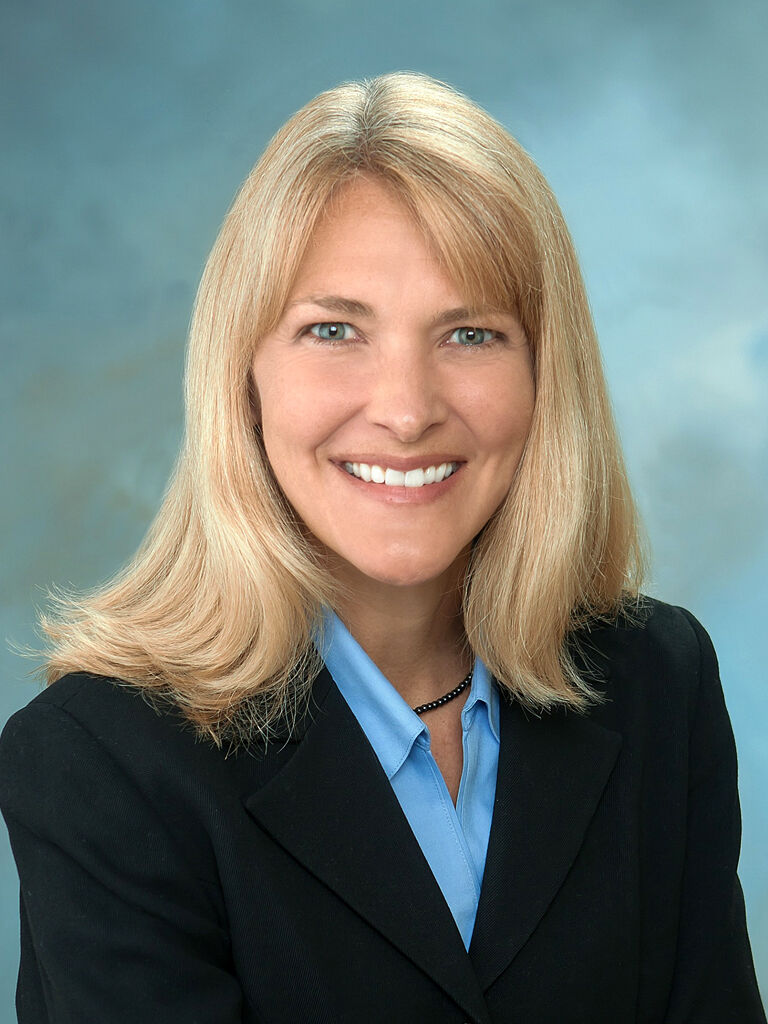
The local artwork angle is but one example of how CPNJ, now with Jill Aguayo at the administrative helm, has been looking for creative ways to connect with the Trenton community. Using Saturday’s concert as a springboard, Aguayo is also hoping to tap into the creativity of the young.
“I’ve asked two of the artists to help me and go out to the schools, and they’re going to do a little lesson about inspiration, and talk to the kids about ‘how are you inspired,’ and then explain to them how they were inspired to create their art, and they’re going to have them listen to music and try something of their own using simple materials.”
Aguayo, formerly on the CPNJ board, has been executive director of the organization since last November. In that time, there has been a notable increase in ancillary events to supplement the orchestra’s main stage performances. More than ever, the orchestra, now in its 10th year, has been venturing outside its traditional venue at Patriots Theater in Trenton’s War Memorial.
“Even as we’re growing, having received a state grant, we would like to focus those resources back into the community. Our idea is to have people come to our concerts that wouldn’t otherwise be exposed to classical music. We would like to be part of the Trenton community, a part of its economic rebirth, so to speak. There are so many other organizations in Trenton that share that mission. We’re trying to partner with some of them.”
She cites a recent chamber music concert, featuring a woodwind quintet from the orchestra, at Mill Hill Playhouse, home of Passage Theatre Company. “We’re doing these concerts in different parts of Trenton to get out into the community. It attracts people. It brings people together.”
She mentions another venue from last year, St. Bartholomew’s Lutheran Church, located in what its pastor described as the most neglected ward in Trenton. “We had people that lived right in the community come to the concert,” she says.
Additional chamber music concerts this season will be held at St. Michael’s Episcopal Church, St. Mary’s Byzantine Catholic Church, and 1867 Sanctuary in Ewing.
Representatives of Passage Theatre will team with members of the orchestra for two performances of Igor Stravinsky’s “A Soldier’s Tale” at Mill Hill Playhouse on December 2.
The orchestra’s actual 10-year anniversary will coincide with its annual New Year’s Eve concert on December 31. A new work has been commissioned from composer John Dickson, and organist Brett Miller will provide a pre-concert recital. To make things even more festive, Aguayo says, following the traditional post-concert champagne toast, there will be more music and food available during a ballroom reception.
March 16 will bring an exciting program of works by Valerie Coleman (her “Seven o’ Clock Shout”), Philip Glass (his Violin Concerto, with Yvonne Lam the soloist), and again Stravinsky (his ballet music for “Petrushka”).
On April 20, members of the orchestra will revive the most notorious work by Trenton’s most famous classical music composer, George Antheil. “Ballet Mecanique” put Paris on its ear at its debut in 1924, with its implacable pianos, percussion, sirens, bells, and propellers. For the work’s centenary, the orchestra will present it in its revised version for four pianos and 11 percussionists. Music director Daniel Spalding, a great Antheil champion, knows this music well, as he recorded it for commercial release on the Naxos label. The CPNJ performance will take place at Roebling Machine Shop and will be further enlivened by the artistry of Trenton Circus Squad.
On May 12, the orchestra will perform a special Mother’s Day concert of music everyone knows and loves — or should — including the overture to Rossini’s “The Barber of Seville,” Mozart’s “Eine Kleine Nachtmusik,” and Sergei Prokofiev’s “Peter and the Wolf,” at the NJ State Museum Theater. Also featured will be the winner of this year’s Mary G. Roebling Youth Concerto Competition.
“We want to bring the idea of classical music to kids,” Aguayo says. “Last spring, our guitar soloist was David Galvez. He’s a Peruvian guitarist, and he went out to some area schools to play and talk about his background. A lot of kids in those schools are Spanish speakers. I remember at one point this kid raised his hand and asked, ‘Do you speak Spanish?’ When he said yes, the kids were excited. We want them to identify with musicians, whether they become musicians or not. They can see someone like them and go, ‘That’s something I could do too.’”
Though she was born in Boston and grew up in a small town in Minnesota, Aguayo is also able to speak Spanish. She learned from her husband, Felix Aguayo, who hails from Peru and works in the solar development industry, as vice president of NexAmp, the largest community solar provider in the U.S.
She also has abundant experience in arts administration and as a performer. She says her family was not musical, but upon further reflection amends the statement, adding that her mother played the accordion. She did so casually, taking it up as child, as the second-youngest of 12 children, when Aguayo’s grandfather brought home the instrument one day and she was the only one who expressed any interest in it. On this, she played mostly German polkas. (Belying her married name, Aguayo’s parents are of German extraction.)
Her father was in the Navy, stationed in California. He retired at the age of 38 and began a second career in Minnesota, where both her parents grew up. There, he established a business insulating houses. Interestingly, perhaps anticipating the man who would later become Aguayo’s husband, he invented a solar unit, which attracted the interest of Popular Science magazine. In the article, he offered the plans to anyone for a dollar and a self-addressed stamped envelope. Aguayo says the response was overwhelming. They returned from a family trip to find thousands of requests.
The youngest of four children, Aguayo took up her sister’s cast-off flute at the age of nine, but “it started to really stick in high school. I didn’t have parents who were pushing me all the time, but that’s all I did. I would just go practice the flute. I never did it as a goal. It wasn’t like, I’m going to practice really hard and get really good at this. I just loved to play the flute. I played it for hours a day. And then I started to get noticed, because I got better.”
She entered Minnesota State University Moorhead with an undeclared major and wound-up graduating with a degree in music teacher education. By the time she was a sophomore, she had already landed her first professional orchestra post.
“My flute teacher was the principal flutist in the Fargo-Moorhead Symphony, and there was a second flute opening. I said, ‘I’m going to get that job.’ And it was great, because I was able to kind of get orchestra lessons right there from my teacher. A lot of my professors were in the orchestra as well. It was a wonderful experience.”
After graduation, she attended the San Francisco Conservatory, from which she emerged with a master of music degree in performance.
She became a freelance musician who played with orchestras and touring groups in her 20s. Then she made the transition to arts administration, working at New York’s Metropolitan Opera, where she gained experience in managing its National Council Auditions and the Lindemann Young Artist Development Program.
She relocated with her husband to the Trenton-Princeton area, where she raised two children — her son plays the trombone and her daughter plays piano and sings — and joined the volunteer board of CPNJ in 2018.
“Both of my kids play,” she says. “I think it’s something that was valuable in my job at the Met and that I think is valuable to the Capital Philharmonic, that I understand musicians. At the Met, I understood the young artists and what they needed. I think that my background helps me in arts administration, because I understand what it takes to play at that level.”
The Capital Philharmonic emerged from the ashes of the former Greater Trenton Symphony Orchestra in 2013. Daniel Spalding spearheaded its creation, in cooperation with double-bassist, musicians’ union representative, and orchestra manager Steven Kyle and a board presided over by Gloria Teti.
As part of its community outreach, CPNJ continues to work with and create musical initiatives for such organizations as Trenton Music Makers, Trenton Children’s Chorus, Sprout University of the Arts, International Charter School of Trenton, the Father Center, and Culture is Key Trenton.
“At this point, it’s really our mission to try to bring the community together,” Aguayo says.
As in planning an effective concert, bringing people together is an art.
Pictures at an Exhibition, Capital Philharmonic of New Jersey, Patriots Theatre at the War Memorial, 1 Memorial Drive, Trenton. Saturday, October 21, 7:30 p.m. $30 to $50 ($10 students). 800-514-3849 or www.capitalphilharmonic.org.