Dancing can benefit those living with Parkinson’s disease, a neurodegenerative disorder, through rhythmic motions that reclaim movement and demonstrate their resilience.
Over two decades ago, the Mark Morris Dance Group in Brooklyn developed the “Dance for PD®” model, which brings people with the condition and their caretakers together in a dance class setting.
Since then, it has been adapted for over 300 affiliates in 42 states and 25 countries, each iteration moving us one step closer to redefining our understanding of the progressive disease.
Participants from one of these local chapters, American Repertory Ballet’s “Dance For Parkinson’s” program, will take the stage at a live event hosted in partnership with Princeton University Concerts on Sunday, March 3, from 3:00 to 4:30 p.m. at the Richardson Auditorium in Alexander Hall in Princeton.
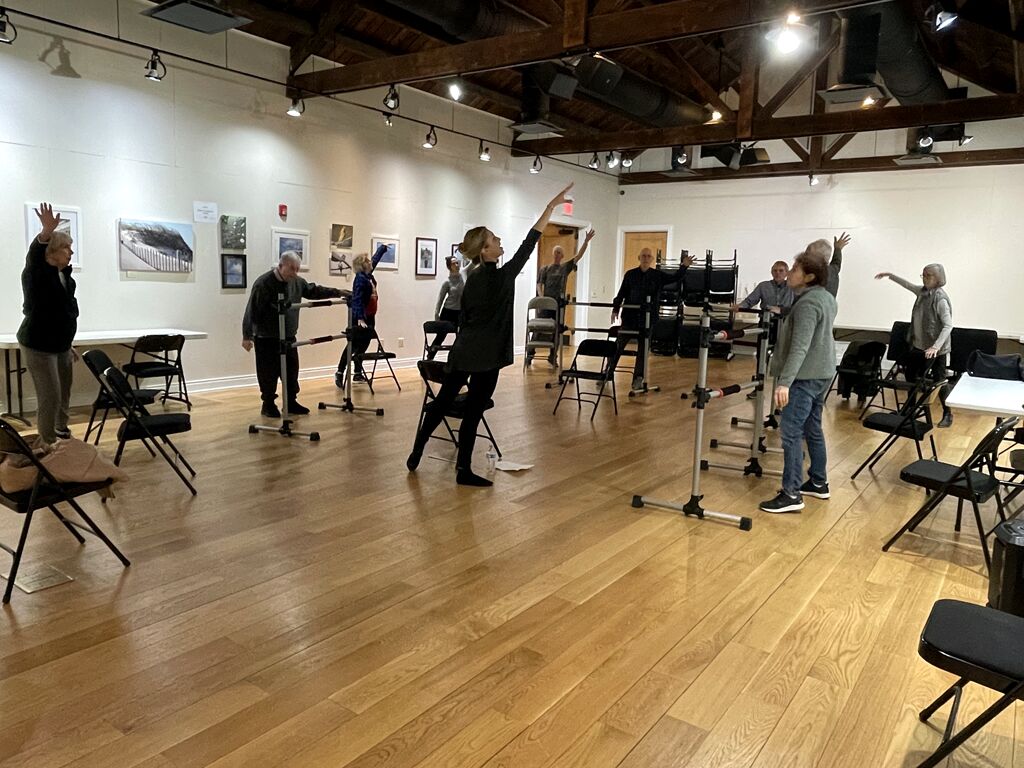
American Repertory Ballet’s Dance For Parkinson’s initiative is an extension of the Dance for PD® framework, offering attendees of all skill levels or abilities the opportunity to express themselves in a community-based, creative environment at the Princeton Ballet School—known as ARB’s official school—that routinely incorporates live music accompaniments into classes across its Princeton, Cranbury, and New Brunswick studios.
ARB and PUC have invited these attendees to dance onstage to an adapted version of Mark Morris’ “Falling Down Stairs” choreography number, which is set to the “Bourrée” section from Johann Sebastian Bach’s “Suite No. 3 for Unaccompanied Cello.”
Anyone from the sessions who does not wish to join the concert can instead receive a complimentary ticket to the show.
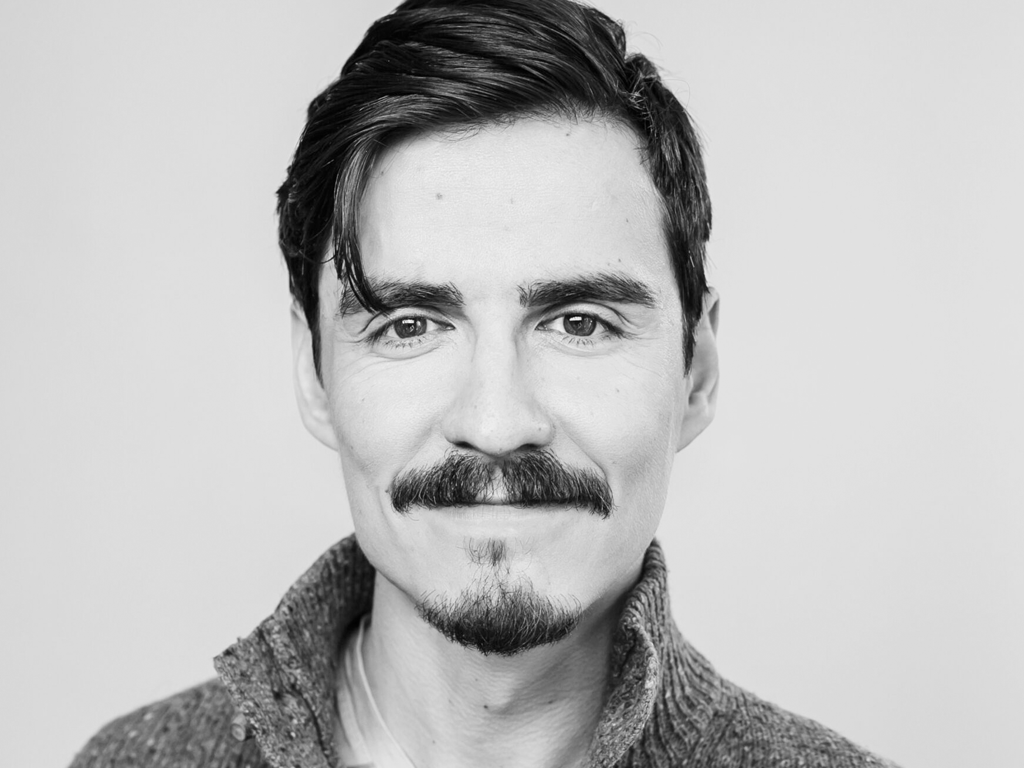
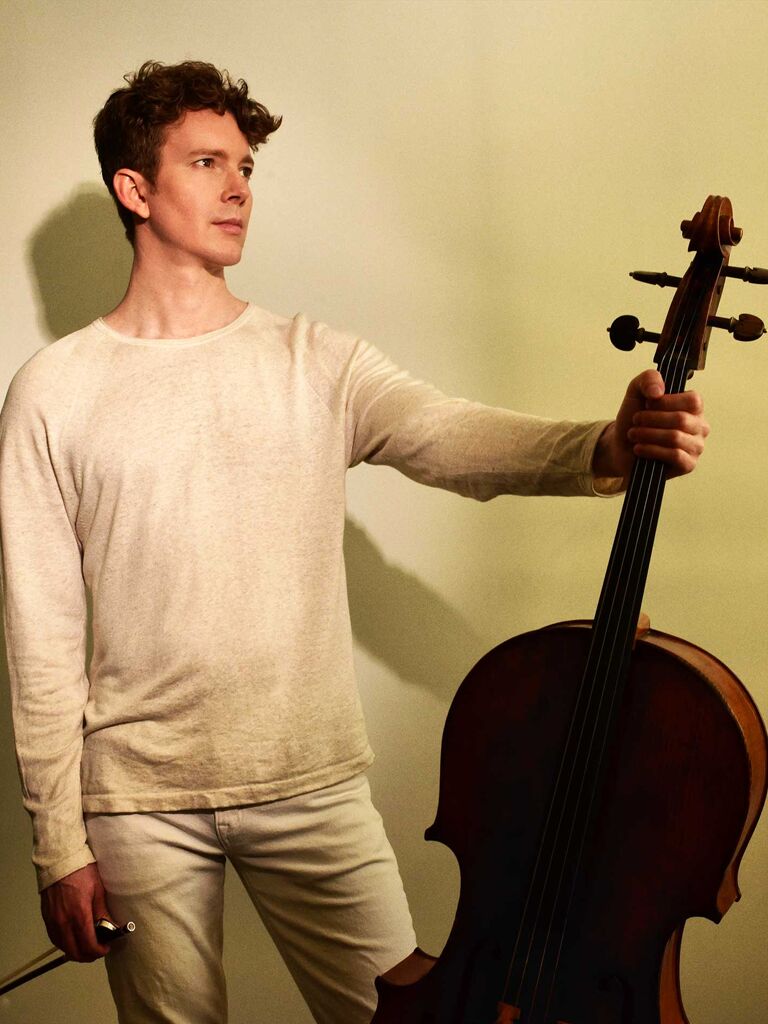
According to the Princeton University Concerts event page at concerts.princeton.edu, cello soloist Joshua Roman will provide live accompaniment to the piece as part of PUC’s ongoing “Healing with Music” series, which showcases the “restorative role” of music through engagements that are equal parts concerts and opportunities for conversation.
ARB and PUC’s collaboration aims to examine “the intersection of music, dance, and Parkinson’s” and includes a panel featuring Dance for PD®’s founding teacher and program director, David Leventhal, in discussion with members of Princeton University faculty.
The Princeton Garden Theatre will also show a special screening of the documentary film “Capturing Grace,” a film by David Iverson about the Dance for PD® program, on Monday, March 4, at 7 p.m. Iverson is set to participate in a live Q&A following the movie, which ties into his own personal history with Parkinson’s disease and the Dance for PD® classes.
Tickets are $15 each for the general public, $10 for students, and free to Princeton University students through the Passport to the Performing Arts program, which “allows students to attend a number of world-class performances on campus each year at no charge,” with students eligible for six credits, or “passports,” at the beginning of each academic year.
Due to popular demand, the Princeton Ballet School has expanded from its initial plan for a 5-week summer session and will hold courses throughout the school year, immediately followed by one-hour rehearsals for the March performance.
The fall season schedule runs on Thursdays from 11:15 a.m. to 12:30 p.m. at the Princeton location at 301 North Harrison Street in the Princeton Shopping Center with lead teacher Linda Mannheim and musician Dottie Westgate.
Mannheim is a professional dancer and Pilates instructor who previously served as an assistant professor of dance at Rider University.
The ARB Dance For Parkinson’s program continues at the Middletown Arts Center on 36 Church Street in Middletown Township on Mondays from 4:15 p.m. to 5:30 p.m. with accompanying pianist and percussionist G.G. Glazer-Armstrong.
Zoom classes stream live on Thursdays from 11 a.m. to noon, headed by lead teacher Michael Vitaly Sazonov, a performer and theater maker who has worked with the Dance for PD® flagship program in New York since 2014.
Rachel Stanislawczyk is the director and founder of American Repertory Ballet’s Dance For Parkinson’s program, as well as its lead teacher at the Middletown Arts Center. She explained that the group has been meeting for nearly three years, forming a tight-knit circle that goes out for pizza together and stays in touch after class.
“If anything happens in each other’s lives, they’re always there to support each other, and it’s just a really beautiful family that has blossomed, and so I think to me, that is the most special part of the program—the relationships in the community,” she said.
For more information on the Dance For Parkinson’s program at ARB or the Zoom link to the weekly classes, email Stanislawczyk at RStanislawczyk@arballet.org or call assistant teacher Lindsay Cahill at 732-249-1254, ext. 19.
Stanislawczyk grew up in East Brunswick and attended the Princeton Ballet School until her sophomore year. She then split her time between East Brunswick High School and the performing arts program at the Middlesex County Vocational and Technical Schools, now called Middlesex County Magnet Schools, where she met director of dance Cleo Mack.
According to Stanislawczyk, Mack, who is also the artistic director of the Rock Dance Collective and co-owner of the Washington Rock Dance studio in Warren, “completely blew up everything” she knew about dance and led her to “fall in love with the art form.”
Mack inspired Stanislawczyk to branch out from her ballet roots to modern and contemporary dance, and Stanislawczyk credits Mack for helping her to continue those studies into college, where she earned a bachelor’s degree in dance and choreography from Virginia Commonwealth University.
Stanislawczyk started her internship with the MMDG’s “Dance for PD®” Brooklyn program in 2017, eventually becoming the lead teacher. She brainstormed about how to implement a similar idea closer to home, believing that the project would thrive at a dance school like the Princeton Ballet School, which incorporates live music in every class.
A year later, she proposed the idea of Dance for Parkinson’s at ARB, a New Jersey-based affiliate of the MMDG’s “Dance for PD®,” with the support of ARB access and enrichment coordinator Lindsay Cahill, a longtime dance and gymnastics instructor who now serves as the assistant teacher for both in-person programs.
Stanislawczyk noted her interest in the correlation between the condition and dance came when her grandfather was diagnosed with Parkinson’s disease, leading her to research the topic in college and then cultivate it further at MMDG.
The concept spread beyond Princeton—influenced in part by Stanislawczyk’s personal connection to the condition—and even survived the transition to a virtual format during the pandemic before returning to all studios except Cranbury.
Stanislawczyk also returned to school, receiving an Ed.M. in dance education from Rutgers University as well as a K–12 teaching certification. The Edison resident is currently a full-time dance instructor for students at David Brearley Middle and High School in Kenilworth.
“I decided that I would go back to school for education so that I could provide students with a program similar to the one that I went to when I was in high school,” Stanislawczyk said, noting that she went on to perform professionally with Mack’s group and still teaches at her dance studio.
“Throughout my life, I’ve always had a passion for sharing what I love about dance and sharing my own personal experience with [those] who are new to the form. That’s why I teach in a school, why I teach Dance for Parkinson’s, is to spread the humanistic response that I think dance provides to a community.”
The Parkinson’s Foundation, an organization that supports the Dance for Parkinson’s at ARB program through a community grant, describes the disorder as one “that affects predominately the dopamine-producing (“dopaminergic”) neurons in a specific area of the brain called substantia nigra” for “more than 10 million people worldwide.”
The NIH National Institute on Aging website added that symptoms “usually begin gradually and worsen over time,” including “unintended or uncontrollable movements, such as shaking, stiffness, and difficulty with balance and coordination.” Others experience “difficulty walking and talking,” as well as “sleep problems, depression, memory difficulties, and fatigue.”
When cells in the brain die or are unable to produce a sufficient amount of dopamine, Stanislawczyk explained, dancing can prove to be a powerful influence.
“Dopamine is the movement base, the feel-good hormone in our brain, and when you dance to live music, it naturally produces dopamine in the brain,” she said.
According to a 2021 UCLA Health article by Chayil Champion, researchers at York University in Toronto, Canada, tracked 16 people with Parkinson’s disease as they attended weekly dance classes for a three-year period between 2014 and 2017.
These participants not only saw “an improvement in speech, [a] reduction in tremors, better balance, and decreased rigidity,” but “showed no deterioration over the three-year period, while the other 16—those who did not participate in the dance classes—experienced a decline in their motor skills.”
“Dance triggers the brain in a different way so that they’re able to waltz, they’re able to march out of the room, because instead of just reaching and trying to pick up a pencil or to do a daily task like pouring a cup of coffee, when you’re doing that and you’re dancing, and you think about sweeping the arm up overhead and grabbing onto something, pulling and pushing, and using that imagery, it triggers the brain in a different way; it provides agency to the people sitting in the room that’s unfortunately being stripped away from them,” Stanislawczyk said.
While participants may feel varying levels of therapeutic relief throughout the course, Stanislawczyk stressed that the class is not dance movement therapy. In fact, the topic of Parkinson’s disease is rarely discussed, with the emphasis instead placed on the core values of creativity and choreography at the heart of any traditional dance class.
“We treat the participants like artists,” she said. “We don’t want them to feel like they’re coming here and going to another doctor’s office. We strip that all away.”
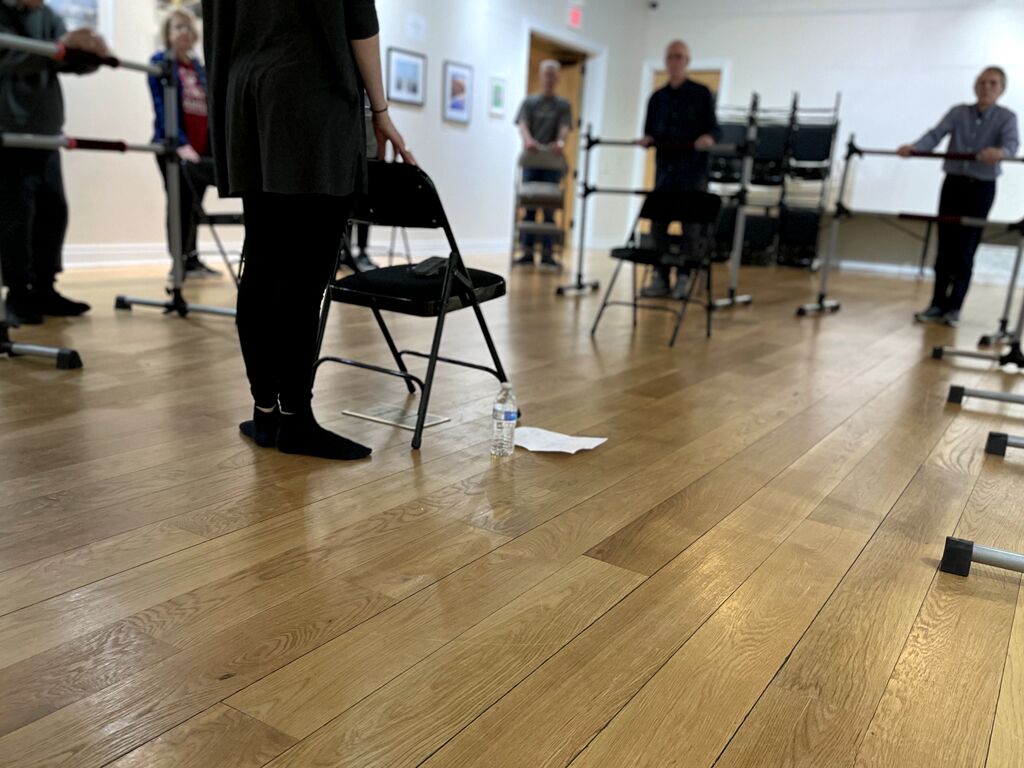
Each class lasts around one hour and fifteen minutes. Participants begin by sitting in a circle of folding chairs with the lead and assistant teacher in the center, the latter of whom modifies the exercises as everyone moves through the motions against the backdrop of live instrumental music.
Throughout the session, attendees have the option of progressing to standing or remaining seated, with Stanislawczyk adding that if something she’s doing doesn’t feel right to them on that particular day, they are encouraged to adjust the exercise in any way they need.
When learning the basic steps of the Dominican Republic social dance known as bachata, for example, participants started at the bar and were subsequently given “the option of moving freely through the space without” relying on structural support.
“We start with a sun salutation exercise, and then we use a lot of percussion to warm up our feet. We use movement from a variety of different dance styles and forms, so one week we might have a salsa dance focus, the next week we might do a ballroom waltz, and the next week we might do jazz, ballet,” and other types that incorporate a variety of cultural influences, Stanislawczyk added.
“We play a lot with the seasons, or if a holiday is coming up, then we might create movements for Valentine’s Day, or we’re going to be incorporating a lot of apple picking and pumpkin picking and leaves falling from the trees,” she explained, noting that every day tends to follow a theme.
“There’s a lot of guided imagery that drives the class,” she said. “The visualization, I think, helps for this population, [because] if they are thinking about squeezing toothpaste out of their leg or tracing like they’re inside of a pumpkin and they’re carving the pumpkin from the inside out, it adds a different dynamic quality to their movement.”
“We do a lot of mirroring in this class, a lot of improvisation, and traveling through the space, and then we always end class with a reverence that we call ‘Passing of the Gift,’ and participants get to improvise, and they create their own ‘gift,’” she added.
It’s almost like charades, Stanislawczyk explained, where a first person “might blow a balloon with their hands and then show how it’s floating” before passing it onto the next individual standing in the circle, who then “has the power to transform that into anything they want.”
“Maybe they turn it into a flower, or maybe they bake cookies, and it goes around the room,” she continued. “We incorporate a lot of circles in this class for community. Circles have been traditionally used in dance throughout history to make sure that everybody is inclusive. You’ll see circles in a lot of ritualistic dances, and it means that we’re all equal and we’re all in this together.”
Stanislawczyk strives to create a “very casual and warm learning environment” through her teaching style, taking participants on a journey of exploration and vulnerability that hopefully “resonates in the room and makes everybody feel comfortable to take risks.”
While the physical aspects of the class are valuable in their own right, Stanislawczyk believes that the emotional rewards of being able to “equally nourish their soul[s] with dance” are felt on both sides of the instructor-dancer relationship.
“It’s one thing to teach children, but when you teach an adult, they are coming to the class for themselves, and they’re so grateful for the opportunity to dance, and so it’s a community that I really resonate with because they’re so appreciative. As much as they love me, I love them,” she said.
“I get just as much from these classes as they do, and I truly believe that—that this is my happy place that I come to for the hour and 15 minutes that we spend with each other each week. It fuels me as a human being.”
Stanislawczyk finds it refreshing that the class fosters such close relationships between people from different backgrounds, each of them coming with their own unique mosaics of life experiences, in a communal space where bonds are forged through mutual respect and rhythmic activity.
“I constantly think about how, in our society as a whole, we’re constantly attached via technology. We’re not really having these human-to-human relationships, and so when you meet somebody and you’re moving together—I mean, it’s scientifically proven that your mirror neurons are turned on and that it develops empathy for one another—and I think that it develops a really strong foundation for a community of trust.”
Stanislawczyk emphasized that it is more important than ever to be engaged and present with others, a lesson she reiterates in class: “Look around and see the people that you’re moving with and that you’re dancing with, and that goes a long way.”
“It’s not often that we come together and we move together, and I think that it’s a powerful thing—a group of people moving in unison in today’s world [where] we’re just constantly with our heads down and typing on the computer and not making eye contact, etc.,” she continued. “We’re really listening to each other and responding to each other authentically.”
“When people are diagnosed with Parkinson’s disease, it can be very isolating. A lot of people lose agency to do simple tasks that we take for granted,” Stanislawczyk explained. “When I’m designing the classes, I try to incorporate everyday movements that we can practice and rehearse in here to live musical accompaniment, and then participants can adopt those movements into their daily lives. I use a lot of imagery, for instance, about flicking water off of the hands. I try to think about the relationships of how that relates to a common hand tremor that you may see with Parkinson’s disease.”
“I think that this class breaks away that sense of isolation, and it makes everybody feel included, including myself,” Stanislawczyk added. “I feel like I get as much out of the class as all of the participants, because it feeds my soul.”
Dance For Parkinson’s, American Repertory Ballet. Fall sessions available at the Princeton Ballet School, 301 North Harrison Street, Princeton; Middletown Arts Center, 36 Church Street, Middletown; and via Zoom. arballet.org/access-enrichment/programs-2/dance-parkinsons-program.
For more information on the classes or any questions, contact program director Rachel Stanislawczyk at RStanislawczyk@arballet.org and/or assistant teacher Lindsay Cahill at 732-249-1254, ext. 1.
“Dance for PD® (Parkinson’s Disease) A Mark Morris Dance Group Program: Exploring the Intersection of Music, Dance & Parkinson’s,” ARB and Princeton University Concerts, Sunday, March 3, 3:00 to 4:30 p.m., Richardson Auditorium in Alexander Hall, Princeton. concerts.princeton.edu/events/23-24-dance-for-pd.
Admission is free for all Dance for Parkinson’s class participants and Princeton University students, $10 for other students, and $15 for members of the general public.
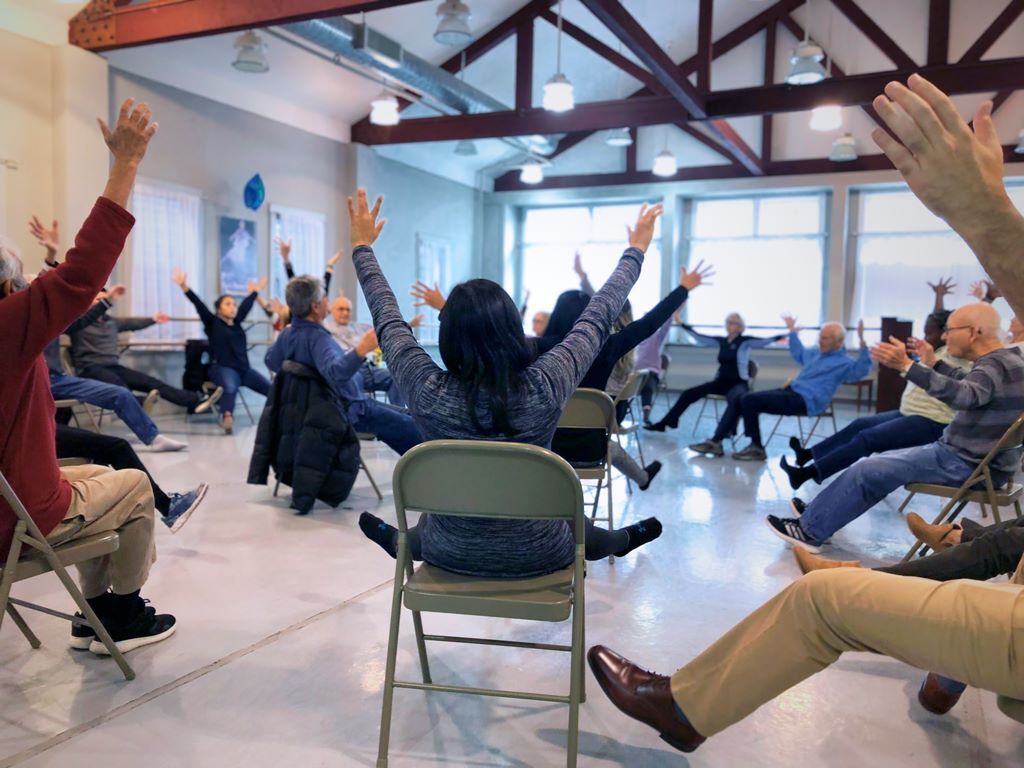
The melody of movement has never been sweeter for the American Repertory Ballet's Dance for Parkinson's program than when shared together in classes that not only build a circle of positivity, but also give its participants the chance to perform onstage at a joint ARB and Princeton University Concerts event next March.,
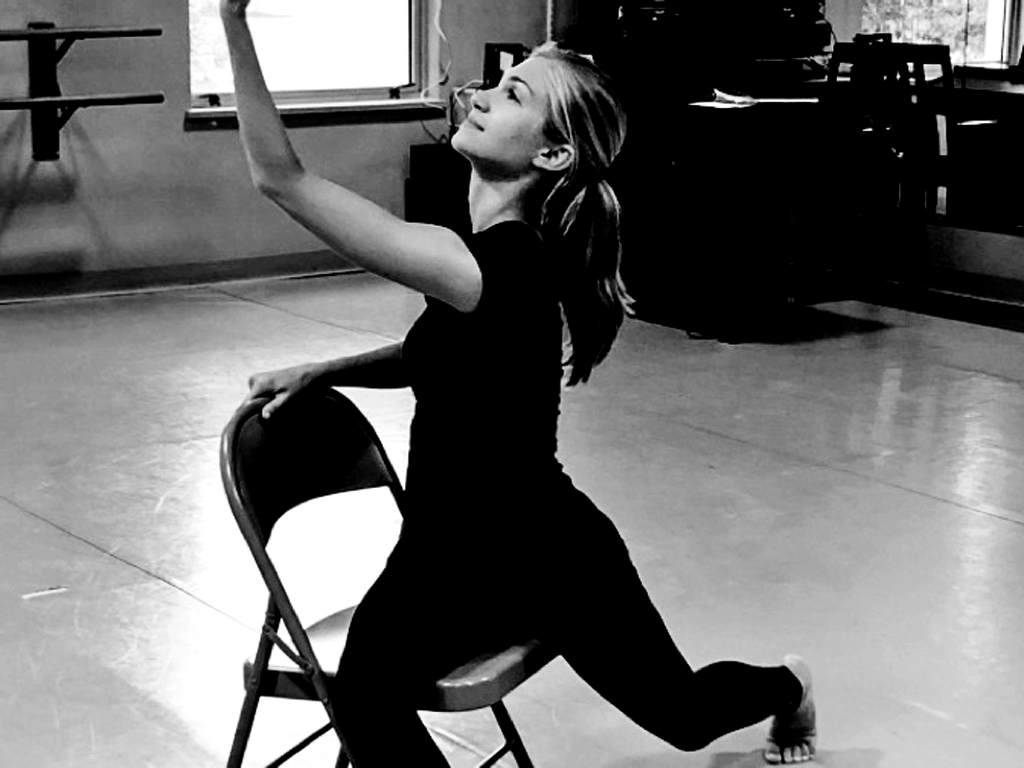
The 'Healing with Music' event at Princeton University Concerts will feature live accompaniment by cellist Joshua Roman, just as a guest musician plays each dance class at the ARB's Princeton Ballet School.,
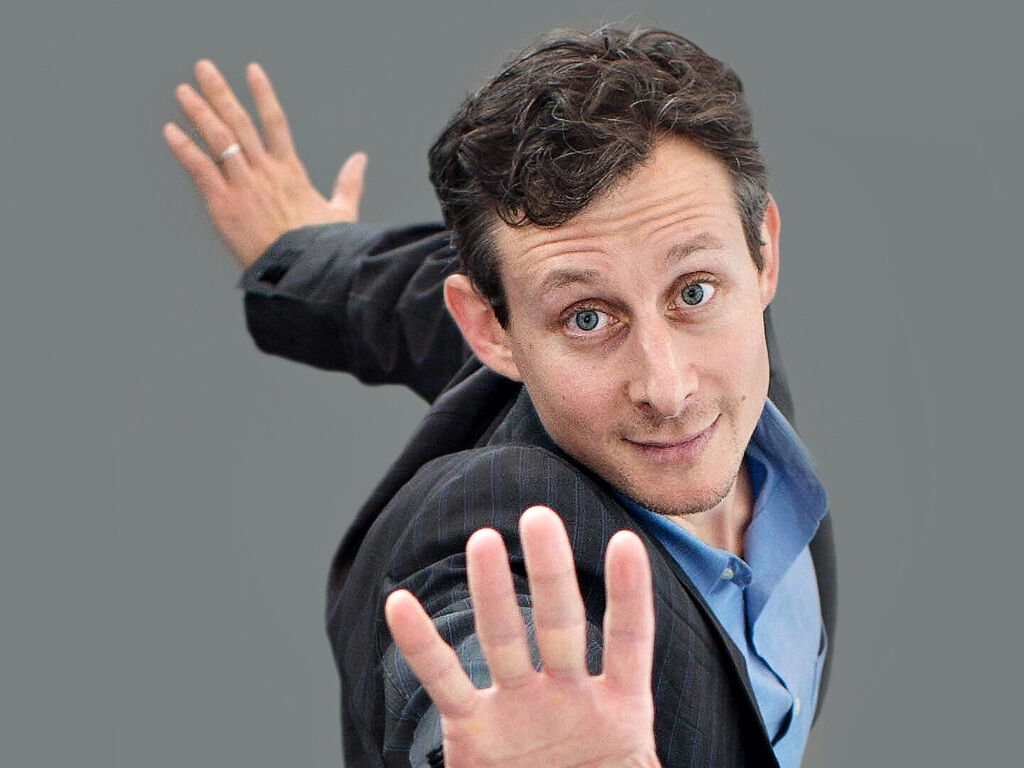
Dance instructor Michael Vitaly Sazonov runs the weekly Thursday afternoon Zoom classes.,