“These are the times that try men’s souls.”
This famous opening line from Thomas Paine’s pamphlet, “The American Crisis, No. 1,” published in December 1776, perfectly captured the utter despair facing the American cause. The Continental Army, having suffered crushing defeats in New York, was in a desperate retreat across New Jersey, pursued by the British. With soldiers’ enlistments set to expire and morale at rock bottom, the Revolution seemed lost.
Paine, embedded with the troops during the harrowing march, realized the fight needed a powerful ideological weapon. He wrote “The American Crisis” to serve as a call to arms for every Patriot, published just days before General Washington’s daring Delaware River crossing.
The pamphlet’s goal was to boost low morale and clarify the stakes. Paine distinguished between dedicated citizens and those he derided as “the summer soldier and the sunshine patriot,” who would only support the cause when it was easy. He reframed the military defeats not as a sign of failure, but as a crucible that would forge the new nation’s character.
Washington understood its power. He ordered the essay read aloud to his weary, freezing troops on December 23, 1776, immediately prior to the successful attack on the Hessian forces at the Battle of Trenton. The victory revitalized the entire Patriot movement, saving the Revolution from collapse.
The historical significance of “The American Crisis” lies in its role as a psychological turning point, proving that powerful language could be as decisive as muskets.
After the war, Paine chose to make Bordentown, New Jersey, his home. In 1783, he purchased a small house on West Church Street near Main (now Farnsworth Avenue) and adjacent land. This was the only property Paine ever purchased for himself in America. Though he spent time abroad, he used this property as his base, living here intermittently from 1778 until he sold it in 1803.
While living in Bordentown, Paine dedicated himself to mechanical invention. He worked extensively on models for a single-span cast iron bridge, showing his designs to George Washington, Benjamin Franklin, and local friends. He even constructed a 100-foot demonstration model in Britain while seeking financial support for it to be built over the Schuylkill River in Pennsylvania. His demonstrations and designs inspired bridges such as Britain’s 240-foot Wearmouth Bridge, directly tying his name to the history of innovation.
Paine’s historical significance extends far beyond American shores. After the Revolution, he traveled to Europe, where he became an ardent supporter of the French Revolution. His work, Rights of Man (1791), was a vigorous articulation of fundamental human rights and the principles of republican government.
He wrote: “The world is my country, all mankind are my brethren, and to do good is my religion.”
Thomas Paine’s impact is indelible. His writings provided the philosophical and rhetorical ammunition for independence, permanently shifting the political landscape and establishing him as one of history’s most effective democratic advocates.
Michael Skelly, Sr. is a board member of the Bordentown Historical Society. For information about the Bordentown Historical Society, call (609) 298-1740 or email bordentownhistoricalsociety@gmail.com.
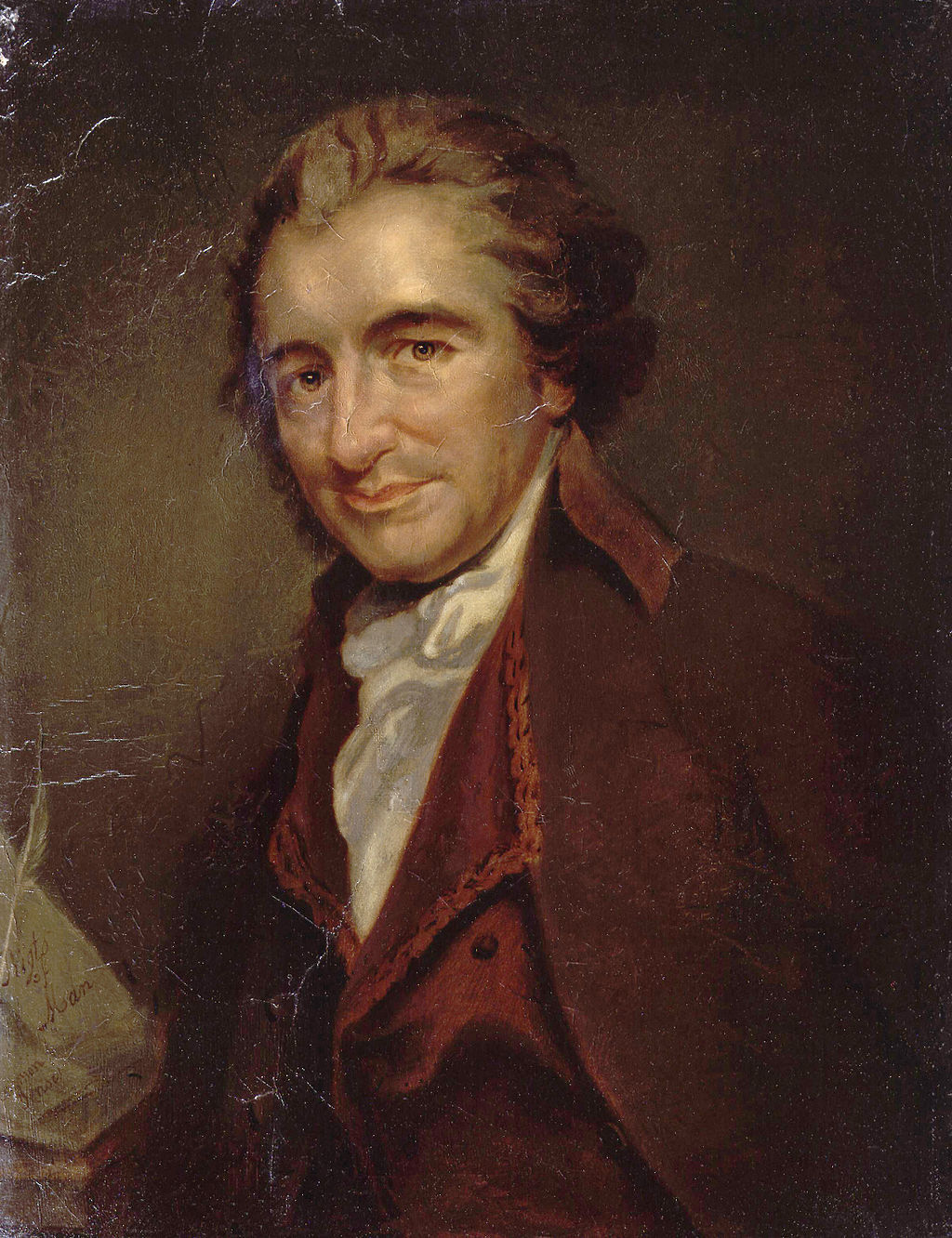
Thomas Paine, painted by Auguste Millière, 1880.,

