Princeton Public Library’s Princeton Environmental Film Festival, now in its 18th year, offers eight feature-length documentaries and 14 short films screened in person and virtually over the course of 10 days from Friday, April 5, through Sunday, April 14. The films come from around the world, but some are from just around the corner, including several short documentaries from Princeton University, one featuring the Pennington-based Watershed Institute, and one as a product of Sustainable Princeton’s inaugural Green House Tour last fall.
The festival is under the direction of Susan Conlon and Kim Dorman. Unless otherwise noted, in-person screenings are held in the library’s community room, and streaming is available from April 8 through 14. All screenings are free.
The schedule is as follows, with film description courtesy of the PEFF website:
Friday, April 5
“Inundation District”: In a time of rising seas and intensifying storms, one of the world’s wealthiest, most-educated cities made a fateful decision to spend billions of dollars erecting a new district along its coast — on landfill, at sea level. Unlike other places imperiled by climate change, this neighborhood of glass towers housing some of the world’s largest companies was built well after scientists began warning of the threats, including many at its renowned universities. The city, which already has more high-tide flooding than nearly any other in the United States, called its new quarter the Innovation District. But with seas rising inexorably, and at an accelerating rate, others are calling the neighborhood by a different name: Inundation District. 1 hour, 19 minutes. 4 p.m. In-person only.
“The Seeds of Vandana Shiva”: In her colorful sari and large scarlet bindi, Dr. Vandana Shiva is an arresting presence: She galvanizes crowds, advises government leaders, fields constant calls from the media, then retreats from big-city buzz to work alongside small farmers across the developing world.
The film focuses on the people, circumstances and seminal events in Vandana’s life — what shaped her thinking and defined her purpose. It also shows how the battle against multinational agribusiness has become an international struggle between two visions for feeding the world: The first, a multinational corporate model of chemically dependent monoculture that rewards a capitalist imperative of profit and growth. And the other, ‘Earth Democracy, that honors ecology, biodiversity, sustainability and community — what Dr. Shiva demonstrates is the only way forward for the future of food. 82 minutes. 7 p.m.
Saturday, April 6
“Princeton Green House Tour: Mrs. Brown’s Lucky Oyster Bar”: In 2023, the Princeton Environmental Commission and Sustainable Princeton teamed up to host a Green House Tour in Princeton, offering residents the chance to go inside some of the most sustainable homes in our community.
Mrs. Brown’s Lucky Oyster Bar is one of four videos from the 2023 Princeton Green House Tour Video Series. This is not, in fact, a bar. It is a stunning home. This new construction emphasizes a tight envelope and a solar array, allowing the house to reach net-zero energy usage. Stormwater management was a priority outside. All this in a small-footprint, one-story home that engages its neighborhood. The name? It comes from hundreds of old bottles and oyster shells that were dug up during excavation. 12 minutes. 9:30 a.m.
“Saving Scottish Pearls”: In the Scottish Highlands, freshwater pearl mussels are a particularly prized part of the environment. Julius Caesar invaded Britain to seize the gems, and they even adorn the Crown of Scotland. But poaching and climate change have imperiled the mollusks. Now the likes of environmentalists, hospitality industry players, and whisky distillers are fighting to save the pearl mussels from extinction through an unlikely method: planting trees. 5 minutes. 9:30 a.m.
“Solar Power and UN Initiatives for Global Warming”: The filmmaker unfolds a captivating narrative, beginning with an insightful lesson on Solar Power versus Conventional Power. Sharing his personal journey from solar energy training in Italy to endeavors in bringing solar power to Indian villages, the story converges on the urgent global issues of Global Warming and Climate Change.
Transitioning seamlessly to the financial realm, the filmmaker sheds light on the crucial role of banks in crisis resolution, highlighting their proactive measures. The narrative culminates in a poignant exploration of United Nations initiatives, rallying the banking community to commit to UN Principles for Responsible Banking. 4 minutes. 9:30 a.m.
“e.coli.gy”: This is a short documentary about the effects of climate change on water quality, specifically the link between decreased Canada goose migration and the abundance of the bacteria E. coli. The film features an interview of the Watershed Institute’s Streamwatch program coordinator, who explores the issue and highlights the work done by the organization to address it. 5 minutes. 9:30 a.m.
“Keeping the Pinelands”: In the 20th century, the once vast forests of the New Jersey Pine Barrens were vanishing. In 1979, a controversial ban on over-development became law, saving over a million acres. But today, the Pinelands face new threats from climate change and fire suppression. To help these forests survive, people are using new ways to manage them. Collaborating with nature is the key to Keeping the Pinelands. 27 minutes. 10:30 a.m.
“A Symphony of Tiny Lights”: In 1971, after witnessing the oil spill in San Francisco Bay, John Francis was moved to give up motorized transport and travel across the U.S. on foot and in silence. During the next 17 silent years, as he listened and studied the world around him, his idea of environmentalism changed. 31 minutes. 10:30 a.m.
“Preserving Our Place: Knowledge is Power”: Two Indigenous photographers from coastal villages four thousand miles apart, one from Alaska and the other from Louisiana, come together to celebrate the beauty of their communities, because of, and in spite of, the colonial and climate disasters that threaten their ways of life. 13 minutes. 10:30 a.m.
“The Asbestos City”: This documentary captures the human story of small-town America in Manville, New Jersey, throughout and beyond the events of Hurricane Ida in 2021. Manville is a borough in the heart of the state that is in a constant struggle for economic resilience, yet it remains strong in its community values, American pride, and cultural history. 1 hour, 25 minutes. 1 p.m.
“399: Queen of the Tetons”: Known by her research number, 399 has captivated photographers since 2007, becoming the most famous — and photographed — grizzly in the world. This film follows 399 as she struggles to raise her cubs in the face of human encroachment, a rapidly changing climate, and threat of losing her protection under the Endangered Species Act. 1 hour, 30 minutes. 4 p.m. In-person only.
Sunday, April 7
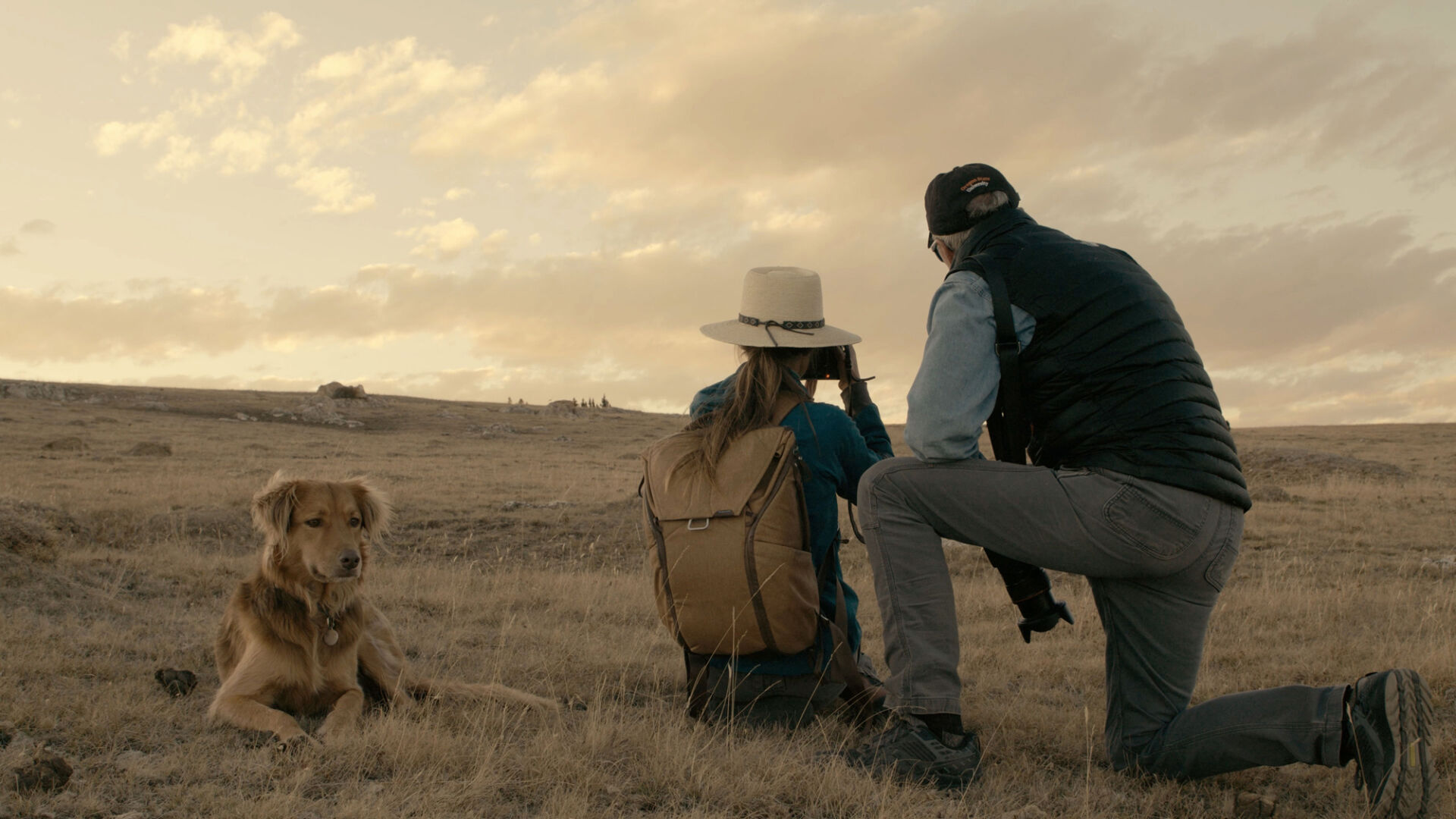
“The Wonder and the Worry”: This lyrical exploration of family, photography and the power of visual storytelling to create change follows the careers of former National Geographic Editor in Chief Chris Johns and his daughter Louise, a young freelance photographer. 1 hour, 38 minutes. 1 p.m.
“Cowboy Poets”: Every year since 1985 they’ve gathered to share their heartfelt cowboy poetry in Elko, Nevada. At once a celebration of the creative process, our need to create, to gather, to share, “Cowboy Poets” reveals a modern West wrangling with change and environmental threats. 81 minutes. 1 p.m.
“The Arc of Oblivion”: In a universe that erases its tracks, why are we so hellbent on leaving a trace? “The Arc of Oblivion” is an unexpectedly playful search for an answer to a deeply existential question. Set against the backdrop of the filmmaker’s quixotic quest to build an ark in a field in Maine, the film heads far afield — to salt mines in the Alps, fjords in the Arctic, and ancient libraries in the Sahara — to illuminate the strange world of archives, record-keeping, and memory. 1 hour, 38 minutes. 4 p.m. at Princeton Garden Theatre.
Streaming Only
“The Untold Story of Fatma Kayac”: Considered responsible for the tragic death of her nephew, Fatma Kayaci withdrew to live in a stone house high on the mountain pasture, never seeing her relatives or neighbors again. Over 38 years, she has created a lush forest, planting trees she named for her nephew, and opposing any effort to clear them. In this sensitive, poetic short film, Fatma tells her painful story. 40 minutes.
“Banks”: Billie-Jazz is an eco-educator and mother of a 4-year-old girl who finds immense joy in sharing her enthusiasm for all the magic that secretly works within the Earth’s biosphere. Recent discoveries related to the issues threatening the St. Lawrence River, a waterway to which she attaches an important bond, lead her to question our relationship with it. She therefore leaves Kamouraska where she lives to drive along the riverbanks from the Mingan islands to Montreal to meet the people who are taking concrete action to protect our greatest Quebec jewel. Whether it’s cleaning the waters of microplastics or taking an activist stance, Billie’s quest plunges us into the urgency of saving our marine territory. 26 minutes.
“In Cod We Trust”: Gloucester, Massachusetts, is home to one of the oldest and largest fishing communities in the United States. Generations of Sicilian immigrants have worked on the rough waters of New England since the late 1600s, but recent changes in government regulations and ocean temperatures have endangered their tradition. Young aspiring fishermen are now scarce, and the history of this once prolific community is in jeopardy. Those who have fished for cod and its relative species look to stay alive despite a gloomy future. 18 minutes.
“Maya Land: Listening to the Bees”: A story about the environmental conflict between GM soy growers and Maya Beekeepers in the Yucatán Peninsula of Mexico. It reflects on what the environment and economy could look like if bee health was considered as a criterion of sustainable development. The film explores the pre-colonial and ongoing relationship between Maya people and their environment, in particular the milpa agricultural system (and its main crop, maize), sacred sinkholes (called cenotes), and sacred stingless bees, the Melipona. 76 minutes.
“Shadow in the Reeds”: One of Australia’s rarest and most mysterious birds is disappearing across the country.
“Shadow in the Reeds” captures the stories of the researchers, Traditional Owners, farmers and community members who are working together to save the Australasian Bittern and restore its wetland habitat. 21 minutes.
“Launching Electric Buses at Princeton University”: In 2023, Princeton University launched a fleet of seventeen electric buses. This effort replaced the existing diesel bus fleet, saving up to 500 metric tons of CO2 emissions per year. For colleges and universities across the world who may be interested in tackling climate change by going electric, this is what we learned. 7 minutes.
“Dark Sacred Night”. Ninety-nine percent of Americans now live under light polluted skies. Many people live and die without ever seeing the Milky Way.
Princeton University astrophysicist Gaspar Bakos wants to change that. He is one of a growing number of experts championing simple, commonsense changes to outdoor lighting that can dramatically reduce light pollution.
As Bakos teaches, light pollution is a problem that impacts far more than astronomical research and stargazers. New studies show that excessive amounts of outdoor lighting contribute to a range of human health problems, squander energy, and have a dramatic negative impact on wildlife, particularly birds and insects.
Bakos’ approach is to promote change one streetlight at a time. Simple solutions to light pollution can be summed up in a few words: make lights dimmer, shield lights so they only shine downward, and use warm-colored lightbulbs.
In Princeton, where Bakos lives and works, he dreams of a park set aside for dark sky viewing, where all surrounding lights are muted and properly shielded. By setting a good example, he hopes other communities will be inspired to do the same. 16 minutes.
More information: princetonlibrary.org/peff.