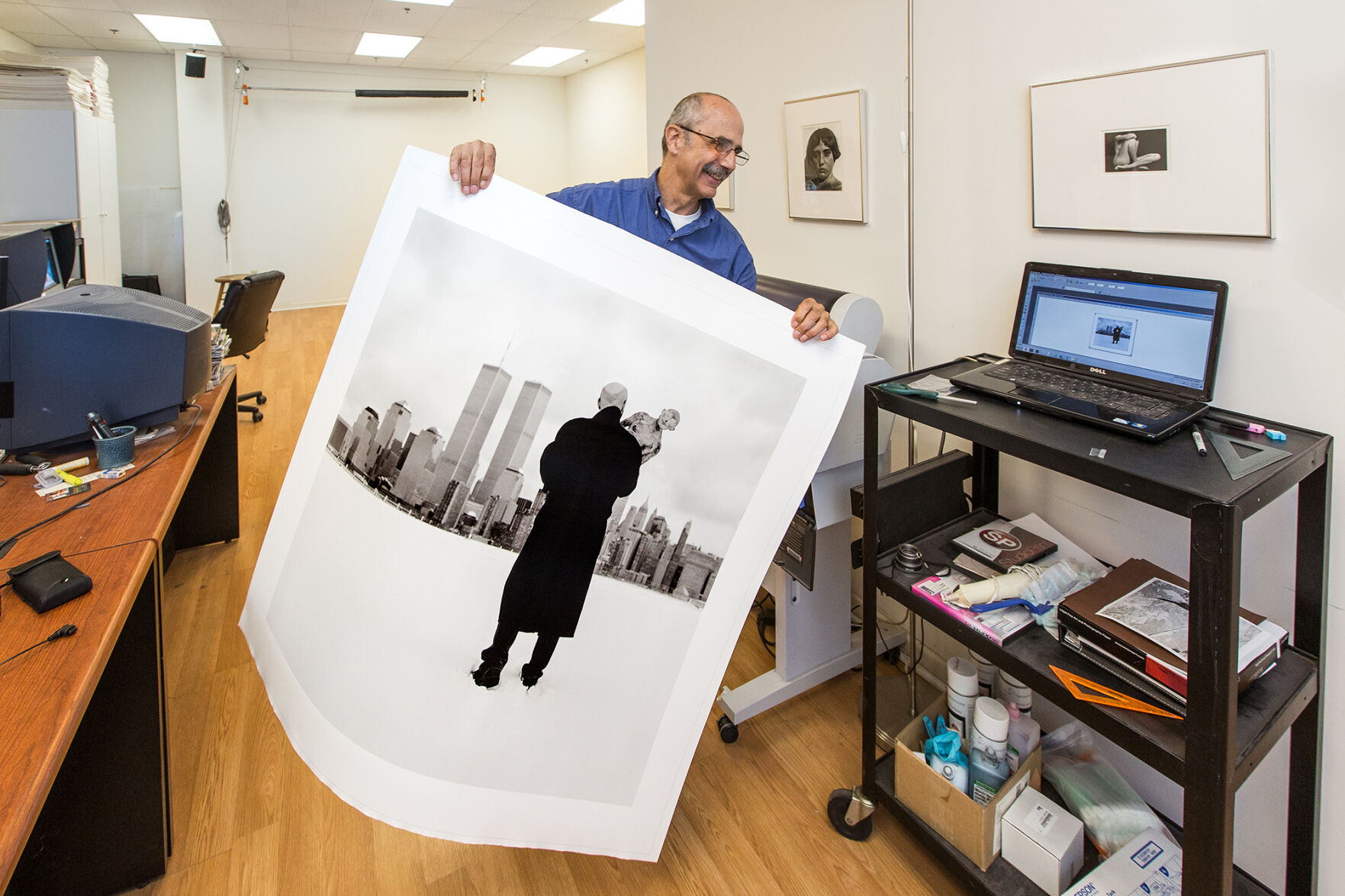
Ricardo Barros is a world-class photographer and videographer. His work is in the permanent collections of a dozen museums. He has done artwork commissioned by Fortune 500 companies. He is a master and a student, always learning. His 2004 book, Facing Sculpture, originated from his work done at the Grounds for Sculpture in Hamilton and shows 60 portraits of some of the best contemporary sculptors in their natural environments.
Barros is also fun, supportive, personable and playful with his art. He is all business, but in a very human way.
How did you begin with photography?
Times are different now, but in the 60’s, photography was alchemy. The magic was tangible. Darkrooms glowed yellow, there was a particular smell to the fixer, your hands got wet in the chemistry, we waited with anticipation for images to appear in the developer… all that was mesmerizing to me as a boy. Then, while in high school, I saw an exhibition of Paul Strand’s work. Seeing those photographs was like being struck by lightening. I was stunned. My knees began to shake as I stood in front of the framed work. The prints had an endless range of greys and luscious blacks. I had never seen such photographs. That was my first experience with the power of art. Chasing that feeling became a lifelong passion.
Who are your artistic influences?
The first influence was photographer Edward Weston. Like he did, I used 4×5 and 8×10 view cameras to photograph B&W landscapes and nudes. For a good 20 years, I was his acolyte. Sometime in the 90’s, I saw Martin Schoeller’s portraits in The New Yorker. In particular, there was a portrait of skateboarding guru Tony Hawk skating off of a kitchen countertop while his wife fed their toddler in the background. The photograph was clearly staged, but it was also real, and captured on film in one shot.
That opened my eyes to a different path to creativity, intervention, and the idea that photographs could be playful. And perhaps my most significant influence wasn’t a photographer at all. It was singer-songwriter Ani DiFranco. Her lyrics are poetry. They have personal meaning. I love that each of her songs sounds different. Her modeling of diversity in one’s oeuvre has motivated my work ever since.
Among different subjects, which comes easiest and which are more challenging?
In portraiture, the sitter may expect me to visually depict his or her identity without the sitter knowing it him or herself. With still lifes, we are tempted to choose subjects whose beauty was revealed to us in other artworks. It is easy to be derivative, to not push the conversation forward. And photographs of “the figure” are loaded with all sorts of landmines.
These range from social appropriateness to what we, in our work, are saying about physical beauty. Nudes, in particular, risk uninvited, prurient interest. But I think the question becomes even more interesting if we take a step back. Challenges such as I describe are portals to discovery. Art isn’t about being safe. It’s about stepping into the unknown, going all-in on a search without necessarily knowing what one is searching for. It is about growing comfortable with fear, about failing, and about a momentary sense of accomplishment when one reaches the proverbial summit. Challenge is wind in the artist’s sail.
How many photos do you take to get the perfect shot, the one you use?
I almost always take lots of bad pictures when I need one, good image. Then I throw the bad ones out. What may be surprising is that my best shot is incredibly similar to so many bad ones. I move the camera slightly to the left, photograph a moment later. The difference between them is subtle. But I think subtlety is, in fact, the difference between good and great artwork. It is easy to convey drama. Nuance is far more elusive.
What fight/struggle do you have regarding your art?
My biggest struggle is that photography has been so devalued. There was a time when each and every picture had a cost. A roll of film had, at most, 36 frames. Days passed between when we pressed the shutter and when we saw what we actually got. People spent time thinking about, looking at, and discussing the ideas photographs conjure. Now there is virtually no cost to taking a picture. We see it instantly, and we dismiss it within seconds. We have a different kind of “Me Too” movement in photography. Thoughtless observation is passed off as insight. Photography has become a performative, social ritual.
Don’t get me wrong: powerful photographs are still being made, even with cell phones, but their existence is obscured by an onslaught of throwaway snapshots. So the photographers’ challenge is to find footing in this new environment. How do we remain relevant? How do we make people spend time with our work? Why should they pay attention to what we are saying?
How do you know what to work on next, do you have a list of projects?
I work with a ‘project’ framework. My projects typically span 5 to 7 years, then I move on. Past projects have included graffiti writing culture, industrial landscapes, and feminist truths expressed through a male gaze. I discover projects by following my curiosity, by uncovering something of interest that I know very little about. I stay with a project until the learning slows, until it becomes difficult to avoid repeating myself. Right now I am working with 360-degree panoramas that suggest an entanglement between space and time. The photographs visually bend space, and sequential events are presented as concurrent. It is still a young project. I have no clue what my next project might be.
Do you see projects in color or black and white?
Both. I see forms crying for a border so they can become a composition. I see stories that need to be told, questions that need answering. The craft I use depends upon the embedded idea.
Who were some of your favorite subjects?
There are so many. Near the top of the list, I suppose, are intimate portraits of family and friends. People with whom I’m comfortable, and they with me, in our innermost sanctums. But more generally, with respect to my favorite photographs, they tend to be ones in which the image transcends the medium. Yes, the photograph may have been made with an 8×10 view camera, but what people see is the image. The image isn’t about photography, it is about life.
Where can we see your work?
The most accessible location is my website. Right now I have two 360’s up in the Fine Arts Annual at the New Jersey State museum. I recently became a Contributing Writer to ICON magazine, where every issue presents one of my photographs and a short essay.
What do you do to relax?
Up until recently I was a certified, mounted umpire with the United States Polo Association. Not that I was the best in their ranks, but I was good enough to trade umpiring Sunday matches for borrowed horses to play in Wednesday practices. I can’t begin to describe how thrilling that was.
What is on the horizon? What are you looking forward to?
I certainly hope I will continue to learn, grow, and make relevant new photographs and videos. As I wind down my client work, I hope to spend more time writing, with the specific goal of helping younger artists and photographers.
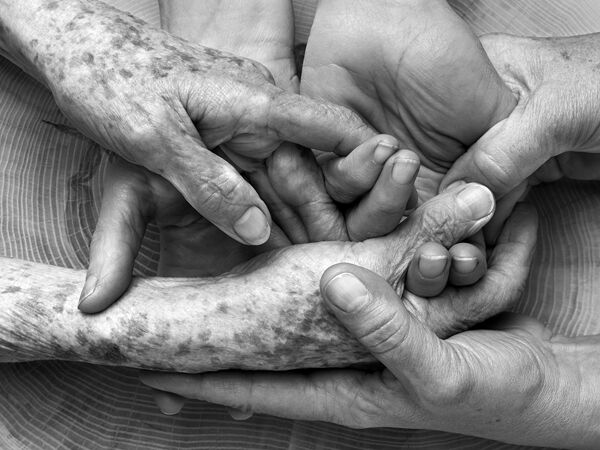
“My Mother, My Sister, My Wife” photograph by Ricardo Barros.,