Mention of the harpsichord likely conjures associations with powdered wigs, ruffles, and flared cuffs. It was, after all, the defining keyboard instrument of the Baroque era (think Johann Sebastian Bach).
But 100 years ago, interest in the harpsichord concerto experienced a revival, thanks in no small part to the eminent harpsichordist Wanda Landowski, who commissioned contemporary composers to write new works for harpsichord and orchestra — most notably Manuel de Falla, in 1926, and Francis Poulenc, in 1929.
Although it never exactly became a craze, other composers did follow suit. That said, if we’re to be perfectly honest, the number of “modern” harpsichord concertos that have entered the active repertoire could probably be counted on one hand. So the opportunity to actually hear one live is extraordinarily rare.
All the more exciting, then, two upcoming concerts of the Princeton Symphony Orchestra (at Princeton University’s Richardson Auditorium, Saturday, March 7, at 7:30 p.m., and Sunday, March 8, at 4 p.m.) will feature the world premiere performances of a new concerto for harpsichord, “Vaudeville in Teal,” by Princeton resident Julian Grant.
The program will include two other works that in some way or other also look back to the Baroque. “Extra(ordinarily) Fantasy,” by Viet Cuong is a genuinely fun concerto for two oboes and orchestra that opens with a Vivaldi-esque riff, before wittily drifting into multiphonic territory (the soloists producing several tones at once).
“While one oboist is focused on sounding ‘ordinarily’ fancy, the other oboist is determined to prove the extra fancy virtues of multiphones,” writes the composer in his program note. “The orchestra observes and joins in as the oboists continually bicker back and forth…”
PSO principal oboe Lillian Copeland and Erin Gustafson will be the soloists.
Following intermission, the PSO will perform the complete ballet “Pulcinella” by Igor Stravinsky, ostensibly based on melodies by Baroque master Giovanni Battista Pergolesi. It was only later that is was learned that the tunes had been misattributed. They are, however, wholly delectable, like the plate of spaghetti so often devoured by the commedia dell’arte character of the ballet’s title.
This is Stravinsky for people who think they don’t like Stravinsky. It was also highly influential, initiating the composer’s widely emulated neoclassical period. The music is infectious — sunny, tuneful, and memorable — with the 18th century dances brought up to date through the playful use of 20th century rhythms, cadences, and harmonies.
Soprano Aubry Ballarò, tenor Nicholas Nestorak, and bass-baritone Hunter Enoch will contribute the vocal parts to this weekend’s performances. PSO music director Rossen Milanov will conduct.
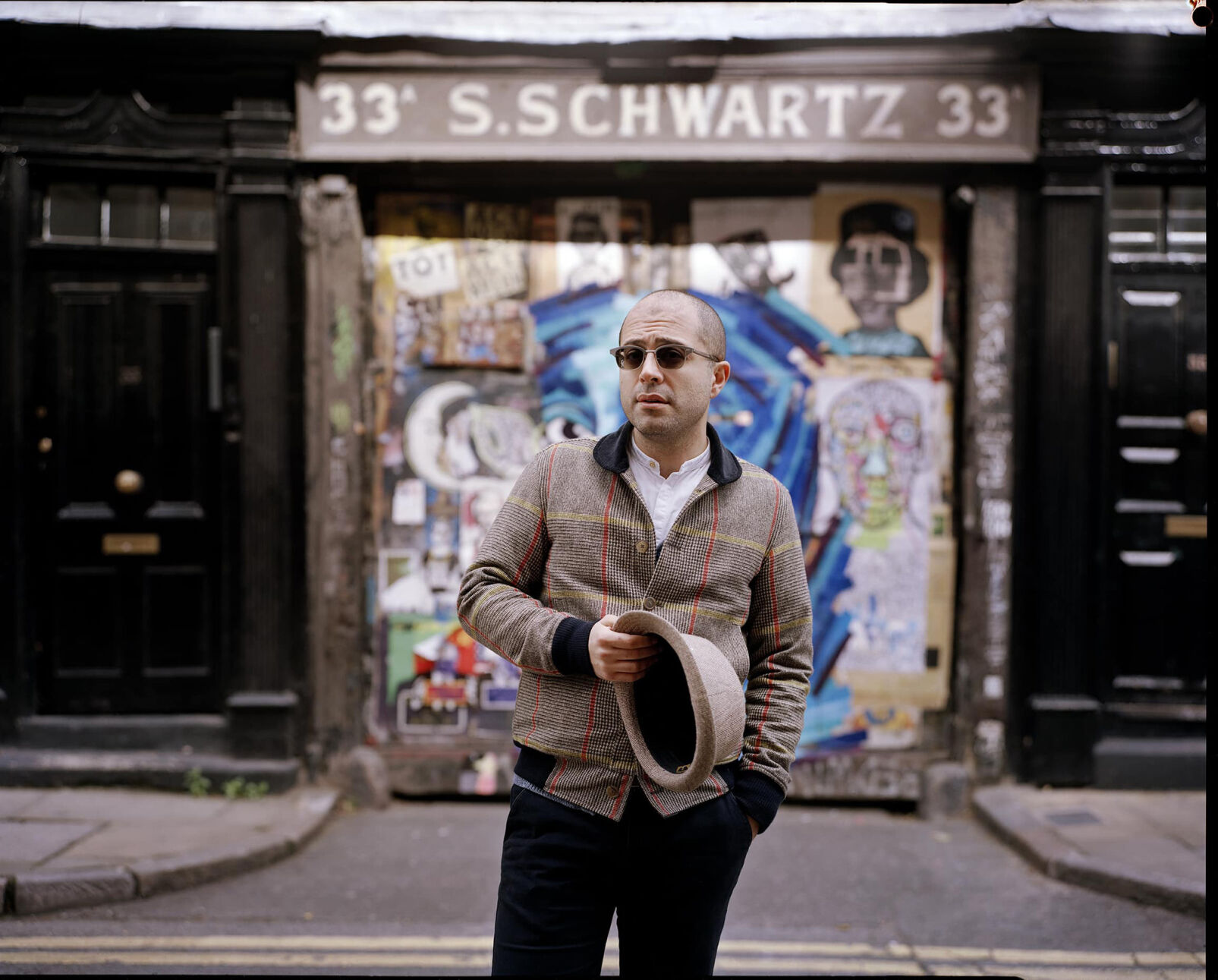
The soloist in the harpsichord concerto will be Mahan Esfahani. Esfahani is one of the foremost living proponents of the instrument, appearing widely in recital and with major symphony orchestras. His recordings are available on Deutsche Grammophon, Hyperion Records, and OUR Recordings.
The work was actually commissioned by the Manitoba Chamber Orchestra and its music director, Anne Manson, who will conduct the work in Winnipeg on March 11, again with Esfahani the soloist. So how does Princeton come to host the premiere? Chalk it up to Grant’s friendships, Manson’s generosity, and Esfahani’s flexibility.
Closer to home, the composer and harpsichordist will participate in a “PSO Soundtracks” event, “From Score to Stage,” at Princeton Public Library on Thursday, March 5, at 6:30 p.m. Grant and Esfahani will talk about the concerto, their creative partnership, and the process of translating a new work from written score and shepherding it to actual performance. The event is free and open to the public. Attendees will have the opportunity to enter a drawing for tickets to the weekend concerts.
At 19, Grant had actually composed an earlier harpsichord concerto at the request of a fellow student, a harpsichord major. “It was rather an unholy marriage of Prokofiev and Poulenc,” he muses. The work had gone lost, but his classmate still had her copy, so he was able give it another look before embarking on the new concerto.
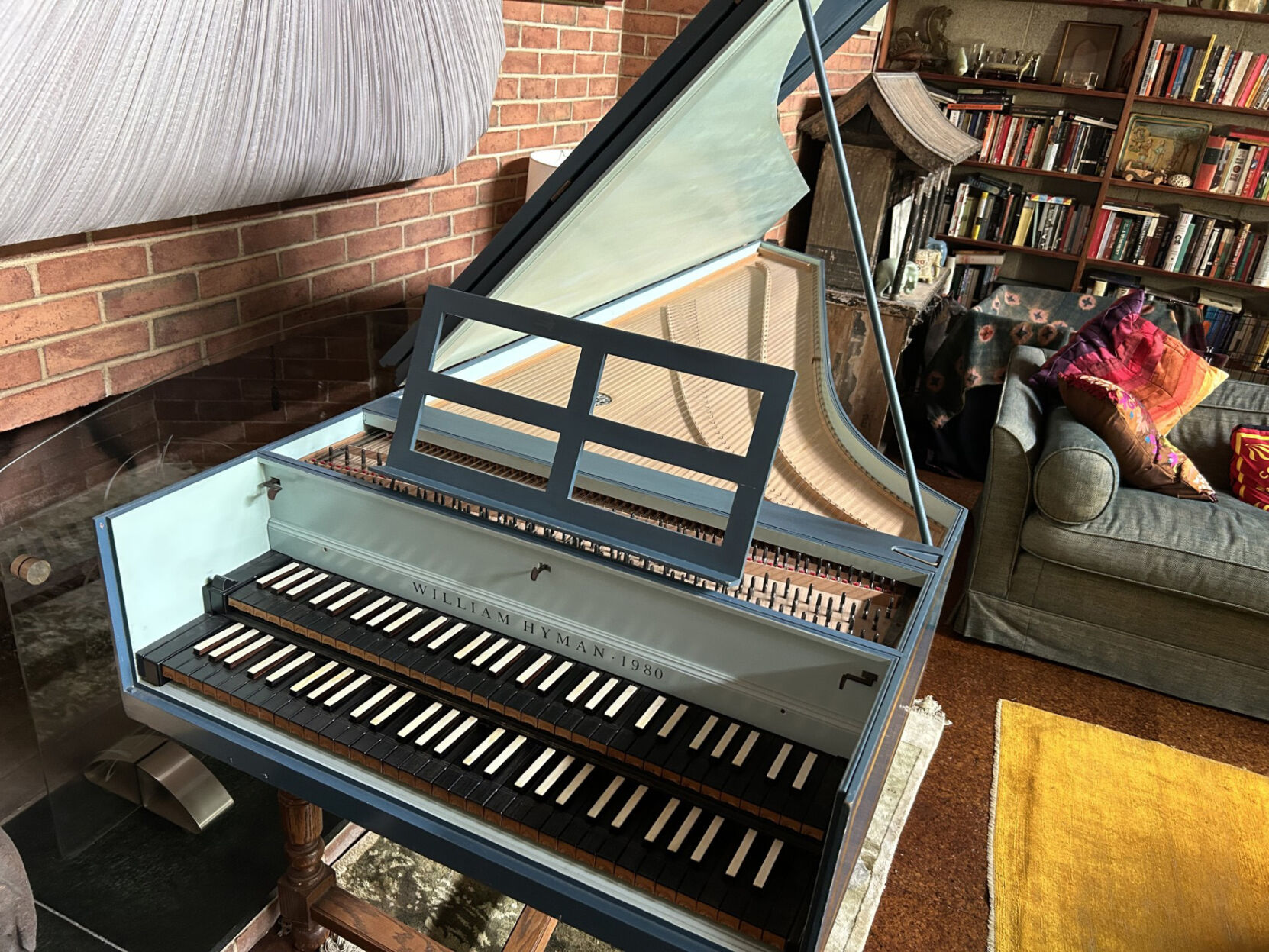
This time, he wanted to do his best to approach the instrument idiomatically, so he rented a modern reproduction from Baroque Keyboards of Leonia, New Jersey. At the end of six months, he purchased it. He also received a lot of advice from professionals. He had been warned that contemporary harpsichord concertos always sound like they’re written at the piano.
Writing for harpsichord and a modern orchestra present some unique challenges for a composer, primarily in terms of volume. The harpsichord is inherently conversational and easily drowned out. So orchestration and the handling of various instrumental voices must be navigated very carefully. It’s not for nothing that harpsichords in contemporary concertos are often amplified.
Grant notes that, in a lot of the concertos he’s listened to, “the orchestra has all the meat and the harpsichord kind of clanks along in the background, and every so often it’s given a busy configuration to sort of sound like a concerto. I was very conscious of trying to generate all the material for the piece on the harpsichord and to give it some ‘air room.’” In the fifth section, “Spiel,” the instrument plays alone.
The work is scored for string orchestra with an obbligato bass clarinet and an obbligato bassoon. In performance, it will span 20-25 minutes.
Grant learned from Esfahani that every harpsichord is different. When he shows up, he has to adapt and figure out how best to bring out the colors of the music. For the week leading up to the Princeton performances, Esfahani will lodge with Grant, so that they can work out any last-minute kinks and interpretive decisions.
As for the title, the harpsichord is teal in color. Alas, it will not be the instrument used for the Richardson concerts. (The performances will employ another harpsichord from the same company.) In its way, the choice of “Vaudeville” is equally colorful. Grant wasn’t enthusiastic about writing a standard concerto in three movements. Then he thought about variations, but dismissed the idea as scholarly and dull.
However, the “V” set him on the track of “Vaudeville.”
“It’s rather like a show with lots of disparate acts. You know, like the old-fashioned vaudevilles used to be. You’d have someone come on and do bird impressions, there’d be a flea circus from Russia, Anna Pavlova would do ‘The Dying Swan,’ you know. Some singer would come on and sing ‘O sole mio.’ I just imagined that the piece would be kind of slightly random sections.”
In the end, there are six of them, played without break: “Curtain,” “Tarantella,” “Threesome,” “Fairies,” “Spiel,” and “Follies.”
“The titles don’t need to suggest much, really. They’re just whimsical, in a way. The ‘Threesome’ movement is basically a trio,” he says. “I just thought ‘Threesome’ sounded naughtier. The harpsichord gets it on with the solo double bass and the bassoon.”
Born in London, Grant attended Bristol University, where he studied with Derek Bourgeois, who would appear to have been a quixotic figure, having composed 116 symphonies, yet paradoxically, in his teaching, offered a lot of practical advice. Later, Grant received a scholarship to attend the Banff School of Fine Arts.
At the core of his creative output is a body of 20 operas, which have been performed by English National Opera, The Royal Opera, and Boston Lyric Opera, among others. He is the recipient of a National Opera Association of America New Opera prize and has been nominated for an Olivier Award.
From 2002-07, he served as Director of Music at St. Paul’s Girls’ School, London, a post most famously occupied by composer Gustav Holst. “I had an office which had a big plaque right in from of my desk, saying, ‘In this room Gustav Holst wrote ‘The Planets’’ — which was not helpful,” he says with a laugh.
He spent a number of years living in the East. In Hong Kong, he hosted a classical music radio show. He also lived in Tokyo. In Beijing, he organized a new music ensemble, employing musicians from the conservatory, and worked toward mastering the Yang Qin (Butterfly Harp).
Grant settled in Princeton in 2010. It was at a dinner at the Lawrenceville School, which one of his daughters was attending, that he was seated with Melanie Clark, then executive director of the PSO (a position now held by Marc Uys). She invited him to join the organization’s board.
He is married to the author Peter Rupert Lighte, a former student of Chinese culture at Princeton University, who discovered a talent for international finance. Together, they adopted two daughters from China, Harriet and Ottilie, now grown. They also made a loving home for Fuqi, a stray dog discovered in a Beijing park. Fuqi passed a year ago. Now Aïda, a rescue, rules the roost.
“There must be some hound in the mix, because she can sing,” Grant observes. “She can’t quite get it to the top C of ‘O patria mia’ yet,” he adds, referencing Verdi’s operatic heroine, but he has faith that one day she will. He also finds that getting out for a walk with her really helps his composing. “You go for walks, and you do not gaze helplessly at the blank piece of paper,” he says.
His own musical tastes are varied, ranging from Russian Romantics to French music to Italian opera to Kurt Weill to Rodgers and Hammerstein to Franz Lehár. During the pandemic, he sustained himself on Haydn, Rossini, Offenbach, and Poulenc. “I needed frivolity and dance,” he says, “and I think there’s quite a bit of that in this new piece.”
To learn more about Julian Grant, visit his website at juliangrant.net.
For tickets and information about the Princeton Symphony Orchestra, visit princetonsymphony.org.
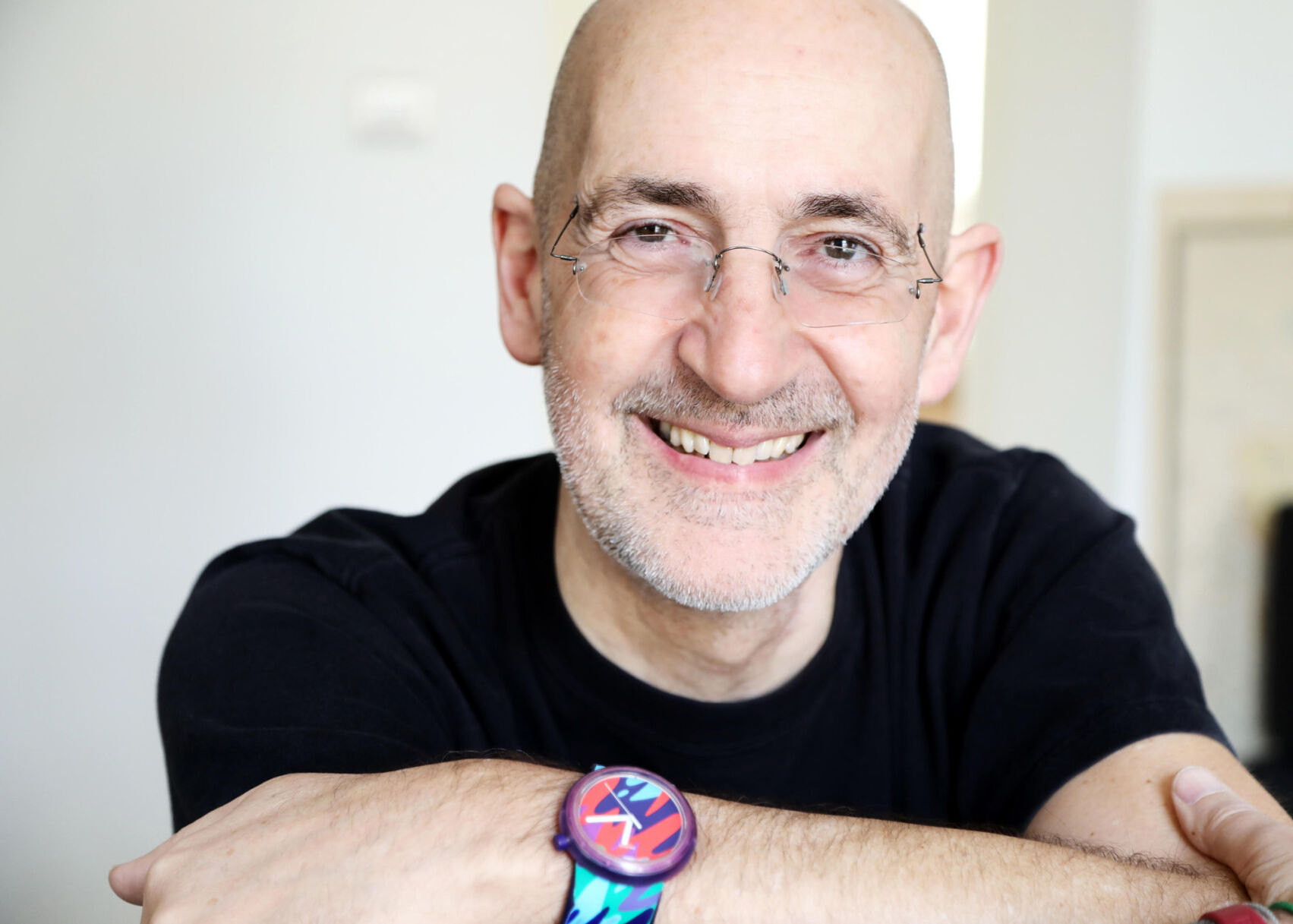
Princeton resident and composer Julian Grant.Photo by Fran Marshall, Marshall Light Studios.,