Proposed legislation moving through the New Jersey Legislature could give towns served by Trenton Water Works a new financial framework that supporters say could help facilitate regionalization or other public water options.
The measure would create a state-created, pension-backed structure that could be used, with additional approvals, to support efforts by communities served by Trenton Water Works to pursue alternatives to the existing system.
The bill, known as the Citizens Fund Act, has drawn sharp debate as lawmakers weigh how — or whether — it could help address years of infrastructure failures, governance disputes, and financial strain at the troubled municipal water system.
The Assembly Telecommunications and Utilities Committee had advanced the bill on Jan. 5 to the Appropriations Committee. The bill was sponsored by Assemblyman Wayne DeAngelo, D-Mercer.
On Jan. 8, the Senate Budget and Appropriations Committee had advanced a companion bill, with amendments, and placed it on second reading in the Senate. The Senate version is sponsored by Sen. Linda Greenstein, D-Mercer. A floor vote had not yet been scheduled.
Unfortunately, with the start of the new legislative session on Jan. 13, the prior versions of the Citizens Fund Act expired.
Any newly filed version of the legislation is required to begin the legislative process again, including committee referrals and hearings, before advancing to a floor vote.
The bill has been reintroduced in both houses and is once again set for committee reviews.
Supporters of the bill say it could serve two public paths forward: creating a publicly owned regional utility that replaces Trenton-only governance, or allowing suburban municipalities to finance their own water systems or connect to other public water providers.
They emphasize that the legislation does not mandate either outcome, but instead establishes a financial and legal framework that could be used as part of a broader restructuring plan if local parties agree.
Either approach, they argue, would give communities an option other than selling or leasing water assets to a private company.
The legislation was shaped against the backdrop of long-running problems at Trenton Water Works, which serves about 225,000 customers across Trenton and surrounding Mercer County communities including Ewing, Hamilton, parts of Hopewell Township, and Lawrence Township.
More than half of the utility’s customers live outside the city, yet Trenton retains full ownership and governance of the system, a dynamic that has fueled years of tension between city officials and suburban municipalities over accountability, investment priorities, and long-term planning.
Trenton Water Works has been under state supervision since 2022 following failures that included water main breaks, boil-water advisories, electrical system problems, staffing shortages, and repeated disruptions tied to frazil ice buildup at the Delaware River intake.
State-commissioned studies and oversight letters from the New Jersey Department of Environmental Protection have cited decades of deferred maintenance and a lack of qualified operators, warning the system faces heightened risk of large-scale failure without sustained investment and structural reform.
Supporters argue the Citizens Fund Act could provide a voluntary framework for communities seeking a publicly owned regional solution that compensates Trenton for its assets, while avoiding outright privatization.
Opponents, including elected officials from Trenton, have warned the proposal raises unresolved questions about local control, pension financing, and whether a complex financial structure can realistically solve operational problems.
The Assembly committee statement describes the Citizens Fund Act as establishing a trust fund for the conveyance of certain assets for the benefit of public benefit plans, with the fund established as an instrumentality of the state.
According to the statement, the fund is intended to lessen the burdens of government by allowing public entities to transfer or sell revenue-producing assets while sharing risks and benefits to maximize long-term value.
Assets would be maintained in accounts segregated from other state funds and could only be used for asset performance, service requirements, public benefit plans, and reasonable administrative costs.
Under the legislation, assets conveyed to the fund would be managed through a Common Pension Fund structure with separate asset holding and investment accounts administered within the state Division of Investment.
Public pension plans would not be required to pay expenses associated with a conveyance.
The bill establishes a five-member Citizens Fund board appointed by the governor, along with advisory boards representing municipalities or counties whose residents are customers of any conveyed asset.
The fund board would include representatives from the New Jersey Infrastructure Bank, the Division of Investment, and the Department of Community Affairs, along with the advisory board chair and a representative of certificate holders not affiliated with a state-administered retirement system.
Advisory boards would provide information and recommendations but would have no voting or veto authority.
Membership would be based on a municipality’s or county’s proportional share of water sales from the conveyed asset, calculated using average annual volume over the previous five years.
A public entity could convey an asset to the fund through a transfer agreement proposed by the fund board and approved by the entity’s governing body.
Any conveyance would require an independent valuation and acceptance by both parties.
The bill also requires an all-inclusive review of any asset proposed for conveyance, including financial condition, operational risks, and long-term obligations.
It amends the Water Infrastructure Protection Act to allow municipalities facing emergent conditions at a water or wastewater system to consider conveyance to the Citizens Fund as one possible option.
During legislative hearings, lawmakers repeatedly referenced Trenton Water Works as the immediate focus of the proposal, despite the bill being written broadly enough to apply to other distressed systems. Video of the hearings was reviewed by Community News Service as a partial source for this article.
Assembly and Senate members cited frazil ice shutdowns, boil-water notices, aging electrical infrastructure, and staffing shortages as evidence that the existing governance model has failed.
Experts involved in state-backed assessments of Trenton Water Works testified about the depth of the system’s infrastructure problems.
Landon Kendricks of Black & Veatch testified that he served as project director for electrical “360-degree” reviews conducted at the direction of the New Jersey Infrastructure Bank, including a completed assessment of the filtration plant and an ongoing review of the central pumping station.
Those reviews documented deterioration of critical electrical systems, obsolete equipment, limited redundancy, and long-standing underinvestment in maintenance.
Kevin Drennan, a public affairs specialist representing American Public Infrastructure, testified in support of the bill, describing it as a voluntary framework that does not itself transfer Trenton Water Works or require municipal participation.
“You’re looking at much more financial stability for towns who choose to take part,” Drennan said.
Local officials from municipalities served by Trenton Water Works voiced strong support during the Assembly committee hearing.
Hopewell Township Committee member Courtney Peters-Manning said repeated failures have eroded public confidence and highlighted the need for structural change, noting that suburban customers make up a significant portion of the user base but have no formal role in governance.
Ewing Township Mayor Bert Steinmann testified that Ewing is entirely reliant on Trenton Water Works and has no alternative drinking water source.
“We had 16 water main breaks over a three-year period in an area they were supposed to be replacing,” Steinmann said. “We’re just at a standstill.”
Lawrence and Hamilton officials were also cited as supporting the legislation, with Hamilton Mayor Jeff Martin noted for the record as favoring the bill.
Opposition at the Senate hearing came primarily from Trenton’s elected leadership.
Mayor Reed Gusciora testified against the bill, warning that transferring a core municipal asset into a new, state-created structure tied to pension funding could weaken local accountability and introduce financial risks.
He urged lawmakers to focus on direct investment and staffing rather than restructuring governance.
Gusciora said the proposal echoed former Gov. Christine Todd Whitman’s 1997 pension bond plan.
“We’re still paying for it,” he said.
He also argued that surrounding communities already receive safe, reliable water from Trenton Water Works.
During Senate questioning, Sen. Declan O’Scanlon pressed supporters on whether the pension-related mechanisms amount to an accounting exercise that revalues assets without generating new cash.
Supporters countered that the bill does not promise a guaranteed outcome, but instead creates an optional tool that could be used if Trenton and surrounding municipalities agree on a path forward.
Senate Budget Chair Paul Sarlo described the proposal as a “creative solution” deserving further consideration given the severity of Trenton Water Works’ documented problems.
Despite its prominence in the debate, the Citizens Fund Act does not itself regionalize the utility, privatize the system, set water rates, or dictate governance details.
Any transfer of assets would require additional approvals and agreements among Trenton, participating municipalities, and state regulators.
With the bill required to restart the legislative process in the new session, debate is expected to continue over whether the Citizens Fund framework becomes a viable option for Trenton Water Works or remains an unused alternative.
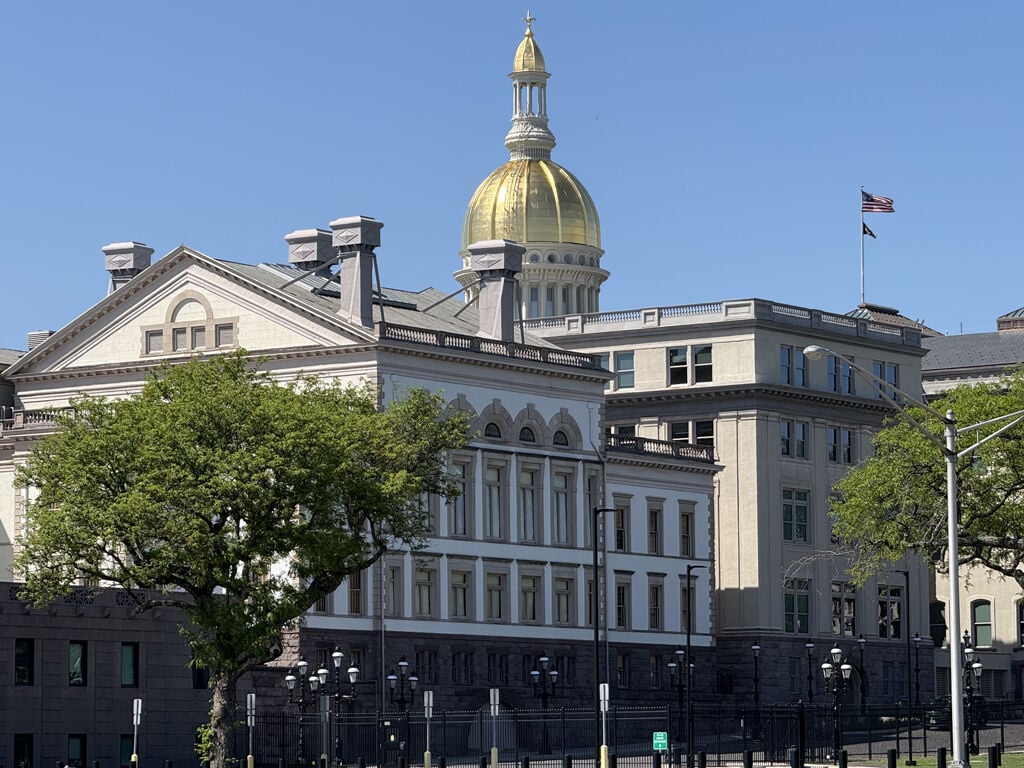
The New Jersey State House in Trenton.,

