Mercer County officials have reached a landmark agreement with Rider University to purchase environmentally and historically significant land in Lawrence Township. The deal is designed to preserve open space while providing the university with needed financial support.
Mercer County Executive Dan Benson, the Mercer County Board of Commissioners and Rider University President John Loyack announced the agreement on March 6. The deal includes the county purchasing approximately 56 acres of land from the university for some $8.5 million.
The majority of the funding will come from the county’s Open Space Trust Fund and capital budget. Lawrence Township will also contribute toward the purchase using its own open space funds.
In addition to the land acquisition, Mercer County will enter into a facility use agreement with Rider that will allow the county to use university facilities for operational purposes and events.
Together, the transactions are expected to total about $10 million.
Officials said the agreement will preserve sensitive land while providing Rider with additional liquidity as the university works to stabilize its finances.
“Rider University is an invaluable asset to our community,” Benson said. “I’m proud that we were able to sit down and work collaboratively with University leadership to reach an agreement that strengthens our partnership, and that’s a win-win for the school and for Mercer County residents.”
The land being purchased includes the final surviving portion of the “Big Woods,” a historic beech forest associated with conservation pioneer Aldo Leopold.
Leopold explored the forest as a student at The Lawrenceville School in the early 20th Century. His experiences there helped shape his environmental philosophy, later expressed in his influential book A Sand County Almanac.
County officials said the land also includes environmentally sensitive wetlands. Mercer County said it plans to improve trails on the property to expand access for passive recreation.
The agreement could also lead to additional cooperation between the county and Rider. Officials said the county and university are discussing a potential easement along the route of the planned Johnson Trolley Line Trail, a proposed pedestrian and bicycle corridor connecting Trenton and Princeton.
“Proposing this purchase allowed us to provide Rider with an alternative to selling off this important land to private residential developers,” Benson said.
“I want to thank the Board of Commissioners for their important support during these negotiations, as well as Lawrence Twp. for their valuable input throughout this process,” Benson said.
Lawrence Township Mayor Christopher Bobbitt said the township endorses the partnership and the preservation effort.
“Lawrence Township fully supports Mercer County’s efforts to preserve vital open space in our community and partner with Rider University during this difficult time for the school,” Bobbitt said.
“The father of wildlife ecology, Aldo Leopold, spent his high school years studying the ‘Big Woods’ in Lawrence and I am delighted that they will now be preserved for future generations to enjoy,” Bobbitt said.
The agreement comes as Rider continues efforts to stabilize its finances following several years of financial strain and declining enrollment pressures facing many private colleges.
In September 2025, Loyack informed the campus community that the university’s financial condition was “more severe than expected.
He warned that Rider faced a significant cash deficit that could threaten its ability to meet financial obligations if corrective action was not taken.
University officials cited several factors behind the financial pressures, including declining demographics of college-aged students, enrollment and retention challenges, rising operating costs, reduced residential occupancy and increased competition across higher education.
Financial pressures had already led to several rounds of cost-cutting measures over recent years, including staff layoffs, reduced compensation and hours, early retirement incentives for faculty, operating budget reductions and delayed capital investments.
Following Loyack’s arrival as president in July 2025, Rider launched a restructuring initiative known as the “March to Sustainability” plan to address those financial challenges and build what administrators describe as a long-term sustainable model for the university.
The plan began with a review of Rider’s recent financial history and included negotiations with unions representing faculty and staff, including the American Association of University Professors and the American Federation of State, County and Municipal Employees.
The university’s Board of Trustees unanimously endorsed the plan in October 2025 and formally approved its implementation in late November.
Under the restructuring plan, Rider reduced employee compensation by about 14%, suspended employer retirement contributions, increased teaching workloads for faculty and eliminated between 30 and 35 full-time faculty positions effective Dec. 31, 2025.
The plan also included administrative restructuring, elimination of several senior positions and reductions in spending for travel, faculty development and other discretionary expenses.
University officials said the goal of the restructuring was to align Rider’s expenses with revenues while preserving core academic programs and the student experience.
Rider has said the plan was designed to avoid eliminating academic majors or cutting scholarships and financial aid while stabilizing finances.
At the same time, Rider has faced increased scrutiny from regulators and accrediting agencies because of its financial condition.
The university’s accrediting body, the Middle States Commission on Higher Education, placed Rider on probation Oct. 30, 2025, citing concerns about the university’s financial viability and compliance with accreditation standards related to institutional resources and planning.
Rider remains accredited while on probation and continues to operate normally.
Middle States required the university to submit a monitoring report detailing its financial recovery plan and also required the school to prepare a teach-out plan to ensure students could complete their degrees or transfer to other institutions if closure were ever announced.
University officials said such teach-out plans are commonly required as a precaution when schools face financial challenges.
Middle States is expected to decide the university’s accreditation status at a meeting scheduled for March 2026.
Rider announced Feb. 9 that it had received an affirmation of approval from the New Jersey State Approving Agency after a risk-based review conducted in January.
The agency found no approval discrepancies and confirmed that Rider remains eligible to serve veterans and their dependents who use federal and state education benefits.
Officials said the approval was an encouraging step as the university prepares for its accreditation review this spring.
“This agreement represents another critical step in reimagining a meaningful Rider as we continue to swiftly rebuild our financial strength,” Loyack said.
“The agreement demonstrates the ultimate in creativity and speed that can be achieved through meaningful public-private partnerships,” he added.
“We are deeply grateful to the Mercer County Executive and the County Commissioners for being so willing to work with us to make this happen,” Loyack said.
“Their collaboration and shared commitment to higher education, environmental stewardship and Rider University reflect what can be accomplished when institutions work together for the greater good,” Loyack said.
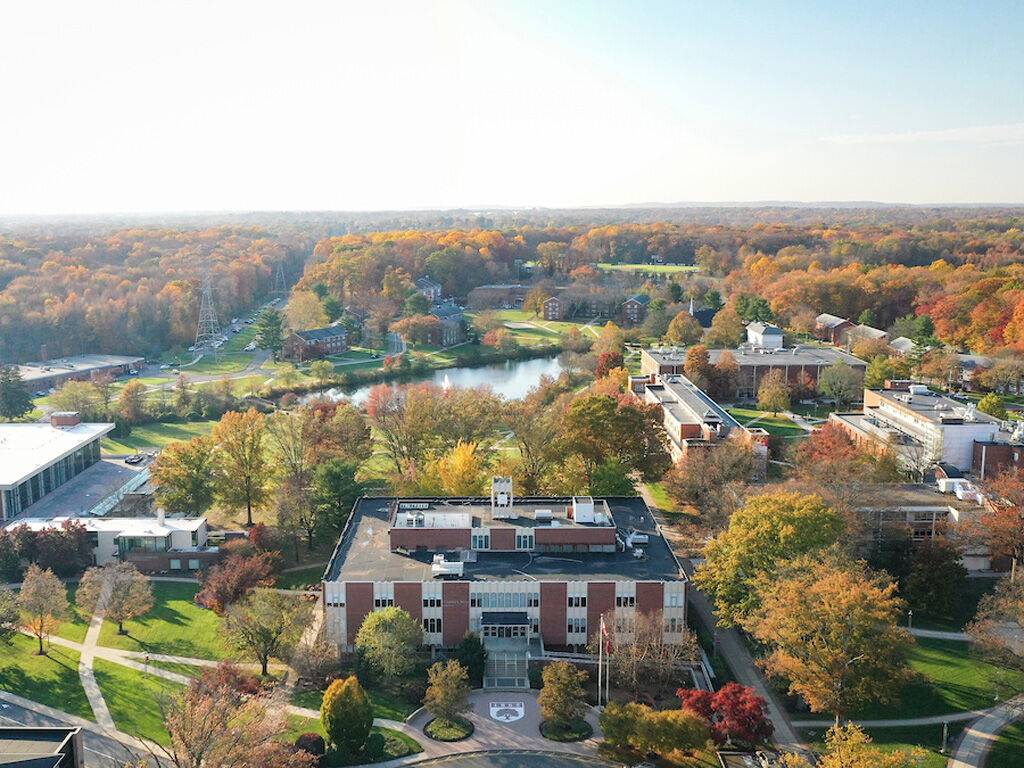
Mercer County and Rider University have announced an agreement to support the school through a land purchase.,

