In January, Hamilton Township Public Schools revealed its 2025 Strategic Plan, a report seven years in the making. The plan is the result of nearly 30 meetings held since 2018 among a committee of administrators, board of education members, teachers and parents.
In the strategic plan, the district offers 10 top-level initiatives, ranked by the plan committee in terms of potential impact to the district. First on the list is a newly built preschool that would serve up to 900 students from across the district.
Another proposal in the plan includes turning two high school pools into classroom/learning spaces, and building a new pool at Crockett Middle School.
The committee also considered a number of options for redistributing students among its 23 existing schools. The option it proposes in the strategic plan is to convert current elementary schools to K-4 schools, turn Grice and Reynolds Middle Schools into Grade 5-6 schools, and turn Crockett into a Grade 7-8 school that every student in the district would attend for two years.
This last proposal is the clearest example of looking to fulfill the “One Hamilton” motto that is part of the district’s seal.
The Hamilton Post spoke with superintendent Dr. Scott Rocco last month about the strategic plan. The following is an abridged version of the interview, edited for clarity and shortened for space.
Hamilton Post: Let’s start with the number one item in the plan, the proposal to build a districtwide preschool.
Scott Rocco: As long as I have been here, we have talked about the need for a preschool program for our youngest students. It is a needed piece that’s been recognized even prior to me becoming superintendent in the district. It’s an initiative in the state to expand preschool to all school districts, but one of our limitations would be space.
Preschool is an important part of a child’s success. What we’re seeing is some kids coming in who are not ready for kindergarten, but I think we are also realizing that there are more academic demands on students at a much earlier age. We have a committee of kindergarten teachers right now developing some programming for next year, and some communication to our incoming kindergarten families on some of the things they can do to prepare their children for kindergarten.
When we can offer preschool, it helps kids get focused on not just academics but all the other things associated with coming to school.
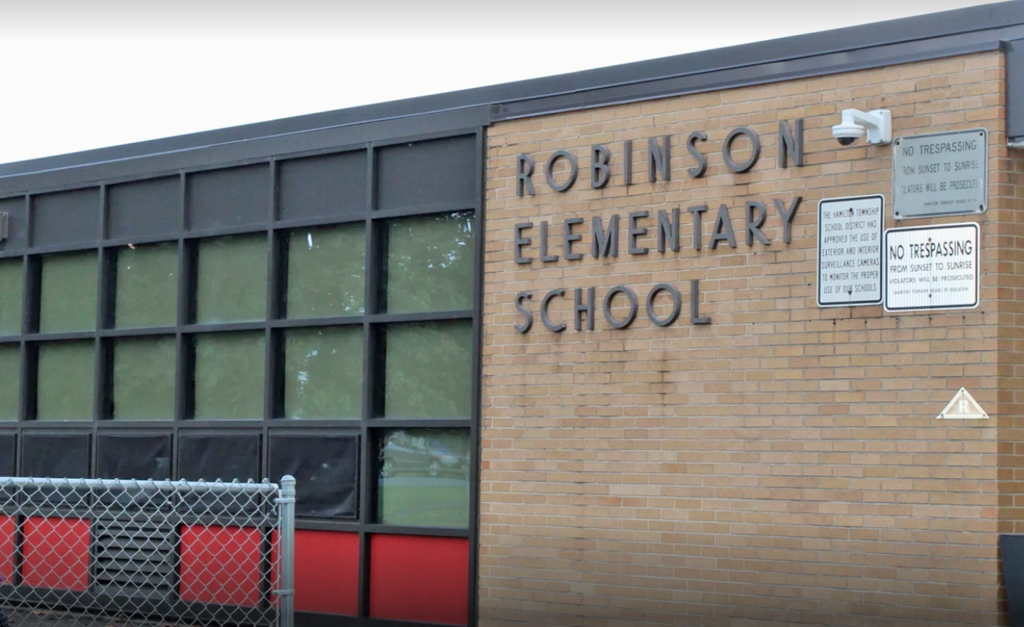
The plan right now is for the preschool to be built behind Robinson Elementary School. They will be two completely separate buildings, with different staff, different classroom space, everything separate, maybe with just a hallway between them or something like that.
It’s going to start with four-year-olds in a half-day program. Three hundred and fifty seats, so we can accommodate 700 kids, which is almost our entire universe of four-year-olds. Some families are going to choose to send their children to private preschools, but we will have children that will be bused from all around the district to our Robinson preschool facility.
We do have preschool programs in some of our buildings now. Some current preschool programs will stay where they are, and some will be brought into new facility. We are evaluating which will stay where they are, and which will go into new buildings. What we don’t want is students moving from one preschool facility to another to another.
HP: The strategic plan proposes changes to the grade levels that will be in the elementary and middle schools. Elementary schools will now be for K-4, Two middle schools grades 5-6 and a third, Crockett, would be expanded to accommodate all seventh and eighth graders in the district.
Rocco: The only way that we can move forward as a district is if we make adjustments and improvements to our facilities and we modernize. Our current facilities aren’t going to take us into the future effectively and for the benefits of the kids. The focus is on our students getting what they need to be successful, and providing our staff with what they need to be successful.
As we look at the developmental readiness of children, the K-4 structure is a great environment for younger children. Grouping grade 5-6 students together is a great environment for kids. Students in seventh and eighth grade are middle school students.
What the committee did when it looked at this piece is, what we need to do, where do we start looking to create space? Creating an addition onto Crockett for 7-8, creating Reynolds and Grice as 5-6 buildings means opening space in other buildings. But things have to fall in place for that to follow through. When we move forward, we also want to be able to balance out the enrollments in buildings.
HP: The district has 17 elementary schools, several of which are more than a hundred years old, and many of which central to neighborhoods. The strategic plan calls for “14 to 16” K-4 schools, with possible additions to some schools. This suggests that some elementary schools in the district may be closed and consolidated with other schools.
Rocco: The community can rightly question, “What does this mean for my community school?” We all have enjoyed community schools. But we have 17 elementary schools that are aging facilities, that we continue to work to keep operational, and that is not working for our students. Our students and staff deserve good facilities to be in every day. We work to do that now with upgrades and updates.
One of the things people say is, you’re talking about redistricting. When we do a facilities plan, we are not here to do redistricting. Redistricting is a by-product of the plans as they are implemented.
If we go to the grade structure that is being suggested, we are going to have to make adjustments to the sending areas of our district. But other things will have to come online before we get to that point, and we’re not talking about six months from now. We are talking about five to seven years. There are a lot of things in here that would have to be adjusted.
Every school community is proud of their community, and we’ve enjoyed the neighborhood model for a very long time. But we’re looking at this from the perspective of what is best for students and staff and the community when it comes to the facilities that we use for school. And that’s going to require some potential adjustment for the future.
If we are talking about keeping the same grade structure, that doesn’t necessarily enable us to modernize our buildings. What the committee presented themselves with is, what is the best grade configuration that enables us to deal not only with the academics but also social-emotional development, and helps us group students in ways that are appropriate?
HP: The strategic plan also calls for shutting down the pools at Steinert and Hamilton West.
Rocco: We have three aging pools in the district. Two of the three need significant, expensive repairs. We also have growing enrollment at the high school level and we need to add classroom space.
One way of doing that without putting massive additions on is to use existing space in our buildings. We have no intention of stopping the swim program. Competitive swimming will still exist. But we would like to use one of our pools, and make that the pool everyone swims at.
Eventually, the recommendation is to put pool at the middle school. A brand new pool, where the high school teams would all compete. The reality is that high school kids don’t want to change for swim class. They get doctor notes saying they’re allergic to chlorine, so they don’t have to. I get that and I respect that, but I also feel that swimming is an important skill for our students to learn.
And it would be better at the middle school than the high school, frankly, and would also be a much more cost-effective way of maintaining the facility.
At any given time when I’ve been superintendent, one, two or all three school pools have been offline. The older they get the more expensive it gets to fix them. This way, we can have a really nice facility for the whole community, and I think that would be really important.
None of the high school pools are large enough or good enough spaces that we would ever open them to the community. If we design something in the middle school with that in mind, then we can do that.
HP: Another proposal in the strategic plan is to introduce different “academies” at the high school level — say a STEM academy at one, a vocational academy at another, a performing arts academy at the third. This would presumably mean that high school students who choose the academy model would end up attending a different high school than they would otherwise attend.
Rocco: With the academy model, the idea is to provide additional programming that interests our students. That may happen in a student’s home school, or it might happen in one of the other schools, and there would be a certain number of seats for programs around the district. Your home school could be Steinert, but the academy you apply for could be in Nottingham, and then you’ll go to Nottingham.
The details have to be worked out, but the conversation is about students applying to an academy that interests them. That’s also how we could work to balance out enrollments in the buildings, by getting students interested in different types of programming.
HP: Why was it important for the district to embark on this strategic plan?
Rocco: The focus by the committee is on our mission of “One Hamilton.” Having the opportunity for our kids to come together in grades 7 and 8 builds camaraderie, builds respect among each other. We have rivalries at our high schools, and that’s fine, but at the same time it would build respectful rivalries by spending time with your fellow classmates when you normally don’t.
I think it would also dispel some of the rumor and misinformation about one another’s schools. I think this would be a great way of building our One Hamilton by having all of our students come together for two years. And when they go off to their high schools, they have that Hamilton pride.
HP: In your presentation of the plan to the public in January, you encouraged the board of education to move forward with the plan, especially in terms of getting construction for the new preschool underway. Where do things stand as of now?
Rocco: This is not a plan that is going to go on a bookshelf and collect dust. Many committee members gave a lot of their time. I think its important that they see some of this work happening. We want to make progress in the district, and we want the committee to see that the district is better off because we are implementing some or all of their recommendations.
We were awarded funding from the state (to build a preschool). We are in a design stage right now. We are working on plans which I want to present to the public and to the Robinson community soon. Then we would be looking to secure the remainder of the funding. That’s where we’re at right now.
The full report can be viewed online.