In developing the proposed 2025-’26 school budget for the Robbinsville Public Schools, our leadership team established clear objectives.
The spending plan should meet the community’s educational expectations, focus on maximizing available resources and develop short- and long-term cost-neutral, grant-funded, low-cost plans to expand student opportunities.
In achieving these vital objectives, difficult decisions are being made.
Adding to the difficulty is a $303,000 cut in K-12 state aid; it remains a consistent struggle to secure adequate state support.
With fixed costs rising, in line with 3.57% in inflation, compounded by decreases in state aid and a restrictive levy, the district’s financial team faced steep challenges matching revenues to expenses.
The school district faces a $2.855 million increase in unavoidable costs, such as $1.1 mil-lion more in health benefits, $1.1 million more in contractual salary increases, and a $203,000 contractual increase for out-of-district tuition for students with special needs.
To cover the recurring structural deficit and balance the budget, the school district must in-crease the tax levy by the full allowable limit, which produces $902,000 in revenue. Even with this additional money, it is still lower than what the school district is facing in rising health insurance premiums, a challenge in every annual school budget.
With the need to further tighten our belts, there will also be a shift in staffing to match student needs and resources, with an unavoidable net reduction in employees.
This staffing realignment comes at a time when we are expecting a reduction of 88 general education students in grades 1-8 for the 2025-26 school year, while we are expanding our pre-school enrollment to 270 students, increasing the program by four classrooms. This offset was factored into our analysis, effectively preserving programs for students.
While our traditional state aid was reduced, the school district is seeing a steady increase in pre-school aid each year as part of the state’s commitment to universal pre-K. Currently, we receive $2.8 million; that number will jump to $3.9 million in the coming school year. We are pleased that many experienced staff members can be shifted to fill these positions, ensuring we retain these talented professionals for the coming year.
Capital improvements will be continued to ensure our buildings remain safe and comfortable places to learn, without any further impact on our taxpayers. The planned projects are to be funded through existing resources; there is no need to borrow money.
These improvements include an extensive HVAC replacement project at Pond Road Middle School and Sharon Elementary School at a cost of $3.9 million. We also need to spend $400,000 on replacing doors at Robbinsville High School, as well as other needed upgrades.
In total, we are proposing a $52.6 million spending plan for the 2025-26 school year, an in-crease of 3.39% from the current school year budget. Of that number, $46.8 million will support the general fund, while $5.7 million is allocated to pay debt from previous capital improvements.
Through this budget process, it remains clear that our expenses continue to outpace revenues and that we cannot rely on the state to cover the deficit. Our partnership with this great community is vital for us to chart the best path forward for our students.
We need to make the hard decisions to reduce staff through natural attrition without affecting the educational quality of the school district. We will also be focusing on new ways to increase revenue, such as seeking grants, improving efficiency, and eliminating all waste in Robbinsville Public Schools.
Creating budgets without the adequate financial resources is a challenge. But we remain committed to ensuring that each and every decision will not impact the educational quality in the classroom, as well as the robust extracurricular offerings that create opportunities for all Robbinsville students.
Dr. Patrick Pizzo is the superintendent of Robbinsville Public Schools.
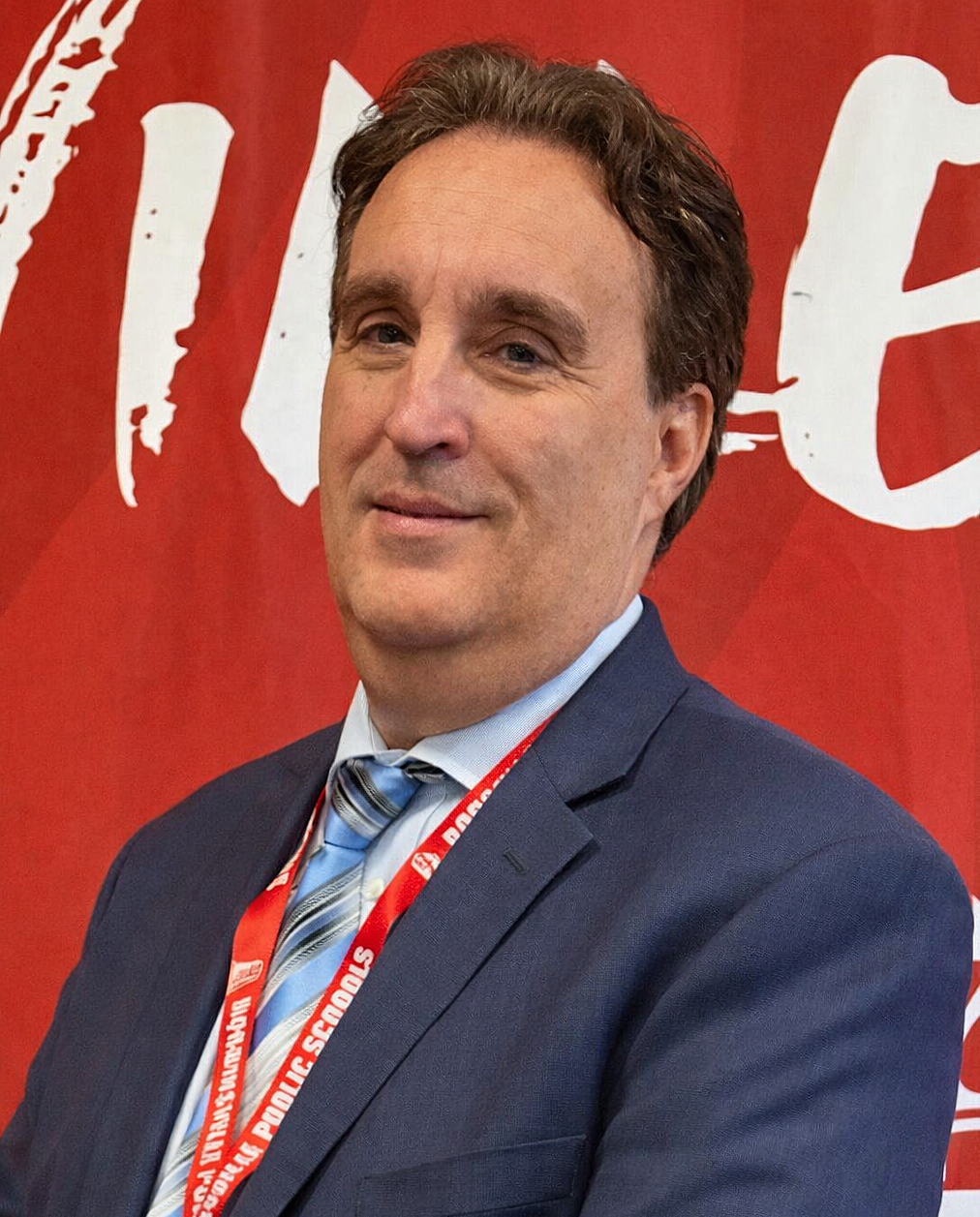
Robbinsville Superintendent Dr. Patrick Pizzo.,

