While some people shy away from community activism, the members of Friends of Hopewell Valley Open Space (FoHVOS) are tackling ecological threats head-on.
They recently partnered with students from The College of New Jersey (TCNJ) in Ewing to combat deer overpopulation, remove invasive species, and repair damaged soils in a bold effort to restore local ecosystems and build a more sustainable future.
Kaitlin Muccio, a land steward for FoHVOS, and interns from TCNJ were at a recent event where they discussed methods to promote sustainability.
The group has collected and analyzed data from the TCNJ area, resulting in four recommendations that the college can pursue as part of its stewardship plan.
These recommendations include deer management, invasive species control, prioritizing specific habitat areas, and student involvement. FoHVOS’s plan to foster sustainability through deliberate human intervention can have positive effects on both physical and mental health.
Muccio described FoHVOS’s plans as “a great opportunity to not only increase ecological health but also human health and well-being.”
According to the American Psychological Association, interacting with nature has significant cognitive benefits, improving mood and overall well-being. Muccio predicts these benefits will grow even greater once spaces become more beautiful through stewardship efforts.
“Land stewardship isn’t just focusing on land; it’s focusing on stewarding community. We’re not separate from land. We use it every day. We walk on it every day,” Muccio said.
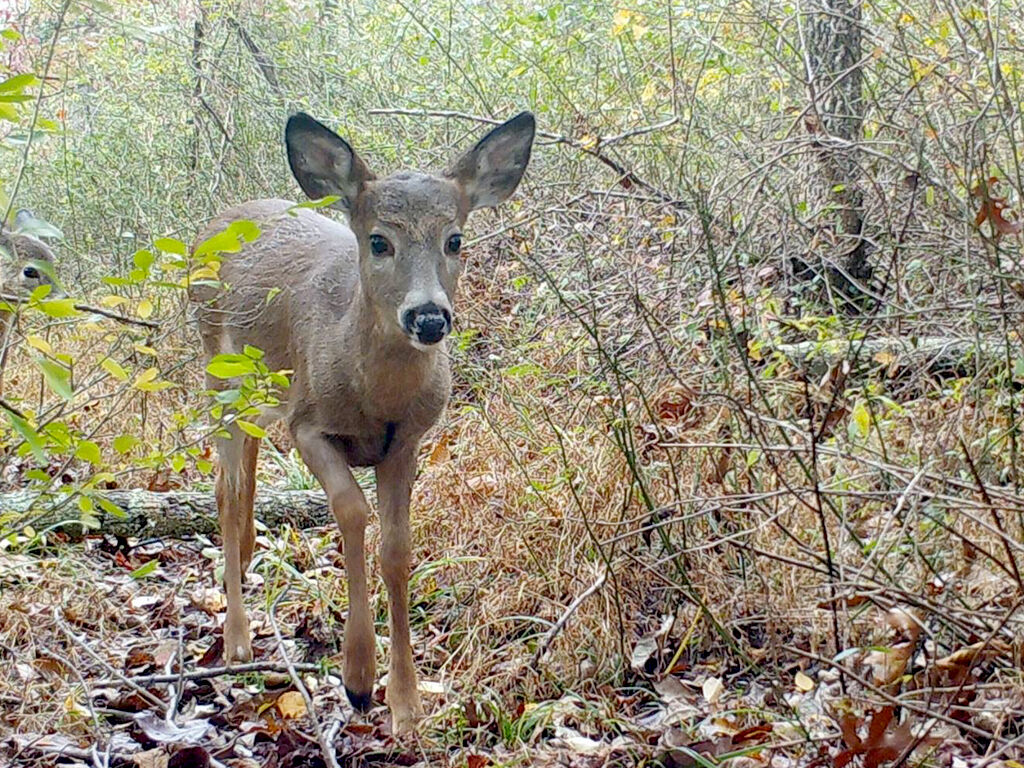
Threats to conservation values should concern everyone, not just land stewards. Deer populations have increased tenfold due to insufficient management, creating ecological and human health risks.
Because hunting access is limited in overpopulated areas, deer numbers continue to rise, negatively affecting plant health. FoHVOS recommends managing this issue by reducing deer density to below 20 deer per square mile.
They also plan to build deer “exclosures”—fences designed to block deer from certain areas to allow plants to regenerate.
Invasive species cause additional problems for ecosystems, with 48 invasive species identified on the TCNJ campus alone. These species often outcompete native plants and are usually not eaten by deer.
Despite its reputation, the careful use of chemical control methods—including herbicides—is essential to effective stewardship. FoHVOS aims to eradicate 25 emerging invasive species by targeting widespread, highly threatening species using selective control strategies, prioritizing key areas to restore and protect native biodiversity.
The organization also plans to address altered soils damaged by tilling, fertilizer use, and compaction from machinery, all of which reduce organic matter.
Plans include converting portions of TCNJ’s ecological deserts into native meadows or shrub islands to increase biodiversity. The ecological health of these areas should be monitored every three to five years, rather than just once.
Student-driven project proposals include a hiking trail, an herbal medicine initiative, communication and outreach programs, and other student sustainability efforts. For the hiking trail, FoHVOS plans to remove invasive species and replace them with native plants and meadow habitats, improving ecological diversity and engaging more students in stewardship.
Trail markers will provide an interactive experience. Along the trail, interns plan to incorporate natural remedies, making the campus more attractive, promoting herbal medicine use, and creating opportunities for students to earn service hours.
Regarding community outreach, FoHVOS will utilize social media and campus-based promotions like flyers to support student sustainability initiatives. Events will include service days and student-led art installations to enhance campus beauty and encourage student participation.
FoHVOS seeks extensive community involvement. Without active human intervention, ecosystems risk falling into “empty forest syndrome,” in which forest floors become barren, or “infested forest syndrome,” where deer overabundance, invasive species, and altered soils combine destructively.
To become involved, Muccio recommends researching local sustainability clubs and nonprofit organizations.
“They’re always accepting volunteers. Please volunteer with us. Those are always really great opportunities for people to get involved,” Muccio said.
(Facebook photo/FoHVOS.),

