The Plainsboro Planning Board on June 16 approved an application for a massive mixed-use development on the historic Princeton Nurseries site.
The project, being developed by WRV Nurseries Plainsboro, LLC, would transform the 109-acre Plainsboro section of the former nursery grounds into a development featuring apartments, townhouses, single-family residences, senior housing and commercial buildings, including office and retail.
The plan calls for 950 residential units, a 75,000-square-foot hotel, and almost 320,000-square-feet of commercial space.
The Princeton Nurseries Property spans a total of 272 acres across Plainsboro and South Brunswick townships. In addition to the Plainsboro plan, the developer is also seeking approval for a 341,273 square-foot data center on a 143-acre tract in the portion of the nurseries site in South Brunswick.
WRV purchased the property from Princeton University in 2024. The tract was originally part of Forrestal Center and slated for all commercial offices, but plans changed after the demand for offices decreased following the COVID-19 pandemic.
A Plainsboro staff report dated June 4 outlined many of the conditions that the planning board approved with the application. The report, underscored the project’s scale and complexity, stating that it is “one of the largest redevelopment efforts proposed in Plainsboro Township in recent years.”
Central to the proposal are two mixed-use multifamily buildings that would accommodate 335 apartments. The first building would have 136 units, including 62 one-bedroom, 64 two-bedroom, and 10 three-bedroom apartments.
The second building would have 199 units, including 88 one-bedroom, 94 two-bedroom, and 17 three-bedroom apartments. The building would include 44 affordable housing units. The planning board approval requires that all of the affordable units be spread throughout the buildings to help ensure that they are indistinguishable from the market-rate units.
Also approved was 230 townhouses on the western portion of the property. Of those, 32 units would be designated as affordable housing. There would also be 20 single-family homes.
The eastern section of the site would feature 51 townhouses, 114 stacked townhouses (including 20 affordable units), 72 age-restricted flats, and 31 age-restricted carriage homes. An additional 97 senior residential units are anticipated in subsequent phases, but are not included in the current application.
The commercial construction is slated to begin in Phase 2 of the plan. It includes 75,000-square-foot hotel with 125 rooms, and a 6,170-square-foot restaurant.
Another building would contain about 10,000 square feet of retail space, and another would include 30,000 square feet of retail space or a grocery store.
Phase 3 calls for a mixed-use building containing 97 age-restricted rental units and either 28,000 or 35,000 square feet of retail space. The developer also plans to build 40,000 square feet of retail space in the building along with the possibility of an additional 18,000 square feet of retail in the first two buildings.
Traffic impacts are a significant consideration for the project. Township staff said that although current traffic volumes on Route 1 are similar to pre-pandemic traffic levels, the impact on local roads has reduced since the pandemic.
The developer will be required to submit a traffic signal warrant analysis and detailed construction plans for roadway and intersection improvements as conditions of approval. It will also be required to enter into a Title 39 Enforcement Agreement with the township that will enable the police to enforce traffic regulations within the private streets of the development.
History of the property
The Princeton Nurseries property was once home to the largest commercial nursery in the United States.
According to the Friends of Princeton Nursery website, Princeton Nurseries was founded shortly before the first World War by horticulturist William Flemer Sr. and grew to become a pioneering force in American landscape design and agriculture.
By the mid-20th century, the company was known not only for its scale—farming more than 1,200 acres across four municipalities—but also for its horticultural breakthroughs that transformed suburban and urban planting nationwide.
Flemer said he selected the Kingston area in 1911 after an extensive search along the Eastern Seaboard. The site’s rich glacial soil, proximity to the newly built Carnegie Lake, and access to both the Delaware & Raritan Canal and the Pennsylvania Railroad made it ideal for large-scale cultivation and distribution.
The nursery began with a 65-acre purchase of the Myrick farm in 1913 for $9,000, followed by acquisitions of the Higgins, Van Dyke and Archibald Gulick farms—bringing the total to 265 acres by the time Flemer’s son, William Flemer Jr., returned from service in the Ambulance Corps in World War I.
Inspired by the French countryside he had seen during the war, Flemer Jr. landscaped the property with roads lined with plane trees and a checkerboard of windbreaks.
He also made it a priority to purchase homes along with farmland to house nursery employees, creating a self-sufficient community. Nearly two dozen historic structures from that era remain today.
At its height, the nursery employed more than 300 people and held patents for dozens of ornamental trees and shrubs.
Its most celebrated trees include the ‘October Glory’ red maple and the Princeton elm, a hardy, disease-resistant cultivar developed in response to the devastation of American elms by Dutch elm disease.
A number of those trees can still be found in the historic Elm Alee that lines Washington Road in West Windsor.
As development pressures mounted in central New Jersey, the nursery began acquiring land in Allentown in the early 1960s and fully relocated its operations there by 1995. The business officially closed in 2010.
Much of the original Kingston site has since been preserved. In 2005, more than 240 acres of the former nursery were permanently protected through a partnership between South Brunswick Township, Princeton Nurseries, and the N.J. Department of Environmental Protection’s Green Acres Program. That preserved land includes the 53-acre Mapleton Preserve, jointly owned by the state and South Brunswick, and now home to the D&R Canal State Park Headquarters.
The grounds remain dotted with specimen trees planted by the nursery, some of them rare and unusual.
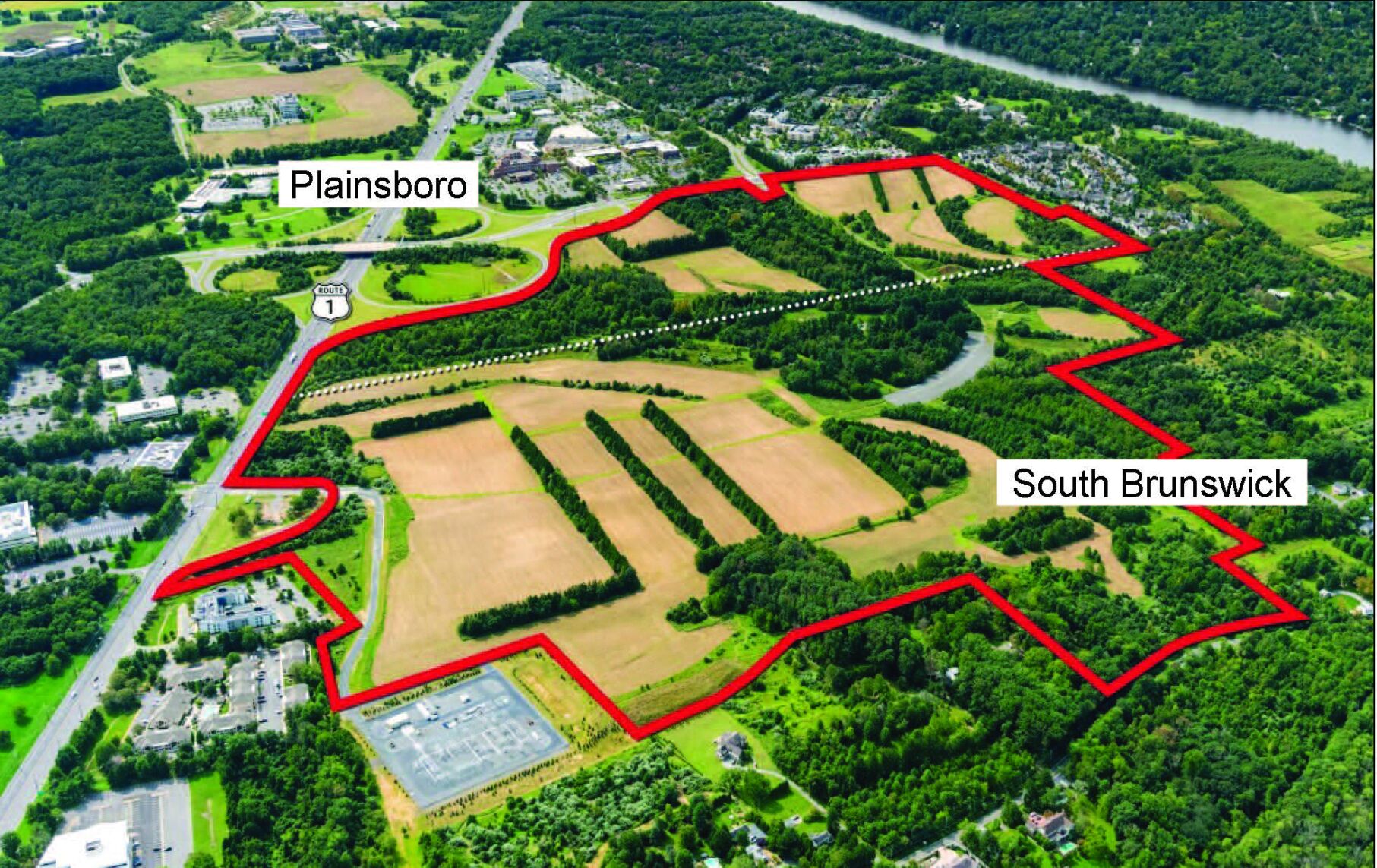
The 272-acre Princeton Nurseries property, which spans both West Windsor and Plainsboro townships.,

