A half-acre property in Ewing Township is drawing attention for what it isn’t—a traditional suburban lawn.
Instead of grass, homeowner Alex Rivera has spent the last five years transforming his Federal City Road yard into a thriving wildlife habitat.
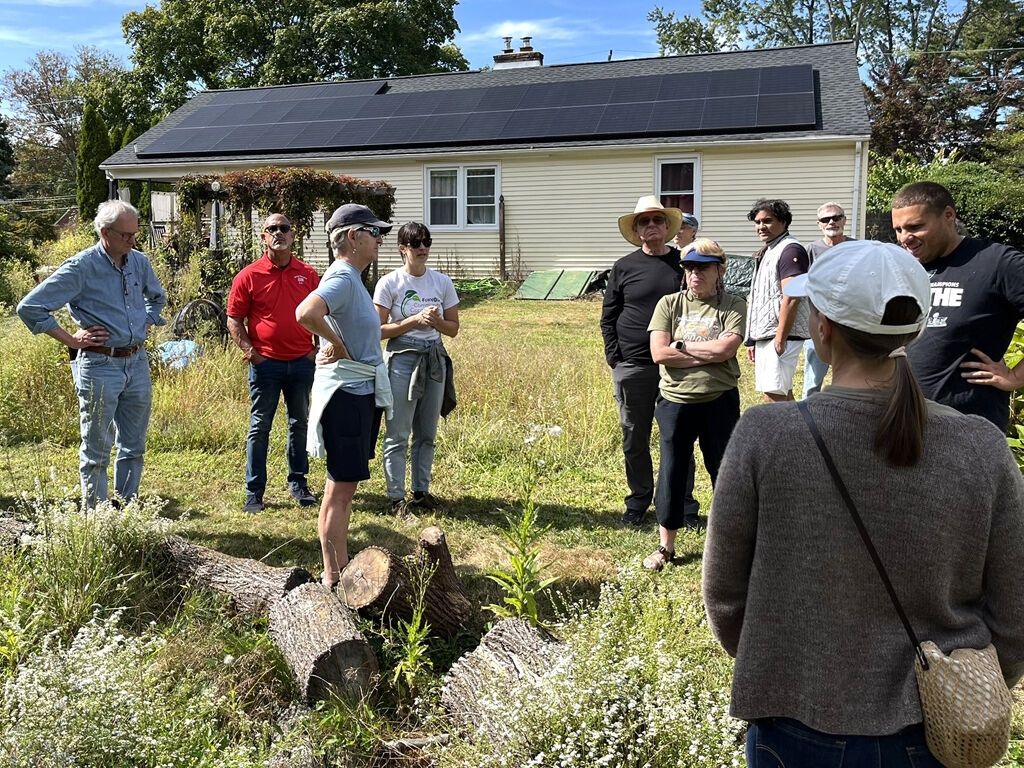
On Sunday, Sept. 21, Rivera welcomed about a dozen visitors for a sold-out tour led by the Friends of Hopewell Valley Open Space (FoHVOS), sharing how his once-manicured lawn became a buzzing conservation garden.
“It started as a personal challenge,” Rivera said. “Lawns take a lot of water, fertilizer, mowing—but I wanted something that invited life in.”
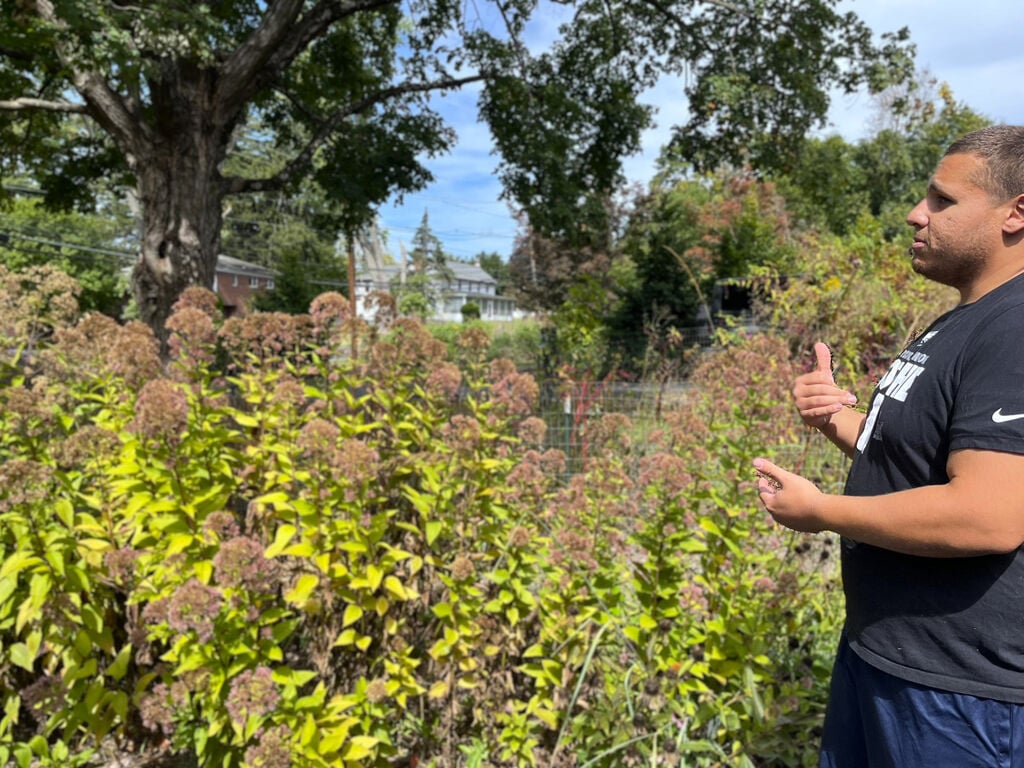
Today, the yard hums with goldfinches, bees, sunflowers, Joe Pye weed, aster and more. Visitors on the tour discussed the evolving definition of “native” gardening and how landscapes can reflect biodiversity without being strictly purist.
“We have to ask — native to what?” said Jenn Rogers, executive director of FoHVOS. “The Pine Barrens and the Piedmont are both in New Jersey, but their ecosystems are very different. The real priority should be avoiding invasive species and supporting biodiversity.”
Rivera, a former City of Trenton employee who works with the Mercer County Park Commission, shared lessons learned from experimenting with plantings from native sales and local nurseries
“I’ve made mistakes,” he said, gesturing to areas where aggressive sunflowers overtook other species or deer ate oakleaf hydrangeas despite fencing.
“Now I’m hiring help for lawn areas, and my wife is taking over the vegetable gardens so I can focus on the rest,” he said.
His conservation-minded yard features umbrella magnolias, evergreen screens of holly and arborvitae, and two “mini-forests” of dwarf chinkapin oaks, which grow well in small spaces.
Mayor Bert Steinmann, who joined the tour, said the project opened his eyes.
“I wasn’t always thinking about native plants or pollinators,” Steinmann said. “But seeing what Alex has done, how alive his yard is, and how much joy it brings him, you can’t help but be impressed.”
Rivera said his naturalistic yard hasn’t clashed with neighbors.
“It’s all about respect. I fence in some areas, and one of my neighbors shares a whole row of Joe Pye with me,” he said. “I think tours like this help people see the value in community conservation.”
The FoHVOS’s Residential Community Conservation program supports residents who want to create habitat and care for their own land.
Nearly 300 households have already participated.
“It’s amazing to see this movement grow beyond Hopewell Valley and into places like Ewing,” Rogers said.
As the tour wrapped up, Rivera watched pollinators swarm the front yard.
“I never thought this would be what brings me the most joy,” he said. “But I can’t imagine it any other way now.”