The one contested municipal election in Hopewell Valley is in Hopewell Township, where Democrats Courtney Peters-Manning and David Chait are running for re-election against Republican challengers Steve Niederer and Ed “Jack” Jackowski. Peters-Manning and Chait are currently serving as mayor and deputy mayor, respectively.
The Hopewell Express sent surveys to all four candidates. Their bios and responses to our questions are below. They have been lightly edited for clarity.
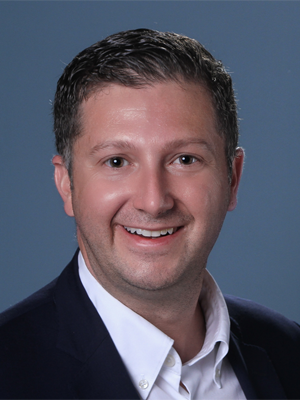
David Chait, 40, has lived in Hopewell Township for six years. He is founder and CEO of Travefy, a software company with three offices across the U.S., including one in Hopewell Township.
He and wife Amanda have two daughters, Julia (10) and Sally (7), who are fifth and second graders at Bear Tavern Elementary School. He was first appointed to the township committee in January 2022 to fill a one-year vacancy. He ran and was elected to a full term that fall. He is currently deputy mayor.
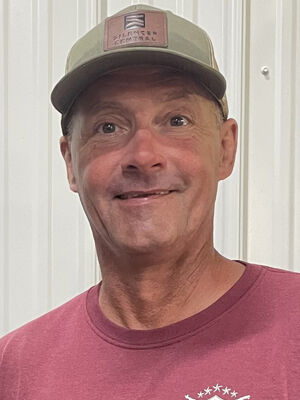
Ed Jackowski, 56, has lived in Hopewell Township for 51 years. He has been the owner of Jack’s Greenhouse and Farm for 30 years. His and his wife, Anita, who is first generation in the U.S. from parents who immigrated from Rajasthan, India, have two daughters: one is studying abroad in France pursuing an art fashion degree, the other works in patient advocacy for a pharmaceutical company. His father was a professor of finance at Rider University. His mother was an accountant for the State of New Jersey. He has previously run unsuccessfully for a seat on the township committee on several occasions.
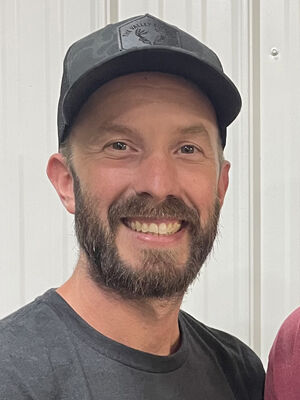
Steven Niederer, 37, has lived in Hopewell Township his entire life. He is a retired Mercer County Sheriff’s Officer and owner-operator of The Valley Butcher Meat Processing.
He is the youngest of three siblings in a fourth-generation farming family in the township. One sister is a teacher in the Hopewell Valley Regional School District, the other a local organic farmer. He has never run for elected office before.
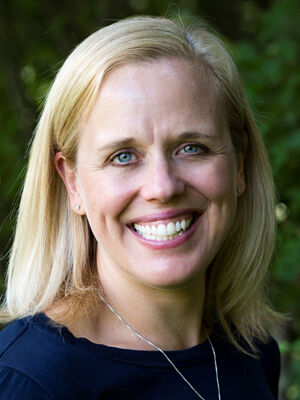
Courtney Peters-Manning, 48, has lived in Hopewell Township for 16 years. She is director of finance and general counsel at the Cambridge School, which her parents founded in 2001 to help kids with language-based learning differences like dyslexia.
She has been married to her husband Tomas, who is a native of Dublin, Ireland, for 20 years. They have two boys, Seamus (17) and Conor (15). Her mother also recently moved to Four Seasons.
She was elected to the township committee in 2019 and 2022, and has served as mayor in 2022, 2024 and 2025, and deputy mayor in 2021 and 2023.
Community News: Tell us about the moment that you decided to run, or run again, for township committee.
David Chait: I’ve always believed in service and giving back. That’s why I served in the Obama administration during the Great Recession, why I’ve volunteered on township boards, and why I serve today. I’m proud of what we’ve accomplished — lowering municipal taxes, preserving open space, improving transparency — but there’s still important work ahead.
After four years, I’ve built the experience and relationships that make me more effective than ever, and I’m excited to keep serving our community.
Ed Jackowski: I decided to run for township committee because I’ve seen firsthand how overdevelopment is impacting our community — from increased traffic and strain on infrastructure to the loss of open space that makes our town special. Growth is inevitable, but it must be managed responsibly.
I want to be part of ensuring that development is balanced, thoughtful and aligned with what residents truly want for the future of our township.
Steven Niederer: I’ve always had a public servant mindset, but a close friend recently encouraged me to consider a leadership role in Hopewell Township. He shared that the committee could benefit from more diversity and youth voices, and that resonated with me. After reflection, I chose to commit myself to serving and strengthening our community.
Courtney Peters-Manning: I first decided to run for office in 2016. No matter one’s political beliefs, I felt that we could do better in terms of tone and dialogue than the political bluster and violent rhetoric at the national level. This has only worsened over the last 8 years. I work hard to be open and accessible, and I will always have respectful, constructive discussions with those whose opinions differ from my own.
CN: What makes Hopewell Township a great place to live?
Chait: Amanda and I chose to raise our family and build a business here because Hopewell Township is such a special place. It has a rich history, which will soon be highlighted by our nation’s 250th anniversary, and is a unique mix of neighborhoods, farmland, and businesses, each with their own character. Add in great schools, parks, restaurants, and a strong sense of community, and it’s the perfect place to call home.
That’s also why keeping Hopewell Township affordable for all residents has been one of my top priorities on the township committee.
Niederer: Hopewell Township is a great place to live because it balances community, convenience and character. Strong connections among residents create a welcoming, safe atmosphere. The township offers excellent schools and reliable services that support everyday well-being.
Green spaces for hiking and ample recreational opportunities encourage active, healthy lifestyles. Local farms and markets provide fresh food, jobs and a lasting connection to the land, enriching community life. Businesses and events foster pride and togetherness, while diverse housing options ensure inclusivity. Hopewell Township truly offers a place where people feel supported, engaged and proud to call home.
Peters-Manning: I have lived all over the country, but my family and I choose to put down roots in Hopewell Township because of its abundant open space, trails, farmland and recreation spaces, which now make up over 40% of the township. But even more than that, a real sense of community permeates everything here. People look out for each other. When someone faces an unexpected loss or tragedy in their lives, neighbors show up to help. I’ve been so lucky to give my kids the opportunity to grow up here.
CN: Name two issues of vital importance in the township right now and explain how, as a member of the council, you would address these issues going forward.
Chait: The most important issue facing the township is finances. None of us wants to pay more than necessary in taxes. I’ve worked to reduce municipal debt, attract new commercial ratables, and open new revenue sources all while maintaining quality services, supporting our schools, protecting our environment, and investing in our community. And I’m proud that this year we again saw a decrease in the municipal tax rate.
Day-to-day issues matter just as much. Residents deserve a committee that listens and responds. We’ve made real progress on road safety, from new four-way stop signs along Scotch Road to the forthcoming light at Ingleside and Route 31. And we’ve also expanded transparency through a new monthly email newsletter among other areas. My commitment is simple: to listen and respond to the everyday concerns of our neighbors.
Jackowski: Transparency is one of the most important responsibilities of a Township Committee. Residents deserve to know the full impact of decisions—especially those involving high-density housing that can reshape a community. When leadership fails to disclose the outcomes of such projects, people are left in the dark about how new development will affect our roads, schools, emergency services, and overall quality of life. Without open communication, decisions feel imposed rather than collaborative, and that erodes confidence in local government. My goal is to rebuild that confidence.
As our township continues to face the pressures of new development, it’s critical that we make sure the benefits are shared fairly across the community. That’s why I support directing PILOT (Payment in Lieu of Taxes) funds toward the growing needs of our schools and public safety. If we don’t allocate resources properly, taxpayers are left carrying the burden while vital services become strained.
Niederer: As our community grows, development brings both opportunities and challenges. A major concern is land being developed faster than infrastructure can keep up. Schools, emergency services, and roads may become strained, and without proper planning, the quality of life we value in Hopewell Township could be at risk. Infrastructure projects are also expensive, and limited funding makes it difficult to provide the services residents expect and deserve. Left unchecked, the imbalance between growth and resources can create lasting problems.
As a member of the Hopewell Township Committee, I am committed to ensuring our community is prepared. That’s why I will make sure all PILOT funding is directed toward supporting education and public safety; the two areas most impacted by development. By doing so, we can manage growth responsibly, protect residents, and preserve the strong, vibrant community we all cherish.
Peters-Manning: Two vital issues facing Hopewell Township are affordability and public safety. On affordability, over the last several years we have developed new sources of revenue, from cannabis to PILOTs, which have enabled us to reduce the municipal tax rate while also pledging $16.1 million to the school district to pay for renovations at Bear Tavern.
On public safety, we listen to our community and respond to traffic safety concerns all over the 60 square miles of Hopewell Township. We have installed two four-way stops along Scotch Road, one with the help and cooperation of Mercer County, and we have relentlessly pushed the DOT to install a traffic light at 31 and Ingleside, which is finally coming to fruition this fall. Further, we have increased hiring in our police department, which has added a community policing division, and under the leadership of Chief Rosso, is hugely responsive to community concerns.
CN: (For incumbents) What are your top accomplishments during your time in office?
Chait: In an environment of rising costs and reduced state aid, managing township finances responsibly is essential. I’m proud that, while maintaining quality services, supporting schools, protecting open space, and investing in our community, we again saw a decrease in the municipal tax rate.
Transparency has also been a priority. We’ve made committee meetings fully hybrid so residents can participate from anywhere, and we’ve elevated communications through quarterly Town Crier mailings and a new monthly email newsletter.
We also took the state’s unfunded Fourth Round mandate head-on. The state called for 543 affordable units — potentially 2,700 total homes. We fought to reduce that. And with extensions, credits, and targeted projects, we’ll meet that obligation with far fewer new homes. Our plan cuts 200 market-rate homes from the prior round and allows only 95 new family homes. That way, we fulfill the state requirement while protecting our schools and community.
Peters-Manning: I am most proud of revitalizing the former BMS campus and our increased support for our first responders. In 2020, we were facing the loss of BMS, a huge township taxpayer. Now, the campus is home to seven companies (and counting) making life-saving medicines for patients in the US and all over the world.
Over my six years in office, I have developed and strengthened relationships with our first responder community. Our police, firefighters, EMTs and public works are always here to keep our community safe. There have not always been good communication and connections between the township committee and our first responders, and it was a priority of mine to change that.
I started the Mayor’s Awards to honor individual members for extraordinary accomplishments, we have increased hiring in the police department, and I am committed to showing up for them every day, like they show up for us.
CN: (For challengers) What makes you the most qualified candidate currently running for Hopewell Township Committee?
Jackowski: My experience as a noncommissioned officer in the Marines taught me leadership, accountability, and how to make decisions under pressure with the good of the team always in mind. I learned the value of service, discipline, and putting others before myself—qualities that are essential in public office.
As a small business owner for over 30 years, I’ve also gained firsthand understanding of what it takes to manage budgets, solve problems, and adapt to challenges while staying focused on long-term goals.
Together, these experiences make me uniquely qualified to serve on the township committee. I know how to lead, how to listen, and how to work hard to deliver results.
Niederer: I am running for Hopewell Township Committee to bring my experience, dedication, and accountability to our community. My background in public safety and business has equipped me with strong skills in problem-solving, budgeting, and collaboration.
For the past 12 years, I have worked in roles that directly serve Hopewell Township and surrounding communities, giving me firsthand knowledge of both our needs and our strengths.
I am committed to transparent communication, responsible development, and ensuring that education and public safety remain top priorities. With a focus on preserving Hopewell’s unique character while planning responsibly for the future, I will work hard to represent all residents and ensure our community continues to thrive.
CN: What is going well, and/or what could be going better, in terms of economic development in the township?
Chait: Hopewell Township is a great place to do business, and we can make it even better. That’s why economic development has been a core focus of mine. I helped establish the Township’s Tourism and Economic Development Advisory Committee, hosted a business listening session, and worked to streamline resources like our online business welcome page.
At a larger scale, we’ve advanced a new economic element for our master plan and supported redevelopment of the former BMS campus into a pharmaceutical and medical innovation hub, bringing jobs, investment and commercial tax revenue. One of those businesses (BeOne) contributed $5.7 million to our affordable housing fund.
Looking ahead, we must continue supporting both major employers and our Main Street businesses, while leveraging our history as we prepare for our nation’s 250th. More commercial ratables mean stronger local businesses and lower taxes for residents.
Jackowski: Preserving the rural character of our community while creating new business opportunities requires thoughtful planning and clear priorities. My approach would focus on three key areas. 1) Targeted Economic Development: Encourage businesses that align with our rural identity, such as ventures that support local farmers, create jobs and bring visitors who strengthen our economy without overwhelming our infrastructure.
2) Zoning and Land Use Planning: Use zoning tools to guide growth in a way that protects open space and farmland while designating appropriate areas for commercial development to ensure businesses complement our community rather than change its character. 3) Tax Relief Through Diversification: Expanding the commercial tax base means homeowners shoulder less of the tax burden. By responsibly growing local business activity, we can generate new revenue streams that fund schools, public safety, and infrastructure without constant increases on residents.
Niederer: Hopewell Township has many strengths. Its location, quality of life, and strong sense of identity make it an attractive place to live and work. Local businesses add character and provide vital services, but sustaining economic development can be challenging. Infrastructure needs, regulations, and balancing growth with open space can make it harder for businesses to thrive.
As a township committee member, I would support smart, responsible development by exploring incentives to retrofit infrastructure and repurpose unused land, ensuring growth without straining our community. Equally important is maintaining open communication with business owners, listening to their needs, and fostering partnerships that encourage collaboration.
By streamlining processes, improving infrastructure, and supporting both new and established businesses, we can create a more cohesive, business-friendly town while preserving the character that makes Hopewell special.
Peters-Manning: Hopewell Township is an excellent place to do business. I just last week met with a project manager who said that he has worked with municipalities all over the state, but Hopewell Township is the best, from the construction office to the tax collector and beyond. Our professionals are responsive and committed to getting applicants the information they need.
Further, in 2020, one of the biggest challenges facing the Township was the redevelopment of the former BMS property. As it then represented about 6% of our tax base, losing BMS was a huge challenge. Since then, that property has attracted many new tenants, including BeOne Medicines, which is a significant source of revenue and just contributed $5.7 million to our affordable housing trust fund. Moving forward and with the completion of work at BeOne, the property will generate more revenue than BMS did at its height.