On every third Monday of February, we celebrate Presidents Day which was set aside by the federal government in 1968 to honor the leadership contributions of all US presidents. Prior to this, Congress in 1885 established February 22nd as a holiday to honor the birth of the “Father of Our Country,” George Washington. Considered one of the most beloved presidents, he was a unifier in the early stages of our nation’s fight for freedom and independence.
The same reference can be applied to Abraham Lincoln who was also born in February and known as great unifier and believer in freedom. The strong values that they cherished dearly still reverberate within the hallowed halls of our government’s institutions.
February also marks the birthday of Richard Watson Gilder, who was born in a simple farmhouse on Crosswicks Street in Bordentown and catapulted to fame as the editor-in-chief of The Century Illustrated Monthly Magazine. From 1881until his death in 1909, Gilder wielded significant power in the literary world. Anybody with a voice and a cause sought the permission of this man to have their stories published in his highly revered monthly periodicals.
Like Washington and Lincoln, Gilder’s principles were grounded in strong moral values and an unwavering faith in God. As a humanitarian, he focused his efforts on helping impoverished families residing in New York City, advocated for the quality of public education, expanded the city’s art and cultural realm, and preserved historic symbols of national importance. In essence, Gilder became a unifier.
As a fervent admirer of Lincoln, in 1886, Gilder and his committee raised funds through subscriptions to his magazine for the purchase of the plaster and bronze casts of Lincoln’s life-mask and hands. In return, they were presented to the National Museum (Smithsonian Institution).
Initially created by sculptor Leonard Volk in 1860 while Lincoln sat for him, sculptor Augustus Saint-Gaudens (close friend of Gilder), made the first casts from the original molds. Gilder and Saint-Gaudens kept a set as did Bram Stoker, the author of famed novel, Dracula.
Lincoln was well-known for his stove-top hats as hats of all sizes were popular in the 1800s. Gilder was no exception and possessed beautiful silk hats that he purchased in New York City and wore on many occasions. Walking in inclement weather, social functions, horseback riding, polo tournaments, and even attending funeral services set the stage for looking dapper.
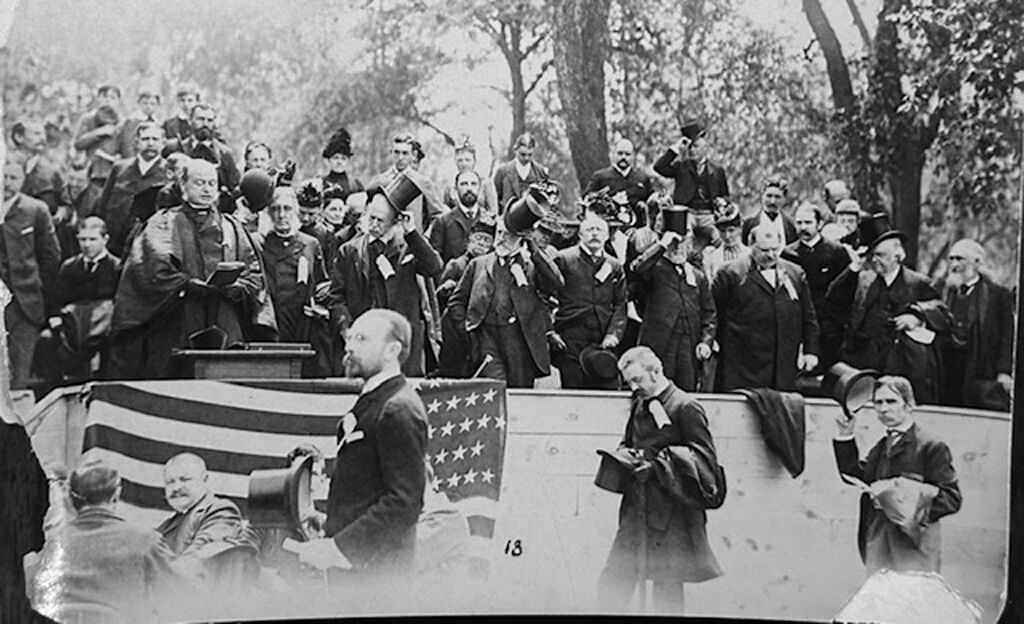
In July of 1885, Richard Watson Gilder wore his hat to honor the life of former Civil War general and US President, Ulysses S. Grant upon his death. In addition, he was one of many distinguished guests that wore ceremonial ribbons on their lapels as the funeral procession marched through the canyons of New York City.
Furthermore, Gilder, an accomplished poet as well as successful editor, was asked by the bereaved Grant family, to recite one of his poignant poems, The Dead Comrade, to which he obliged.
The Bordentown Historical Society is blessed to have many artifacts from the Gilder family, including the ceremonial ribbon worn at Grant’s funeral and the last hat owned by Richard Watson Gilder. The hat was purchased at a men’s store known as Dobbs on Fifth Avenue when it was established in 1908. Gilder died the following year while standing before dinner guests during a major presentation.
For information about the Bordentown Historical Society, call (609) 298-1740 or email bordentownhistoricalsociety@gmail.com.
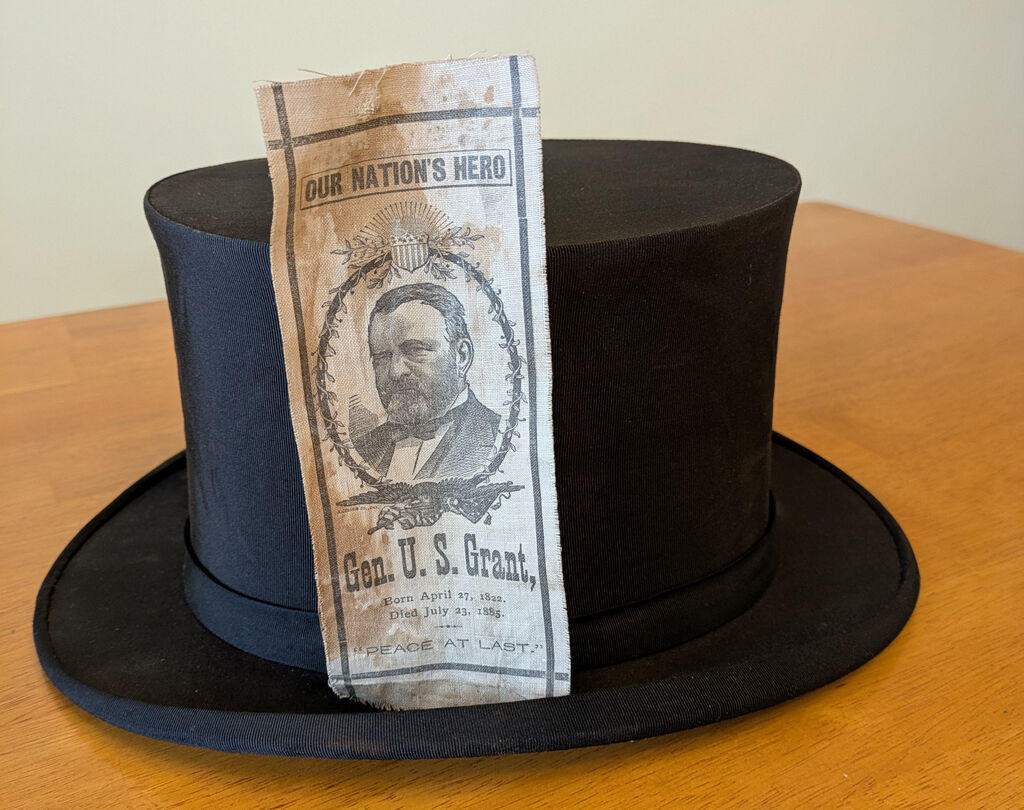
Richard Watson Gilder’s last hat and ceremonial ribbon from the funeral.,