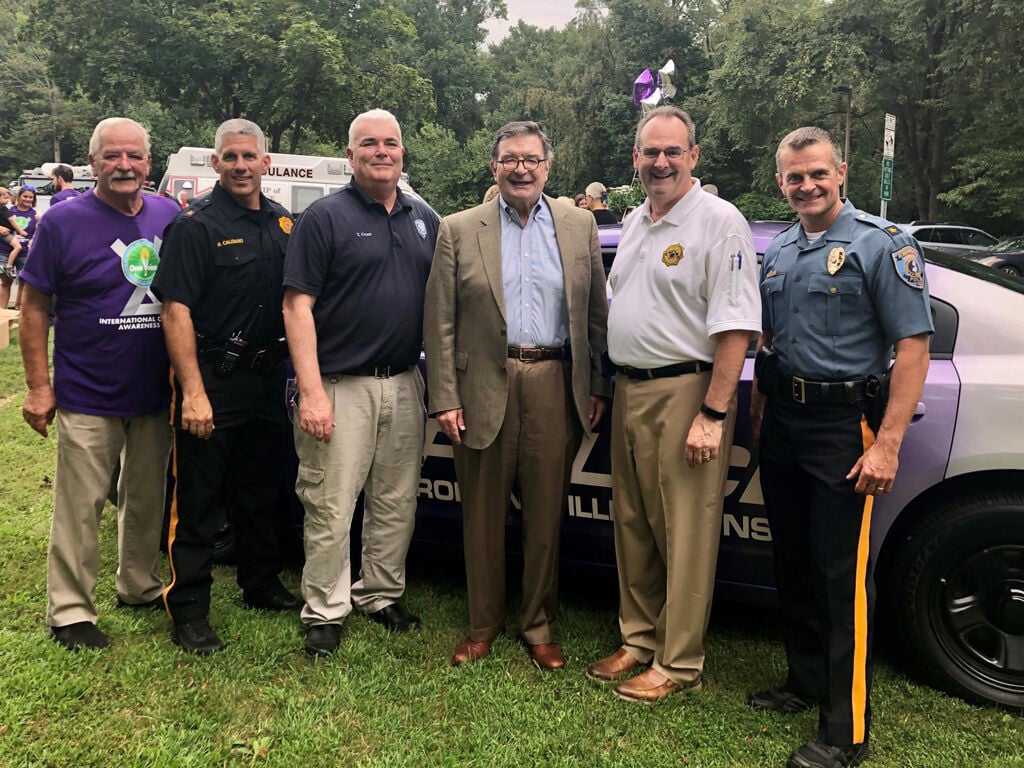
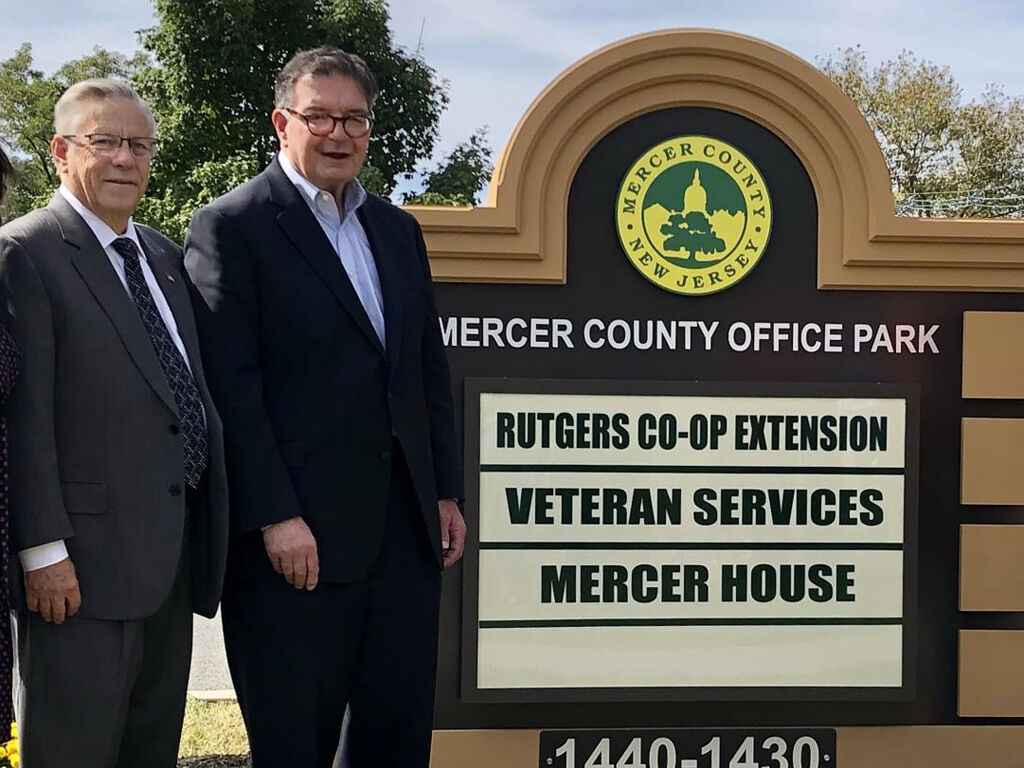
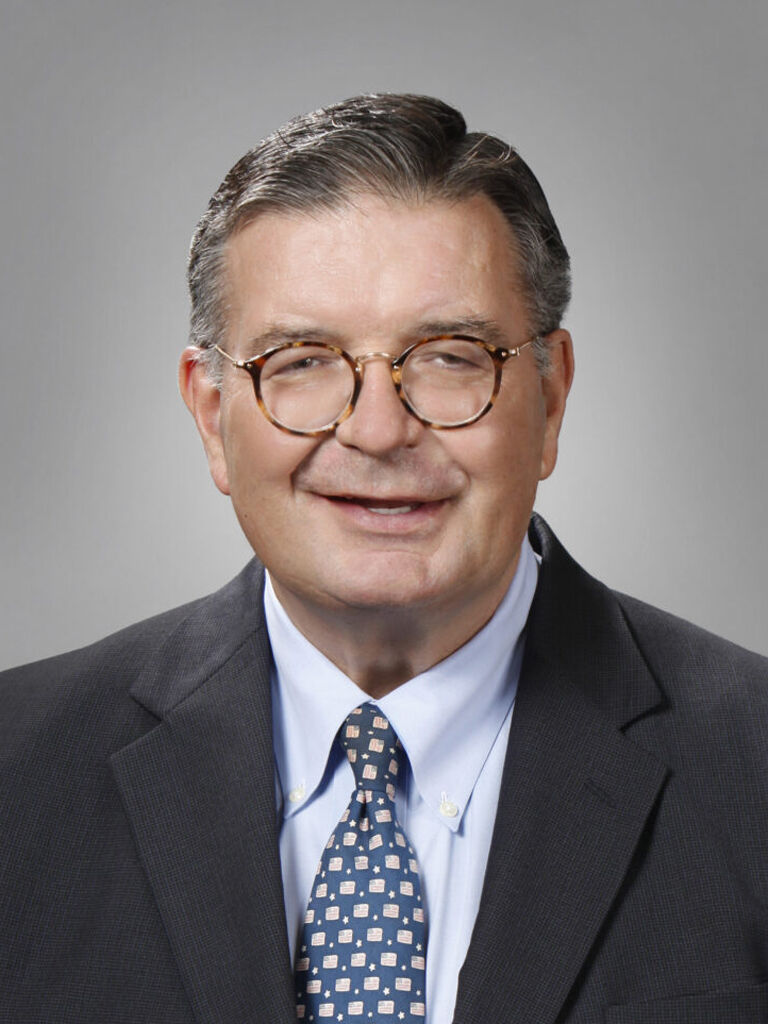
For the first time in two decades, long-time Mercer County Executive Brian Hughes won’t be sitting behind the desk of the county’s top administrative elected official.
Former Assemblyman Dan Benson — a Democrat who was overwhelmingly elected in November over Republican Lisa Richford — will be sworn in at the county’s annual reorganization meeting, which was set to be held at the Trenton War Memorial on Thursday, Jan. 4, at 6 p.m.
Hughes, who was not chosen to run again in favor of Benson during the Mercer Democratic Party Convention last March, will be looking to move on to greener pastures after many years in elected office.
When asked during a recent interview with communitynews.org about what Benson’s biggest challenge will be, Hughes joked: “Removing all the Hughes signs from across the county.”
Many of those signs highlight Hughes’ accomplishments during his years as county executive. His achievements are many, and they include the revitalization of the Trenton-Mercer Airport (and the approval of a new terminal and parking garage at the site), the preservation of thousands of acres of open space, numerous recreation projects, multiple economic initiatives, and helping to shepherd the county through the COVID-19 pandemic.
Hughes, a resident of Princeton, is the son of former governor and N.J. Supreme Court Chief Justice Richard J. Hughes.
Before being elected county executive in November 2003, he served two terms on the Board of Chosen Freeholders (now the Board of County Commissioners), first being elected in 1997. Before that, he served as deputy executive director of the Governor’s Council on Alcoholism and Drug Abuse.
Trenton Mayor Reed Gusciora lauded Hughes when he endorsed him at the Democratic Convention: “He has kept County taxes stable. He acquired over 5,000 acres of open space, preserving and protecting fully a quarter, some 27%, of Mercer County from development — forever. That is real environmental protection. And, he has promoted sustainability through the establishment of new bus routes, bike paths, EV charging stations and a massive solar field that has produced nearly a million dollars a year for education.”
During his final days in office in December, Hughes spoke with communitynews.org editor Bill Sanservino about his challenges and accomplishments, as well as his thoughts on future issues confronting the county. An edited version of that interview is presented below in Q&A form.
* * *
Communitynews.org: You have spent the last 20 years as Mercer County executive, and more as a public servant. What are your plans for the future? Do you want to continue with some kind of public service?
Brian Hughes: Well, I have a couple of irons in the fire, and I think when you believe in public service, it never really ends. My wife works at the Institute for Advanced Study, and she’s been there for about 32 years. Before that she worked at Princeton University. So, she is dedicated to educational service.
My son is 24 years old, graduated from Princeton University and is working in public service in Washington, DC. So, I think it’s something that’s in the bloodstream. Working in public service in the future is something that I would certainly be interested in.
CN: Can you share some of the things you are pursuing after you leave office?
BH: Well, I have, I think, 34 years working for the State of New Jersey. They just finished figuring out what my pension is going to be, and I believe that if you work for the State of New Jersey for more than $17,500, you put your pension at risk — so I’m not looking for a job with the state or another county government entity. So, with that, I would say it would probably be a public service job with a nonprofit or something of that ilk.
CN: I’m sure there’s a lot of charitable organizations and nonprofits that could benefit from your years of experience.
BH: Yes, I would think so. I have not formalized what that would be.
Open space
CN: A significant amount of open space has been preserved throughout Mercer County over the last 20 years. Can you talk about why you chose to make that a priority and your philosophy on why open space preservation is important?
BH: I spent six years as a freeholder (before being elected county executive), and we did some open space projects, but not as many as I think we should have. Right now, I believe 20% of Mercer County is open space, and I’m proud of that fact.
That open space will live on for our children, our grandchildren and beyond. New Jersey is one of the most congested states in certainly the Northeast, and I think in the country. It needs places where there are open space park activities—wonderful things like the Lawrence-Hopewell Trail.
CN: Right, they’re not making any more land, and once it’s developed, it’s hard to go back. A lot of the communities that I have covered over the years have focused on preserving open space. I have covered West Windsor for 30 years now, and I know they’ve prioritized it, and they’ve gotten a lot of support from the county in helping to fund open space. A number of other towns in Mercer County have too.
BH: West Windsor is a unique town in that it’s nonpartisan. But they’ve always gotten along in one way or another. They’ve had fights on the council and the mayor here and there, but they’ve been able to work their way through them. West Windsor is certainly a place I think is an important part of the county. They pay a lot in taxes, and they should get a return on their dollar. Hopefully we’ve done that over the years.
The airport
Mercer County has received state and federal approvals to build a new terminal that is four times larger than the existing facility. The project also includes a parking garage for more than 1,000 vehicles. The Federal Aviation Administration has forecasted a 51% increase in flights from Mercer County, rising from 316,665 to 476,507 by the year 2035.
CN: The revitalization of the Trenton-Mercer Airport happened during your time as county executive, and now the county is moving ahead with significant improvements there, including a new terminal. There are some people who have been against it, but I think in general, a lot of people are in favor of it. Can you tell me how you helped bring about the revitalization of the airport, and why you think it’s important to the county?
BH: The airport that we currently have is crowded. It’s difficult to get your luggage. It’s difficult to use. I’d like to see a brand-new airport. It’s something I’ve been working on for 10 or 15 years. The FAA, being a federal bureaucracy, has been exceedingly slow in granting approvals and giving funding.
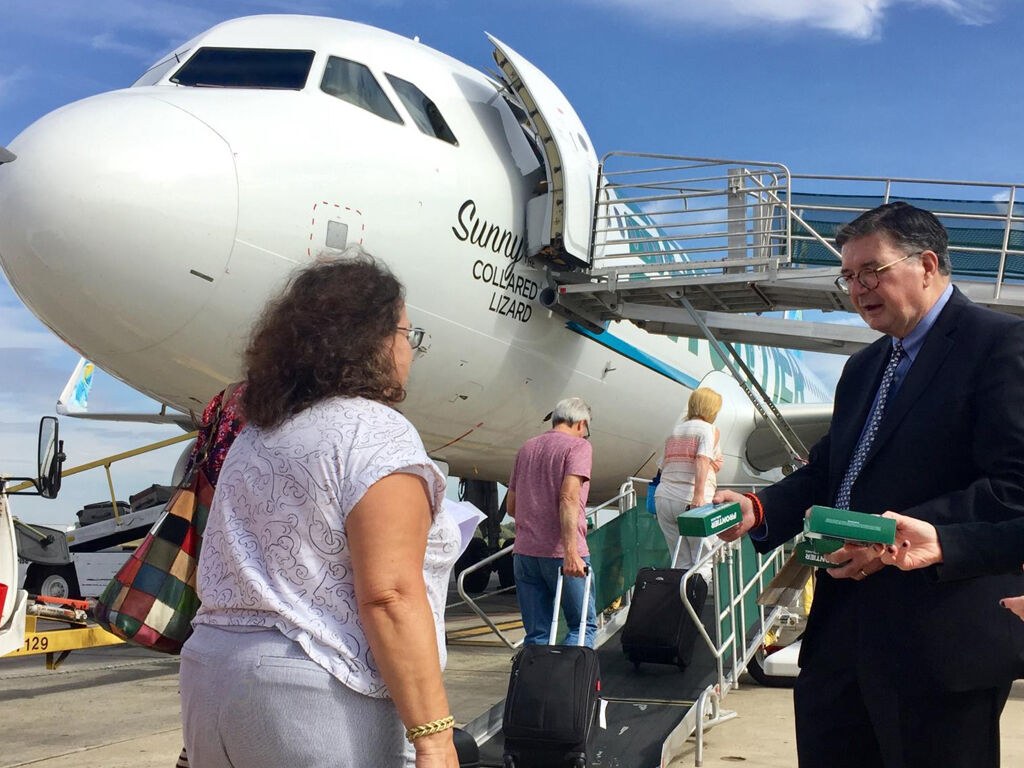
But the reason that the airport is successful is because we were able to negotiate with Frontier Airlines. They started very small, and we were able to convince them to expand — and they didn’t need much convincing, because they were making money out of the airport.
We were able to give them space, taxiway space, gate space, and the things that they needed to expand the number of destinations that they flew to. When they first started there, they just flew to Florida and back. Now they have several airports that they fly to, and I think that made a difference.
CN: Yeah, it’s a significant convenience to them to be able to fly out of somewhere that’s close to home, instead of having to go to one of the big airports like Newark or Philadelphia. I know that significant approvals have been granted, and that the project will be carried through by the Benson Administration, but can you give us an idea of what you think the timeline will be to get shovels in the dirt and see construction started there?
BH: I think we could probably do it within a year or even sooner. There needs to be a parking garage built, there needs to be a new terminal built, a terminal that has checkways—which we don’t have now—that would provide better access for people who are handicapped and who need assistance getting on and off a plane. There are a lot of things that I think could happen very quickly, but that’s going to be up to the next administration.
CN: Based what you’ve seen, once things finally do get started, what are the estimates as to how long it would take to get everything finished?
BH: Because we’ve had this delay from the FAA, we have plans in place and people should go take a look at it (ttnterminal.com/airport-master-plan). There is a design build plan already made, so all it takes is money and the will to do it.
I believe the FAA is in a position now that they are willing and able to assist regional airports. What you say is true about Newark, LeGuardia, JFK and Philadelphia. And the prices to fly out of Philadelphia are extremely high. I think the FAA is ready to assist regional airports more than ever, so you could probably do it sooner rather than later.
CN: In 2021 the Congress and President Biden approved the Bipartisan Infrastructure Law that included money for airport improvements. Do you know if any funds have been earmarked for smaller airports like Trenton?
BH: I don’t have figures to give you right now, but I do believe that money was set aside for smaller regional airports. Now, you hear stories all the time about smaller regional airports in places like Kansas and Arkansas closing down because their federal funding ran out, but I don’t think that’s the case in Trenton. We draw from Monmouth County, Somerset County. Believe it or not, even though we get some noise complaints from Pennsylvania, we get a lot of customers from there as well.
We have signed a contract with Frontier Airlines that is good for another five to seven years. I don’t have it in front of me, but they’re willing to make an investment in Trenton, and we are willing to make an investment in them.
Business and development
CN: What are some things the county has done to help businesses and the economics of the region?
BH: During the pandemic there were a lot of bills that came out to help small businesses. Right now, we have a small business loan agreement with 0% interest payback, and all they have to do is apply to the County of Mercer. I guarantee you that they will be approved if they show a need—and I think most small businesses will show a need (tinyurl.com/mercerloan).
We have made plans through our Department of Economic Development to help businesses—small businesses especially. We developed a special department that is geared towards looking out for African American, Latino and women-owned businesses. That’s up and running and has been providing funding for the last five years.
CN: When it comes to land use, developers want to build whatever they think will make them money at that particular time. Currently the demand is for warehouses, and developers are planning to build warehouses on commercially zoned tracts thought the county. For example, there’s the Bridge Point 8 plan in West Windsor that was approved for 5.5 million square feet of warehouse space. What are your thoughts on the proliferation of warehouse development?
BH: I think the warehouses like the ones in Robbinsville were well placed, because they were less than a mile from an interstate highway, which would take them south to distribution centers down there, north on Route 295, Route 1, and many other places.
I think it’s a mistake, and quite frankly, I’ve told the mayor of West Windsor that it’s a mistake to build all those warehouses on Route 1. It will tie up traffic for years to come. It’s right across from QuakerBridge Mall. Now, I know the mall isn’t used as much as it used to be, but to tie up traffic on that corner on Route 1 — what is that viability right there?
The trucks and traffic going there are going to have a greater impact on Route 1 and other communities more than on West Windsor. They will see the tax benefit from the development, but it’s going to be a burden on the rest of the county, and I don’t really think that’s fair.
Like I said, I’ve given my opinion to the mayor of West Windsor and to council members, and I guess they’re going to do what they want to do. Our planning board has some final decisions to make, but by law our scope is limited to things like water runoff. We’re not able to say, “You can’t build warehouses.”
I wish we were, because I’d say, “You’re not able to go to build a warehouse there.” So that’s it. That’s a disappointment that the next administration is going to have to deal with.
CN: It’s not only West Windsor. I think almost every town has a big warehouse project that it has approved or that they’re looking at approving. Do you have any concern that they’re going to overbuild and then we’ll wind up with a bunch of warehouses that are sitting empty?
BH: I do. Amazon, which is one of the biggest companies in the world, is downsizing their warehouses to make them more efficient. Why some of the towns in this state—and particularly Mercer County—would approve more warehouses is beyond me.
I suppose they want to build warehouses because they don’t want to build houses. And they don’t want to build houses because they don’t want to add kids to the schools. Well, the fact of the matter is that kids are going to keep coming whether you like it or not. And you’re going to have to build schools and pay teachers and buy lunches and do all the things you have to do, but that’s part of growth.
Affordable housing
CN: There’s a new round of affordable housing coming after 2025, and that’s going to force communities to provide for more affordable units whether they want to or not. What is the difference between the way that the county looks at planning as opposed to the way a municipality looks at it?
BH: I think county officials ought to work with municipalities and help them plan. We’ve got a great planning department here in Mercer County, whether it stays together (in the next administration), I don’t know. I hear the next administration appreciates the work of our planning department.
I live in Princeton, and Princeton began planning for their new obligations for housing, I believe, about two years ago, and they made investments where they needed to in new schools, and new structures, and where a new school could go.
Some towns throughout the state have done nothing—it’s not just in Mercer County. They know the beast is out there, but they’re putting off doing significant planning for the day when they are going to be compelled to do more affordable housing. I just don’t see much planning going on.
CN: I think that’s probably the case with most towns. Many are burying their heads in the sand until the time comes. Affordable housing is a great concern because of high housing prices, and a lot of people just can’t afford it, especially younger people. They’re graduating college and they can’t afford a house.
BH: I mean, even the affordable housing is not that affordable. If you’re just coming out of college and maybe you have or you don’t have a college loan, an affordable house at $400,000 or more isn’t that affordable. So, people are going to have to think a lot more about realistically priced apartments that people can afford in the first year or two out of either high school, vocational school or college.
CN: Some towns have approved a lot of apartments in recent years, but they’re what’s being called “luxury apartments,” and they’re not that affordable either.
BH: We could go back all the way to where we started this conversation. Why did I make open space a priority? It’s because it kind of forces the hand of municipalities to realize their obligation to the upcoming generation. If they want taxpayers in their municipalities, they’re going to have to make their municipalities affordable.
Like I said before, I live in Princeton and the affordable housing that they’re building is not that affordable, and I haven’t seen a whole lot of affordable housing being built in Mercer County that’s affordable. So, they’re gonna have to lower the bar a little bit to reach the criteria that the government wants and seeks.
CN: And if they don’t make it affordable enough, the courts are going to step in and force them to do it.
BH: Right. My father was governor, but he was also the chief justice of the State Supreme Court, and there were a lot of decisions he had to make that were unpleasant to a lot of people.
CN: He was he involved in the Mount Laurel decision? (The 1975 case in which the Court outlawed exclusionary zoning and required all towns to provide for their “fair share” of affordable housing units.)
BH: He was very involved in the Mount Laurel decision. He was a Catholic that went to church every single day — even when he was on the road. I remember being at the Democratic National Convention in 1968 in Chicago, which was a wild one. As you remember, that was the one with Abbie Hoffman where all heck broke loose (riots broke out among protesters against the Vietnam War, and there were accusations of police brutality).
I saw my dad at 7:00 in the morning coming back from church. I said, “What are you doing? You were up until 2:30 last night.” And he said, “Well, it’s just something I do.”
And so, he had a lot of hard decisions to make, and I think our Supreme Court is going to have a lot of hard decisions to make in the upcoming years.
Other accomplishments
CN: What are some accomplishments that I haven’t mentioned that you’d like to talk about or some things that you’re particularly proud of?
BH: Just the fact that we were able to keep a cabinet together, for the most part, for close to 20 years. I’m looking at a picture right now, and I think we have 14 people in the picture that started with the administration that are still here. That kind of continuity serves you well.
And the other thing I would say are I’ve been proud of is our MCBOSS (the Mercer County Board of Social Services). We stayed open there every single day of the pandemic to provide welfare checks and food stamps and other services that people need. We never closed down that office one day, and for that, I’m proud.
We took a lot of heat during the pandemic. There were criticisms that we didn’t have enough tests fast enough. We didn’t give enough shots fast enough. We were not made one of the counties that had a super site (locations that received large numbers of vaccinations to server the region) and Burlington was.
Well Burlington goes from the Delaware River to the Atlantic Ocean. I did not really mind them being a super site, and we were able to get up and running. We made the CURE Arena (in Trenton) a place for tests and a place for shots. Also, it was a place in Trenton, which I think was important.
And we were able to continue working in the suburban areas by having a site at the Mercer County Community College in West Windsor. We did as good as we could with the supplies we had— and there were some weeks when we would get six vaccinations. I’m not talking 60, or six boxes. We would get six vaccinations.
It was very tough to tell a town they weren’t getting any vaccinations this week. They asked why not, and we had to tell them that we only got six vaccinations and that’s all. And so, the towns were mad at us. People were mad at us. But I think we did a lot of things right.
We changed our goals very quickly. We worked with the Trenton Health team. We changed all of our TRADE buses, which are made to transport senior citizens to doctor’s appointments. I have to congratulate those people, too, because they worked every day. We changed them from taking people to doctor’s offices to delivering food all over the county to senior citizens. So, there were a couple of things I think we did right. But, you know, it was a difficult time.
CN: Yeah, it was. Once it reached a certain point, though, they really ramped up the number of shots pretty fast.
BH: I’m concerned this winter may bring another mini-pandemic, and the county’s got to be ready for that as well.
Other challenges and final thoughts
CN: Aside from some of the things you mentioned, what were some of the biggest challenges you faced?
BH: Well, I don’t know if you know this or not, but Mercer County has a horse farm on the border of Hopewell and Ewing (Mercer Meadows Equestrian Center). There were a lot of people who wanted us to shut it down. They said, “It’s a waste of money,” or “It doesn’t do the county any good.”
But I knew that children with special needs, children who had never been exposed to any type of animal before would be taken—mostly from Trenton—and be exposed and be able to ride a horse for the first time ever. It made such a fantastic difference in their lives.
If you could just go out there and see the experience that went on and that that goes on—it made a difference to a lot of people. So even though I would get a lot of letters or complaints about keeping that open, I thought it was important.
CN: Mercer County is remained a desirable place to live and for businesses to locate. Why do you feel that that’s the case?
BH: I think it’s because we have open space, because we have trails, because we are good government, and because we have municipal governments, and a county a government that cares about the people who come here and who live here. It’s a wonderful place.
You’ve got Veterans Park in Hamilton, which the county added 86 acres to. You have Mercer County Park, which is an active park—it has ice skating and softball, and we have people, believe it or not, come out and play cricket there. Those folks stay out there all day long. I don’t know if you ever watched cricket—a game takes like six hours.
We have Mercer County Lake. We have a very great passive park in Mercer County Park Northwest. We have golf courses. We have all types of activities that people can enjoy. I think that’s one of the reasons they come here.
CN: There’s also the arena and the baseball stadium.
BH: Well, the arena and the baseball stadium have been disappointments to me, quite frankly.
CN: Why is that?
BH: Well, the arena was built for a skating team that went away. The baseball stadium was built for a baseball team that went away. And while we’re finding alternative uses for them, it’s just not the same as having the revenue. number one, or the excitement and the experience of going to a baseball game or going to a hockey game.
CN: There were a lot of people who were disappointed when the hockey team didn’t work out and when the Yankees pulled the minor league team out of out of Trenton.
BH: I think something that Major League Baseball did. They changed the number of minor league teams from 86 to, I think, 42. Somebody had to go and unfortunately it was us.
CN: Which is surprising, because I far as I have ever seen, it was a successful team. Did it do well there?
BH: It was successful, but I think they didn’t think there were enough after-the-game activities to stay in Trenton. So, they went to Somerset, but I don’t see any activities there either — unless you want to buy a car in Flemington or something. But, that’s how it went. That doesn’t mean we’re going to stop looking for a Minor League team that’s associated with a Major League Baseball team.
CN: Do you have any other thoughts in closing?
BH: You know, let me say — I lost (to Benson) at the convention. At first, I was gonna put up a fight. I was going to run in the primary, but then I thought about the party. I thought about where we needed to go. We should have unity rather than division.
Ever since I made that decision, people call me up and ask if I’m alright and if I’m feeling okay, and frankly, I feel like the Sword of Damocles was taken away from my head. I really feel like I put my time in. I did my 34 years or 36 years and served this state well. Sometimes it’s time to go and sometimes it’s time to stay.
CN: And sometimes it’s good to get a get a fresh start.
BH: Yeah, it really is.

Hughes at overdose Awareness Day in Lawrence in 2021.,