If you look at the street names, landmarks, and parks around Hopewell Township, local history and historical families feature prominently. From Blackwell Road to Woolsey Park, Hopewell Township has always honored its history. However, a key segment has been overlooked for this honor over the many centuries. The contributions of Black residents of the Hopewell Valley have been wide-ranging and historically significant, yet we do not see their mark on the roads and streets around town. With the coming of two new neighborhoods, we have the rare opportunity to correct this.
In coordination with the Stoutsburg Sourland African American Museum, Hopewell Township and Lennar, the developer of our new neighborhoods, will be naming the streets in Hopewell Parc and The Collection at Hopewell after prominent Black residents of the Hopewell Valley throughout history.
The two streets that directly intersect with Scotch Road are Aaron Truehart Way and Cora Bergen Boulevard. Both Aaron Truehart and Cora Bergen were real people with real stories entwined with the history of the Hopewell Valley. Thanks goes to local residents Elaine Buck, Beverly Mills, Catherine Fulmer-Hogan, and Angie Witcher, Cora Bergen’s granddaughter, for allowing us to glimpse into the lives of these important contributors to our history.
Aaron Truehart, Civil War Hero
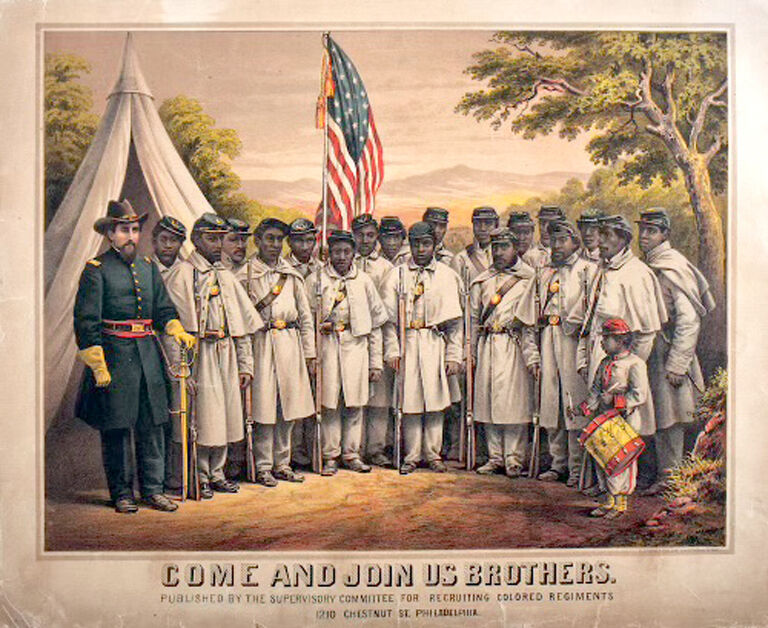
Aaron Truehart was born in 1835 on the Sourland Mountain. During the Civil War, he served in the 127th Regiment of the United States Colored Troops. Trained at Camp William Penn outside Philadelphia, the soldiers of the 127th were among more than 180,000 Black soldiers who fought in the Civil War. The 127th Regiment was at the Appomattox Court House to witness the surrender of Lee’s army to General Grant, which means that Aaron Truehart witnessed this momentous moment of victory in the Civil War. Further, he was discharged in 1865 in Brazos Santiago, Texas, so he was present in Texas for Juneteenth, when the final enslaved people in the United States were freed.
Aaron returned home after the war and spent the rest of his life as a farmer on the Sourland Mountain, raising his family along with his wife Catherine Amanda Peterson. He died in 1910 and is buried in the Stoutsburg Cemetery. His grandfather, Friday Truehart, is honored by a Witness Stone at the Old School Baptist Church in Hopewell Borough. Friday came to this region as a 13-year-old enslaved boy, but his grandson Aaron was a free man who witnessed both the surrender of the confederacy and the final enforcement of the emancipation proclamation on Juneteenth.
Cora Bergen, Matriarch and Community Champion
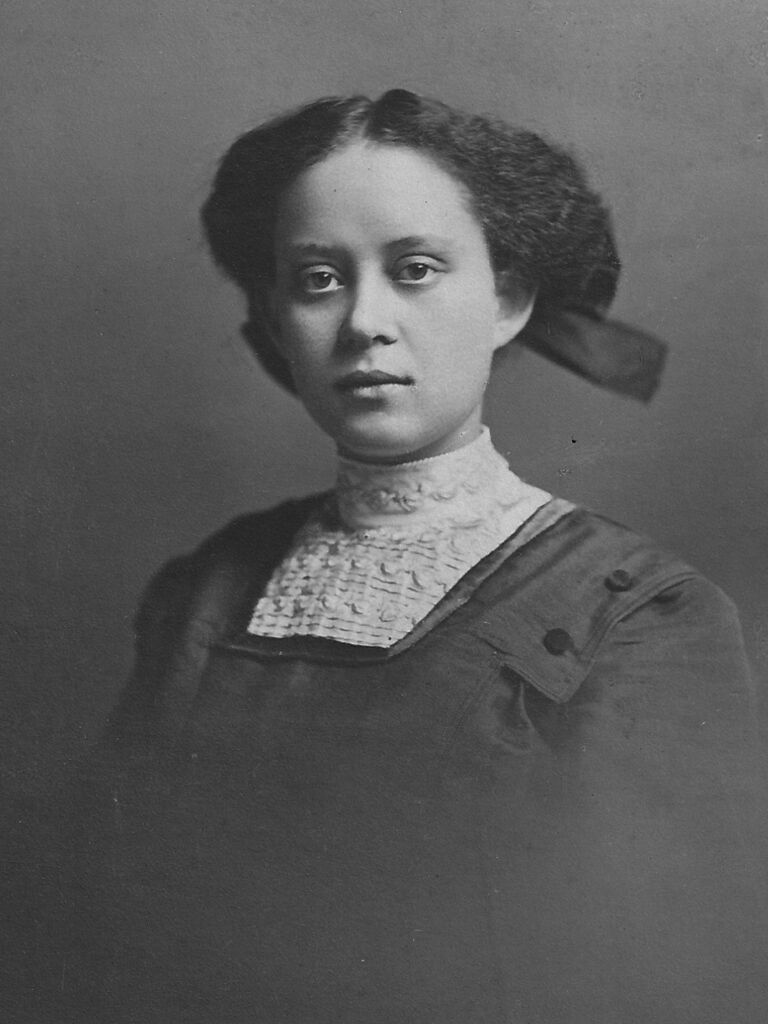
Cora Bergen’s life was representative of many women of her era. Most were described as housewives, but without any real description of what that entailed and the substantial influence that they had in their communities. Cora’s mother, Minnie Butterfield, came to Hopewell from New England, where she married Cora’s father, John Bergen. Unusual for the time, Cora’s parents were both married and interracial. As a young woman, Cora married Elmer Levi Nevius of Hopewell.
Together they raised seven children who went on to make important contributions to their families, neighborhoods, churches, and nation. Throughout her life, Cora worked out of her home conducting domestic and business affairs in support of her family. She is remembered as being soft spoken and always had a basket of clothes for mending. Cora died in 1948 and is buried in the Highland Cemetery in Hopewell. The house where she was born still stands on the Hopewell-Wertsville Road in the Sourland Mountains.
Courtney Peters-Manning is the mayor of Hopewell Township, which provided this content.
Cora Bergen.,