A centennial is more than a milestone; it is a testament to the adaptability and ingenuity needed to survive in a changing world.
For Adath Israel Congregation, founded on October 15, 1923, in Trenton, its 100th anniversary year has been an opportunity to delve into the synagogue’s history, to honor its strengths, and to develop new approaches to ensure a thriving future. The congregation, located in Lawrence Township also serves Ewing and a number of its members are from that community.
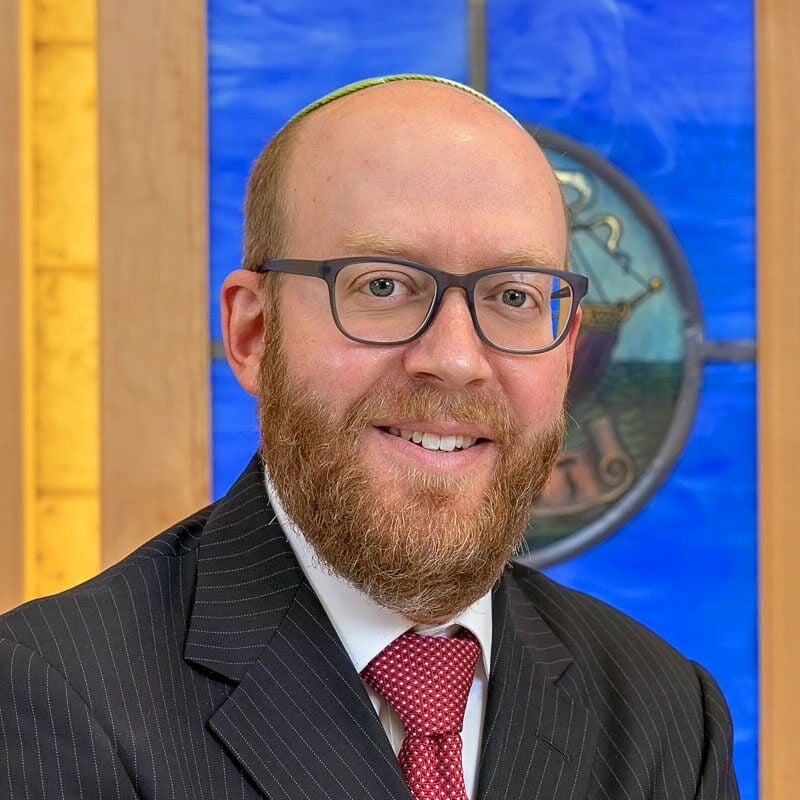
Rabbi Benjamin Adler, celebrating his 10-year anniversary at Adath, used his 2022 Rosh Hashanah sermon to prepare his congregation for its hundredth anniversary, using history to shed light on present challenges and future opportunities.
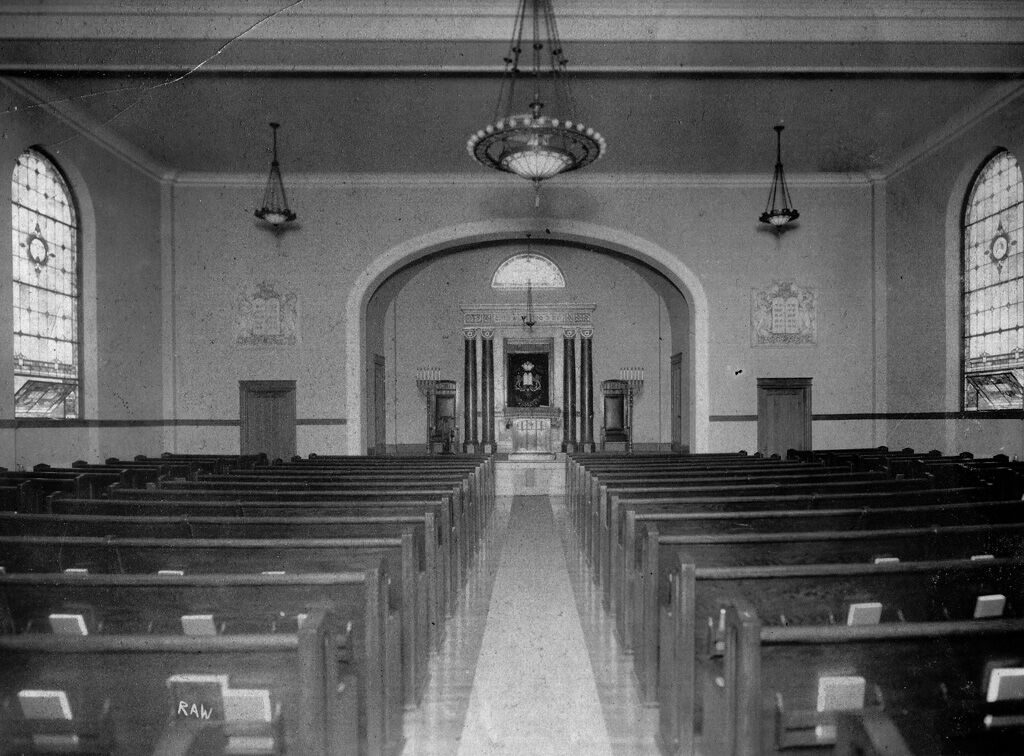
The congregation laid the cornerstone for its first building, at 715 Bellevue Avenue in Trenton, designed by Louis Kaplan, the architect of the Trenton War Memorial. The building was sold on January 1, 1989.
Jews in 1920s Trenton worried about Jewish survival into the next generation, despite their thriving religious and secular Jewish community: with delis, bakeries, kosher butchers, synagogues, funeral homes.
The 1920s, Adler says in his 2022 sermon, were a time of “deep anxiety for American Jews.” The explosion of Jewish immigration to the United States in the preceding 40 years meant that “many were looking for ways to create a new life and were not interested in Judaism. … Jews wanted to be American.”
Evidence of the anxiety of Trenton Jews appears in a November 2, 1920, letter in the Adath Israel archives that proposes a meeting to discuss creation of a Conservative synagogue in Trenton.
This letter sounds like it could have been written today. Signed by 18 concerned Jews, it asks a series of questions including: Do you not feel deep concern over the fact that Judaism is declining in your community? Are you not chagrined when, on Yom Kippur, more young Jews are in the theatres than in the synagogues?
For the letter’s writers, the solution to their angst is a Conservative synagogue. Adath Israel’s founders, Adler says, “felt that the answer to the problem of Jewish apathy and rapid assimilation was a modern, contemporary synagogue that would appeal to Jews of Trenton in the 1920s.” They were looking to create “an intermediate synagogue,” between the highly observant Orthodox and the far less traditional Reform synagogues, where, for example, men and women could sit together, and prayers would be in both Hebrew and English.
Just as these 1920s Jews resolved their problems with “a new [Conservative] synagogue that would pray in a different way,” Adler suggests that the 2022 Adath needed self-renewal and increased relevance.
To do so, Adath Israel has instituted changes a number of changes over the last few years.
For the year leading up to Adath Israel’s hundredth anniversary, Friday night services based on the synagogue’s history, two decades at a time, reflected timely music and snacks as well as sermons based on material from the synagogue’s archives that “focused on the struggles and triumphs of the community for those decades; what was going on in the world and how did that affect Adath; and what we can learn because today we are going through struggles similar to theirs,” Adler says.
Another change has been a monthly, more intimate service in the round featuring young musicians who are teaching the congregation new melodies and, Adler says, “working with us to build a sustainable model so that we can evolve our services ourselves even when [they are] not here.”
Because many people today are reluctant to affiliate with institutions like synagogues or social clubs, Adath Israel has also created MOSAIC, a center for arts, culture, and ideas, with a twofold purpose. One, Adler says, is “to reach out to people who are not necessarily interested in membership,” including both Jews and non-Jews. The center also encompasses another role of a synagogue, beyond religious school and worship services. “It is a place to learn and grow as adults,” Adler says.
Some new programs focus specifically on “finding multiple avenues for young families to be part of the Jewish community,” Adler says. The poster for two new biweekly educational programs this fall for children 0 to 2 and 2 to 4 ½ years olds promises: “Your children will learn to love being Jewish through music, art, cooking, puppet shows, and food.”
The synagogue is also trying to make it financially easy for young families to join, with half-cost memberships for the first two years. In addition, children of all members pay no tuition to attend religious school.
The synagogue has also changed organically over time under the influence of different rabbinical leaders and changing needs.
Although a condition of the synagogue’s formation was that men and women would sit together during services, its first full-time rabbi, Samuel Rosenblatt (the son of the cantor who played himself in “The Jazz Singer”), did not approve of men and women sitting together during services and left after one year.
In 1951, Ruth Sugarman, whose father was the synagogue president, wanted to have a bat mitzvah. The rabbi, trained in Orthodoxy, studied the issue and could not come up with an objection. As a result, the synagogue became egalitarian, and women celebrated bat mitzvahs and were counted as members of a minyan, the quorum of Jewish adults required for certain religious obligations.
After more than 60 years at Adath’s building in Trenton, in 1986, the synagogue made the decision to move out of Trenton and purchased the Lawrenceville property. Despite the sadness of leaving its longtime home, Ruth Sugarman, now chair of the development committee, said in an article in “The Times of Trenton”: “It has to happen. The congregation has to go where the people are.”
The synagogue suffered an antisemitic incident early on. A sign that announced its move to the Lawrenceville property with the heading, “Future Home of Adath Israel Congregation,” was defaced with Nazi graffiti. But the other Lawrenceville religious institutions quickly stepped in and added their own sign next to the original one: “The Religious Communities of Lawrence welcome our new neighbor.”
In 1988 Rabbi Daniel T. Grossman, who served for 25 years before Adler’s arrival, became Adath Israel’s rabbi, bringing with him a commitment to inclusion for special needs children and access for people with disabilities. He guided the design of the new, barrier-free synagogue building in Lawrenceville. The sanctuary of the one-story building includes a ramp to the bima (prayer platform) and special cradles that allow someone in a wheelchair to take out the Torah scroll. “Our tradition is that everyone uses the ramp, not just the people who need it,” Adler says, adding that Grossman was able to use American sign language during services.
Responding to special needs — whether learning issues, behavioral challenges, or developmental disabilities — continues to be a hallmark of the Adath religious school. “We’ve always been a place for kids who didn’t fit into other religious schools,” Adler says.
Inclusiveness at Adath also comprises welcoming of new congregants, as it did with the March 2010 merger with Ahavath Israel synagogue of Ewing. Part of the official welcoming campaign, called Beit Echad (One House), was a musical celebration where members of Ahavath Israel walked into the Adath Israel sanctuary under a huppa, like a bride being brought to her groom.
One additional step toward increasing inclusivity has been a change in by-laws to allow non-Jews to become members. This change brought another one, still in process, where Adath has designated a part of its Fountain Lawn Cemetery section for interfaith burials — not traditionally allowed in a Jewish cemetery.
Adler grew up in a Conservative synagogue in San Antonio, Texas, but it was Camp Ramah in California that, he says, was “the transformative part of my Jewish journey.”
“I loved being in this very intense Jewish environment where we were praying every morning, saying the blessing after meals, Jewish learning, and singing — all that was really energizing for me,” Adler says.
In 1997 Adler graduated from Columbia University and started working in the programming department of B’nai Jeshurun in New York City, which describes itself as “a non-affiliated, egalitarian, inclusive synagogue community focused on the power of prayer and music, rooted in love and social justice.”
Having grown up in a synagogue where musical instruments were not part of prayer services, he says, “It was my first time with not just instruments, but a band and really beautiful music that was so different than what I was used to — the experience of being at Shabbat services where there are thousands of people and everyone is singing and dancing. And afterwards, the scene on the steps outside, hundreds of young people talking, shmoozing, and meeting people.”
He met his wife, Lisa, at B’nai Jeshurun, where she was teaching religious school and also attending services. They married in 2000 and have three children: Ronen, 21, is studying economics at the University of Michigan; Jonah, 19, started at Yeshivah University this fall. Miya, 15, is in tenth grade at Lawrence High School. Lisa, a social worker, is now chief development officer for the Center for Modern Aging in Princeton. She worked previously at the Jewish Family and Children’s Service of Greater Mercer County and for the Jewish Federation in the Heart of New Jersey.
As Adler worked at Adath Jeshurun on adult education, the weekly newsletter, and other administrative tasks, he soaked in its very contemporary approach to synagogue life.
At the same time he was contemplating becoming a rabbi. But before committing to a career as a Jewish professional, Adler investigated the “for profit” world and worked for two internet companies in New York during the dot com bubble.
“It was an interesting and exciting time to be in that industry, but it wasn’t very fulfilling for me,” he says. So he decided to pursue the rabbinate and was ordained by the Jewish Theological Seminary in 2007.
Adler’s first congregation was the White Meadow Temple in Rockaway, New Jersey, in Morris County, which he describes as an “interesting and quite beautiful community on a lake,” yet “somewhat isolated.” But after seven years he was looking for a change: “I wanted a place with a little bit more opportunity to grow my own rabbinate and to try new things. Adath, being much more of a regional synagogue, pulling from different communities in different towns, in Pennsylvania and New Jersey, has been a wonderful place for the last 10 years.”
That also goes for Bernice Abramovich, the congregation’s first woman president. If you include her extended family, affiliation with Adath Israel covers an entire century. Her great uncle, Harry Siegel, was active at the synagogue’s founding. When her parents married, “they wanted an egalitarian synagogue where they could all sit together, so it seemed logical to come to Adath,” Abramovich says. Then she and her husband joined 45 years ago when their oldest son was starting kindergarten.
Growing up in Trenton, Abramovich remembers a tight Jewish community. “All of our friends went to the Hebrew school; we would all walk from Junior 3 to the synagogue and stop on the way at the delis on Hermitage Avenue,” she recalls. “We all lived close together. On holidays, the synagogue was an extension of our celebrations.”
For Adler, looking back on his decade at Adath, he highlights the importance of his connection with the congregation’s children and particularly being there at their bar and bat mitzvahs. “I’ve seen them grow up from being babies to young adults. It’s special for me. I’ve taught them in religious school. I see them at the bus stop to the JCC [Jewish Community Center] camp. I see them in the rest of town. It’s fun; it’s one of the great things about being a rabbi.”
Adath Israel Congregation, 1958 Lawrenceville Road, Lawrenceville. 609-896-4977 or adathisraelnj.org.
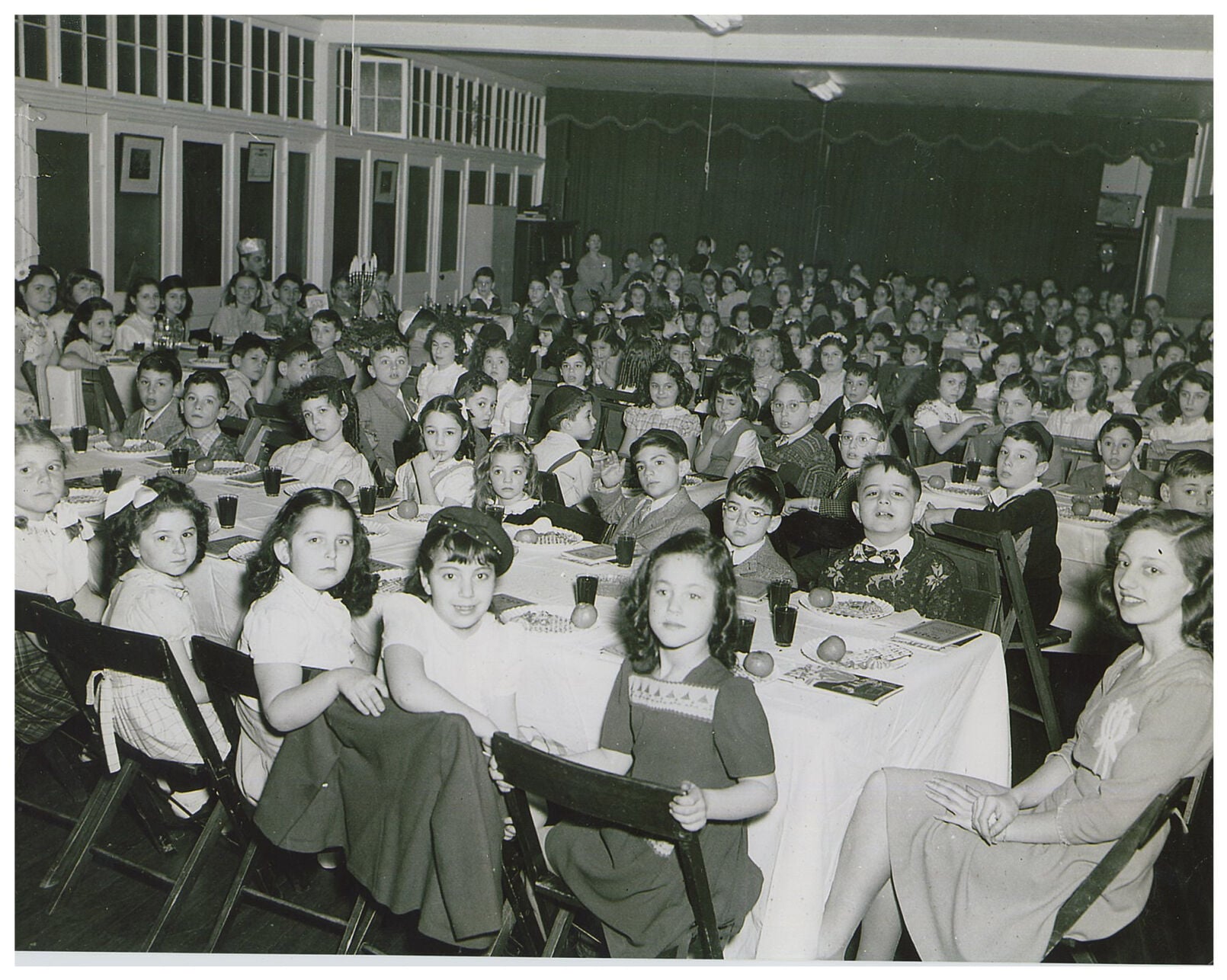
An image from the archives shows a 1946 Passover seder at Adath Israel's Trenton synagogue.,