Update 1/3/2025: Mercer County Superior Court Judge Robert Lougy on Thursday denied a request by a group of towns seeking to pause implementation of the state’s new affordable housing law and its deadlines.
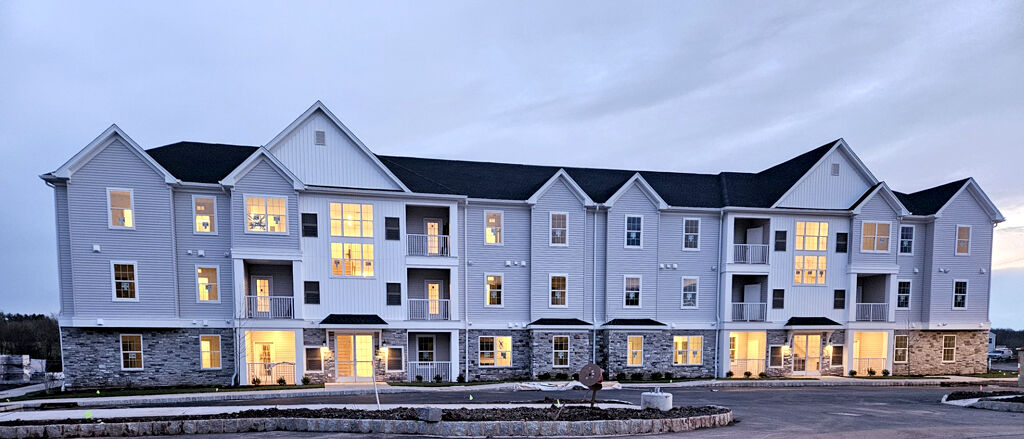
New Jersey municipalities are once again under the gun to build thousands of units of affordable housing thanks to a new state law passed earlier this year.
Every town in the state is currently up against a Jan. 31 deadline to pass a binding resolution to formally adopt their affordable housing obligation for the next decade. The goal is to address a statewide demand for almost 150,000 low- and moderate-income units.
In addition to the resolution, the law also requires municipalities to adopt a Housing Element and Fair Share Plan by June 30 this year.
Under numbers released by the state earlier this year, Mercer County towns would be required to rehabilitate a total of 1,800 existing affordable units (mostly in the City of Trenton) as well as provide for the construction of 3,500 new units.
Because the construction of these affordable units is often subsidized through the construction of market rate housing, it could result in tens of thousands of new houses in Mercer County alone.
In March, Gov. Phil Murphy and the state legislature approved new affordable housing legislation outlining new processes for determining and enforcing municipalities’ constitutional responsibility to provide affordable housing withing its borders.
“At this critical juncture in New Jersey, with soaring housing prices and limited housing stock, this legislation is essential,” said state Senate Majority Leader Teresa Ruiz, a primary sponsor of the bill.
She added: “Furthermore, by streamlining the process for municipalities with clear guidance and deadlines, we aim to make fulfilling affordable housing obligations less daunting while effectively addressing the state’s affordable housing shortage.”
As required by the new law, the N.J. Department of Community Affairs released new affordable housing calculations for each municipality in October. The calculations outline the affordable housing needs for the period between 2025-2035.
Advocates for the provision of more affordable housing in the state have praised the legislation.
“This new law ensures that New Jersey will have one of the strongest frameworks in the U.S. to require affordable homes in historically exclusionary communities,” said Adam Gordon, executive director of the Fair Share Housing Center.
“This will help tear down the walls that have denied too many in our state access to opportunity and create new affordable homes near jobs, schools and transportation,” he said.
Opponents, meanwhile, argue that the new law puts an unfair burden on municipalities without providing other necessary land use planning tools to provide for construction of the units.
A number of towns have filed lawsuits seeking to invalidate or modify the requirements, and many believe the process is overly complex. The towns argue that the calculations of their housing needs are too high and do not consider local conditions, such as zoning limitations or land capacity.
Mercer County Superior Court Judge Robert T. Lougy heard arguments on Dec. 20 from Montvale and almost 30 other towns seeking a stay of the deadlines as the case progresses. To date, no town in Mercer County has joined the lawsuit. The judge has said he will issue a decision at the beginning of January on the motion.
“The growing number of municipalities joining this lawsuit highlights the deep frustration with Trenton’s unrealistic fourth round affordable housing mandates,” said Montvale Mayor Mike Ghassali, who is leading a bipartisan coalition called “Local Leaders for Responsible Planning”
“Our coalition will continue to grow as we fight back against a broken system that imposes quotas requiring high density housing instead of thoughtful, community-driven solutions that support affordable housing,” Ghassali said.
Gordon responded to the litigation challenging the new law.
“The lawsuit will inevitably get thrown out in court,” he said. “It’s purely a smokescreen to undermine and delay the implementation of [the new law]. This lawsuit is nothing new—it’s supported by many of the same ultra-wealthy communities who have fought affordable housing for decades, every step of the way.”
The history of N.J. affordable housing
State officials said the new law was necessary to address ongoing challenges in fulfilling municipalities’ obligations to provide affordable housing under the state’s Mount Laurel doctrine and Fair Housing Act.
The Mount Laurel doctrine, which was established through a series of state Supreme Court rulings over multiple decades, requires municipalities to provide their “fair share” of affordable housing to low- and moderate-income residents.
Problems arose, though, over the years as the process of determining and enforcing these obligations faced legal battles, delays and inconsistencies.
The previous system, overseen by the state Council on Affordable Housing, struggled with inefficiency, frequent litigation and a lack of clear standards — leading to a backlog of unmet housing needs.
In 2015, the state Supreme Court transferred oversight of affordable housing obligations to the courts due to COAH’s dysfunction.
The state purpose of the law was to create a standardized framework, streamlining the calculation of housing needs and making municipalities more accountable for meeting their obligations.
By outlining a clear methodology for determining “present” and “prospective” housing needs and introducing specific criteria for identifying deficient housing, the law aims to resolve the confusion and delays that previously hindered the construction of affordable housing.
Under the new law, the N.J. Department of Community Affairs was made responsible for calculating both regional housing needs and individual municipal obligations for affordable housing under the latest “round” of requirements.
Rounds of affordable housing obligations refer to different periods during which municipalities’ responsibilities to provide affordable housing under the Mount Laurel doctrine were calculated and enforced.
The first round (1987–1993) began after the creation of COAH in 1985 under the Fair Housing Act, which was the state’s first attempt to legislate the Supreme Court’s Mount Laurel decisions. It was COAH’s job to manage compliance with the Mount Laurel rulings.
COAH developed formulas to calculate each municipality’s obligation based on factors like population growth, housing needs and economic conditions.
The second round (1993–1999) extended the framework from the first round and added additional obligations for towns to address affordable housing.
The second round used similar formulas to the first, but it also refined the process for compliance. Towns could meet their obligations through various means, such as zoning for affordable housing, building units, or participating in regional contribution agreements (RCAs), where one municipality could transfer a portion of its housing obligation to another municipality.
The third round (2004–2015) was intended to cover the period from 2004 to 2018 but faced significant legal challenges and delays. COAH initially proposed new rules for the third round in 2004, but the rules were met with lawsuits, which led to years of legal challenges and confusion.
The third round introduced a new “growth share” model, which tied municipalities’ affordable housing obligations to their growth in both residential and non-residential development. Towns would have to provide affordable housing based on their rate of development.
The growth share approach was challenged in court, and in 2010, the N.J. Appellate Division ruled that the model was unconstitutional. This led to further delays, and in 2015, the state Supreme Court ruled that COAH had become dysfunctional.
The court eventually transferred oversight of affordable housing back to the judicial system, allowing municipalities to work through the courts to meet their obligations rather than through COAH.
The fourth round (2025–2035) was designed to address the shortcomings of the third round.
The new law focuses on ensuring that municipalities meet their affordable housing obligations and tasks the DCA with assessing the present and prospective needs of low- and moderate-income households across the state. This will be done using specific formulas outlined in the law to project fourth round housing needs.
Present and prospective need
The first step in this process was determining the “present need,” which is defined as the number of “substandard” housing units currently occupied by low- and moderate-income households.
The new affordable housing law defines deficient units as those that are overcrowded, over 50 years old, or lacking complete kitchen or plumbing facilities.
The following are the numbers determined by DCA in the Central New Jersey area:
In Region 3, which includes Hunterdon, Middlesex and Somerset counites, the present need is 7,073 units.
In Region 4, which includes Mercer, Monmouth, and Ocean counties, the DCA has determined that there are currently 6,721 housing units that meet the definition of present need.
In Region 5, which includes Burlington, Camden and Gloucester counties, the present need was calculated to be 5,927 units.
In order to meet present need, towns will need to create rehabilitation programs to help renovate and preserve existing affordable housing units. One way to do this, for example, would be to offer grants or low-interest loans to homeowners or landlords to improve substandard units.
The second, and in most towns, larger piece of the affordable housing puzzle is the prospective need obligation — the number of housing units needed to provide for low- and moderate-income residents over the next 10 years.
The state DCA calculated the number based on projections of population change, employment growth, economic trends and development potential in the state’s six housing regions.
Population change was estimated by comparing 2010 and 2020 Census data. If household growth was positive, it was divided by 2.5 to estimate the need for affordable housing.
The breakdown was:
Region 1 (Bergen, Hudson, Passaic, Sussex), 27,743 units;Region 2 (Essex, Morris, Union, Warren), 20,506;Region 3 (Hunterdon, Middlesex, Somerset), 11,604;Region 4 (Mercer, Monmouth, Ocean), 13,822;Region 5 (Burlington, Camden, Gloucester), 9,134; andRegion 6,(Atlantic, Cape May, Cumberland, Salem), 1,889.
Nonresidential property values, income levels and land availability were calculated using data from local property assessments, census income figures, and land use maps. They were combined to assign each municipality its housing obligation.
The regional prospective need was distributed to municipalities based on their economic resources and land capacity, with adjustments to ensure fairness.
The following are the requirements for area towns released by the DCA in October based on the above criteria:
East Windsor Township’s present need is 166 units, and its prospective need is 368 units.Ewing Township’s present need is 99 units, and its prospective need is 319 units.Hamilton Township must provide for the second highest number of new units in Mercer County under the new numbers released by DCA (West Windsor is highest). Its present need is 186 units, and its prospective need is 546 units.Hightstown Borough’s present need is 47 units, and its prospective need is 35 units.Hopewell Borough’s present need is 0 units, and its prospective need is 39 units.Hopewell Township must provide for the third highest number of new units in Mercer County under the new numbers released by DCA (West Windsor is highest and Hamilton is second). Its present need is 8 units, and its prospective need is 543 units.Lawrence Township present need is 68 units, and its prospective need is 320 unitsPennington Borough present need is 4 units, and its prospective need is 58 units.Princeton’s present need is 60 units, and its prospective need is 276 units.Robbinsville Township’s present need is 40 units, and its prospective need is 336 units.Trenton’s present need is 1,084 units, and its prospective need is zero units.West Windsor Township must provide for the highest number of new units in Mercer County under the new numbers released by DCA. The township’s present need is 61 units, and its prospective need is 661 units.Plainsboro Township’s present need is 53 units, and its prospective need is 309 units.Bordentown City’s present need is zero units, and its prospective need is 28 units.Bordentown Township’s present need is 95 units, and prospective need is 159 units.
Municipalities are now required to create plans to meet these needs through zoning changes, building projects, or other measures, often in cooperation with developers or nonprofit housing organizations.
The law contains provisions outlining how municipalities may receive “bonus credits” that allows units of affordable housing to be credited as 1.5 or 2 units in certain circumstances. It allows towns to satisfy up to 25% of their housing obligation through these incentives.
They include housing for individuals with special needs, partnerships with non-profit developers, transit-adjacent housing, large units with at least three bedrooms, housing exceeding very low-income thresholds, and projects on previously developed land.
Who qualifies?
Eligibility for low- and moderate-income affordable housing is based on household income relative to the area’s median income, adjusted for household size. The U.S. Department of Housing and Urban Development defines income limits for very low, low, and moderate-income households.
Very low-income households can earn up to 30% of the median income, low-income households up to 50%, and moderate-income households earn up to 80%. These income limits vary by county and household size.
For example, in the Mercer County region, the 2024 income limits for very low-income households are $44,100 for one person, $50,400 for two, $56,700 for three, and $62,950 for four.
Low-income households have limits ranging from $68,500 for one person to $129,100 for eight. Moderate-income limits range from $109,600 for one person to $210,000 for eight.
Each town offers a variety of affordable housing, including for-sale and rental units; senior communities; housing for people with disabilities and special needs; and group homes. More information can be found online at nj.gov/dca/codes/publications/guide.shtml
According to the Department of Community Affairs website:
Bordentown Township offers 214 affordable housing units at three sites, and Bordentown City has 185 units in two places. For more information on the Township’s affordable housing program, call (609)-298-2800, or go to bordentowntownship.com. For the City, call (609) 298-0604 , or go to cityofbordentown.com.
Ewing Township offers 498 units of affordable housing at 21 sites. For more information on the municipality’s affordable housing program and how to apply, call (609) 786-1100, ext. 301 or go online to ewingnj.org/departments/community-affairs.
Hamilton Township offers 1,051 units of affordable housing at 21 sites. For more information on the municipality’s affordable housing program and how to apply, call (609) 890-3675 or go to hamiltonnj.com/Housing.
Hopewell Township offers 424 units of affordable housing at 10 sites. For more information on the municipality’s affordable housing program and how to apply, call (609) 924-3822, ext. 2 or go to hopewelltwp.org/150/Affordable-Housing.
Lawrence Township offers 1,163 units of affordable housing at 27 sites. For more information on the municipality’s affordable housing program and how to apply, call (609) 844-7005 or go to lawrencetwp.com/departments/AffordableHousingBoard.
Said Lawrence Township Municipal Manager Kevin Nerwinski regarding the new law: “The township intends to continue its longstanding commitment to meet our affordable housing obligations as determined by the State of New Jersey. Though some residents in our community oppose residential development in all forms, the obligation to meet this critical need is legal and moral.”
Pennington Borough offers 229 units of affordable housing at four sites. For more information go to penningtonboro.org or call (609) 737-0276.
Princeton offers 1,332 units of affordable housing at 38 sites. For more information on the municipality’s affordable housing program and how to apply, call (609) 688-2029 or go to princetonnj.gov/173/Affordable-Housing.
The City of Trenton offers 6,501 units of affordable housing. For more information on the municipality’s affordable housing program and how to apply, call (609) 278-5000 or go to tha-nj.org.
Robbinsville Township offers 308 units of affordable housing in 12 places in town. For more information on the municipality’s affordable housing program and how to apply, call (609) 259-3600, ext. 1134, or go to robbinsville-twp.org/departments/affordable_housing.
West Windsor Township offers a total of 699 units of affordable housing at 19 sites. For more information about the municipality’s affordable housing program and how to apply, call (609) 799-2400, or go online to westwindsornj.org/departments/affordable-housing.
Plainsboro Township offers a total of 329 units of affordable housing in eight sites. For more information about the township’s affordable housing, go to plainsboronj.com/150/Affordable-Housing-Opportunitiesor call (609) 786-1100m ext. 301 or (609) 656-4205.
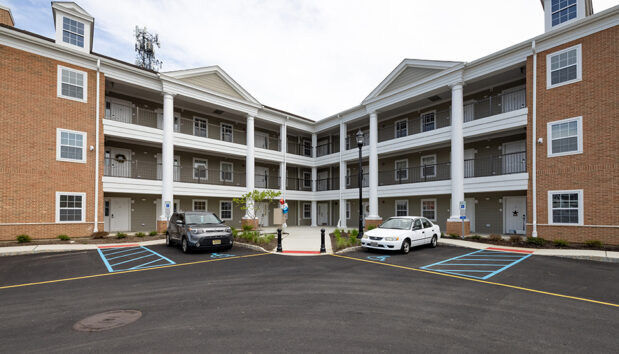
Project Freedom in Robbinsville, which provides housing for individuals with disabilities, is one example of affordable housing that qualifies the state's requirements.,