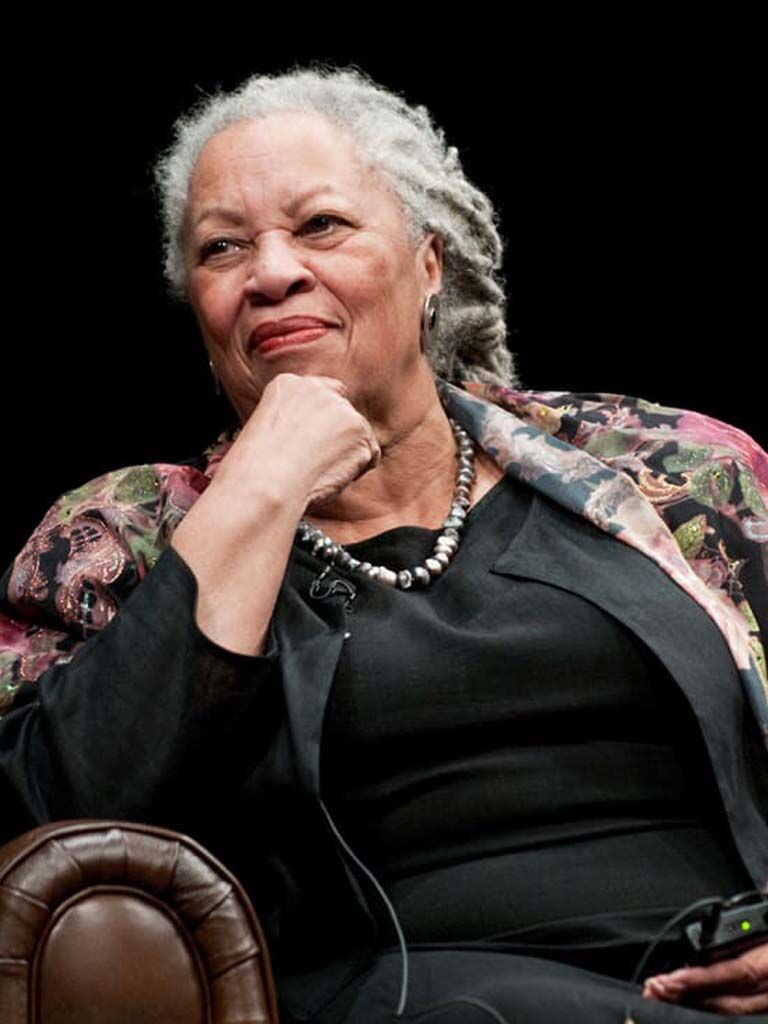
Author Toni Morrison is a literary icon who left an indelible mark on the world of writing and, in her time as a professor at Princeton University, donated a number of her papers to the library’s permanent special collections. Nearly a decade after the initial acquisition, more of Morrison’s archival materials are turning the page with a series of events and a new exhibition.
“Toni Morrison: Sites of Memory,” which will run from February 22 to June 4 in the Ellen and Leonard Milberg Gallery of Firestone Library, serves as an “anchor” for other programming in coordination with commissions and content from the McCarter Theatre, Princeton University Concerts, the Princeton University Art Museum’s Art@Bainbridge gallery, and more.
While information on the public tours is still to come, “Sites of Memory” will be open to the public from Monday through Friday, 10 a.m. to 6 p.m., and then on Saturday and Sunday, from noon to 6 p.m.
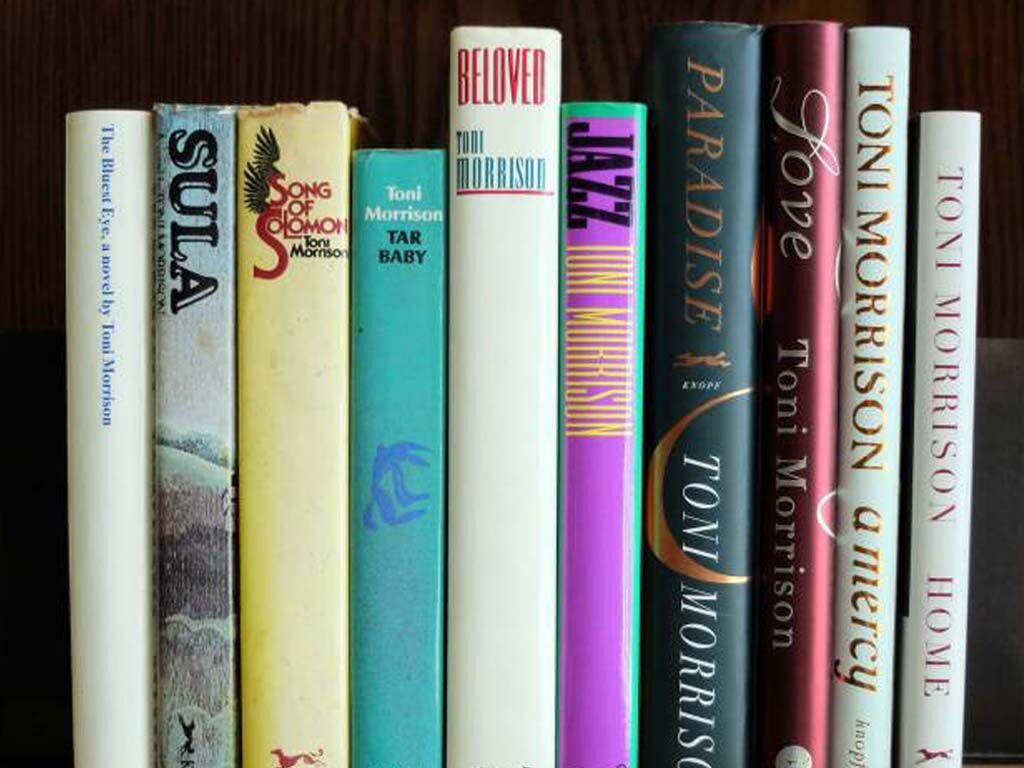
Starting with her first novel, “The Bluest Eye,” in 1970, Morrison enraptured audiences with works prominently featuring Black women and girls, prioritizing their experiences through the lens of a decisively feminist view. In addition to being known for fiction, she also authored several nonfiction and children’s books, the latter of which she co-wrote with her son, Slade.
Morrison grew to be a notable public speaker, essayist, and occasional playwright. Her many accolades, which include receiving the 1988 Pulitzer Prize in fiction for “Beloved,” arguably one of her most famous works; the 2012 Presidential Medal of Freedom from President Obama; and the 1993 Nobel Prize in literature — which she was the first African American woman to win — are rightfully celebrated.
The figure at the center of “Sites of Memory,” who started teaching in Princeton University’s creative writing program starting in 1989, shifted from her designation as the Robert F. Goheen Professor in the Humanities to emeritus status in 2006.
During those 17 years, Morrison would be a transformative force in the fields of performing arts and African American studies. Curator Autumn Womack, an assistant professor of English and African American studies at Princeton, has been part of efforts to marry knowledge of Morrison’s popular contributions with many of those that had never been shown to the public prior to this.
“There is not a corner of Princeton University, Black creative life, and cultural production that Toni Morrison has not impacted,” Womack said in a PUL press release from January 24. “This initiative, we hope, will begin to bring to the surface new aspects of that wide impact.”
Morrison was born Chloe Ardelia Wofford in 1931 in Lorain, Ohio, and adopted the nickname “Toni” after converting to Catholicism. She would get her bachelor’s in English from Howard University and a master’s in American literature from Cornell University, teaching at various institutions but spending about 16 years as an editor for Penguin Random House, the first female Black editor in Penguin Random House history, according to the publisher.
Morrison and her colleague Nell Painter were also “the first female African American faculty and among the first of any women to teach at Princeton,” as is explained on the university’s page for the Department of African American Studies.
Morrison founded the Princeton Atelier in 1994, a seminar program that pairs students with artists to workshop projects together. In recognition of her impact, the AAS major has moved to its new home in the aptly named Morrison Hall.
“The Bluest Eye” was followed by “Sula” (1973), “Song of Solomon” (1977), and “Tar Baby” (1981), while the concept for “Beloved” came from a newspaper clipping Morrison found about the real-life case of Margaret Garner. Garner, an enslaved woman, had attempted to escape from a plantation with her family when they were about to be apprehended.
Garner killed her youngest daughter to prevent her from growing up in the conditions from which the group tried to flee. The book, which drew from elements of the true story, was made into a 1998 film adaptation starring Oprah Winfrey. Morrison also wrote the libretto, or text, of the 2005 opera “Margaret Garner.”
Morrison’s other works, “Jazz” (1992), “Paradise” (1998), “Love” (2003), “A Mercy” (2008), “Home “(2012), and “God Help the Child” (2015), tackle family conflict, war, racism, abuse, and other topics interwoven with Morrison’s distinct writing style.
In their biography of Morrison, the editors of Encyclopaedia Britannica state that “the central theme of Morrison’s novels is the Black American experience; in an unjust society, her characters struggle to find themselves and their cultural identity. Her use of fantasy, her sinuous poetic style, and her rich interweaving of the mythic gave her stories great strength and texture.”
Morrison bequeathed some of her papers to Princeton University’s Permanent Library Collections in 2014; two years after the acquisition, these resources were made open to the public. The author and Nobel laureate died at the age of 88 on August 5, 2019.
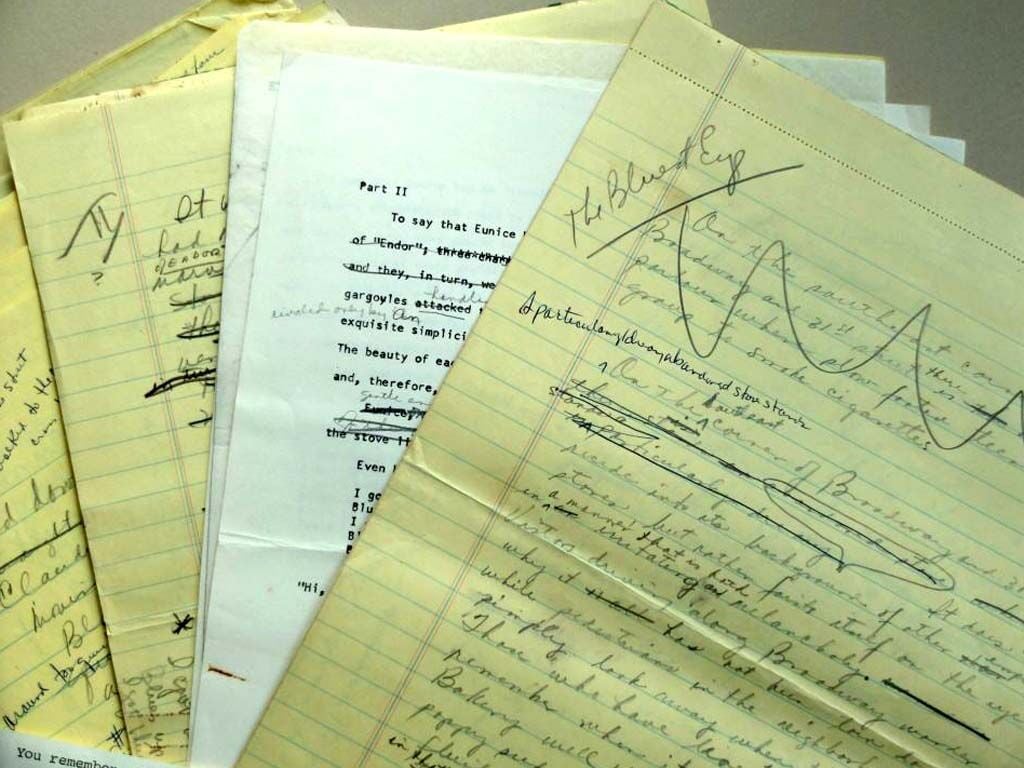
According to the PUL, the “Toni Morrison Papers” are about “200 linear feet of research materials, manuscript drafts, correspondence, photographs, and other ephemera” that span the years 1908 to 2017, but primarily from 1970 to 2015, according to the online finding guide.
Womack has worked with a group to examine about 400 boxes from Morrison’s collection and credited help from Jennifer Garcon, a librarian for modern and contemporary special collections, Rene Boatman, a technical administrative assistant for the library of special collections, and English department graduate students Kierra Duncan and Andrew Schlager.
The title of the exhibit comes from Morrison’s speech, “The Site of Memory,” which appeared in the 1995 publication “Inventing the Truth: The Art and Craft of Memoir.” It will feature 100 original archival items that have been divided into six categories: “Beginnings”; “Writing Time”; “Thereness-ness,” a section of Morrison’s rare architectural drawings and maps; “Wonderings and Wanderings”; “Genealogies of Black Feminism,” detailing the movement through the 1960s and ’70s via letters between Morrison and other Black women; and “Speculative Futures,” a focus on the author’s “unfinished projects and unrealized possibilities that only live in the collection,” according to the PUL.
Additional files for the exhibit draw from Morrison’s time as an author, editor, academic, and instructor, while her research materials, galley copies, outlines, and proofs show the creative process behind how this literary figure built her best books. After taking extensive notes on yellow legal notepads or in the margins of day planners, marking her thoughts, Morrison was able to transform these handwritten musings into beloved bestsellers.
Another item of note, Garner’s newspaper account, accompanies an image from photographer James Van Der Zee’s 1978 book, “The Harlem Book of the Dead,” which inspired “Jazz.”
The programming to expect, in order of date, is as follows:
PUL’s “They’ve Got Game: The Children’s Books of Toni & Slade Morrison,” Cotsen Children’s Library, with additional family programming to come, February 22 to June 4.Princeton University Art Museum’s “Cycle of Creativity: Alison Saar and the Toni Morrison Papers,” Art @Bainbridge, February 25 to July 9.“Sites of Memory: Practice, Performance, Perception” symposium, March 23 to 25.McCarter Theatre’s commissions from performance artists Daniel Alexander Jones and Mame Diarra Samantha Speis, March 24 and 25, 8 p.m.Princeton University Concerts’ commission from Cécile McLorin Salvant, Richardson Auditorium in Alexander Hall, April 12.Toni Morrison spring 2023 lecture series with scholar Farrah Jasmine Griffith, a friend of Morrison.Future undergraduate courses centered on the author’s work.
Womack added in the PUL release that “in imagining this initiative — from exhibition to symposium to partner projects — I wanted to show the importance of the archive to understanding Morrison’s work and practice. But I also wanted to show how this archive in particular is a site that opens up new lines of inquiry and inspires new kinds of collaboration.”
Library materials continue that in Saar’s “Cycle of Creativity,” the mixed-media artist “pairs writings and other notes from the writer’s archive with sculptures, prints, and textiles by Saar to explore their joint dedication to voicing the spiritual practices, artistic techniques, and historical truths of the many cultures that inform Black American experience.”
According to the description on the Art@Bainbridge website, Saar has identified three themes that she shares with Morrison, “musicality, labor, and ancestry,” as common threads to weave into her productions.
Jones and Speis, through their own reflections on Morrison’s influence, will communicate how her work can be translated “beyond the field of literature” for McCarter Theatre. Tickets for their two shows will go on sale sometime in February.
Salvant is a MacArthur Fellow and three-time Grammy Award-winning jazz vocalist whose two shows, the first of which is already sold out as of press time, feature the composer and singer’s vocals with Sullivan Fortner on piano.
The three-day symposium is funded through a grant from the Humanities Council Magic Project and organized by Womack and Kinohi Nishikawa, an associate professor of English and African American Studies. Throughout the program, more than 30 scholars, writers, and artists will explore the archive together with the hope of engaging in nuanced, intellectual discussions about the significance and applications of Morrison’s creative practices.
This way, the symposium website states, the programming “emphasizes how the Morrison Papers [are] very much a living archive — a site of collaboration, innovation, and experimentation.”
PUL’s exhibition of English literature, “In the Company of Good Books: Shakespeare to Morrison,” features four centuries of content and is expected to open in the fall. Morrison’s “previously unseen work” will be keeping Shakespeare’s first folio company.
The combination is fitting because while Morrison’s first play, “Dreaming Emmett,” is about the 1955 murder of Black teenager Emmett Till by two white men in the Jim Crow-era South, her second, “Desdemona,” is a musical reimagination of Shakespeare’s tragedy “Othello” from the perspective of the character’s ill-fated and oft-forgotten wife.
Besides her ongoing appreciation at Princeton events, Morrison will be featured in a commemorative stamp by the United States Postal Service. She has already left an international imprint, opening dialogues through her characterizations that celebrate Black life in America, especially the experiences of women, and by sharing her perspectives in her writings and with the world.
Of the published lines that would become bound in books, each of them inflected with captivating wisdom, there is a likely origin lurking somewhere in Morrison’s papers. Upon their emergence from the margins at the end of February, the words of Toni Morrison will go on display in a comprehensive collection about the author, whose influence has undeniably shaped Princeton.
More information: library.princeton.edu.
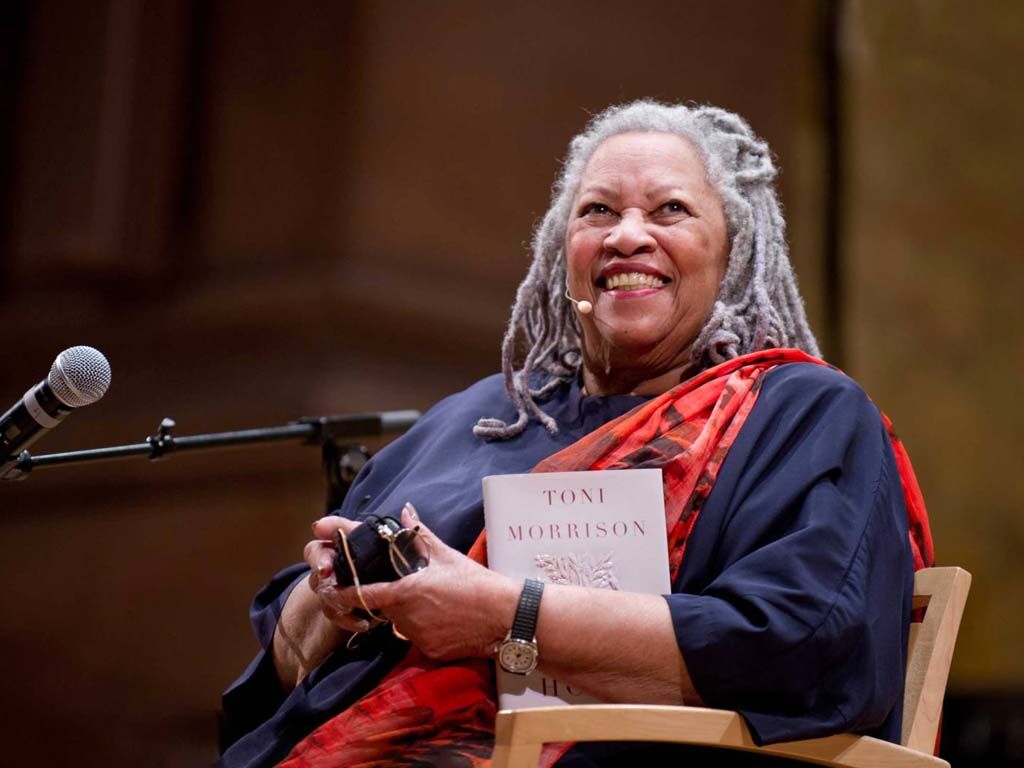
The late Nobel and Pulitzer Prize-winning author and Princeton faculty member Toni Morrison is being celebrated with a series of exhibits, lectures, and other events at Princeton University. (Photo by Sameer A. Khan/Fotobuddy),

'The Bluest Eye' handwritten manuscript page and other Morrison papers that are part of the Special Collections at Princeton University Library.,