Flag Day on June 14 may mark the date that America adopted the iconic stars and stripes as we now know them in 1777, but it also recognizes the formation of the U.S. Army.
As the two occasions align in this annual patriotic pattern, stitch the imagery of independence with the country’s earliest branch of the armed forces and charge forward to visit these military museums across the region.
Editor’s Note: This month’s Six09 is composed largely of sections from stories that ran in previous issues of U.S. 1, Community News Service’s Princeton metro area paper, on various dates (see the end of the article for details). The content has been updated accordingly for both currency and clarity.
The National Guard Militia Museum of New Jersey at Lawrenceville
The original National Guard Militia Museum of New Jersey is based in Sea Girt, but the secondary site at the Lawrenceville Field Artillery Annex, located on the New Jersey Army National Guard complex, uses its own military weapons, uniforms, photographs, documents, and interpretative texts to chronicle the state’s history of service from the early settlements through the present day.
It also claims to possess one of the largest collections of New Jersey-related Civil War research material in the country, including copies of diaries, letters, newspaper clippings, memoirs, regimental histories, and articles—all while paying attention to the diverse experiences of the New Jersey citizen soldier.
The NJ Militia Museum’s website recommends that visitors come prepared with a valid form of identification, such as a driver’s license, and enter the National Guard complex through Gate #3. After checking in with the security guard at the booth, follow directions to the parking lot and take note of the outdoor exhibits of historic tanks and large-caliber guns on display.
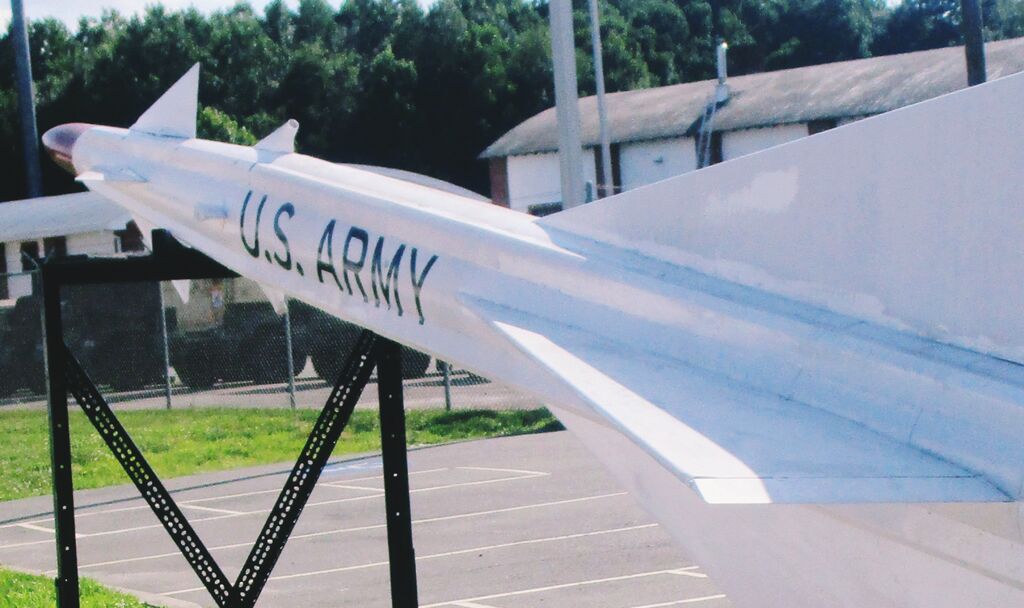
In a Facebook post, the NGMM of NJ referred to the Nike Ajax missiles, co-designed by Bell Laboratories, as “the world’s first guided, surface-to-air missile system.”
The museum offers docent-led tours and educational programming in its mission to conserve and convey the nuances of the armed forces in New Jersey, an extensive legacy enriched by displays in galleries that span “over 350 years” of state history on the subject, according to its website.
The NGMM of NJ launched its Mercer County sister location at the Lawrenceville Armory in 1998. Thanks to about $1.2 million in federal and state funding, the museum expanded with new buildings and reopened in October 2021.
The approximately 6,000-square-foot facility now has “display space to better complement the impressive collection of armored vehicles and artillery surrounding the complex,” according to the online history page for the museum.
In Dan Aubrey’s November 2021 interview with William Kale, the volunteer co-curator of the Lawrenceville Museum, he said that the second site was chosen as part of a larger desire to highlight the important New Jersey Revolutionary War battle sites in Trenton and Princeton.
Kale, a retired lieutenant colonel who was born and raised in Trenton, worked for the state upon his return from being stationed in countries like Germany and Vietnam before stepping into similar curatorial shoes as his brother, the late Army Colonel Donald W. Kale, who helped found the Lawrenceville museum.
In the piece, Aubrey walked with Kale through the museum’s attractions:
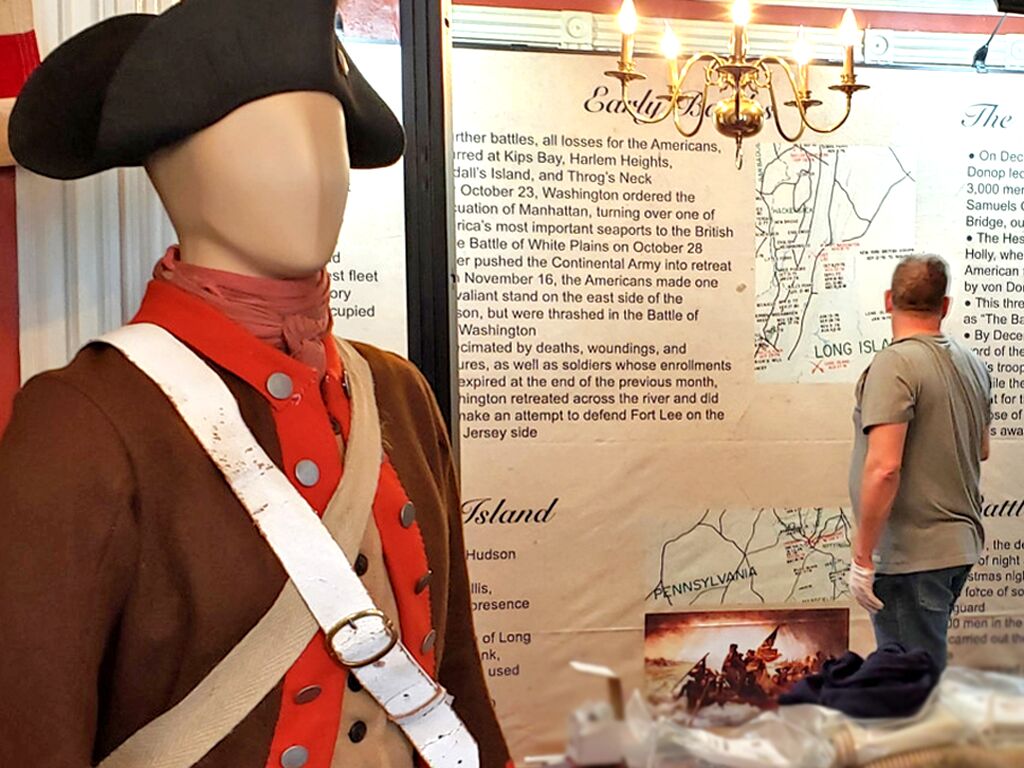
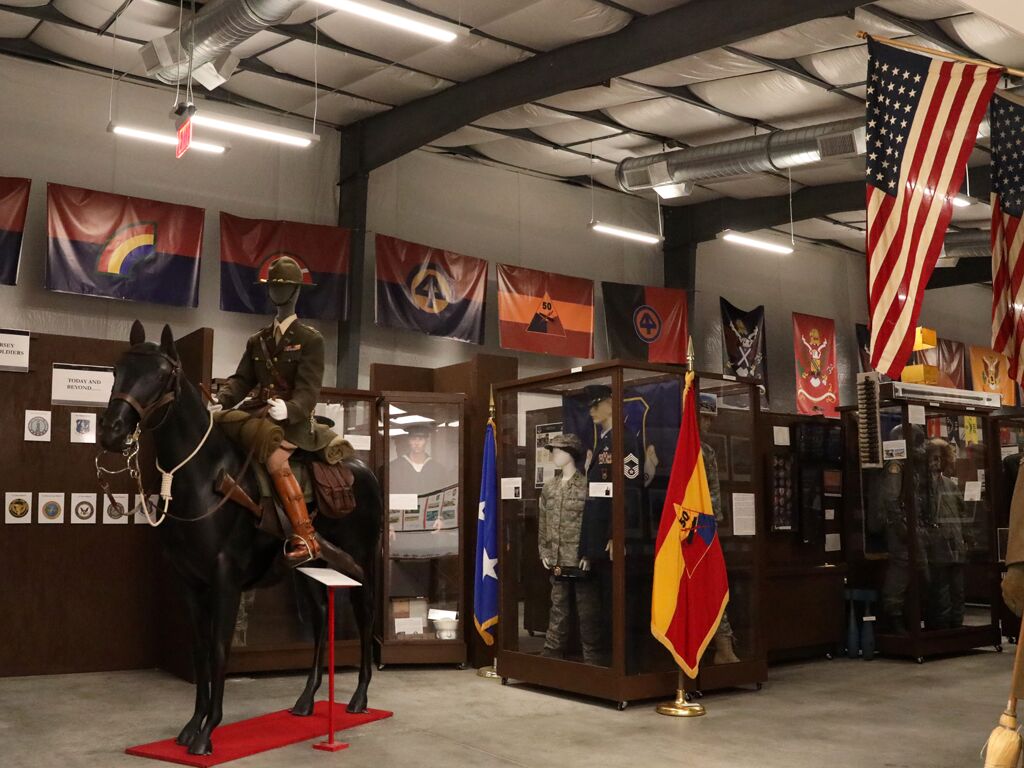
A mannequin in a “Jersey Blue” uniform worn by soldiers from the first militia regiment, which was established by provincial legislators in 1673, kicked off the tour with an immediate state connection. The blue coat and red facings remained unchanged until the early stages of the American Revolution.
In 1779, General George Washington established uniform regulations that required the facings to be buff-colored.
While the Third New Jersey Regiment refused to give up the red, other state regiments did and created an alleged connection to today’s New Jersey: “The color of the flag adopted by the newly independent state of New Jersey was supposedly patterned after the buff facing of New Jersey’s soldiers in Washington’s army,” the museum noted.
Quickly, visitors learn that there were two uniforms used by New Jersey Revolutionary War soldiers. One was the French-made uniform consisting of a blue coat with “white trim on the hat [that] depicts infantry and the white brocade [that] symbolizes the alliance with France.”
The other was the Colonial Rifleman’s uniform of flax, cotton, wool, and a rifleman’s hat. They also adopted the practice of wearing moccasins for comfort and, since riflemen often served as skirmishers and had to move quickly, mobility.
After a brief stop at the Whiskey Rebellion, when the New Jersey Militia organized 4,000 men to form three infantry and two cavalry regiments as part of a four-state militia force to address a Western Pennsylvania insurrection against the federal tax on whiskey in 1794, the next section transitions into materials on the Civil War.
For additional context supplemented by Aubrey’s 2022 Memorial Day article on the Civil War legacies of the region, the Lawrence National Guard Militia Museum stated that New Jersey provided more than 88,000 men to the Union cause—some 10,000 over its quota—who participated in 37 infantry regiments, three cavalry regiments, five artillery batteries, and several independent militia companies. These units fought in both the Eastern and Western theaters of operations and were involved in almost every major battle.
Another text also cited the contributions of Black soldiers, noting that while a state census from the time listed some 4,866 African American men between the ages of 18 and 45, approximately 3,000 served in the Union Army and Navy.
The exhibit expands on the influence of several Civil War military leaders, such as Major General George B. McClellan, who later became Governor of New Jersey, and features a map of Trenton’s Civil War camps, such as Camp Olden and the Trenton Barracks, as well as Trenton Grand Army of the Republic memorabilia.
The following stop, Aubrey continued, focuses on the 1898 Spanish-American War, where “the declaration of war with Spain found the New Jersey National Guard ready and eager to meet the call for troops.”
Then 20th and 21st-century conflicts take over a major section of the exhibition area with objects from World Wars I and II and the Vietnam War, which yielded the last U.S. military weapons on display at the museum.
While “war trophy” weapons from the Gulf War are on display, current military weapons are not, Kale added.
Director-curator Staff Sergeant Andrew Walker confirmed in a quote that what Kale cited as one of the museum’s most unusual objects, “an Up-Armored Humvee door where the window ‘caught’ an RPG in Iraq between 2004 and 2005,” brings home the danger of war by showing the crater of the impact—as well as the technology that enabled soldiers to survive.
But these messages of endurance are just as palpable when crossing over to storytelling, as the NGMM of NJ oversees the Center for U.S. War Veterans’ Oral Histories in partnership with the Library of Congress Veterans History Project, which has recorded interviews with over 600 veterans across varying campaigns and arms of service.
The National Guard Militia Museum of New Jersey at Lawrenceville, Lawrenceville Armory, 151 Eggert Crossing Road, Lawrenceville. Free admission and parking. Hours: Monday to Friday, 9 a.m. to 3 p.m.; Saturday, 10 a.m. to 3 p.m. Closed on state holidays. (609) 213-3296 or njmilitiamuseum.org/lawrenceville.
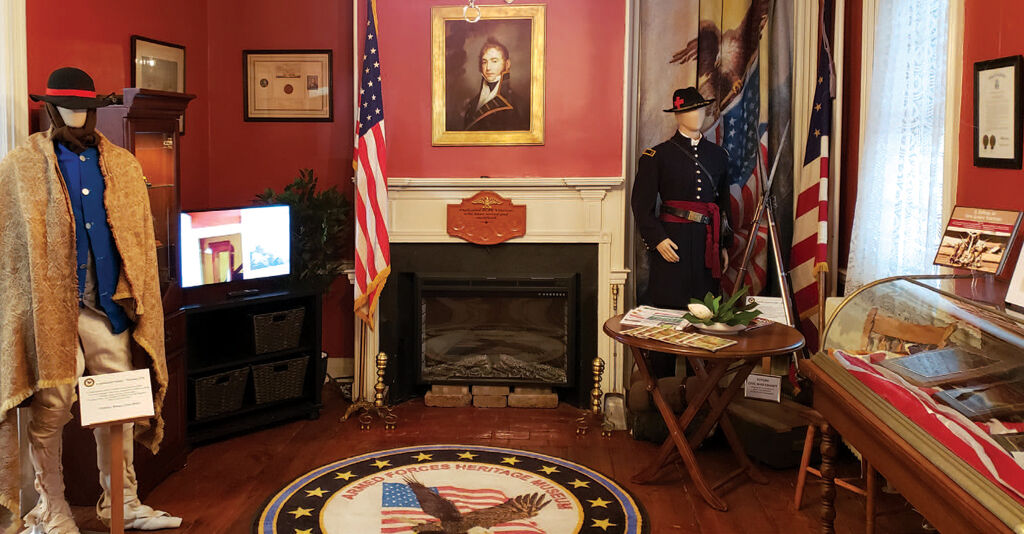
Armed Forces Heritage Museum
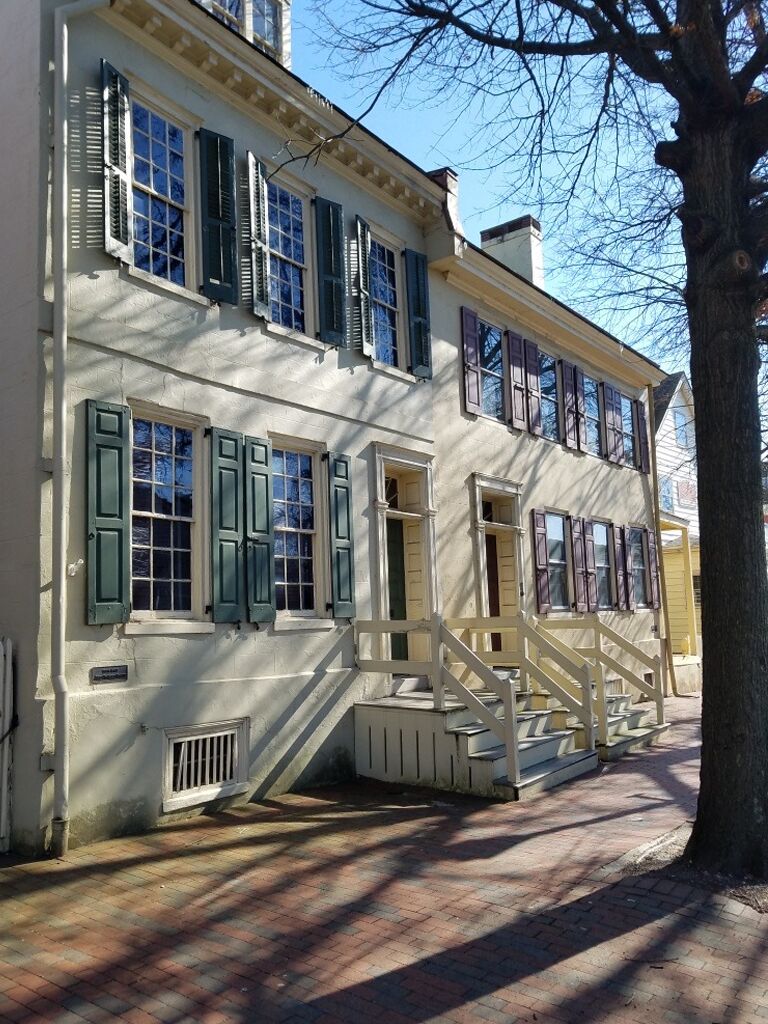
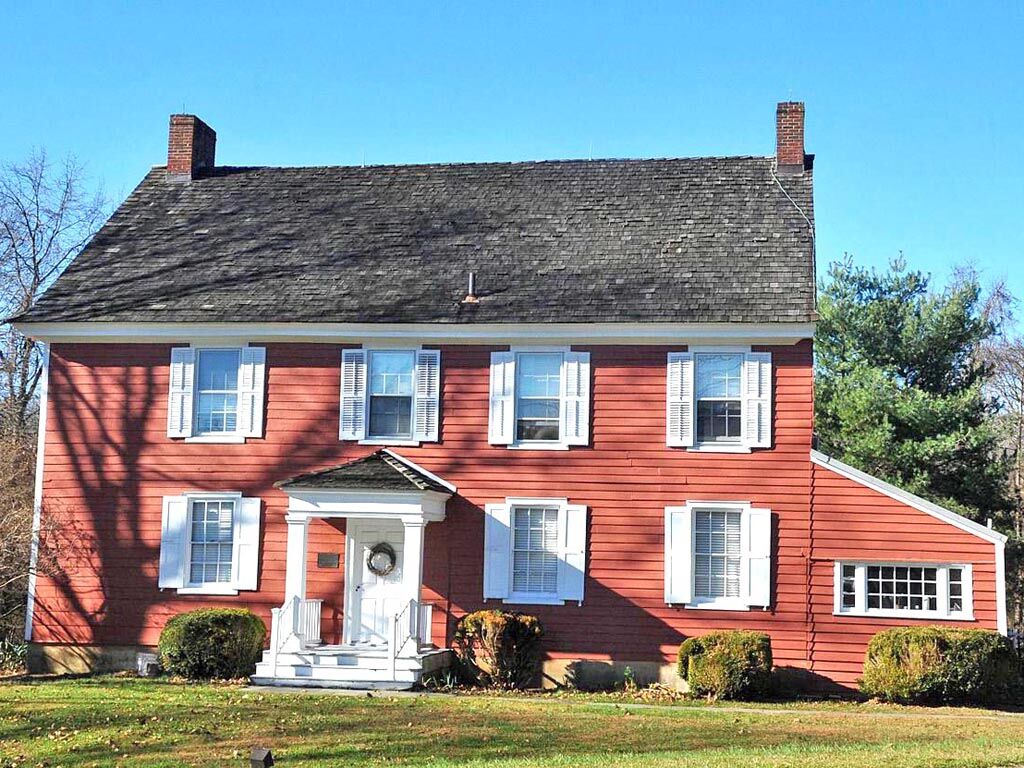
The Armed Forces Heritage Museum is headquartered at the Captain James Lawrence House, a state-owned building on the campus of the Burlington County Historical Society that was once the family home of the naval officer who lent his name to Lawrence Township.
As commander of the USS Chesapeake during its capture during the War of 1812, Lawrence is said to have issued a fierce battle cry of “Don’t give up the ship!” as his last words, which became a rallying message that lived on centuries after he perished in the attack.
That quote shares a similar inspiration for AFHM Executive Director Roy Plummer, who persevered in the decade-long process of opening the museum.
His concept originated back in 2010 as a brick-and-mortar educational center at Joint Base McGuire-Dix-Lakehurst, which Plummer noted in “Welcome to the Armed Forces Heritage Museum,” from this year’s February 22 issue of U.S. 1.
After reconfiguring the format, the volunteer, nonprofit organization toured across Burlington County with a 32-foot mobile unit instead.
The Burlington County Historical Society campus comprises several historical buildings in Burlington City and previously hosted several of AFHM’s “Living History” lectures with veterans, so the groups built on this relationship to establish the physical AFHM museum at the Lawrence House.
Now with both permanent and rotating exhibits, Plummer continued, the organization plans for new additions like the “Immersive Experience Room,” which “will allow visitors to have an interactive, audiovisual journey into an aspect of our nation’s rich military history.”
To take a brief tour of the 1740s-era house online, visit the AFHM YouTube channel at youtube.com/@afhmus5700.
The Armed Forces Heritage Museum, Captain James Lawrence House, 459 High Street, Burlington. Free. Open Saturdays from 11 a.m. to 4 p.m. afhmus.org.
The Clarke House
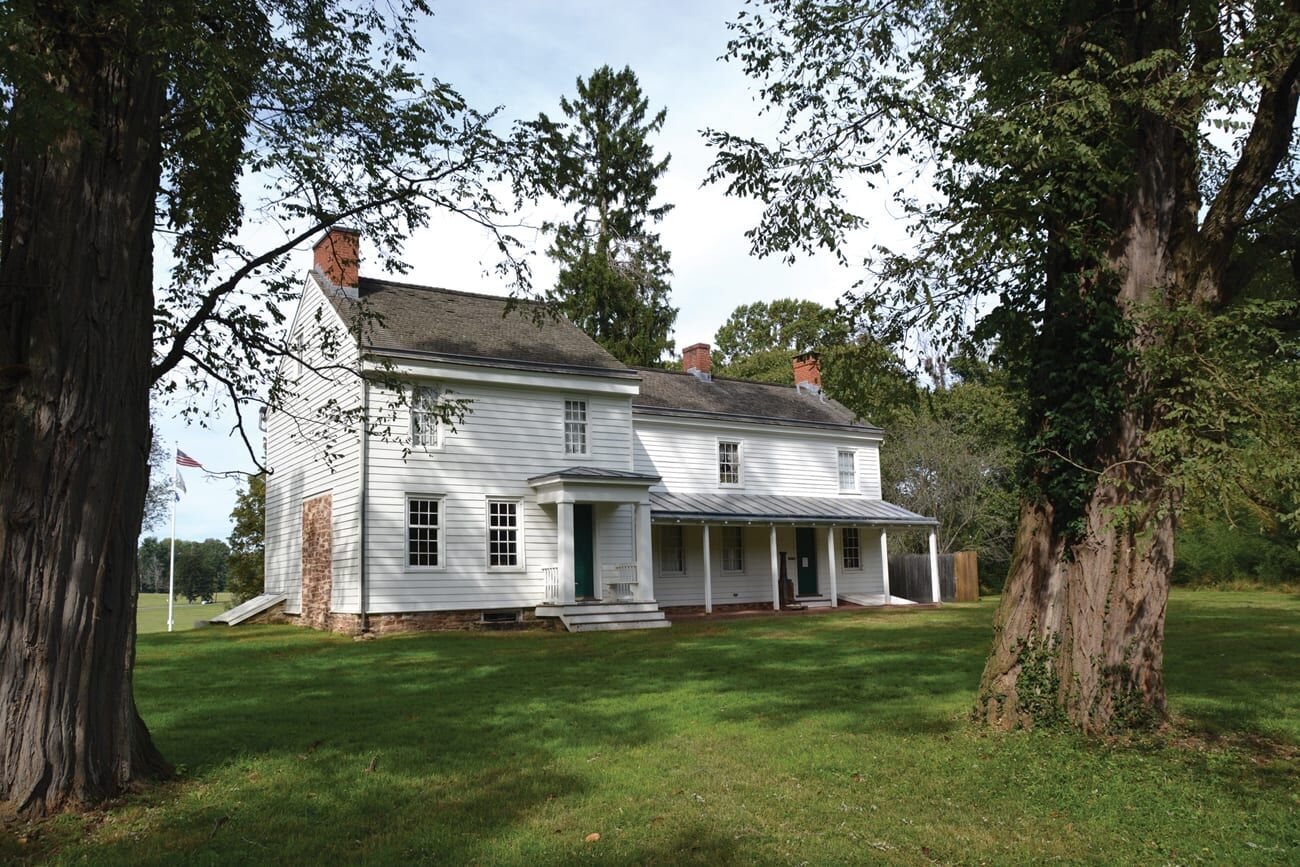
The Clarke House at Princeton Battlefield State Park, built by Quaker farmer Thomas Clarke in 1772 on a vast acreage of farmland, is the sole surviving building from the Revolutionary War era and played a key role on the front lines of the Battle of Princeton.
According to the Princeton Battlefield Society website, when the Clarke family converted their farmhouse residence into a field hospital in the aftermath of the battle, they tended to injured men from both sides of the conflict. Although the Americans had secured a victory at the site, Continental Army General Hugh Mercer ultimately died from his combat wounds, with Mercer County later named in his honor.
Today, the Clarke House serves as a museum that features Revolutionary War exhibits and artifacts. Visitors are encouraged to walk around the battlefield and view the colonnade memorial by Thomas Ustick Walter, who served as the fourth architect of the United States Capitol.
The Thomas Clarke House, Princeton Battlefield State Park, 500 Mercer Road, Princeton. Free admission. Program fees may apply. Wednesday to Friday tours by appointment only. Hours: Saturdays from 10 a.m. to noon, then 1 p.m. to 4 p.m.; Sundays from 1 p.m. to 4 p.m. 609-921-0074 or pbs1777.org.
Benjamin Temple House
The Benjamin Temple House at Drake Farm Park in Ewing was built circa 1750, taking its name from an early area settler and prosperous farmer. Temple was the friend, as well as the brother-in-law, of Declaration of Independence signer and Hopewell resident John Hart.
While the Temple family maintained and modified the Georgian-style house at the border of Ewing and Hopewell for 150 years, records show that the house was eventually sold in 1903 to Patrick Ryan, whose family operated a dairy there for the next half century at its spot along Pennington Road.
The Ewing Township Historical Preservation Society now operates out of the structure, which was moved and saved from demolition alongside its now-owner, Ewing Township, during the construction of Interstate 95 in the early 1970s.
From its relocated spot at Federal City Road on 26 acres of parklands, the landmark, sometimes referred to as the Old Ryan Farm or the Temple-Ryan Farmhouse, is active as a museum and a central hub for Ewing history.
Benjamin Temple House, 27 Federal City Road, Ewing Township. Free. Hours: Wednesdays from 10:00 a.m. to 2 p.m.; open house tours held on the first Sunday of every month from 2 p.m. to 4 p.m.; all other times are by appointment only with the site manager. 609-883-2455 or info@ethps.org.
Washington Crossing State Park
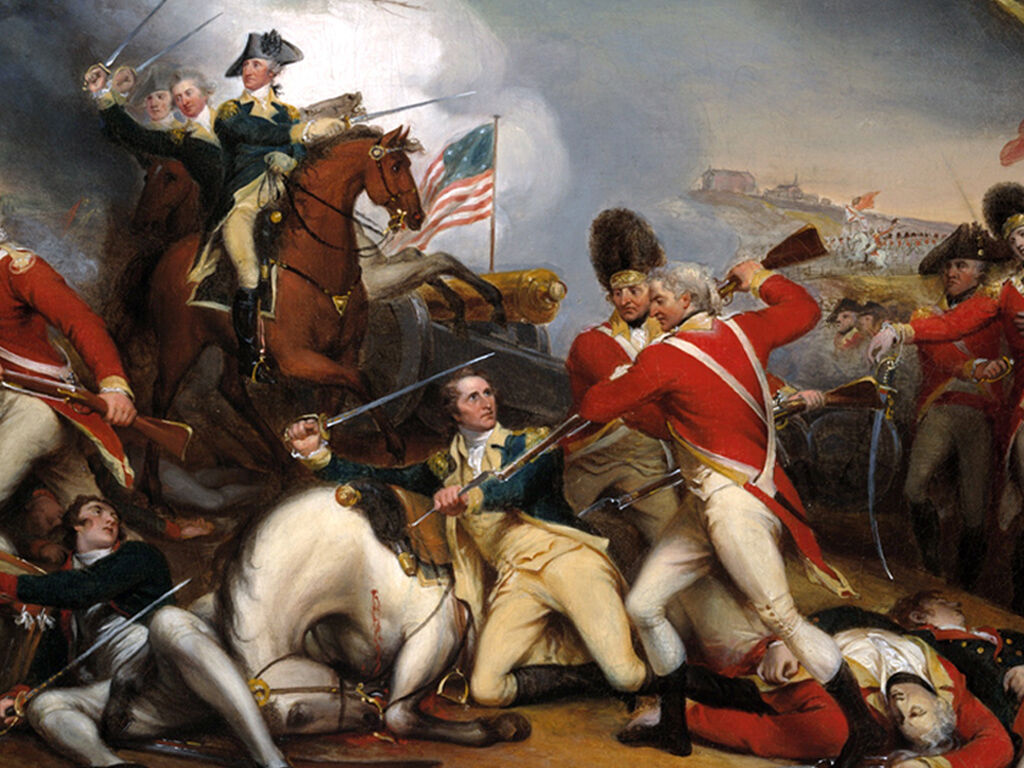
But before the troops could successfully defeat British forces in Princeton, General George Washington’s troops famously crossed the Delaware River on Christmas Night, 1776.
As he led his men to confront the Hessians, the future president paved the way for Washington Crossing State Park in Titusville to become another reservoir of Revolutionary War historical knowledge.
Starting May 28, the Historic Education Committee of the Washington Crossing Park Association, or WCPA, will host free guided history tours on Sundays from 1 to 2:30 p.m. at the Washington Crossing Visitor Center Museum.
According to the NJDEP website, these begin with the museum’s two galleries: one where guests can watch and discuss the NJN-produced film “Ten Crucial Days: The Road to Liberty” in the auditorium, which documents the time between Washington’s Crossing and the Battles of Trenton and Princeton, and another that houses the “over 500 authentic Revolutionary War artifacts” on loan from the Swan Historical Foundation Collection.
Other stops include Sullivan Drive and Continental Lane, the Stone Barn, and the landing overlook by the Johnson Ferry House. Tickets must be reserved in advance via the WCPA’s page on EventBrite.
The Johnson Ferry House is a circa 1740 farmhouse that overlooks the Delaware River. Historians believe that Washington’s men might have stayed here prior to utilizing the transport services and making the journey across the freezing cold waters. The building is furnished with Colonial-era period pieces and reproductions, including an 18th-century kitchen garden.
Washington Crossing State Park is free to enter until July 1, at which point a $5 cash fee will be implemented every weekend until Labor Day on September 4.
Washington Crossing State Park, 355 Washington Crossing-Pennington Road, Titusville, Hopewell Township. Free. Hours (Visitor Center Museum): Every day from 9:00 a.m. to 4:00 p.m. 609-737-0623. Hours (Johnson Ferry House): Tuesdays through Saturdays from 11 a.m. to noon, then 1 to 3:45 p.m. 609-737-2515. WashingtonCrossing@dep.nj.gov.
More Sites to Salute
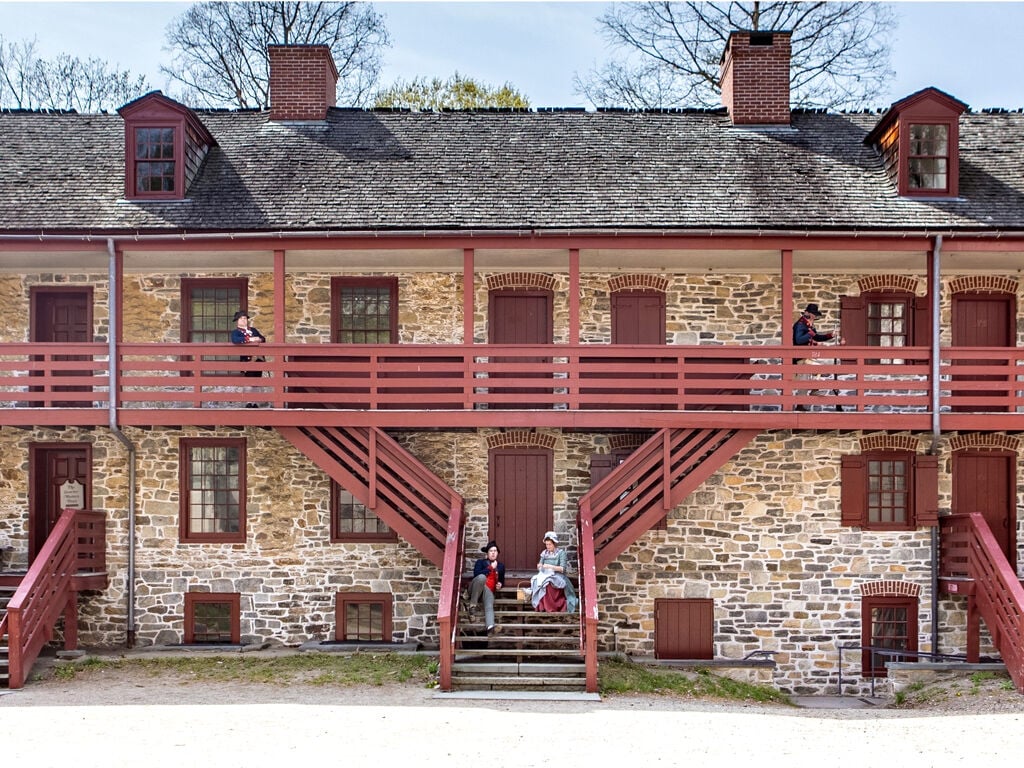
The Old Barracks, which were originally constructed during the French and Indian War in 1758 to house British soldiers, notably sheltered the Hessian forces during the Battle of Trenton. The site now actively hosts historical tours and events.
The Old Barracks Museum, 101 Barrack Street, Trenton. Open Wednesdays through Saturdays from 10 a.m. to 5 p.m. Admission prices: adults, $10; students and seniors, $8; active military and children under five years of age, free. 609-396-1776 or barracks.org.
Hamilton’s “Pepper House,” described online as “the first Civil War Museum in New Jersey,” has yet to reopen to the public since it closed “temporarily” because of the COVID-19 pandemic.
However, the circa 1730 John Abbott II House down the road at 2200 Kuser Road remains in use by the Historical Society of Hamilton Township, with weekend hours from noon to 4:30 p.m.
The Civil War and Native American Museum, 2202 Kuser Road, Hamilton.
Those looking for a one-of-a-kind trip into art, history, and New Jersey culture only need to drive less than an hour outside of the area code to join members of the Navy Lakehurst Historical Society for free tours of the Navy Lakehurst Heritage Center, which is located at the active US military base that is part of Joint Base McGuire-Dix-Lakehurst.
Whether you come to see exhibits in the aircraft hangar, the stained glass pieces at the Cathedral of the Air on the site’s border, or to visit where the infamous Hindenburg disaster took place, the naval history here makes the visit worthwhile.
Navy Lakehurst Heritage Center, Hangar One, Lansdowne Road, Lakehurst. Free. (732) 323-6547 or nlhs.com.
As a final note, the New Jersey State Museum in Trenton also has a formidable collection of Civil War flags recovered from military units raised in New Jersey, encompassing nearly 200 cavalry, volunteer regiment, and captured Confederate battle flags that rotate through the exhibit.
The articles quoted and referenced, in order of online publication date: “Explore military history at National Guard Militia Museum” from November 10, 2021; “Free and Easy — Day Tripping With Kids” from March 16, 2022; and “Naval Lakehurst Keeps History Flying High” from February 8, 2023, were all written by Dan Aubrey and are available at www.communitynews.org.
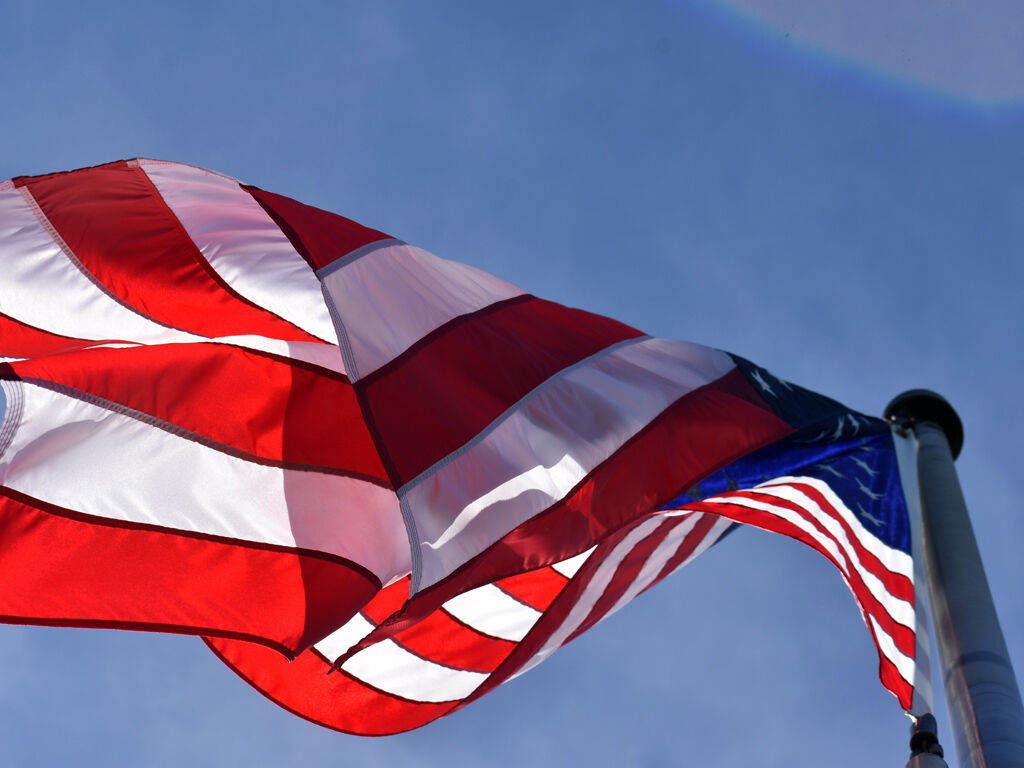
Raise the flag for a summer of historic sights with Flag Day on June 14, then keep your spirits flying high throughout the month with tours at local military museums. (Photo by Kevin McCartney from Pexels),
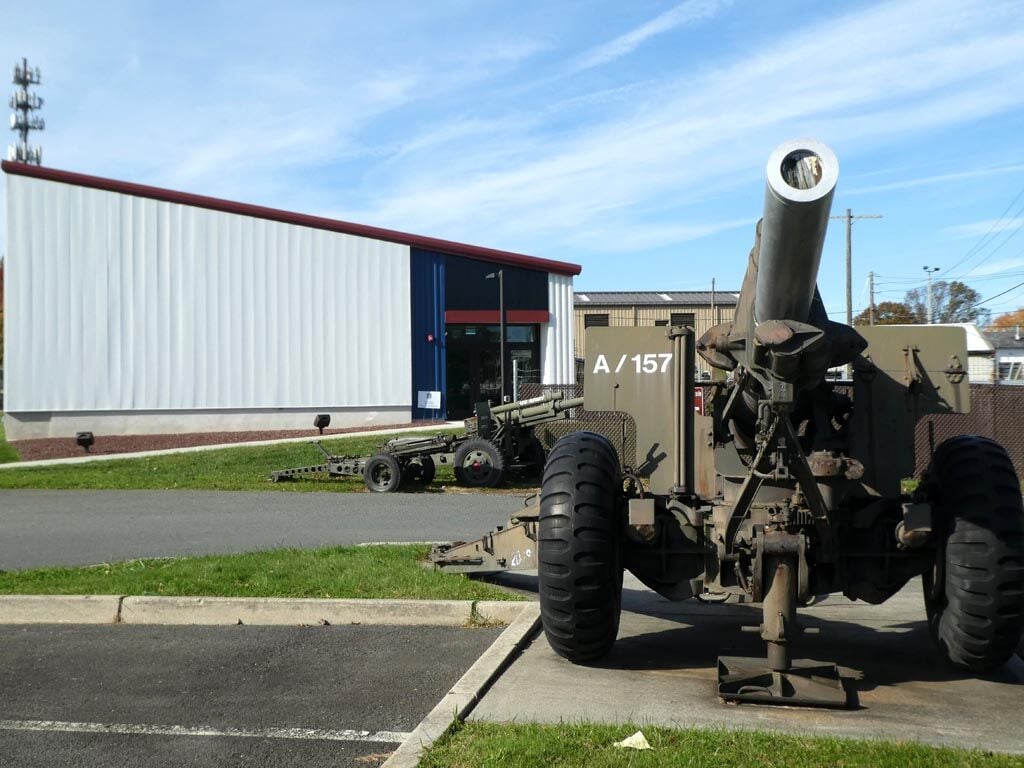
A Nike Ajax missile on display outside the National Guard Militia Museum of New Jersey at Lawrenceville. (Photo by the NGMM of NJ),
Flags fly at the entrance to the NGMM of NJ at Lawrenceville. (Photo by the NGMM of NJ),
The Armed Forces Heritage Museum at the Captain James Lawrence House in Burlington.,