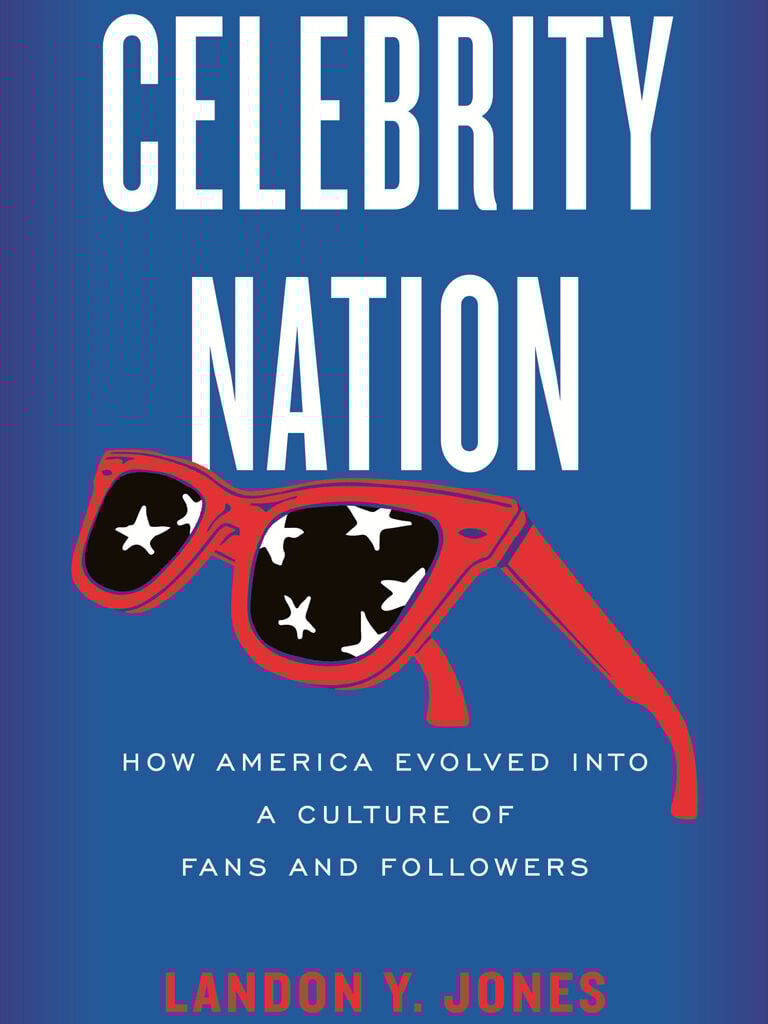
Landon Jones has a story about the birth of his new book, “Celebrity Nation,” and the Princeton resident and former editor of People Magazine is ready to share.
“I used to attend focus groups to find out what People readers were interested in,” he says. “As the panelists settled in, the moderator would typically warm up the group by throwing out an easy question: ‘Who are your heroes?’”
“But then one week at a focus group in Chicago, I noticed that the moderator no longer asked that question.
“‘Why don’t you ask about heroes?’ I asked.”
“‘Because they can’t think of any,’ she said.”
“I was startled. How could that have happened? Societies need heroes and have sought them out since ancient times. Heroes are our founders and builders. A hero is a person (of any gender identity) of great deeds and great dreams who takes great risks and endures sacrifices to lead others into the future. A hero’s fame cannot be manufactured; it is hard earned. Heroes give our society ballast and coherence.”
Well, times have changed.
And he’s being loud and clear in telling what happened — such as telling the story during a recent public event at Labyrinth Books in Princeton, where he discussed the phenomenon with his prominent novelist friend and noted Princeton University professor Joyce Carol Oates.
And, of course, he tells it in the book whose subtitle is “How America Evolved into a Culture of Fans and Followers.”
In short, Jones argues that the status once given to those who made a difference has been transferred to individuals famous for — well, as one definition put it — just being famous.
“American culture is consumed by celebrity,” Jones says during a recent interview in the sunny nook next to the kitchen in the Princeton home he shares with his wife of 53 years, Sarah.
But he could have just as easily said that celebrity culture now consumes America’s attention, resources, and soul.
For example, as Jones reports regarding how celebrities market themselves and the product to which they’re connected, “There’s a battle for visibility. What is the scarcest resource? People’s attention. You have to keep your name out there or people will forget about you.”
In order do to that celebrities market their images as well as “personal brands with spin-offs that keep their products in the spotlight” and “celebrities are selling us all they can, all of the time.”
Now add in a study showing that every day millions of Americans become infatuated with celebrity personas, gradually enter into a perceived — or parasocial — relationship with the figure, and then pay their way into making a connection. The outcome is an “influencer market at $13.8 billion in the US. alone.”
Jones also uses a good number of studies and reports to show that over the past several decades America’s collective romanticizing of celebrity “has led to a coarsening of American culture” and more.
Individuals most interested in celebrity culture “are least engaged in politics, least likely to protest, and least likely to vote.”
Instead, there is a “desire for fame and the perceived benefits of social status, power, and influence, improved lifestyle, celebrity emulation, and increased happiness” — despite the not-so-sobering statistics about the mental and physical health of celebrities.
Jones taps into his on-the-scene experience at People magazine and says if there were a bet on what story went over best, forget the person who made a sacrificed for a great cause, and put the money on the unheroic, narcissistic, and formulaically defiant celebrity.
For example, he notes, “Donald Trump not only gained the nation’s highest office on the strength of celebrity alone, he did so by also publicly mocking heroics. The most obvious example was his belittling of John McCain, whose courage as a naval aviator and North Vietnamese prisoner of war for five-and-a-half years was reduced by Trump to a dismissive slur: McCain was just someone who got captured.”
Additionally, notes Jones, Trump “mastered not just the messaging of celebrity but its mechanics too. He used TV and Twitter not only to grow and sustain his visibility but also to position himself as the one politician who engaged his supporters directly, unmediated by the political elite. In the absence of experience and conventional qualifications, however, he was required to work endlessly to keep reminding people he was a ‘totally big celebrity’ — since his fame was the primary measure of his merit. Celebrity could become the loudest voice in the room.”
As the book shows, there is also a shift from an actual person using a star-like persona to a strange new realm of celebrity influence, like Miquela Sousa (aka Lil Miquela).
She is a self-described “19-year-old living robot in LA” with 3 million Instagram followers.
From her digital realm or platform, the computer-generated influencer “promotes her music, collaborates with luxury brands (including Prada and Supreme), and posts candid selfies with her friends and love interests (a mix of other robots and human celebrities).”
She also streams music to 200,000 monthly listeners on Spotify and promotes sponsored products at an estimated $12,000 to $25,000 per post — bringing the value of her creating studio, Brud, to an estimated $125 million.
Jones also reports that Lil Miquela also raises money for causes, such as Black Lives Matter — tapping into the segment of celebrity culture where some celebrities also connect to a cause.
And while some individuals are sincere about their causes, others are not and follow it as one of the scripts that appeal to the public: Celebrity encounters personal tragedy, struggles through it, and shares personal triumph.
As Jones points out, this redemptive narrative is something that appeals to the public. And according to Northwestern University professor Dan McAdams, author of “The Redemptive Self,” it made up 52 percent of the stories in People.
The narrative also appeals to story subjects who can present themselves in a sympathetic manner, and, by using a familiar story line that shows up in books and films, strengthen their celebrity as mythic figure status.
“You see it in celebrity memoirs,” says Jones during the interview about redemptive narratives. “Redemption has a certain humanness. People respond. They say, ‘That person recovered from a tragedy; I could do that too.’”
Turning to the creation of the book and his own involvement with celebrity culture via People, Jones says the book had been slowly fermenting for years.
“I had been slightly interested in celebrity and popular culture,” Jones says. “When I went to People, it became a colossal success and I got interested.”
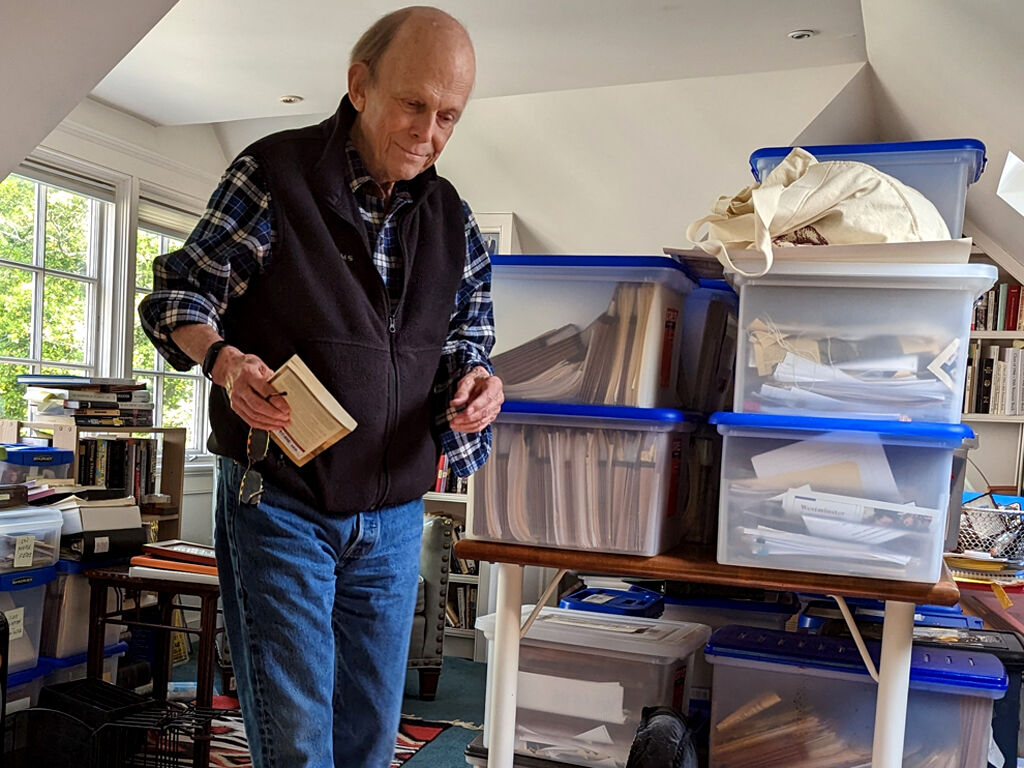
Since then, he has been accumulating information on famous people in hundreds of files tucked into storage bins stationed on tables and shelves around his second story office.
And though he mentions a few fresh names, he also has a stash of information of some of America’s first historic bigger-than-life influencers: Buffalo Bill, Annie Oakley, and P.T. Barnum.
“They pioneered what became modern celebrity and used images, posters, newspapers, and little biographies,” he says, adding that they also showed a “certain amount of defiance that we see in celebrities to today.”
The St. Louis-raised journalist and writer of historic nonfiction — he has two works related to Lewis and Clark — says that when he writes, “I pile up clips and then organize and where the biggest pile is that is where I go. You follow your reporting.”
And while he has plenty of celebrity stories — interviewing Liz Taylor and dancing with Lady Diana — Jones says he “didn’t want to write about anecdotes. I wanted to write about the phenomenon.”
What he settled for was “an odd combination of personal experiences, the history of celebrities, and academic studies on celebrity and its consequences.”
Although the idea crystalized several years ago and he and his literary agent, Carol Mann, connected with Beacon Press five years ago, the writing of the book included several unexpected counters. That includes the author’s health, COVID, and the need to research unfolding celebrity-related developments — such as celebrities being hired to send “Cameo” telephone greetings to friends and family.
Asked if he thought if his work at People reinforced the current interest in celebrities, Jones says he feels “ambivalent. We are not responsible for the actions of our imitators. But I wish I could have given more attention to heroes. If you follow the money, you go to celebrities. Markets do.”
He adds that when People started, “We didn’t use the world celebrity,” although there were already well-known individuals whose reputations were grand and commanded attention.
The son of a PET evaporated milk businessman and culturally active mother says he also began to observe a contradiction between the social figures and actual people.
Jones points to one important example, Malcolm X.
Jones, who had come to Princeton University through the support of the head master at a St. Louis day school, was trying out for the Daily Princetonian, the student newspaper, when he was offered the opportunity to interview Malcom X.
As Jones writes, “Malcolm X was the most controversial man in America” and “ I could not imagine that (he) was looking forward to talking to a preppy white kid from the Ivy League.”
However, in a moment that allowed the future writer to see a difference between a celebrity and an actual changing person, Jones says, “I could have not been more wrong. The man I met had nothing to do with the man described in the media.”
Jones says the moment convinced him to pursue a career in journalism and writing at Princeton.
While doing so, he caught the eye of a Princeton-educated Time Life editor who invited Jones to try his hand with the publishing giant.
After working for several national publications, including Money and Time, fate and fortune unfolded.
“People grew out of Life magazine,” says Jones. “It had bombed out. TV took the ads away. Life didn’t have any more ads and it folded. The guys who started People knew me and were desperate for help.
“(People) was an enormous success. We hit a nerve about writing about the intimate lives of prominent people. If you were doing a story on me, we would see the kitchen. We had orders to get the names of the pets and (people) in pictures — it creates intimacy.”
Though Jones moved to writing books, such as “Great Expectations: America and the Baby Boom Generation” (where he coined the term Baby Boomer), his clipping habits and the new book indicate his ongoing interest in the phenomenon of people being elevated into the concept of a celebrity.
Jones thinks the current idea of celebrity is a holdover of our past cultural orientations and credits Jungian analysts for showing how our reverence to gods and rulers was shifted to charismatic celebrities — even though they had no socially important accomplishments.
“We became celebrity worshipers. And celebrities took advantage of it,” says Jones.
Since he has been keeping up with celebrity culture, he also has some late-breaking observations. “What is new and not in the book was a report on what sources do people trust. Number one was newscasters, another was entertainers, third was comedians, and another was athletes. At the bottom was scientist and experts.”
So, what’s the takeaway from his book and observations?
“Celebrity is harmful,” says Jones. “It is harming celebrities themselves. And it is harming the community.
“(But) I think we can outgrow it. We stop seeking sensationalist copy, stop seeking copy for its own value and look for its underlying value.
Hopefully, he says, “the book can help.”
“Celebrity Nation: How American Evolved into a Culture of Fans and Followers” by Landon Y. Jones, 208 pages, $26.95, Beacon Press.
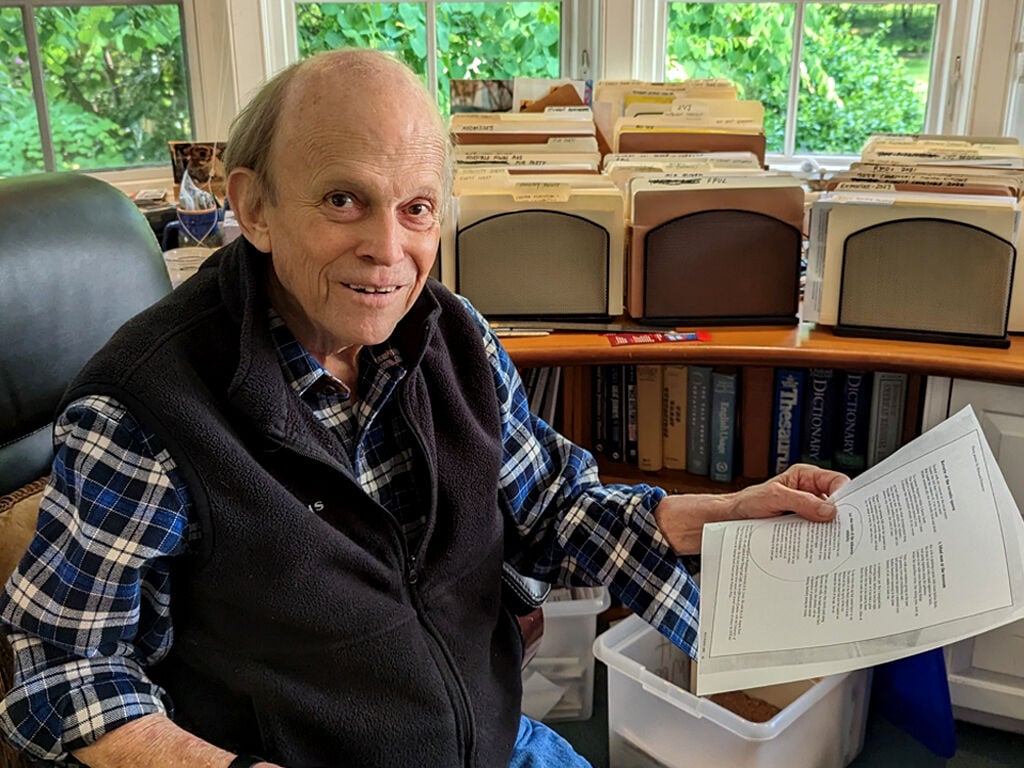
Author Landon Y. Jones in his Princeton home office.,