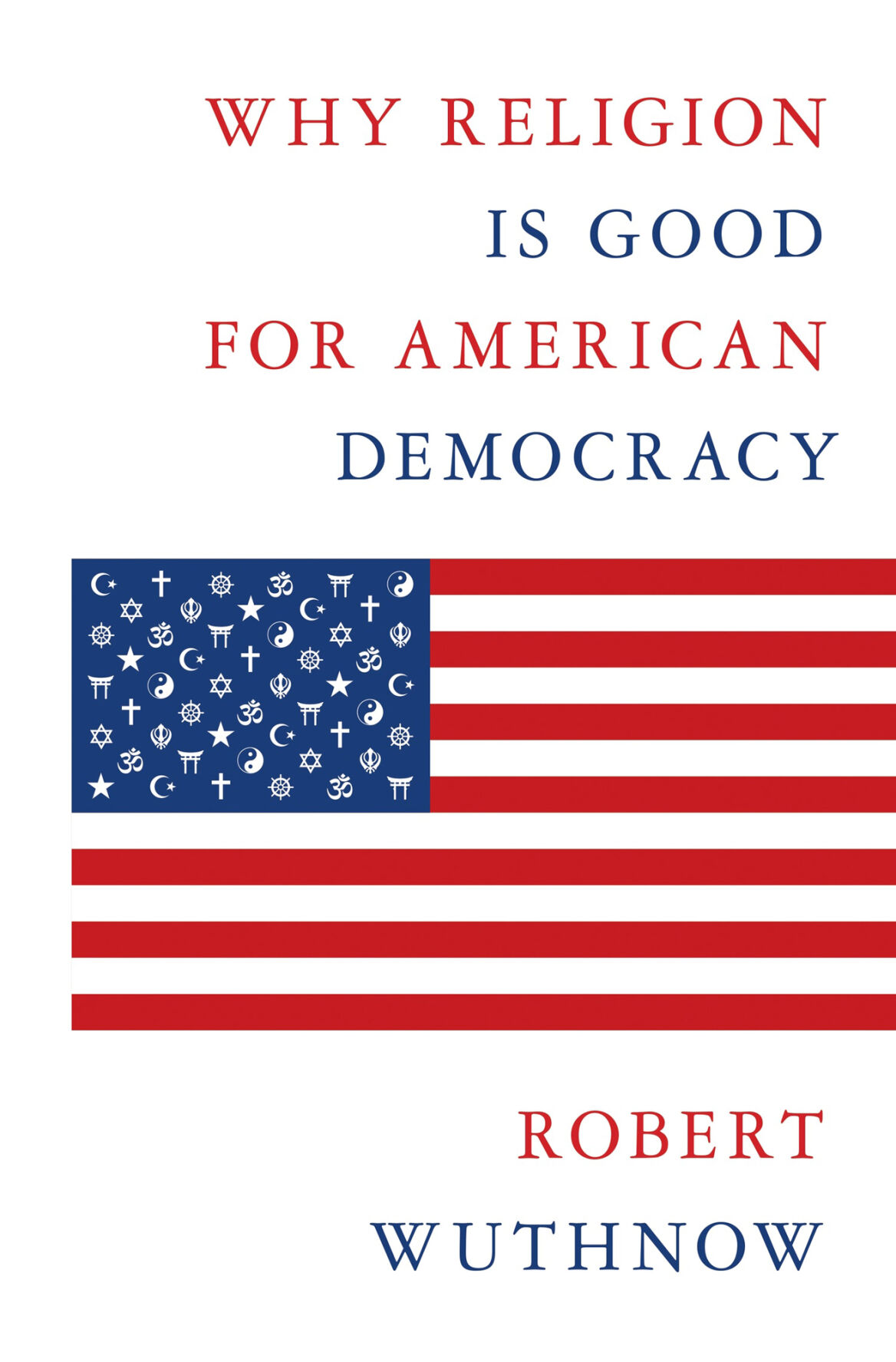
Robert Wuthnow, a retired Princeton University sociology professor and former director of the university’s Center for The Study of Religion, has stepped forward with a new Princeton University Press book that takes a look at our current state of democracy and how religion contributes to it — mainly for the good.
In a recent interview for online publication Religion and Politics, the Lawrence Township resident put the work in context by saying, “I am a student of religion and I have always been interested in religion and politics, so it was natural for me to focus on religion and democracy rather than on democracy and its relationships to other realms of our society. Despite separation of church and state, religion is very much in the public mind as we think about the current challenges to American democracy.”
Additionally, he said, “I have been increasingly worried in recent years about the strength of American democracy. Our democracy is always fragile, and it is always endangered externally by threats such as terrorist attacks, Russia meddling in our elections, and China posing economic as well as military challenges. But in recent years, democracy is also endangered from developments within, such as malfeasance and corruption at the highest levels of the federal government, partisan gridlock in Congress, and even the kind of attacks we experienced on our nation’s capital on January 6.”
Coupling his career with his concerns, Wuthnow told the interviewer, “I am a sociologist by training whose training included historical sociology as one of the methods we use to tackle large questions,” including what he calls those “big questions” regarding religion and democracy.
He does so by exploring several historical occasions where religion influenced social movements. That includes 1930s mainstream religion overcoming differences “to warn constructively about the imminent threat of authoritarianism,” redefine freedom of conscience in the late 1930s and early 1940s, and, in the 1950s, “advocate for freedom of assembly and from the 1960s through the end of the century contending about human dignity and welfare provision.”
More recently, the “role of religious diversity is evident in discussions of immigrant rights, the wealth gap, and the response to COVID-19.” And while the details “are broadly familiar, documented by journalists and social scientists,” he shows “why it mattered that religious practices were present and why it was significant that leaders and the groups they served so often took adversarial positions toward one another.”
Advancing his argument early in the book, Wuthnow says, “The claim I make is that religion is good for American democracy less because of the unifying values it might provide and more because of religion’s capacity to bring diverse values, interests, and moral claims into juxtaposition with one another. Through its diversity, religion contributes to the contending beliefs, values, arguments, and counterarguments that constitute the debate about how to order our lives together.”
He notes that while people who have strong arguments about religion and dogma can “vehemently disagree with one another and take adversarial positions toward one another,” their diverse practices and diverging convictions “animate American democracy.”
Wuthnow says, “Contention about what we hold dear is central to democratic processes: voicing strong convictions about what is unequivocally right, advocating for conflicting definitions of the common good, affirming and modifying basic points of agreement, and refining the procedures that make living together possible. Religious diversity is woven into this contention, augmenting it and supplying it with competing ideas, practices, and values.
“Conceived in this manner religious groups’ potential to benefit American democracy occurs in several ways. They can mobilize resistance to the authoritarian threats of autocratic leaders, support efforts to uphold freedom of conscience, organize voluntary associations, and defend these associations’ independence. Additionally, religious groups can advocate for human dignity, provide social services and support, champion the value of inclusive orientations, and address the threat to democracy of economic inequality.”
The author of several other books, including the 2021 “The Restructuring of American Religion: Society and Faith since World War II” and 2019 “The Left Behind: Decline and Rage in Small-Town America,” says the benefit is that “differing groups bring multiple perspectives to bear on social issues, articulate claims and counterclaims, mobilize in opposition to one another, check one another’s aspirations, and give voice to constituencies with differing values and interests. None of this follows a set pattern. It happens in historical contexts — where religion’s diverse contributions are most clearly seen.”
Wuthnow believes that democracy’s strength depends on the rule of law, “the Constitution, freedom of speech and assembly, fair elections, and the nation’s system of government checks and balances. These principles and institutions have served democracy well.
“The multilayered complexity of these arrangements, frustrating as it often is, safeguards American democracy. When democracy is threatened, Americans historically have trusted the laws, the lawmakers, the courts, and the press to protect it. Today, no less than in the past, democracy’s resilience depends on responsive representative institutions, fair elections, active civic participation, freedom of expression, and adherence to constitutional norms. Unless these institutions and norms are respected, democratic governance is weakened.”
Looking at our current challenges to democracy, Wuthnow reminds readers that “whether we are among those who think democracy was founded on religious principles or are convinced that reasonable people would be better off putting religious convictions aside, the reality is that millions of Americans practice religion in one form or another. They enact it in churches, synagogues, mosques, ashrams, and temples, coming together in hundreds of thousands of places of worship large and small. Additionally, many Americans who do not identify with any religion hold considered opinions about how religion should or should not be practiced. And, although religious faith for many is a matter of the heart, it is also demonstrably influential in public affairs. Faith perspective informs whom people trust, the issues they care about, and in many cases how they vote.”
Wuthnow says that over the past century, religious groups and their leaders have contributed to American democracy, “not in spite of their diversity but because of it. People have been propelled into action because they vehemently disagreed with one another. They were forced to contend with their disagreements, seeking and sometimes finding common ground, but in the process posing the hard questions about who we want to be, what our values should be, and how to get along with those who see things differently.”
It’s a good point to consider during a polarized and contentious moment in our always-fragile democracy.
Why Religion Is Good for American Democracy, Robert Wuthnow, 328 pages, $29.95, Princeton University Press.
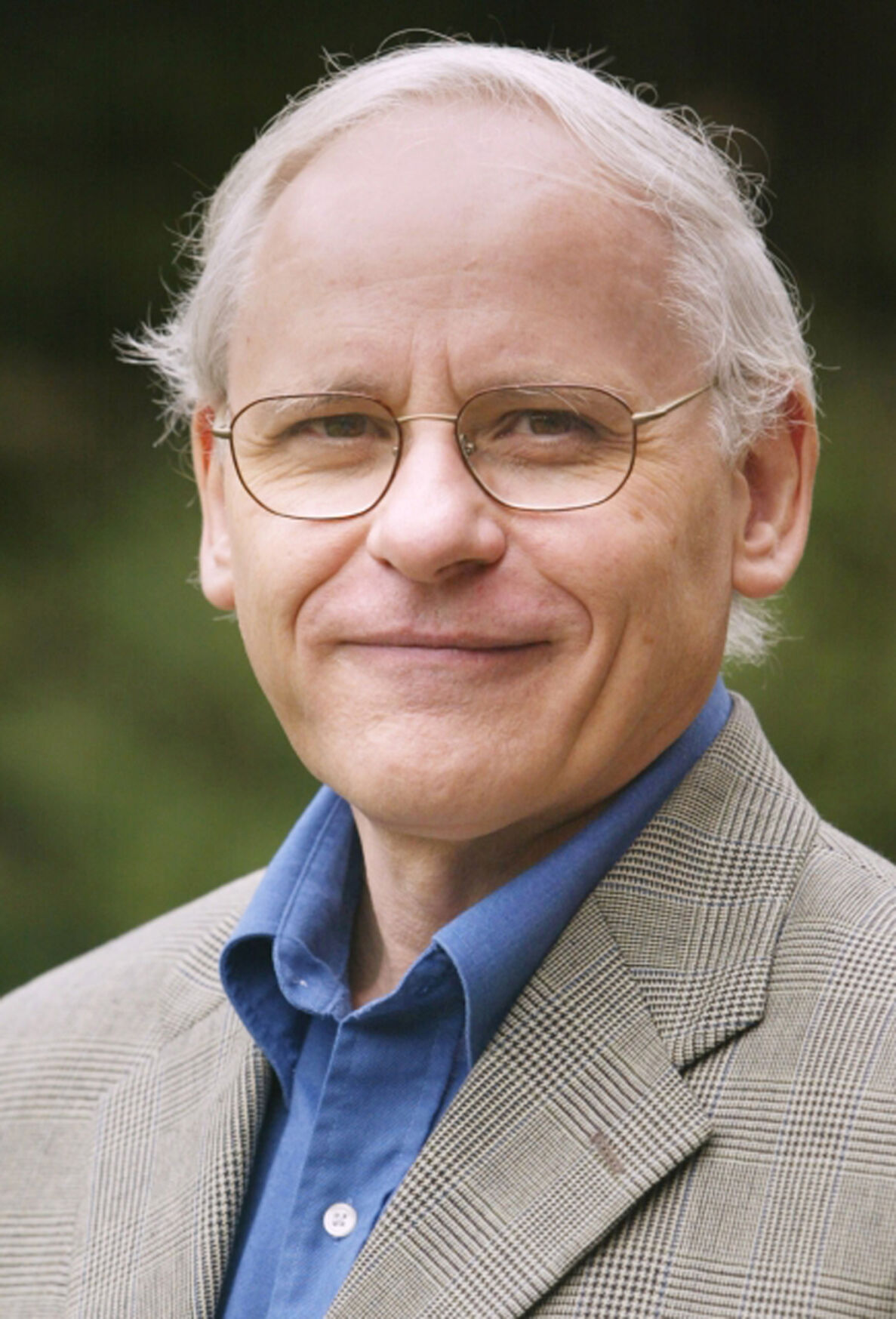
Robert Wuthnow,